Shipping OpenAI Symphony in Prod: A Real-World Guide
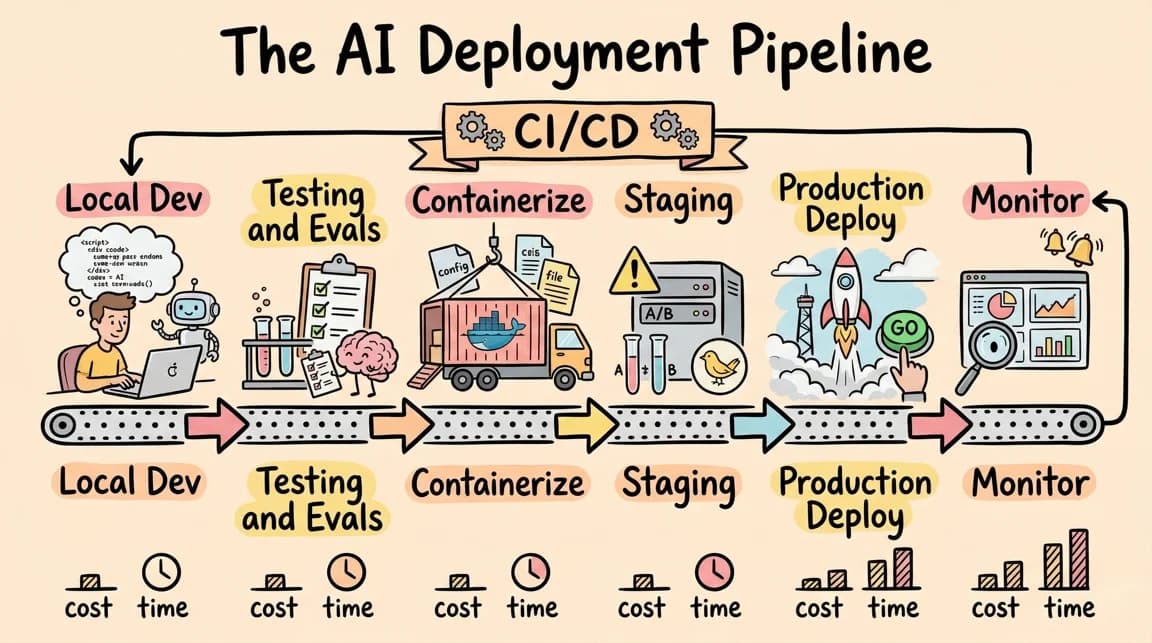
TL;DR
What it actually takes to wire OpenAI Symphony into a Linear-driven Codex workflow - auth, runs, sandboxes, costs, and the gotchas nobody warned me about.
Why Symphony Matters#
When OpenAI open-sourced Symphony, they buried the headline number under a wall of Elixir docs: a 500% increase in PR throughput inside their own infra teams. That is not a "we shipped a chatbot" stat. That is "we replaced a junior engineering pod with a fleet of Codex agents and the kanban moves itself." The thesis Symphony forces you to internalize is manage work, not agents. You stop thinking about prompts and start thinking about tickets, queues, and merge gates.
For the design side of the same problem, read OpenAI Codex: Cloud AI Coding With GPT-5.3 with OpenAI vs Anthropic in 2026 - Models, Tools, and Developer Experience; they show how agent-generated interfaces fail and how to give coding agents better visual constraints.
I forked the repo on a Saturday night, pointed it at a live Linear board for one of my smaller DD products, and watched it land four PRs before I finished my coffee. This post is the unredacted ops story - what setup actually looks like on Apple Silicon, what the runtime feels like in production, and where it breaks.
If you want the visual demo first, the DevDigest YouTube channel has the screen-recording walkthrough where Linear ticket goes in and PR comes out in under three minutes.
Why Elixir / BEAM Was the Right Pick#
Before the setup walkthrough, this matters: Symphony runs on the BEAM. That sounds like an aesthetic choice until you watch six Codex agents melt down concurrently and the supervisor tree just… restarts the failing one. No restart loop in your Node process. No half-dead Python worker holding a file lock. The actor model is what lets a single laptop juggle a real fleet without becoming a babysitting job.
If you have ever tried to orchestrate agents with a Python asyncio gather and a Postgres queue, you already know why this matters. Symphony's choice to put each agent run in its own supervised process means a runaway Codex session crashes itself, not the orchestrator.
Setup: From git clone to First Run#
The README is honest about engineering preview status, but it underplays how rough Erlang/OTP install is on Apple Silicon. Here is the actual sequence that worked on M3 Max, macOS 15:
Terminal
# 1. Erlang via asdf (brew install erlang takes ~30min and frequently fails)
brew install asdf
asdf plugin add erlang
KERL_CONFIGURE_OPTIONS="--without-javac --with-ssl=$(brew --prefix openssl@3)" \
  asdf install erlang 27.1.2
asdf install elixir 1.17.3-otp-27

# 2. Clone and bootstrap
git clone https://github.com/openai/symphony.git
cd symphony
mix deps.get
mix ecto.setup
Three env vars do real work:
Terminal
export OPENAI_API_KEY=sk-...
export LINEAR_API_KEY=lin_api_...
export SYMPHONY_WORKSPACE_ROOT=$HOME/symphony-runs
SYMPHONY_WORKSPACE_ROOT is the one most people miss. Symphony clones target repos into ephemeral subdirectories under that root. If you do not set it, it picks /tmp and macOS nukes it on reboot mid-run. Ask me how I know.
For Codex auth, Symphony uses your existing codex CLI session, so codex login once on the host and Symphony inherits it. The Linear API key needs read and write on issues - read only is not enough because Symphony writes status comments back to the ticket.
From the archive
Tool Use in the Claude API: Production Patterns for Reliable Agents
Apr 29, 2026 • 12 min read
Vercel's Agentic Infrastructure Stack Explained
Apr 29, 2026 • 12 min read
Vercel's New Durable Execution Programming Model: A Developer's Guide
Apr 29, 2026 • 10 min read
Agent Replays with TraceTrail: Loom for Agent Runs
Apr 28, 2026 • 8 min read
Anatomy of a Run#
Once you boot Symphony with mix phx.server and open the dashboard at localhost:4000, you connect a Linear team. Symphony pulls open issues with the label agent (configurable) and queues them. Each run looks like this:
- Plan phase - Codex reads the ticket, the linked repo, and produces a plan in a sandboxed worktree.
- Implement phase - Codex edits files, runs tests, iterates. The whole thing happens inside a per-run git worktree under
SYMPHONY_WORKSPACE_ROOT. - Review phase - Symphony pushes a branch and opens a PR with the ticket linked.
- Status phase - Symphony comments back on the Linear ticket with the PR URL and moves it to
In Review.
The isolation boundary is a git worktree plus a process-level chroot of sorts. The agent sees the repo, your shell, your test runner. It does not see your other repos, your home dir, your secrets file. That is the whole point. If you want true container-level isolation, you can wire SYMPHONY_RUN_COMMAND to wrap each run in a Docker invocation - there is a stub for this in lib/symphony/runner.ex but it is not wired up by default.
Production Hardening#
Out of the box Symphony will happily spawn 20 concurrent Codex runs and burn $40 in 15 minutes. Three knobs matter:
ELIXIR
# config/runtime.exs
config :symphony, Symphony.Orchestrator,
  max_concurrent_runs: 3,
  max_run_duration_ms: 20 * 60 * 1000,
  max_cost_per_run_usd: 2.50
max_cost_per_run_usd is the one I would not ship without. Symphony tracks token spend per run via the OpenAI API response headers and will kill the run if it exceeds the cap. I had a single ticket on a gnarly refactor consume $11 in tokens before I added this. Now nothing crosses $2.50 without my review.
For observability, Symphony emits OTel spans for every phase. I pipe them into DD Traces so I can see exactly where each run spent its tokens - turns out 60% of cost on most tickets is the plan phase re-reading the same files. Caching prompts for the implement phase cut my bill in half.
The other thing nobody documents: Symphony's kill_run/1 is a soft kill. It signals the agent process. If Codex is mid-API-call, the call completes and bills you. If you actually want hard-kill semantics, patch lib/symphony/runner.ex to Process.exit(pid, :kill) instead of the graceful path.
Where Symphony Breaks Down#
This is engineering preview, not GA, and it shows in three places:
No auth roles. Anyone with the dashboard URL can trigger runs and spend your tokens. Put it behind a VPN or Cloudflare Access. There is no built-in user model.
No native multi-repo. Each Linear team maps to one repo. If your ticket touches two repos, Symphony picks the first and the agent fakes the rest. I hit this on a frontend/backend coordinated change and had to manually split the ticket.
No retry queue. When a run fails (rate limit, transient git error, flaky test), Symphony marks the ticket failed and stops. There is no exponential-backoff retry. I built a 30-line GenServer wrapper that catches :run_failed events and reschedules with a backoff. OpenAI will probably ship this soon but until then, expect to write it.
OpenAI's own README says "do not run this in production yet." Take them seriously. This is a fork-and-run-on-your-laptop tool today, not a multi-tenant SaaS.
My Ship-It Verdict#
For a solo dev or a small team where one person is the platform owner, Symphony is the most leveraged thing I have run this year. Six Codex agents working a backlog feels like running a junior team without standups. But it is your responsibility to keep the wheels on - cost caps, observability, kill switches.
If you are at a 50-person eng org, wait for the productized version. The auth and multi-repo gaps are real.
If you want a lighter-weight orchestration pattern that does not require Erlang, check out DD Orchestrator - same management-not-agents thesis, simpler runtime, less throughput. The right pick depends on how much volume you are actually pushing through.
What I would steal for any agent stack regardless of which orchestrator you pick: per-run cost caps, OTel-everywhere, sandboxed git worktrees, and the discipline to label tickets agents are allowed to touch. Those four habits alone are worth the whole exercise.
The 500% PR uplift number is real, but only if you do the ops work. Symphony hands you the chassis. You still have to drive.
FAQ#
Is OpenAI Symphony ready for production use?#
Not officially. OpenAI's own README calls it an engineering preview and warns against running it in production. It lacks auth roles, native multi-repo support, and a retry queue, so treat it as a fork-and-run tool for a solo owner or small team rather than a multi-tenant service.
How do I control Symphony's token spend?#
Set max_cost_per_run_usd in config/runtime.exs under Symphony.Orchestrator. Symphony tracks spend per run via OpenAI API response headers and kills a run once it crosses the cap. Also cap max_concurrent_runs, since the defaults will happily spawn 20 concurrent Codex runs.
Why does Symphony run on Elixir/BEAM instead of Node or Python?#
The actor model means each agent run is its own supervised process, so a runaway or crashing Codex session takes down itself, not the orchestrator. That is harder to replicate with an asyncio gather or a Node process pool.
What is the alternative if I do not want to install Erlang/OTP?#
For a lighter-weight orchestration pattern with the same "manage work, not agents" thesis but simpler runtime and less throughput, see DD Orchestrator. For the broader agent SDK landscape, see Codex SDK vs CLI vs GitHub Action.
Read next
Codex Exec in CI: The Practical Guide to Headless OpenAI Agents
codex exec is OpenAI's non-interactive mode for running Codex agents from scripts, CI pipelines, and GitHub Actions - here is how to set it up safely with real flags and working YAML.
9 min readOpenAI Codex in 7 Minutes: The Desktop App, Plan Modes, and Multi-Agent Workflows
A companion guide to the OpenAI Codex video: a tour of the Codex desktop app, its plan and goal modes, plugins, multi-agent workflows, and UI annotation. Here is what the video shows and where to go deeper.
6 min readOpenAI Codex, Managed Agents, and AWS: What Developers Should Watch
OpenAI is moving Codex from a coding assistant into an enterprise agent platform. Here is what changed with Codex, Managed Agents, AWS, and the Responses API.
8 min readShare
Developers Digest
Technical content at the intersection of AI and development. Building with AI agents, Claude Code, and modern dev tools - then showing you exactly how it works.
300+ videos30K+ GitHub stars850+ articles
Related Tools
AI CodingAgent

OpenAI Codex
OpenAI's coding agent for terminal, cloud, IDE, GitHub, Slack, and Linear workflows. Reads repos, edits files, runs comm...
View ToolAI Models

ChatGPT
OpenAI's flagship. GPT-4o for general use, o3 for reasoning, Codex for coding. 300M+ weekly users. Tasks, agents, web br...
View ToolAI Coding
Codex CLI
OpenAI's open-source terminal coding agent built in Rust. Runs locally, reads your repo, edits files, and executes comma...
View ToolAI Frameworks
A
Agency Swarm
Multi-agent orchestration framework built on the OpenAI Agents SDK. Define agent roles, typed tools, and directional com...
View ToolApps from Developers Digest
Related Guides
Guide
Chronicle Research Preview Setup Guide
Set up Codex Chronicle on macOS, manage permissions, and understand privacy, security, and troubleshooting.
Getting StartedGuide
Claude Code Setup Guide
Configure Claude Code for maximum productivity -- CLAUDE.md, sub-agents, MCP servers, and autonomous workflows.
AI AgentsGuide
Getting Started with Claude Code
Install Claude Code, configure your first project, and start shipping code with AI in under 5 minutes.
Getting StartedRelated Videos
OpenAI Codex in 7 Minutes
OpenAI Codex Desktop App: Plan/Goal Modes, Plugins, Multi-Agent Workflows & UI Annotation Demo The video showcases OpenAI’s Codex desktop app, which the creator calls OpenAI’s best product and a prem...
Video·
OpenAI Codex in ChatGPT in 5 Minutes
In this video, we delve into OpenAI's latest release, Codex, a cloud-based software engineering agent designed for various coding tasks. Unlike tools like Cursor or Windsurf, Codex integrates...
Video·
OpenAI Open Sources Codex: The CLI Coding Agent
Exploring Codex: AI Coding in Terminal In this video, I explore Codex, a new lightweight CLI tool for AI coding that runs in the terminal. This tool, possibly a response to Anthropic's CLI,...
Video·
Related Posts
7 min read
Codex
Codex CLI Worktrees Turn Agent Runs Into Durable Sessions
Codex CLI 0.154.0 adds experimental worktrees, inline answers, Windows daemon support, and approval hardening. The impor...
8 min read
Codex
Codex Computer History Turns Repeated Work Into Reusable Skills
Codex Computer History gives agents a rolling view of work across apps. Here is how it works, where it helps, and the pr...
7 min read
News
OpenAI Enterprise Signals: The Agentic Gap Is Now Measurable, and It Is Not About Models
OpenAI published real usage data from its enterprise customer base: Codex now drives 64% of enterprise output tokens, an...

7 min read
News
OpenAI Open-Sourced Codex Security: What HN Thinks
OpenAI released the Codex Security CLI and TypeScript SDK as open source on GitHub. The Promptfoo team behind it, the 2....
7 min read
OpenAI
Codex Hits 8 Million Users: What the GPT-5.6 Surge Means for Developers
OpenAI crossed 8 million active users on Codex and ChatGPT Work in one week. Here is what drove the surge, what changed...
5 min read
AI
Codex Now Encrypts Multi-Agent Prompts, Breaking Local Auditability
OpenAI's Codex CLI now encrypts inter-agent communications for Sol and Terra models, leaving users unable to inspect wha...
Build with the member tools

Get Smarter About AI Dev
New tutorials, open-source projects, and deep dives on coding agents - delivered weekly.
One email per weekReal code, not theoryFree forever