Briefing · Saturday, July 4, 2026
Rendering Context as Images, the MCP July Deadline, and Webernetes
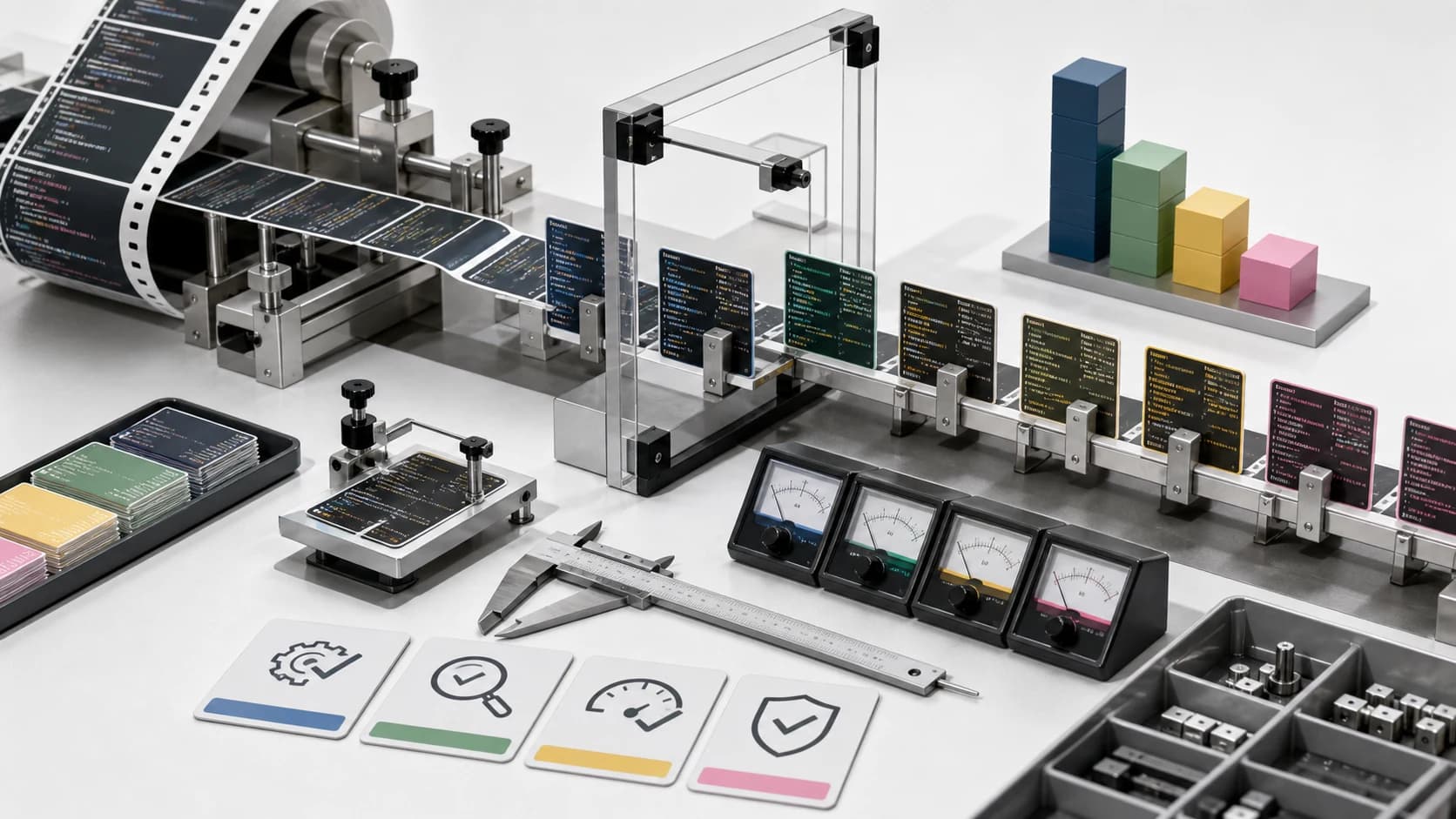
Good morning. It's Saturday, July 4, and we're covering a compression proxy that claims to cut agent context bills by 60 percent, the Model Context Protocol's 24-day breaking-change countdown, and a TypeScript Kubernetes port that runs entirely in your browser.
The pxpipe thread hit 235 points and 87 comments on a holiday weekend - more than most Show HN projects manage on a busy weekday. The technique is real, lossy, and deserves a careful read before anyone wires it into a production pipeline.
In today's brief:
- A local proxy renders bulky agent context as images before sending it to Claude, claiming 59-70% input cost cuts on token-dense workloads - the byte-safety rules are where the story actually lives
- The MCP 2026-07-28 release candidate is live; session-based handshakes are deprecated and the 24-day countdown has started
- An ngrok engineer ported 100,000 lines of Kubernetes to TypeScript with 2,059 tests, producing a browser-based cluster
- App Builder and Agent Studio shipped Thursday with single-file prompt-to-app and subagent authoring
THE BIG ONE
Rendering Agent Context as Images Cuts Token Bills Up to 60%
pxpipe is a local proxy that intercepts selected agent context blocks, renders them as images, and sends image tokens to vision-capable models instead of text tokens. The Show HN thread hit 235 points and 87 comments. The headline claim - 59-70% cost reduction on Claude Code-style workloads - holds up under scrutiny, but the safeguards are where the story gets interesting.
The cost gap exists because dense text context (tool schemas, JSON, command output, old chat turns, long docs) can often be packed into a fixed-size image more cheaply than equivalent tokenized text. The proxy does not blindly compress everything: it leaves recent turns as plain text, uses a per-block profitability gate so sparse prose stays in text, and logs counterfactual token accounting to ~/.pxpipe/events.jsonl so you can verify real savings.
The failure mode is byte-exact recall. The project's own README reports that exact 12-character hex strings in dense image renders were unreliable in tests, with some model paths producing silent wrong answers. File paths, SHA hashes, API keys, function names, short identifiers, and tool schema field names all belong in the text lane.
The right mental model is a codec, not a summarizer: image compression preserves the visual form of the original content but makes character-exact recovery probabilistic. For orientation and navigation tasks, that is usually fine. For tool calls that act on exact values, it is dangerous.
Why it matters: This is less about pxpipe specifically and more about what it surfaces - agent teams do not yet have a mature context accounting layer. Compression policy belongs at the block level, not as a global switch. Our full breakdown covers the byte-safety rules, which context types compress safely, and what a proper eval harness for this should measure.
PROTOCOLS
The MCP July 28 Spec is 24 Days Out - Session State is Deprecated
The 2026-07-28 Model Context Protocol release candidate is live, and the breaking changes are real. The headline shift is a stateless core: no session handshake, load-balancer-friendly request routing via an Mcp-Method header, and a cacheable tools/list endpoint with a ttlMs field.
Three features are deprecated with a hard July 28 cutoff: Roots, Sampling, and Logging. The spec also adds MCP Apps for server-rendered UIs and promotes Tasks to a first-class extension for long-running work, with tighter OAuth and OIDC requirements throughout.
If you maintain an MCP server, the stateless move is the one to plan for now. The four-week runway is short for any server that relies on the current session handshake or any of the three deprecated endpoints.
Why it matters: The stateless direction is architecturally sound - it makes MCP servers composable behind load balancers and eliminates sticky-session problems - but the deadline is a hard line. Our migration checklist has the full dated list of what breaks, what to adopt, and how to migrate before the spec lands.
TOOLS WORTH A LOOK
- pxpipe (OSS, free) - Local proxy that compresses selected agent context as images. Read the limitations section in the README before wiring into any pipeline that touches exact identifiers or security-sensitive values.
- App Builder (credits, ~50 per build) - Describe an app in plain language, get a single self-contained HTML file with a live sandboxed preview. Revise by talking to it, share with a link, or download. No build step, no folder to open. Details: our post.
- Vercel AI Gateway (free tier, usage-based above threshold) - One API key and string model IDs for hundreds of models, including Kimi K2.7 and every major Anthropic and OpenAI model. BYOK and OIDC supported. Setup guide.
WHAT ELSE IS HAPPENING
- GitHub Models retires July 30: The hosted model playground is 26 days from shutdown. If any of your workflows call GitHub-hosted endpoints, migration planning should already be in flight. (2 min read)
- Webernetes: Kubernetes ported to TypeScript: ngrok's Sam Rose spent two months porting 100,000 lines of k8s to TypeScript across 629 files, producing a browser-based cluster with 2,059 passing tests. The demo runs at webernetes-demo.ngrok.app. Our explainer covers the architecture and what "runs in the browser" means in practice. (HN 48738985)
- Senior SWE-Bench: Snorkel AI's benchmark grades coding agents on senior-engineer tasks using natural language bug reports, runtime investigation, and a "Tasteful Solve" metric that penalizes working-but-ugly code. Claude Opus 4.8 leads at 24%; frontier models fail more than 75% of tasks. (91 HN points)
- PostgreSQL 19 beta features overview: Native graph queries via SQL/PGQ, SQL:2011 temporal tables, and
REPACK CONCURRENTLYfor live table reorganization. Our breakdown on what each feature changes for application builders. (HN 48733031) - Ornith-1 open-source self-improving coding model: DeepReinforce AI released Ornith-1.0 claiming self-improvement. The HN discussion hit 200+ points with substantive skepticism about what "self-improving" means in practice. Our take on what the model actually does versus the framing. (HN 48722052)
FROM THE SITE
What We Published This Week
Three posts went live Thursday: App Builder: From a Prompt to a Working App You Can Watch Run, Agent Studio: Authoring the Roles, Not Just the Knowledge, and One Endpoint, Every Capability: A Reference Architecture for Progressive Disclosure.
Today: Image Token Compression Is a Real Agent Cost Lever - the full breakdown behind this issue's lead story, including the byte-safety rules, eval harness design, and the opposing view.
Every link above goes to a primary source or our sourced coverage. Tomorrow's brief lands when the news does - subscribe to get it by email.
Get the next one in your inbox
The daily brief, delivered. Free, unsubscribe anytime.