Cloudflare Page Shield ML Caught 4 Storefront Malware Campaigns Static Scanners Missed
TL;DR
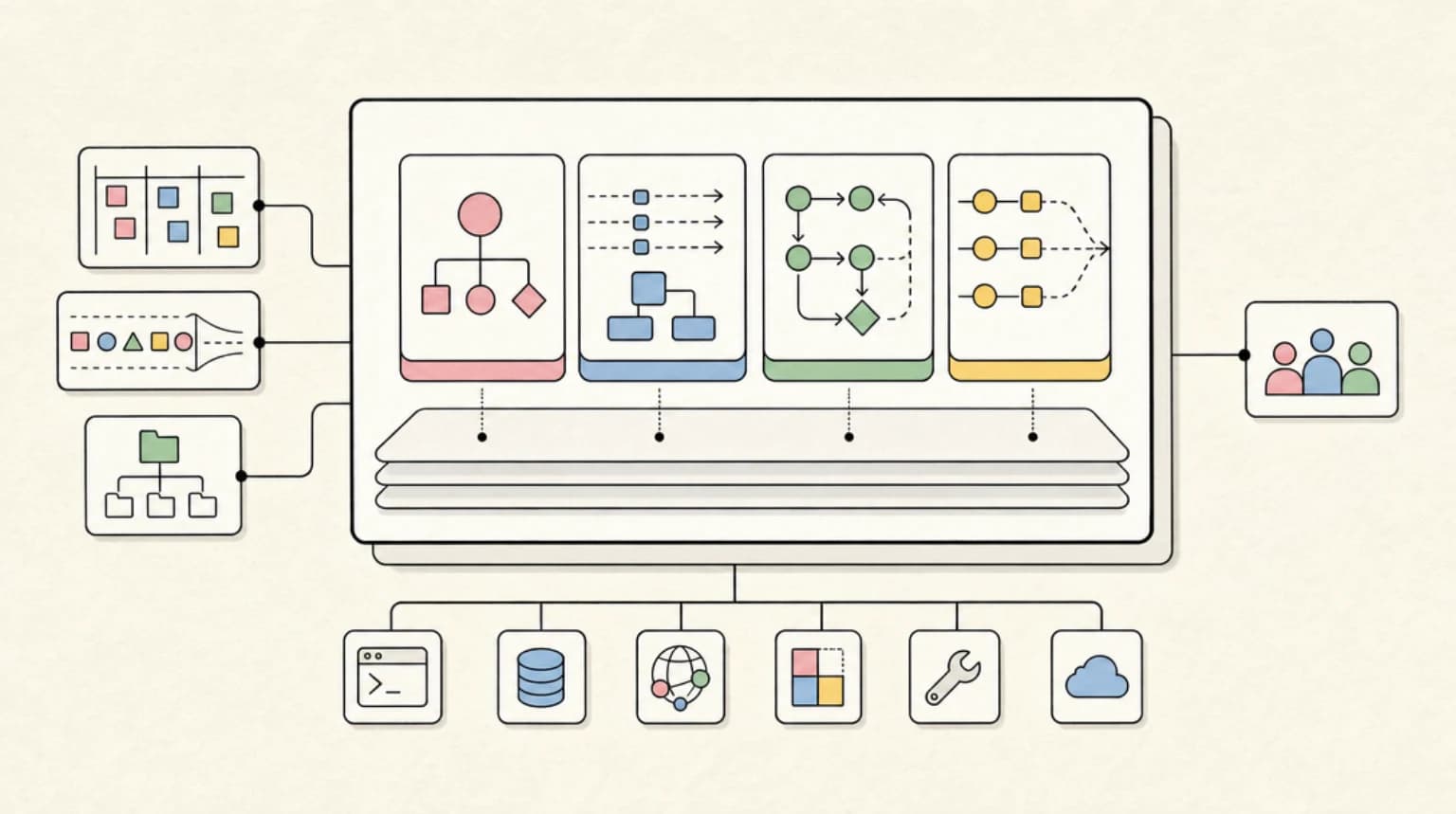
Cloudflare's client-side security ML surfaced four malicious JavaScript operations across online stores: affiliate hijacking, clickless commission theft, a repurposed search-hijacker turned storefront backdoor, and a paid-mobile cloaker. None of them had a signature, and most were invisible to VirusTotal and URLScan.
Cloudflare published a field report today (September 16, 2026) from its Page Shield machine learning system: four separate malicious JavaScript operations, eight payloads in total, caught running live on storefronts. The detail that matters is what they were. Not one of the four was a new exploit. They were attribution fraud, click hijacking, analytics tampering, and a remote-execution backdoor, all built to stay invisible to anyone scanning the page once.
The numbers make the case for behavior-based detection: seven of the eight payloads were entirely absent from VirusTotal, and URLScan returned no malicious verdict for any of them. Page Shield ML flagged all eight in live traffic.
Four ways a storefront can be quietly hostile#
The four operations are worth separating because they are four different failure modes, not one malware family.
After-hours affiliate hijacker. On mobile devices and only during gated times, a script waits for a qualifying click on a product tile (it watches with a MutationObserver), opens an attacker-chosen page in a new tab, and routes the original tab through an affiliate tracking link to plant the attacker's attribution cookie. A three-day localStorage cooldown makes repeated inspection see nothing. The delivery host was adtargett[.]com, a one-letter typosquat of an advertising domain registered in 1998.
Clickless affiliate theft. A script on a tourism booking site sends covert affiliate requests even when the visitor never clicks anything, through an off-screen iframe with referrerpolicy="no-referrer", falling back to a hidden programmatic link click if the iframe fails. It computed Asia/Kolkata time in JavaScript, checked embedded AU/US/UK config windows, then applied deterministic odd/even-hour rules to choose which affiliate URL to hit.
Storefront backdoor. The Lnkr malware family, known since the browser-extension era for hijacking Google and Bing searches, was repurposed: on the storefront its redirect modules stayed dormant while its telemetry and remote-code branches stayed live, letting the attacker download and run arbitrary JavaScript in shoppers' browsers at will. It kept its analyst-evasion tricks, including a check that paused the script if a search contained words like "virus".
Paid-mobile cloaker. The most elaborate gate stack: it only fired for campaign-tagged (ppc, cpc, sms, paid, flow, campaign) mobile visitors with a viewport under 477px on the first or second page load, from a US consumer mobile network, outside a handcrafted 325-entry IP substring denylist (313 unique addresses across 249 prefixes). Then it disabled nine monitoring and analytics tools, hid live support chat, and loaded Google Ads under a replacement publisher ID while firing zero-pixel telemetry beacons with a 600-day cookie. One of its "random" gates was a giveaway: Math.random() <= 1 always resolves true, likely camouflage or a leftover.
From the archive
Gemini 3.8 Live and 3.8 Live Extended Thinking: Google's Audio-to-Audio Voice Models, Benchmarked and Priced
Sep 16, 2026 • 8 min read
TypeSafe Jev: the First Decision-Only Model Class, Benchmarked and Priced
Sep 16, 2026 • 6 min read
Turn a Voice Memo into a GitHub Issue (and PR) with ElevenLabs Scribe
Sep 16, 2026 • 11 min read
Claude Code Plugin Evals Make Agent Extensions Testable
Sep 13, 2026 • 8 min read
Why static scanning fails at these#
Every campaign uses the same core trick with different furniture: conditional execution. Each script only acts when device, time, referrer, geography, session state, and cooldown locks line up. A scanner that loads a page once and takes a snapshot sees a healthy shop. Attackers have clearly reverse-engineered the audit loop of tag review and periodic scanning, and built payloads that sleep through it.
Two delivery mechanics are the ones developers should actually internalize:
- The marketing supply chain is the attack surface. One confirmed path ran Google Tag Manager, then another tag manager, then the malicious script. Two of the four campaigns typosquatted trusted marketing domains. Third-party tag approval is the modern equivalent of approving a dependency without reading its package.json.
- Behavior beats signatures, and the browser is the only place to see it. Cloudflare's pipeline is a GNN that reads JavaScript as a syntax tree and flags under 0.3% of analyzed traffic as malicious, a lightweight LLM on Workers AI as a live second opinion on each flag, and a cohort of frontier "teacher" models (about six families, including open-weight models) that argue over the hardest scripts, with each vote weighted by its score on the Artificial Analysis Intelligence Index. Disagreement between models is treated as signal, not noise, and label distributions feed back into GNN training.
What it means for developers#
If you operate a storefront or any site that loads third-party scripts, the report is a checklist of what one-off audits cannot see: time-gated behavior, device-gated payloads, cooldown caching, and remote code that changes what the page does between your checks. Continuous client-side monitoring is the fix, and the practical version at Cloudflare scale is Page Shield's script monitoring (the ML detection sits behind Client-Side Security Advanced). The concrete recommendations: treat every tag and tag-manager entry as a supply-chain decision, review new scripts the way you review new dependencies, and assume a clean scan proves nothing for more than a day.
For anyone building detection systems, the pipeline design is the more durable lesson, and it matches the pattern we found in Cloudflare's Adaptive Intelligence bot detection work: a cheap high-recall first pass, a small model for triage, frontier models for the hard cases, human review only at the end, and corrections flowing back into training. The same shape applies whether the traffic is bots, API calls, or JavaScript, and the same caveat applies too: the ensemble-and-feedback economics only work when you already see enormous volumes of malicious traffic.
The honest limits: the feedback loop that retrains the GNN on label distributions is still partly manual, the IOCs published with the report are defanged and partial to protect victim identities, and the report does not prove attribution for the four campaigns. What it does establish, solidly, is the failure mode of signature scanning against gated payloads, with eight captured examples spanning four distinct attack economies.
Continue Reading#
- Cloudflare Adaptive Intelligence: Bot Scores That Retrain Weekly Instead of Quarterly - the same detect-validate-enforce ML loop applied to bot traffic
- Cloudflare Agent Trust: Behavioral Detection - judging sessions by behavior and history instead of fingerprints
- Cloudflare DDoS Threat Report H1 2026 - how the automated attack economy scales
- AI Coding Agent Security Models Compared 2026 - the permissions and sandboxing model behind safe agent execution
- Approval Fatigue Is an Agent Security Bug - why contextless checks fail, in security and in code review
Sources#
Read next
Cloudflare Adaptive Intelligence: Bot Scores That Retrain Weekly Instead of Quarterly
Cloudflare's new bot detection engine drops the keep-everyone-out wall for a continuously retraining model, disposable rules, and a memory of past attacks. The first component ships today as a toggle in Bot Management, and the design is an inversion of how every bot product has worked until now.
7 min readCloudflare Ships Behavioral Trust for the Agentic Internet: 206M Events, 73K Zones
Cloudflare's Web Integrity team published the framework behind its agent traffic posture: continuous behavioral trust instead of point-in-time bot scoring, Precursor telemetry from 206 million evaluation events a day across 73,438 zones, and a verified-bot taxonomy where agents earn access by declaring themselves honestly.
7 min readCloudflare DDoS Report H1 2026: 1 Tbps Attacks Soared as DNS Floods Became the Leading Vector
Cloudflare mitigated 935 network-layer attacks above 1 Tbps in H1 2026, a +519% quarter-over-quarter jump, while DNS floods grew from 25.7% to 40.0% of network-layer attacks. Here is what the numbers say about how attacks are changing and what it means for anyone running public infrastructure.
7 min readShare
Developers Digest
Technical content at the intersection of AI and development. Building with AI agents, Claude Code, and modern dev tools - then showing you exactly how it works.
300+ videos30K+ GitHub stars850+ articles
Related Tools

Related Guides
Guide
Claude Code Complete Course
A complete, citation-backed Claude Code course with setup, prompting systems, MCP, CI, security, cost controls, and capstone workflows.
ai-developmentGuide
Chronicle Research Preview Setup Guide
Set up Codex Chronicle on macOS, manage permissions, and understand privacy, security, and troubleshooting.
Getting StartedGuide
WebFetch Tool - Claude Code
Fetch and parse content from URLs, including JS-rendered pages.
Claude CodeRelated Posts
7 min read
News
Cloudflare Adaptive Intelligence: Bot Scores That Retrain Weekly Instead of Quarterly
Cloudflare's new bot detection engine drops the keep-everyone-out wall for a continuously retraining model, disposable r...

7 min read
News
Cloudflare Ships Behavioral Trust for the Agentic Internet: 206M Events, 73K Zones
Cloudflare's Web Integrity team published the framework behind its agent traffic posture: continuous behavioral trust in...

7 min read
News
Cloudflare DDoS Report H1 2026: 1 Tbps Attacks Soared as DNS Floods Became the Leading Vector
Cloudflare mitigated 935 network-layer attacks above 1 Tbps in H1 2026, a +519% quarter-over-quarter jump, while DNS flo...
10 min read
AI Coding
AI Coding Agent Security Models Compared 2026: Permissions, Sandboxing, and Threat Models for Every Major Tool
How Claude Code, Cursor, Codex, GitHub Copilot, Aider, and Windsurf handle permissions, sandboxing, credential protectio...
7 min read
News
Cloudflare Gateway Can Now Detect MCP Traffic on the Wire: Shadow MCP Gets a Network Boundary
Cloudflare Gateway now classifies MCP traffic by protocol headers instead of hostname heuristics, ships a shadow-MCP das...
7 min read
News
Cloudflare's Agent Access Model: Zero Trust for Task-Scoped Agent Runs
On August 5 Cloudflare published the Agent Access Model: a reference architecture where credentials are short-lived and...
Build with the member tools

Get Smarter About AI Dev
New tutorials, open-source projects, and deep dives on coding agents - delivered weekly.
One email per weekReal code, not theoryFree forever