OpenAI Disrupts a Cambodia Scam Network That Ran on ChatGPT

TL;DR
OpenAI took down a Cambodia-based operation that used ChatGPT for personas, translations, forged documents, and admin work. It is the clearest picture yet of how LLMs slot into organized fraud.
OpenAI disclosed on July 31 that it disrupted a Cambodia-based scam operation that used ChatGPT across multiple fraud lines: fake dating personas, cryptocurrency and spot gold investment schemes, bogus gambling bonuses, and law enforcement impersonation. The investigation started from a lead shared by WhatsApp, and OpenAI says it has passed threat signals to industry partners and relevant authorities.
The takedown matters beyond the abuse case itself. It is the most concrete public look yet at how organized crime treats a frontier LLM as operational infrastructure: not just for generating scam copy, but for translation, document forgery, persona research, and internal administration.
What OpenAI found#
The network used ChatGPT to build and run fake online personas, generate and translate messages sent to targets on WhatsApp and Telegram, create promotional content, and handle day-to-day operations. The account activity was organized around a repeated three-stage pattern OpenAI labels the ping, the zing, and the sting: establish contact and trust, apply emotional pressure, then push for deposits, activation fees, or fines with payment screenshots as proof.
Specific observed behaviors included:
- Dating personas that built trust before pivoting to cryptocurrency and spot gold "investment" opportunities with guaranteed returns.
- Impersonation of gambling platforms offering fake bonuses and winnings.
- Law enforcement personas demanding payment of fines for fabricated criminal offenses.
- Generated images of forged documents: passports, legal notices, stock-purchase confirmations, and trading platform interfaces.
A subset of accounts also used ChatGPT for administrative work: drafting internal announcements, translating between staff, and maintaining records of employee debts, salary deductions, and disciplinary fines. Some content referenced detention, escape attempts, and visa overstays, which OpenAI flags as consistent with public reporting on human trafficking and forced criminality in Southeast Asian scam compounds. It also found social media ads recruiting "chatter" workers in Poipet with promises of flights, accommodation, visas, and work permits.
OpenAI banned the associated accounts, shared indicators with partners and authorities, and hardened re-entry for the actors. It could not independently verify total losses, but the operators' own communications referenced individual victims losing thousands of dollars, with hundreds of targets interacted with across scam types.
From the archive
Put an AI Agent on a Cron Job: Automating Dev Chores with OpenCode
Jul 31, 2026 • 11 min read
ORCA-bench: Frontier Agents Score 10% on Hard Oncall RCA
Jul 31, 2026 • 6 min read
OwlPath: Ontology-Based Code Retrieval Cuts Agent Tokens 29%
Jul 31, 2026 • 6 min read
PAIChecker: 13.6% of SWE-bench Verified Instances Have Misaligned PR-Issue Pairs
Jul 31, 2026 • 7 min read
Why this is a developer story#
Three things stand out for anyone building AI products, not just for OpenAI.
First, the force multiplier is translation and research, not copywriting. The operators used ChatGPT to translate conversations between staff and targets, research dating profile material, and maintain internal records. When an LLM lets a fraud group operate across languages and manage a workforce with admin documents, the abuse surface is the whole business process, not the scam message itself.
Second, the forgery shift is real. The network generated images of stock-purchase confirmations, gambling interfaces, and legal notices. Detection built around text-only abuse signals will miss the operational core of modern fraud, which increasingly lives in generated documents and fake platform UIs. This mirrors the escalation we covered in the three-second voice fraud case, where the barrier to convincing impersonation keeps falling.
Third, the takedown is a supply-side signal for fintech, crypto, and marketplace teams. The pattern of romantic trust-building followed by a regulated-looking investment dashboard is precisely what payment-flow fraud controls are meant to catch. If a romance-scam ring can now generate a credible trading interface and onboarding documents in any language, fraud teams should assume the asset is cheap and tune for behavior, not appearance.
Where abuse detection is headed#
OpenAI frames this as a continuation of its October 2025 threat intelligence report, which covered earlier scam networks and the same blend of victim-facing fraud with administrative ChatGPT use. The recurring pattern: diversified scam portfolios, blurred lines between online fraud and trafficking, and disruption that has to hit the organization, not just the front-facing scam.
For developers building agentic systems, the practical takeaways carry over from our agent security checklist and the prompt injection analysis in banking contexts: identity verification on real-world-money flows matters more than any generation guardrail, and abuse patterns observed by one platform are worth treating as industry-shared signals. OpenAI's decision to publish the takedown and share indicators with peers is the collaborative pattern that actually slows these networks down.
There is also a compliance angle. The markets that fraud rings target - payments, trading, gambling-adjacent apps - are the same markets where AI abuse reporting is becoming a regulatory expectation. Publishing a takedown report with verified artifacts, as OpenAI did here, is increasingly the shape of credible AI security disclosure.
Continue Reading#
- AI Voice Fraud Needs Three Seconds of Your Voice
- The AI Token Relay Market Fraud Analysis
- AI Agent Prompt Injection in Banking
- Agent Security Checklist Before Connecting Tools
- OpenAI Daybreak: The AppSec Bottleneck Is Patching, Not Finding
Sources#
Read next
Ghost Font: Text That Humans Can Read But AI Cannot
A new experimental technology encodes messages in video using motion-based steganography, exploiting how AI models process video as individual frames rather than continuous motion.
6 min readOpenAI Open-Sourced Codex Security: What HN Thinks
OpenAI released the Codex Security CLI and TypeScript SDK as open source on GitHub. The Promptfoo team behind it, the 2.1k-star reception, and what the HN community says about cost, guardrails, and local model support.
7 min readNoam Shazeer Joins OpenAI After Two Years Back at Google
The Transformer co-creator leaves Google DeepMind for OpenAI just two years after Google paid $2.7 billion to bring him back from Character.AI.
5 min readShare
Developers Digest
Technical content at the intersection of AI and development. Building with AI agents, Claude Code, and modern dev tools - then showing you exactly how it works.
300+ videos30K+ GitHub stars850+ articles
Related Tools
AI Models

ChatGPT
OpenAI's flagship. GPT-4o for general use, o3 for reasoning, Codex for coding. 300M+ weekly users. Tasks, agents, web br...
View ToolAI Models

GPT-5
OpenAI's latest flagship model. Major leap in reasoning, coding, and instruction following over GPT-4o. Powers ChatGPT P...
View ToolAI CodingAgent

OpenAI Codex
OpenAI's coding agent for terminal, cloud, IDE, GitHub, Slack, and Linear workflows. Reads repos, edits files, runs comm...
View ToolAI FrameworksEssential

Vercel AI SDK
The TypeScript toolkit for building AI apps. Unified API across OpenAI, Anthropic, Google. Streaming, tool calling, stru...
View ToolApps from Developers Digest
Developer ToolsIn Progress
Migrate
Beat the August 2026 Assistants API sunset. Paste old code, get Responses API.
View AppDeveloper ToolsIn Progress
Changelog Insights
Read product changelogs and extract the releases, risks, and opportunities that matter.
View AppDeveloper ToolsIn Progress
Key Vault
Document API key ownership, rotation context, and integration notes without storing secrets.
View AppRelated Guides
Guide
Claude Code Complete Course
A complete, citation-backed Claude Code course with setup, prompting systems, MCP, CI, security, cost controls, and capstone workflows.
ai-developmentGuide
Getting Started with DevDigest CLI
Install the dd CLI and scaffold your first AI-powered app in under a minute.
Getting StartedGuide
Claude Code Setup Guide
Configure Claude Code for maximum productivity -- CLAUDE.md, sub-agents, MCP servers, and autonomous workflows.
AI AgentsRelated Videos
OpenAI's NEW Web Browser ChatGPT Atlas in 2 Minutes
OpenAI AI has launched their first browser called ChatGPT Atlas, which incorporates ChatGPT for enhanced functionality. This browser allows users to interact with their documents using natural...
Video·
OpenAI Codex in ChatGPT in 5 Minutes
In this video, we delve into OpenAI's latest release, Codex, a cloud-based software engineering agent designed for various coding tasks. Unlike tools like Cursor or Windsurf, Codex integrates...
Video·
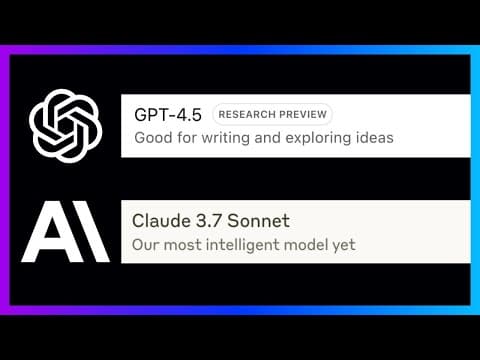
OpenAI's GPT 4.5 ChatGPT Compared to Anthropic Claude 3.7 Sonnet
In this video, I dive into an in-depth comparison between the latest AI models GPT-4.5 and Claude 3.7 Sonnet. 📊 You'll learn about the strengths and weaknesses of each model, as well as...
Video·
Related Posts

7 min read
News
OpenAI Open-Sourced Codex Security: What HN Thinks
OpenAI released the Codex Security CLI and TypeScript SDK as open source on GitHub. The Promptfoo team behind it, the 2....
7 min read
News
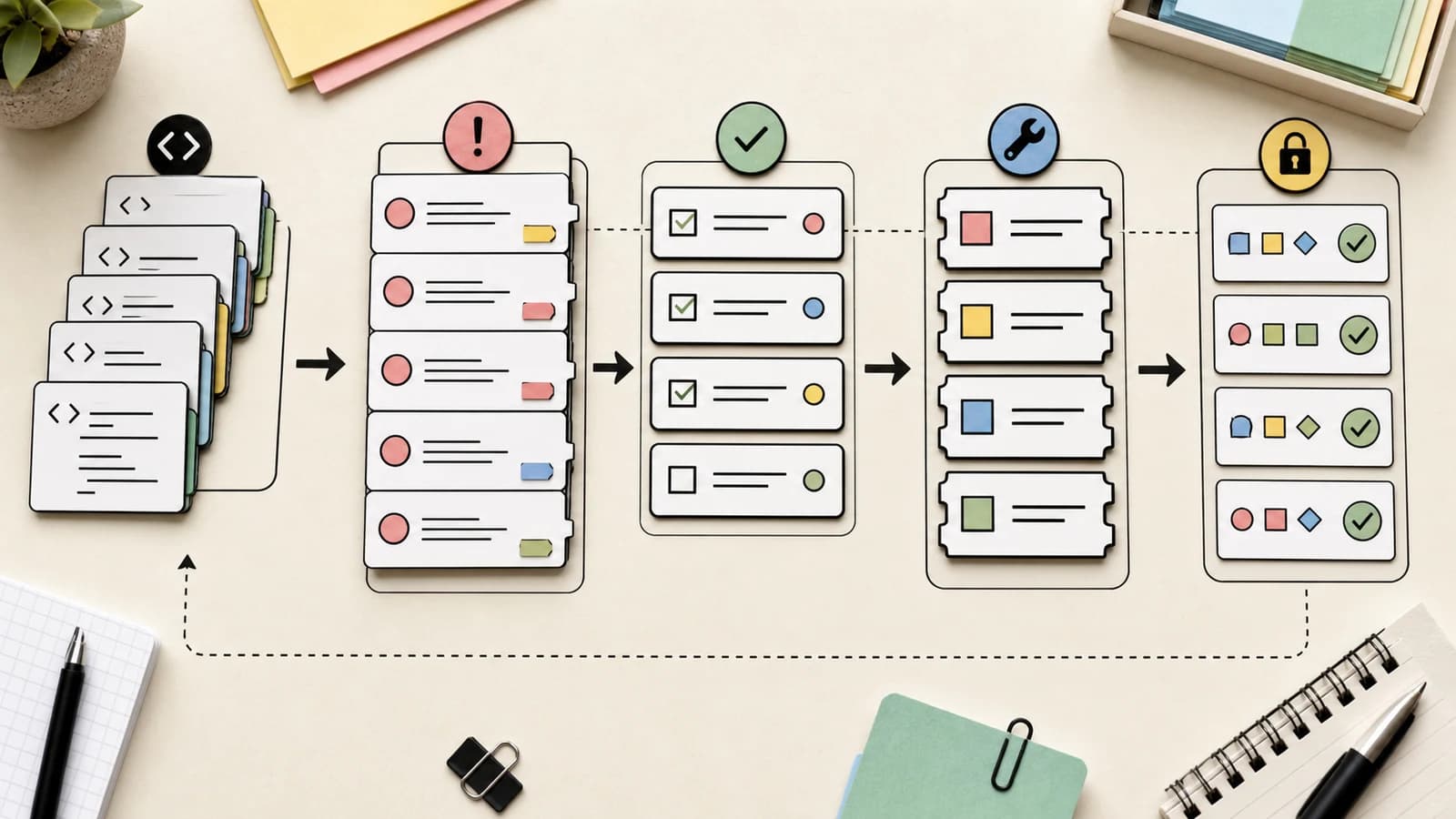
AI Voice Fraud Needs Three Seconds of Your Voice
Voice cloning now requires just 3 seconds of audio to impersonate someone. With $893M in reported losses, detection has...
5 min read
AI
Codex Now Encrypts Multi-Agent Prompts, Breaking Local Auditability
OpenAI's Codex CLI now encrypts inter-agent communications for Sol and Terra models, leaving users unable to inspect wha...
6 min read
News
Ghost Font: Text That Humans Can Read But AI Cannot
A new experimental technology encodes messages in video using motion-based steganography, exploiting how AI models proce...

6 min read
News
GLM 5.2 Outperforms Claude Code on Semgrep's IDOR Vulnerability Benchmarks
Semgrep's security research team benchmarked LLMs on IDOR vulnerability detection. The open-weight GLM 5.2 beat Claude C...
7 min read
News
Vulnerability Reports Are Not Special Anymore
Filippo Valsorda argues that LLMs have ended the era of treating security researchers with kid gloves. When anyone can d...
Build with the member tools

Get Smarter About AI Dev
New tutorials, open-source projects, and deep dives on coding agents - delivered weekly.
One email per weekReal code, not theoryFree forever