Prompt-Based Hooks - Claude Code
Use Claude itself to handle hook logic instead of shell scripts.

Prompt-based hooks let Claude evaluate the event with a short prompt, making allow/deny decisions that are too nuanced for pure shell scripts.
What it does
Instead of a shell command, you provide a prompt. Claude Code sends the event context to a lightweight model call, and the response shapes the hook's decision. The model can reason about the content of a prompt or tool call, not just regex-match it. This opens up semantic policies - "block this if it looks like a destructive production action".
When to use it
- Policies that require judgment ("is this prompt about the production DB?").
- Content classification that a regex can't do reliably.
- Advisory hooks that suggest improvements rather than block.
- Cases where the event context is too complex for simple checks.
Gotchas
- Prompt-based hooks add model latency to every fire. Pick a cheap, fast model.
- Non-determinism is a feature and a bug - the same event might decide differently twice.
- For safety-critical policy, pair with a deterministic shell hook for defense in depth.
Official docs: https://code.claude.com/docs/en/hooks.md#prompt-based-hooks
Technical content at the intersection of AI and development. Building with AI agents, Claude Code, and modern dev tools - then showing you exactly how it works.
Was this helpful?
Related Guides
Related Tools

Claude Agent SDK
Anthropic's SDK for building agents on the same tools, agent loop, and context management that power Claude Code. Python...
View Tool
Claude Code
Anthropic's agentic coding CLI. Runs in your terminal, edits files autonomously, spawns sub-agents, and maintains memory...
View ToolCodeburn
Interactive TUI dashboard that shows exactly where your Claude Code and Cursor tokens are going, in real time.
View ToolConductor
Mac app for running parallel Claude Code, Codex, and Cursor agents in isolated workspaces. Watch every agent work at onc...
View ToolRelated Videos

Generate Videos in Codex + Claude Code with This...
Check out HeyGen! https://heygen.1stcollab.com/developersdigest The video introduces HeyGen, an AI video generation platform with a rich API and a CLI that lets developers create, fetch, and manipula...

10x Design in Claude Code and Codex
Try Higgsfield: https://higgsfield.ai/s/higgsfield-general-campaign-developersdigest-juDMTi AI coding agents can build entire websites in minutes, but the default results often still look generic and...
Self Improving Applications with Claude Code & Codex
Build a Self‑Improving Next.js App: Supabase + Vercel Eve + GitHub Issues + Agent Loops Check out Supabase: https://supabase.plug.dev/1wWOTGS The video demonstrates how to build and deploy a self-im...
Related Posts
Claude Fable 5.1 in Claude Code: How to Switch, Pin, and Pay Less
Claude Code v2.1.257 points /model fable at Fable 5.1: 1M context, $10/$50 per MTok, $0.25 cache reads. Setup, gotchas,...

Claude Design, Slides and Docs in Any Chat: How to Use Them
Claude Design, Slides and Docs now open in any Claude chat, Claude Code session or the Artifacts tab, on every plan. Exa...

Claude for Startups Offer Paused: What Founders Do Now
Claude for Startups paused its free Claude Team year and $1,000 API credit offer at capacity. What the program page says...
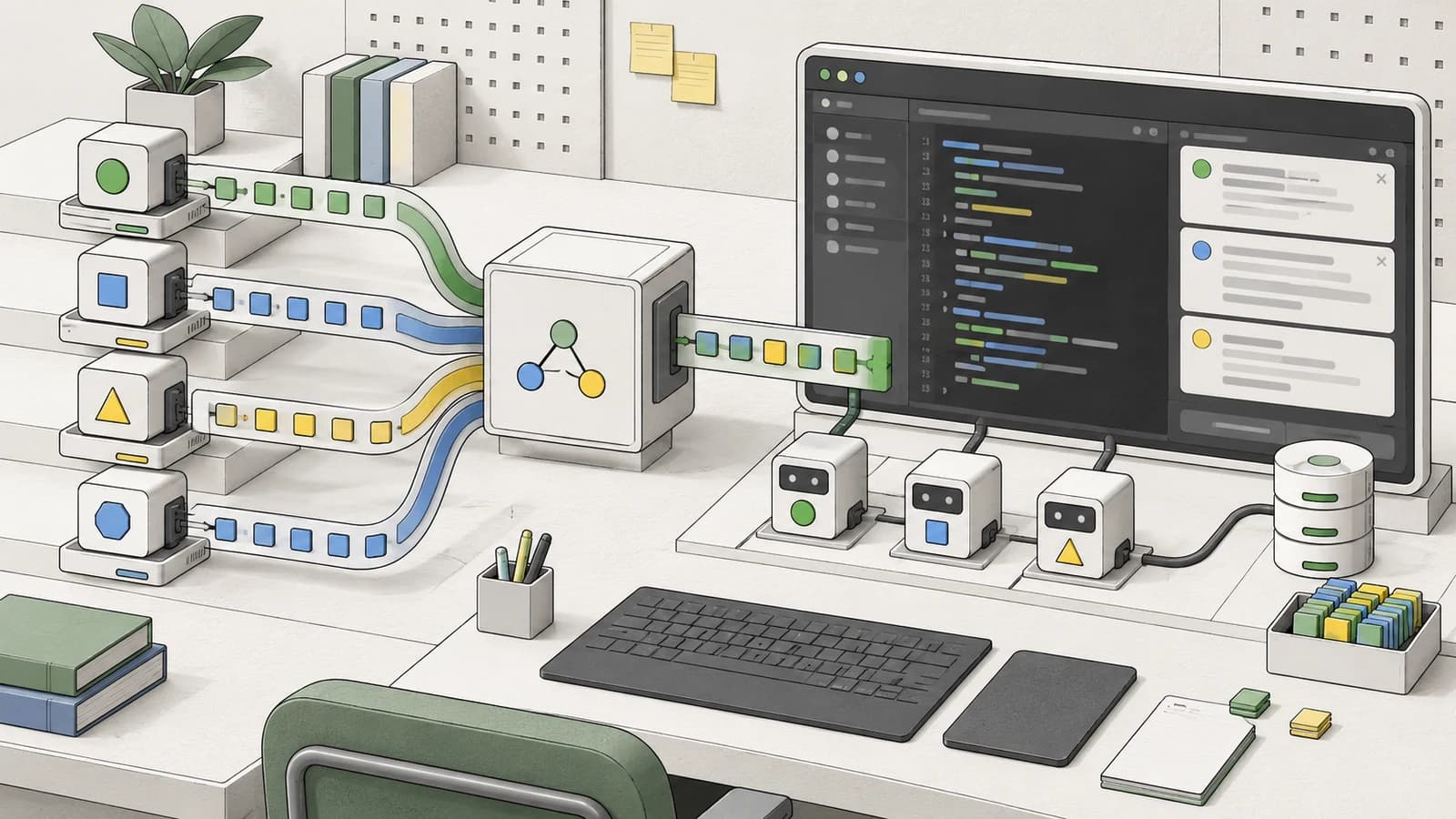
Claude Advisor Tool vs a Bigger Model: When the Pairing Pays
Anthropic's own runs: a Fable 5.1 advisor added 1.7 points to Opus 5.5 for 2.1x the cost. When the Claude advisor tool p...
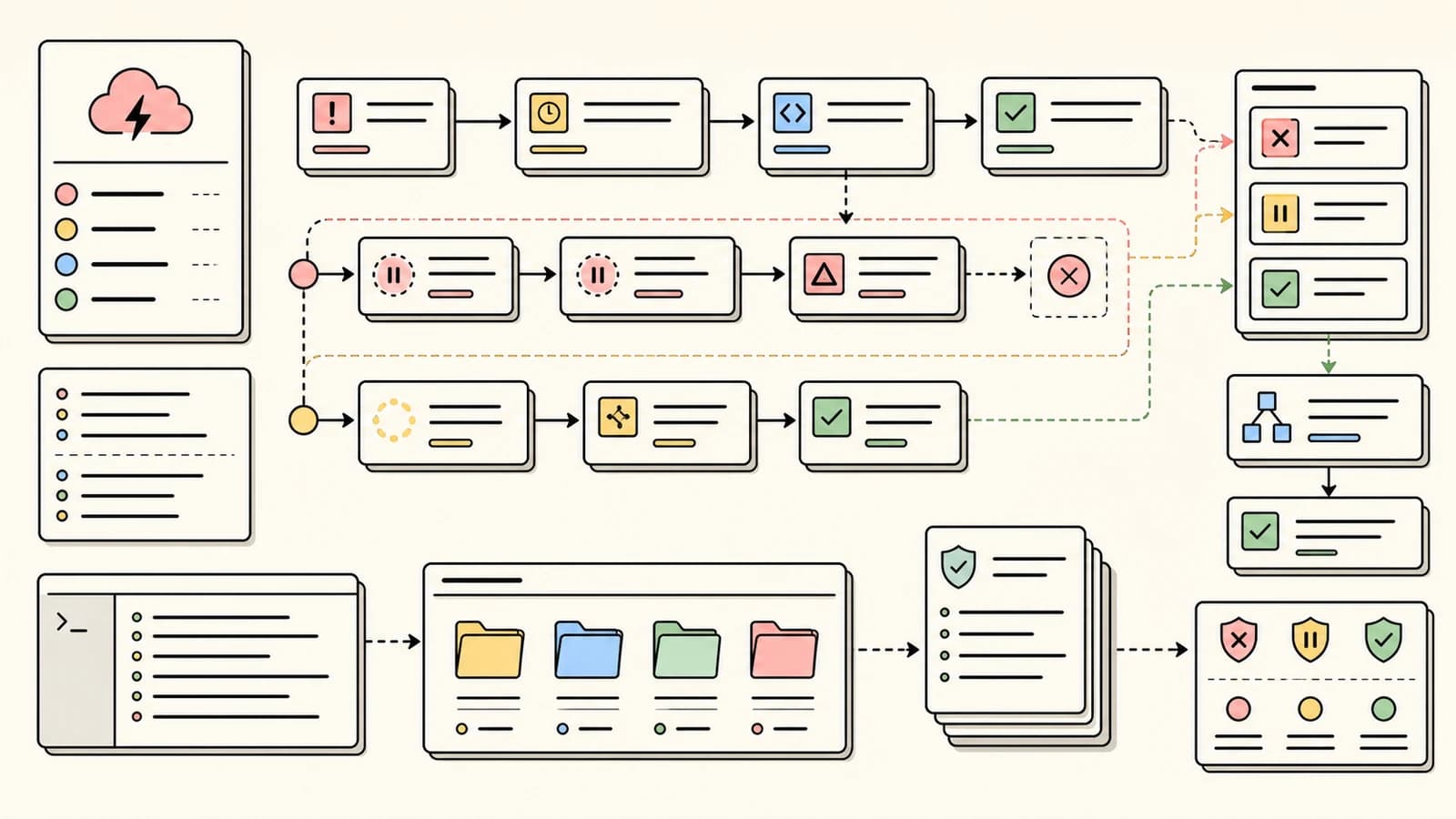
Claude Code Retry Watchdog: Keep Unattended Runs Alive
CLAUDE_CODE_RETRY_WATCHDOG=1 makes Claude Code wait out 429 and 529 errors instead of failing after 10 retries. When to...
Do Your Agent Hooks Fail Open? Claude Code vs Codex vs Cursor vs Gemini CLI
A guard hook that crashes, times out or points at a missing script lets the tool call through by default in Claude Code....
