Codex Hits 8 Million Users: What the GPT-5.6 Surge Means for Developers

TL;DR
OpenAI crossed 8 million active users on Codex and ChatGPT Work in one week.
Official Sources#
| Source | Notes |
|---|---|
| OpenAI GPT-5.6 announcement | Official launch post, July 9, 2026 |
| Introducing workspace agents in ChatGPT | ChatGPT Work launch details |
| OpenAI Release Notes | Official changelog for Codex and ChatGPT |
| Using Codex with your ChatGPT plan | Plan tiers and access |
| Codex rate card | Credit and usage details |
Last updated: July 15, 2026
OpenAI crossed 8 million active users on Codex and ChatGPT Work on July 14-15, 2026. That is up from 1 million in February and 6 million just three days earlier. The growth rate is unusually steep, even for a flagship product launch.
The catalyst was GPT-5.6's general availability on July 9, combined with the merger of Codex into the ChatGPT desktop app and the simultaneous launch of ChatGPT Work. For developers evaluating AI coding tools, the week changed the competitive landscape in ways worth understanding.
The Numbers#
| Metric | Value |
|---|---|
| Active users (July 14-15) | 8 million |
| Active users (July 12) | 6 million |
| Active users (February 2026) | ~1 million |
| Growth since February | 7x |
| Weekly agentic usage increase | 2.5x |
The growth came from three releases on the same day. GPT-5.6 launched across ChatGPT, Codex, and the API. The standalone Codex app merged into the ChatGPT desktop application. ChatGPT Work launched as a new agent layer that runs multi-step workflows for hours.
Sam Altman called the GPT-5.6 Sol growth "insane" and warned of inference scaling hiccups as capacity teams work to keep up with demand.
What GPT-5.6 Adds#
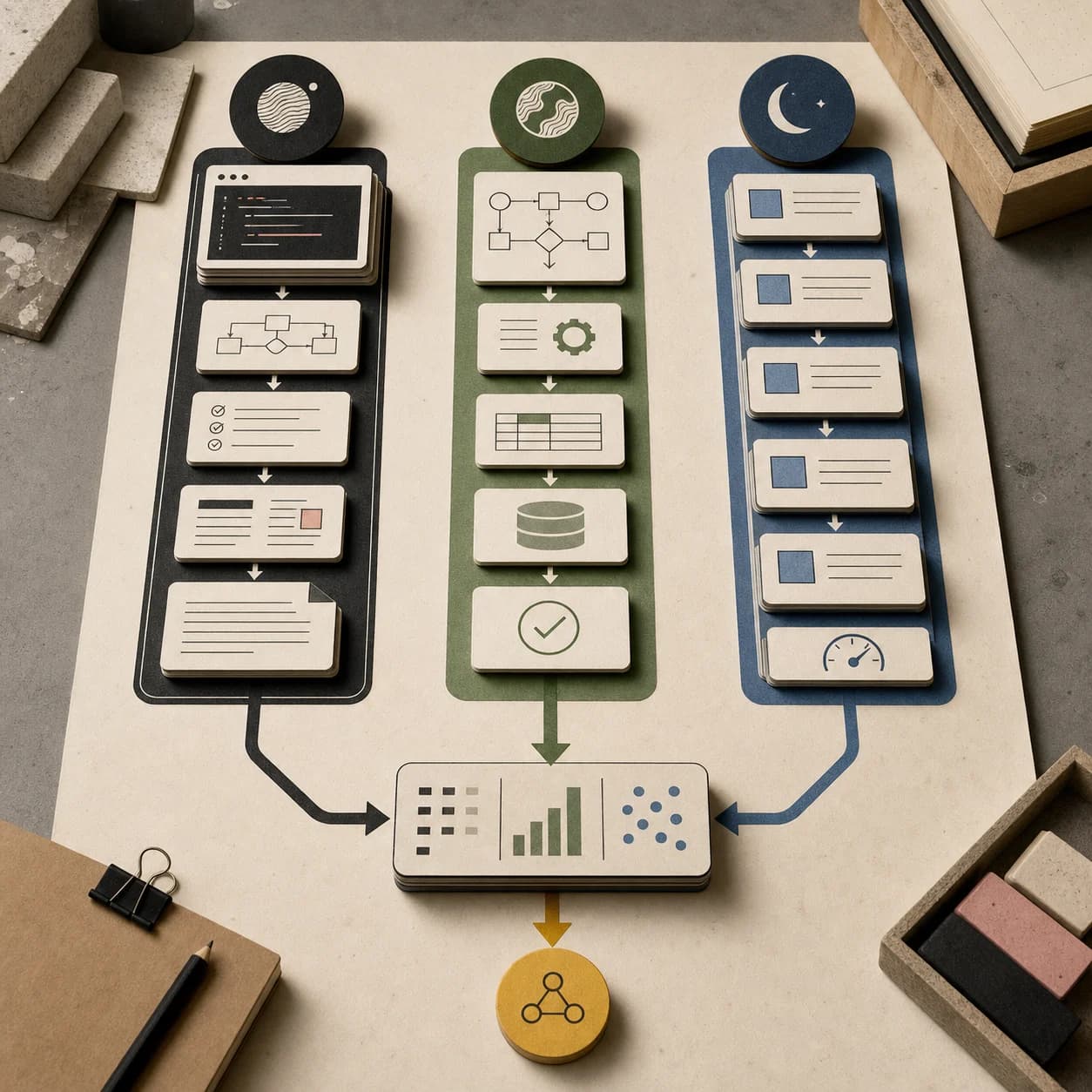
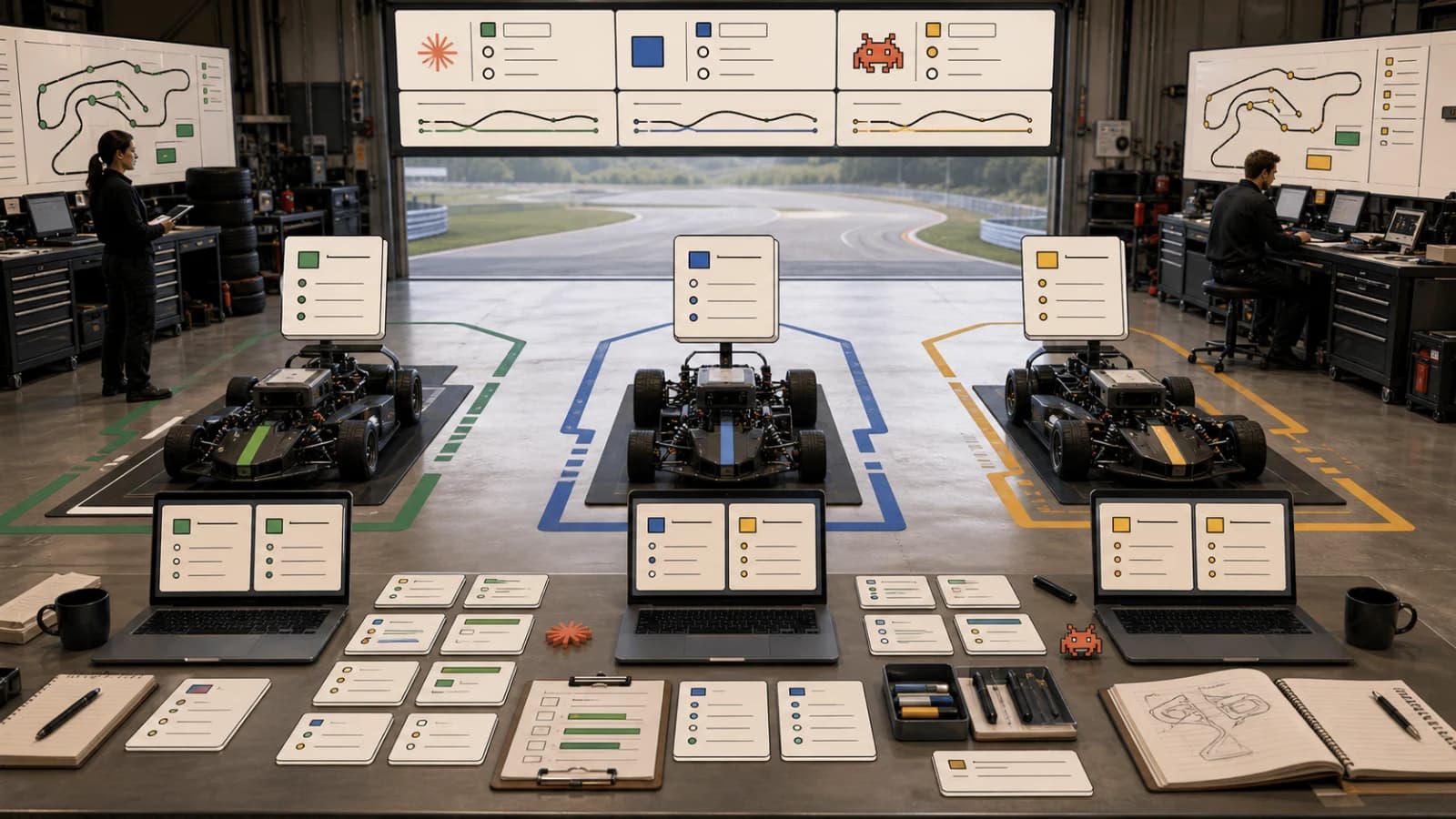
GPT-5.6 is a three-tier model family.
Sol is the flagship. It targets frontier reasoning and long-horizon agentic work. API pricing is $5 per million input tokens and $30 per million output tokens. OpenAI claims Sol is 54% more token-efficient on agentic coding tasks compared to GPT-5.5.
Terra is the balanced tier. It is positioned as an everyday model at roughly half the cost of GPT-5.5, priced at $2.50/$15 per million tokens.
Luna is the fastest and cheapest option at $1/$6 per million tokens. It is designed for high-volume workloads where latency matters more than peak reasoning depth.
The key change for Codex users: GPT-5.6 is now the default across all plan tiers. The five-hour usage restriction that previously limited Sol access was lifted on July 13 following the demand surge. Usage counters were reset for all users.
What Codex and ChatGPT Work Do Now#
The July 9 release merged three previously separate surfaces.
Codex remains the coding agent. It now runs inside the ChatGPT desktop app rather than as a standalone application. You can invoke it the same way, but the context and session management are shared with ChatGPT.
ChatGPT Work is the new agent layer. It takes a goal, gathers context from connected apps and workflows, breaks the work into steps, and completes them over minutes or hours. The output is finished documents: spreadsheets, slides, web apps, and code.
Desktop integration means Codex and ChatGPT Work can access local files and apps directly. A built-in browser pulls in web content without leaving the app.
For developers, the practical change is that Codex now shares a session with ChatGPT. You can switch between chat, coding, and agentic work modes in one window.
What Changed for Pricing#
The 8 million user surge landed on an already-complicated pricing transition.
Codex is bundled with all ChatGPT plans. The Free tier includes basic access. Plus ($20/month) is the entry point for serious usage. Pro ($100/month or $200/month) offers 5x or 20x usage respectively. Business and Enterprise have their own rate cards.
The important detail: OpenAI removed the five-hour Sol usage limit on July 13 and reset usage counters. This was a response to demand, not a permanent policy change. The practical effect is more Sol access for now, with uncertainty about whether limits return when capacity stabilizes.
For teams budgeting AI coding spend, the Codex rate card is the source of truth. Credit consumption varies by model tier, context size, and task complexity.
What to Watch#
Capacity constraints. Altman's warning about inference scaling hiccups is not hypothetical. Codex and ChatGPT Work run multi-turn, long-context workloads. At 8 million users with lifted rate limits, the compute demand is substantial. Expect potential latency increases or temporary throttling during peak hours.
Usage limit changes. The lifted Sol limits are a response to launch demand. They may or may not persist. If you are planning workflows around unlimited Sol access, build in fallback to Terra or Luna.
Desktop-only features. Some ChatGPT Work capabilities, including local file access and the built-in browser, are desktop-only. If your team's workflow depends on these, the web and mobile versions are not equivalent.
Competitive response. The GPT-5.6 launch and Codex surge put pressure on Anthropic (Claude Code) and Cursor. Fable 5's deadline on July 19 means Claude Code users have four days left at included rates. The pricing and capability comparison is shifting weekly.
How This Compares to Claude Code and Cursor#
The 8 million user number is a growth metric, not a capability benchmark. For tool selection, the practical differences are workflow fit, not user counts.
Codex is strongest when you want cloud-first execution, desktop integration with local files, and access to OpenAI's full model family. The ChatGPT Work layer adds structured multi-step workflows that other coding agents do not offer.
Claude Code is strongest for terminal-native workflows and deep reasoning tasks. Fable 5 remains the most capable model for complex refactoring and agentic coding, but the deadline pressure (July 19) makes the cost structure uncertain.
Cursor is strongest for IDE-native workflows with visual diffs and inline completions. It routes to multiple model providers, including GPT-5.6 and Claude, so the model advantage is not exclusive.
For a detailed comparison, see the Claude Code vs Cursor vs Codex breakdown and the pricing comparison.
The Take#
The 8 million user milestone is a market signal, not a feature. What matters is what OpenAI shipped alongside it: GPT-5.6 with three cost-performance tiers, Codex merged into a unified desktop app, ChatGPT Work for multi-hour agentic tasks, and temporary removal of Sol usage limits.
For developers, the week changes the default assumptions about OpenAI's coding stack. Codex is no longer a separate product. GPT-5.6 Sol is no longer rationed. The question now is whether capacity keeps up with demand and whether the lifted limits become permanent policy.
If you are evaluating AI coding tools, the next week is a good time to test Codex while Sol limits are lifted. If you are already using Claude Code or Cursor, watch the pricing responses. The competitive pressure from this launch will ripple through every tool in the category.
FAQ#
How many users does OpenAI Codex have?#
Codex and ChatGPT Work reached 8 million active users on July 14-15, 2026. This is up from 1 million in February 2026 and 6 million on July 12. The growth was driven by the GPT-5.6 launch and the ChatGPT Work release.
What is GPT-5.6 Sol?#
GPT-5.6 Sol is the flagship model in OpenAI's new GPT-5.6 family. It is designed for frontier reasoning and long-horizon agentic work. API pricing is $5 per million input tokens and $30 per million output tokens.
Is Codex free?#
Codex is bundled with all ChatGPT plans, including the free tier. Practical usage depends on your plan's allowances. Plus ($20/month) is the entry point for regular coding work. Pro ($100-200/month) offers higher usage limits.
What is ChatGPT Work?#
ChatGPT Work is OpenAI's agent layer that runs multi-step workflows over hours. It can gather context from connected apps, break work into steps, and produce finished documents like spreadsheets, slides, and code. It launched on July 9, 2026.
Are GPT-5.6 Sol usage limits permanent?#
The lifted Sol usage limits are a response to launch demand and may change. OpenAI removed the five-hour restriction on July 13 and reset usage counters. The long-term policy is uncertain.
Continue Reading#
Get the next deep dive like this in your inbox
One email a week on OpenAI and the rest of the AI dev stack. Free.
Read next on AI coding tools
OpenAI Codex: Terminal and Cloud AI Coding Agent
Codex works from the terminal, cloud tasks, IDEs, GitHub, Slack, and Linear. Here is how to use it and how it compares to Claude Code.
5 min readGPT-5.6 Sol, Terra, and Luna: A Developer's Guide to OpenAI's New Model Family
A practical guide to choosing GPT-5.6 Sol, Terra, and Luna, using programmatic tool calling, caching, and the multi-agent beta in production.
8 min readChatGPT Work and Codex Now Share One Desktop App: What Actually Changed
OpenAI is consolidating its desktop apps, not merging ChatGPT and Codex into one indistinguishable product. Here is how ChatGPT Work, Codex, and GPT-5.6 fit together.
8 min readNew here? Start with
Technical content at the intersection of AI and development. Building with AI agents, Claude Code, and modern dev tools - then showing you exactly how it works.