Qwen 3.7 Max Developer Guide: 1M Context, $1.25/MTok, and Agent-First Architecture
TL;DR
Qwen 3.7 Max developer guide: the 1M token context window, pricing, Anthropic and OpenAI-compatible API, benchmarks, and when to pick it over Claude or GPT.
Official Sources#
| Resource | Link |
|---|---|
| Qwen Official Site | qwen.ai |
| Qwen 3.7 Announcement | qwen.ai/blog/qwen3.7 |
| Alibaba Cloud Model Studio | alibabacloud.com/product/model-studio |
| OpenRouter - Qwen 3.7 Max | openrouter.ai/qwen/qwen3.7-max |
| Artificial Analysis Benchmark | artificialanalysis.ai/models/qwen3-7-max |
Last verified: June 11, 2026. Verify current pricing and availability against the official sources before production deployment.
Alibaba's Qwen team shipped Qwen 3.7 Max on May 19, 2026. The model targets a specific gap in the market: long-horizon autonomous agent workflows where context retention and tool use matter more than raw benchmark scores.
The headline numbers: 1 million token context window, $1.25 per million input tokens, $3.75 per million output tokens, and OpenAI plus Anthropic-compatible API endpoints. For developers building coding agents or document-heavy applications, the combination of context size and price is hard to beat.
What You Get#
Context Window: 1 million tokens. Full million. This puts it alongside Gemini 2.5 Pro and ahead of Claude (200K on most tiers) and GPT-5 (128K default). For codebase-wide refactors, long research documents, or multi-file agent workflows, the context ceiling matters.
Max Output: 65,536 tokens per response. Enough for complete implementations, not just summaries.
API Compatibility: Both OpenAI and Anthropic-compatible endpoints. If your code already calls the Anthropic Messages API or OpenAI Chat Completions, switching to Qwen 3.7 Max is a configuration change, not a rewrite.
Agent Architecture: The model was trained with agentic execution in mind. Alibaba demonstrated a 35-hour autonomous kernel optimization run that achieved a 10x geometric mean speedup. That is not a benchmark - that is sustained multi-hour execution with extensive tool use.
Pricing (June 2026)#
| Resource | Price per Million Tokens |
|---|---|
| Input | $1.25 |
| Output | $3.75 |
| Cached input (explicit) | $0.125 |
| Cached input (implicit) | $0.25 |
Compare that to the current frontier model pricing:
| Model | Input/MTok | Output/MTok |
|---|---|---|
| Qwen 3.7 Max | $1.25 | $3.75 |
| Claude Sonnet 4.5 | $3.00 | $15.00 |
| Claude Opus 4.8 | $5.00 | $25.00 |
| GPT-5.4 | $2.50 | $15.00 |
| GPT-5.5 | $5.00 | $30.00 |
| Claude Fable 5 | $10.00 | $50.00 |
| DeepSeek V4 | $0.21 | $2.10 |
Qwen 3.7 Max sits between DeepSeek V4 (the budget leader) and the Anthropic/OpenAI workhorse tiers. The pricing math gets more interesting when you factor in the 1M context window - you can load more context per request without hitting limits, and cached reads at $0.125/MTok make iterative agent workflows significantly cheaper.
For the full cross-provider rate card, see our frontier model API pricing breakdown for June 2026.
Benchmark Performance#
Qwen 3.7 Max does not chase flagship benchmark crowns. It targets the working-tier sweet spot where quality, context, and cost intersect.
Coding: 69.7 on Terminal Bench versus Claude Opus 4.6 at 65.4. That is a meaningful edge for terminal agent workloads. The model ranks #11 of 314 models on coding benchmarks, placing it in the top quartile.
Math reasoning: 44.5 on Apex versus Claude Opus 4.6 at 34.5. Significant lead on mathematical problem-solving.
Long-context retrieval: 90.4 on MRCR-v2 versus Claude Opus 4.6 at 84.0. The 1M context window is not just marketing - the model actually uses it effectively.
Multilingual: 85.8 on WMT24++ versus Claude Opus 4.6 at 82.7. Strong cross-language performance.
General capability: Near parity with Claude Opus 4.6 on MMLU-Pro and general reasoning tasks.
The pattern: Qwen 3.7 Max wins on context-heavy workloads, coding, and math. It trades frontier reasoning depth for context breadth and price efficiency.
When to Use Qwen 3.7 Max#
Long-horizon agent workflows. If your agent runs for minutes to hours with multiple tool calls, the combination of 1M context and low token pricing makes Qwen 3.7 Max economical. A 100K context agent session costs $0.125 in input tokens plus output. The same session on Claude Opus 4.8 costs $0.50 in input alone.
Codebase-wide operations. Loading 50+ files into context for a refactor or migration is practical at these prices. The model handles code well enough that you are not sacrificing quality for capacity.
Document processing pipelines. Long documents, research papers, legal contracts, medical records - anything that benefits from full-document context rather than chunked retrieval.
Cost-sensitive production APIs. If you are building a product with AI features and model cost is a significant line item, Qwen 3.7 Max delivers frontier-adjacent quality at mid-tier pricing.
Anthropic-compatible drop-in. The Anthropic Messages API compatibility means you can swap Qwen 3.7 Max into existing Claude workflows for cost testing without changing your code.
When to Use Something Else#
Flagship reasoning depth. Claude Fable 5 and GPT-5.5 still lead on the hardest reasoning tasks. If your workload involves complex multi-step proofs, novel algorithm design, or tasks where getting the answer right on the first pass matters more than cost, pay for the flagship.
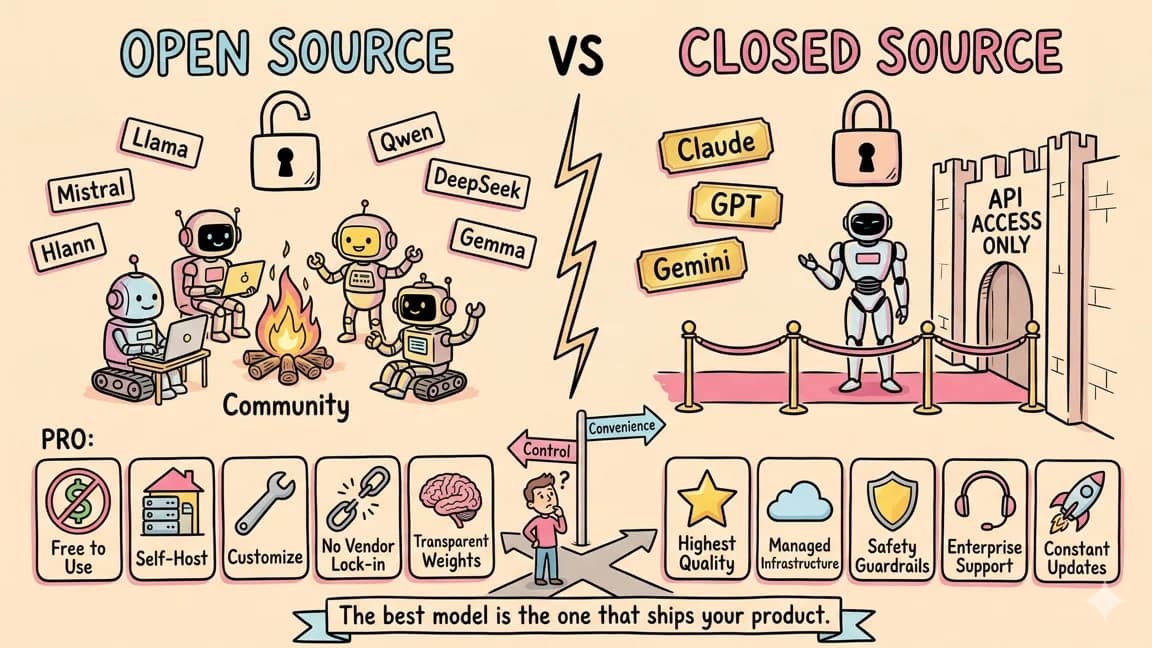
Self-hosting requirements. Qwen 3.7 Max is API-only. No open weights, no self-hosting, no fine-tuning. If you need on-premises deployment or data residency guarantees, look at Qwen 3.6 Plus (open weights) or DeepSeek V4.
Ultra-low cost. DeepSeek V4 at $0.21/$2.10 per MTok is still the budget leader. For high-volume production workloads where every cent matters, DeepSeek wins on pure cost.
Existing ecosystem investment. If your team is already deep in Claude Code workflows with CLAUDE.md, skills, and sub-agents, switching to Qwen for marginal cost savings introduces friction. The ecosystem matters.
API Integration#
The Anthropic-compatible endpoint means standard SDK patterns work:
import Anthropic from "@anthropic-ai/sdk";

const client = new Anthropic({
  baseURL: "https://api.yottalabs.ai/v1", // or your gateway
  apiKey: process.env.QWEN_API_KEY,
});

const message = await client.messages.create({
  model: "qwen3.7-max",
  max_tokens: 4096,
  messages: [
    {
      role: "user",
      content: "Refactor this codebase to use the new API client...",
    },
  ],
});
The OpenAI-compatible endpoint works the same way:
import OpenAI from "openai";

const client = new OpenAI({
  baseURL: "https://api.yottalabs.ai/v1",
  apiKey: process.env.QWEN_API_KEY,
});

const completion = await client.chat.completions.create({
  model: "qwen3.7-max",
  messages: [{ role: "user", content: "Explain this code..." }],
});
For gateway access, Yotta AI Gateway and OpenRouter both route to Qwen 3.7 Max. Alibaba Cloud Model Studio provides direct access with regional deployment options.
Qwen 3.7 Max vs Qwen 3.6 Plus#
| Qwen 3.7 Max | Qwen 3.6 Plus | |
|---|---|---|
| Access | API only | Open weights |
| Context | 1M tokens | 1M tokens |
| Self-hosting | No | Yes |
| Fine-tuning | No | Yes |
| Agent performance | Frontier | Strong |
| Pricing | $1.25/$3.75 | Self-hosted or API |
Choose Qwen 3.7 Max for frontier agent capability when you can use API access. Choose Qwen 3.6 Plus for self-hosting, fine-tuning, or cost-controlled production inference where you run the infrastructure.
For local model recommendations, see our best local coding LLMs for 2026 guide.
The Bottom Line#
Qwen 3.7 Max fills a specific gap: frontier-adjacent performance at mid-tier pricing with a genuinely useful 1M context window. For developers building long-running agents, processing large documents, or looking to reduce API costs without dropping to budget-tier quality, it is worth testing.
The agent-first architecture is not marketing. The 35-hour autonomous run demonstrates real sustained execution capability. For agentic coding workflows, document processing, and cost-sensitive production APIs, Qwen 3.7 Max earns a spot in the model selection conversation alongside Claude, GPT, and DeepSeek.
FAQ#
What is Qwen 3.7 Max?#
Qwen 3.7 Max is Alibaba's flagship proprietary language model released May 19, 2026. It features a 1 million token context window, agent-first architecture designed for long-horizon autonomous execution, and both OpenAI and Anthropic-compatible API endpoints. Unlike Qwen's open-weight models, 3.7 Max is API-only with no self-hosting option.
How much does Qwen 3.7 Max cost?#
Qwen 3.7 Max costs $1.25 per million input tokens and $3.75 per million output tokens. Cached input reads cost $0.125 per MTok (explicit cache) or $0.25 per MTok (implicit cache). This positions it between DeepSeek V4 (budget) and Claude/GPT workhorse tiers, with pricing roughly 60-75% lower than Claude Sonnet 4.5.
Is Qwen 3.7 Max good for coding?#
Yes. Qwen 3.7 Max scores 69.7 on Terminal Bench, outperforming Claude Opus 4.6 at 65.4. It ranks in the top quartile (#11 of 314 models) on coding benchmarks. The 1M context window makes it practical for codebase-wide refactors and multi-file agent workflows where loading extensive context matters.
Is Qwen 3.7 Max open source?#
No. Qwen 3.7 Max is proprietary with API access only through Yotta AI Gateway, OpenRouter, or Alibaba Cloud Model Studio. There are no open weights and no self-hosting option. For open-weight Qwen models, use Qwen 3.6 Plus or Qwen3-Coder-Next.
How does Qwen 3.7 Max compare to Claude and GPT?#
Qwen 3.7 Max matches or exceeds Claude Opus 4.6 on coding (69.7 vs 65.4), math reasoning (44.5 vs 34.5), and long-context retrieval (90.4 vs 84.0). It reaches near parity on general reasoning. Pricing is significantly lower than Claude Opus 4.8 ($5/$25) and GPT-5.5 ($5/$30). The trade-off: flagship reasoning depth still favors Claude Fable 5 and GPT-5.5 on the hardest tasks.
What is the context window for Qwen 3.7 Max?#
Qwen 3.7 Max supports 1 million tokens of context with a maximum output of 65,536 tokens per response. The model effectively uses this context - scoring 90.4 on MRCR-v2 long-context retrieval benchmarks, ahead of Claude Opus 4.6 at 84.0. This makes it suitable for codebase-wide operations and document processing.
When should I use Qwen 3.7 Max instead of Claude?#
Use Qwen 3.7 Max when: context window size matters (1M vs 200K), cost is a significant factor (60-75% cheaper than Claude tiers), or you need Anthropic API compatibility with lower pricing. Use Claude when: flagship reasoning depth matters more than cost, you are invested in Claude Code ecosystem features (CLAUDE.md, skills, sub-agents), or you need the specific model behaviors Claude provides.
How do I access Qwen 3.7 Max?#
Access Qwen 3.7 Max through: Yotta AI Gateway (primary), OpenRouter (model aggregator), or Alibaba Cloud Model Studio (direct). The API supports both OpenAI and Anthropic SDK patterns - point your existing SDK at the appropriate endpoint and set the model to "qwen3.7-max". No code changes beyond configuration.
Continue Reading#
- GitHub Apps Can Now Be Installed at the Enterprise Level, Opening the Platform to Third-Party Integrators
- Qwen 3 Coder: Alibaba''s Coding-Optimized LLM
- Qwen 3: Alibaba''s Open-Source Model That Outclassed Llama 4
Sources#
- Qwen 3.7 Announcement - Official Alibaba Qwen team announcement
- OpenRouter - Qwen 3.7 Max - Pricing and availability
- Artificial Analysis - Qwen 3.7 Max - Independent benchmark analysis
- Yotta Labs - Qwen 3.7 Max Guide - Access and feature overview
- Price Per Token - Qwen 3.7 Max - Pricing comparison
Get the next deep dive like this in your inbox
One email a week on Qwen and the rest of the AI dev stack. Free.
Read next on local and open-weight models
Qwen 3: Alibaba's Open-Source Model That Outclassed Llama 4
Qwen 3 is Alibaba's family of eight Apache 2 licensed models, led by a 235B MoE flagship. How it compares to Llama 4, how hybrid thinking works, how to run it.
8 min readQwen 3 Coder: Alibaba's Coding-Optimized LLM
Qwen 3 Coder is Alibaba's 480B mixture-of-experts open coding model. Benchmarks against Claude 4 Sonnet, how it was trained, and how to start with Qwen Code.
5 min readLLM API Pricing, October 2026: Claude vs OpenAI vs Gemini
LLM API pricing for October 2026 per million tokens: Claude Haiku 5.5, Sonnet 5.5, Opus 5.5 and Fable 5.1 vs GPT-6, Gemini and DeepSeek, plus the caveats.
12 min readNew here? Start with
Technical content at the intersection of AI and development. Building with AI agents, Claude Code, and modern dev tools - then showing you exactly how it works.