Qwen4-Max: Pricing, Benchmarks and What to Test
TL;DR
Qwen4-Max is live on QwenCloud at $1.50 input and $4.50 output per million tokens, down from $2 and $6 for Qwen3.8-Max. What is vendor-reported, what is missing, and a test plan.
Last updated: November 16, 2026
Qwen4-Max went live on November 15 at $1.50 per million input tokens and $4.50 per million output, a 25% cut from Qwen 3.8 Max, with cached input down to $0.075. The benchmarks are Alibaba's own and the weights are closed. For a developer the question is simple: is it worth a day of testing in your agent loop? This post lays out what is confirmed, what is not, and how to test it.
What the primary source says#
Per the Qwen4-Max launch post:
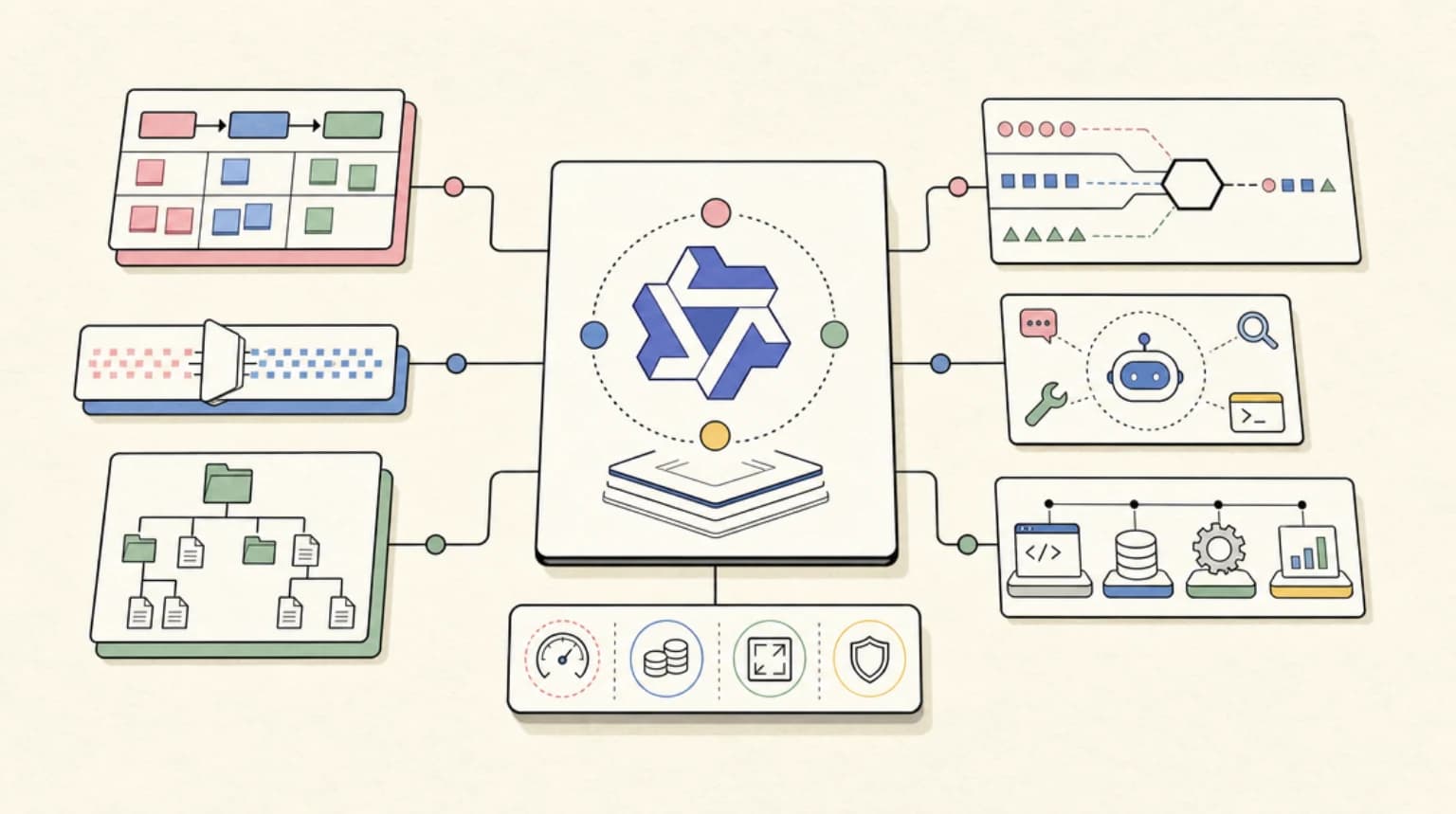
- A new Qwen4 architecture with a 2.4T-parameter backbone, 71B activated per token, plus 328B N-gram embedding parameters. The post credits Gated DeltaNet layers with sparse attention, gated residuals and N-gram embeddings.
- Native vision and a 1M-token context window.
- Token efficiency: about 24% and 35% fewer tokens than Qwen3.8-Max on its Work360 benchmark at Xhigh and High effort, and about 48% and 49% fewer on Terminal-Bench 4.0.
- Cost: on Work360, average cost per task falls from $4.43 to $1.67, a 62% reduction. This is vendor-reported, and it combines the lower token count with the lower price.
- Availability: QwenCloud (Token Plan or API), QwenWork, Qoder and QwenStudio. Smaller Qwen4 models are promised for open source later; Max is not.
The QwenCloud model page confirms the API side: OpenAI and Anthropic-compatible endpoints, function calling, structured outputs, batch, context caching and a 262K reasoning cap.
Pricing#
| Item | Qwen4-Max | Qwen3.8-Max |
|---|---|---|
| Input per 1M tokens | $1.50 | $2.00 |
| Output per 1M tokens | $4.50 | $6.00 |
| Implicit-cache input | $0.075 | $0.25 |
| Context | 1M | 1M |
Qwen4-Max figures come from the QwenCloud page read on November 16. The Qwen3.8-Max column is from our release post at launch, so recheck it. The cache rate is the interesting line: a coding agent re-reads the same repository prefix every turn, so a 70% cheaper cached read matters more than the 25% headline cut. For the same cache-first math on other models, see the open-weights cost comparison.
The benchmark caveat#
Alibaba's launch post leads with Work360, a benchmark it built and scored itself (52.69 for Qwen4-Max against 47.74 for Qwen3.8-Max), plus JobBench and Terminal-Bench 4.0 charts. All are vendor-reported. I did not find an independent coding-agent score at publication time. The post also says the Work360 gains come in part from co-design with the Qoder harness, so a result inside Qoder may not carry over to Claude Code or OpenCode.
That matters because harness choice can swing cost far more than a model bump does; we covered that in the harness benchmark post.
What people are actually saying#
The Hacker News thread reached 192 points and 54 comments within hours of the launch. I could not read the comments in this run, so I will not characterise them. A Reddit thread in r/Qwen_AI is split, going by the search excerpt: some users say it stayed at the 3.8 Max level, others say it improved a lot. Early impressions of a closed model through a chat UI are weak evidence. Treat both camps as unverified until someone posts agent-loop results.
Earlier preview coverage also noted that some pre-launch specs differed from the final ones, for example access via Token Plan only. Prefer the live vendor pages over third-party spec tables.
What to do Monday#
- Create a QwenCloud key and point an OpenAI-compatible client at the endpoint the model page shows, with
model="qwen4-max". - Pick 10 real tasks from your own repo. Run each on your current model and on Qwen4-Max with the same harness.
- Record pass or fail, total tokens and dollars per passing task. That last number is the only one that decides this.
- Test with and without thinking. The model page documents thinking mode, and it changes both cost and latency.
If you run Claude Code, the model page says the API speaks the Anthropic format. I have not verified a working Claude Code configuration, so check the QwenCloud docs before relying on it.
Who wins and loses#
Winners: teams already on Qwen 3.8 Max, who get a cheaper endpoint for the same family. Pressure lands on mid-priced closed models; compare against Kimi K3.1 Pro and the current frontier price tracker before you move.
The catch: closed weights mean no local fallback and a Singapore-region endpoint by default. That is a procurement question for some teams.
Continue Reading#
- Qwen 3.8 Max release - the predecessor, its launch price and weights.
- Kimi K3.1 Pro release guide - the closest rival at the same tier.
- Open-weights coding cost math - cost per task for cheaper models.
- Coding agent harness benchmark - why the harness moves your bill.
Sources#
Get the next comparison like this in your inbox
One email a week on Pricing and the rest of the AI dev stack. Free.
Read next on local and open-weight models
Qwen 3.8 Max Ships: 2.4T MoE, 1M Context, $2/$6 per MTok, Open Weights Next Week
Qwen 3.8 Max is a 2.4T-parameter MoE with 95B active, a 1M context window and $2/$6 per million tokens on QwenCloud, with open weights promised next week.
8 min readKimi K3.1 Pro: Pricing, Benchmarks, Open Weights Date
Kimi K3.1 Pro costs $2/$10 per million tokens, promises weights by Nov 4, and scores 65.7% on Terminal-Bench 4.0 (vendor-reported). The cost-per-task catch.
7 min readGLM-5.2 Cost Math: When Open-Weights Coding Models Actually Save You Money
GLM-5.2 cost math: when Z.ai's open-weights coding model actually saves money, with per-token pricing, a worked cost-per-task example and a decision guide.
9 min readNew here? Start with
Technical content at the intersection of AI and development. Building with AI agents, Claude Code, and modern dev tools - then showing you exactly how it works.