Alexandr Wang: The Riemann Hypothesis Means Superintelligence Is Arriving
TL;DR
Alexandr Wang argues the AI-assisted proof of the Riemann Hypothesis shows intelligence is no longer the bottleneck, and that the default path to ASI is not inevitable.
Last updated: November 23, 2026
Watch the Short on YouTube: https://youtube.com/shorts/a1sdu_5QK5g
Alexandr Wang at Meta says superintelligence is arriving, and his evidence is the Riemann Hypothesis. In Superintelligence is Arriving, published on X on November 22, 2026, he argues that the proof of the Riemann Hypothesis, completed with the help of AI, marks the beginning of a significant change. He adds that how humanity acts over the next year will shape the world we end up in.
Everything below is Wang's argument, summarized. He makes three points.
1. Intelligence is no longer the bottleneck, he argues#
Wang starts with what he calls a difficulty gap. Models began acing the AIME in December 2024 with o3. He points out that the AIME is an extracurricular competition for teenagers, yet its hardest problems are, in his view, harder than most of the coding, cyber and business work people do day to day.
The Riemann Hypothesis sits at the other end. He describes it as a problem some of the most brilliant humans have worked on for 150 years, and as the pinnacle of intellectual accomplishment. Drawing on growing up in Los Alamos, he says many physicists would call the atomic bomb "a homework problem" by comparison.
From that gap he draws his first conclusion. Raw intelligence, he argues, was never the main thing holding models back in other fields. Over the past two years, he says, the industry has been filling in the other gaps, and he points to coding being nearly solved, strong cyber capabilities and useful agents as results. What remains for models to surpass humans across fields, in his framing, is domain-specific know-how, plumbing and experimentation.
2. It turns on itself#
His second point follows from the first. Wang argues that AI research is much less intellectually demanding than the Riemann Hypothesis. So, he says, models will be intelligent enough to automate all of AI research and to improve themselves.
He expects the same acceleration in biological research, weapons research, economics and more. Just as mathematicians have not fully digested the proof, he writes, nearly every field could move faster than humans can understand or monitor.
That leads him to a hard question. He says it is hard to imagine humanity keeping control over fully unconstrained recursive self-improvement, or over a superintelligence far more capable than humans in every field. He calls safety, alignment and security extremely urgent, and says progress there is not enough on its own. For background on how labs have discussed self-improvement so far, see Recursive Self-Improvement: What Fable 5, Dario's Essay, and Anthropic's Own Data Actually Tell Us.
3. The default path is not inevitable#
The last point is the one he stresses most. Wang calls the industry view that ASI is inevitable, with safety as the only remaining problem, "a particular form of lazy thinking."
He argues against a "handover" of society to AI. Instead he wants technology that gives all humans greater agency and empowerment. He believes that is possible, but says it likely means the whole industry acting meaningfully differently from the "default path" in front of it.
In a follow-up post on November 23, he says leaders at other labs have made many of the same points. What he adds, in his words: "this path is not inevitable."
Why it matters to developers#
Wang's claims are his own, and many people will disagree with them. Still, the argument is worth knowing because it shapes how one frontier lab leader thinks about the next year:
- The bottleneck framing. If he is right that know-how, plumbing and experimentation are the gaps, then much of the remaining work is engineering. That means tooling, data access and feedback loops, the kind of work developers already do.
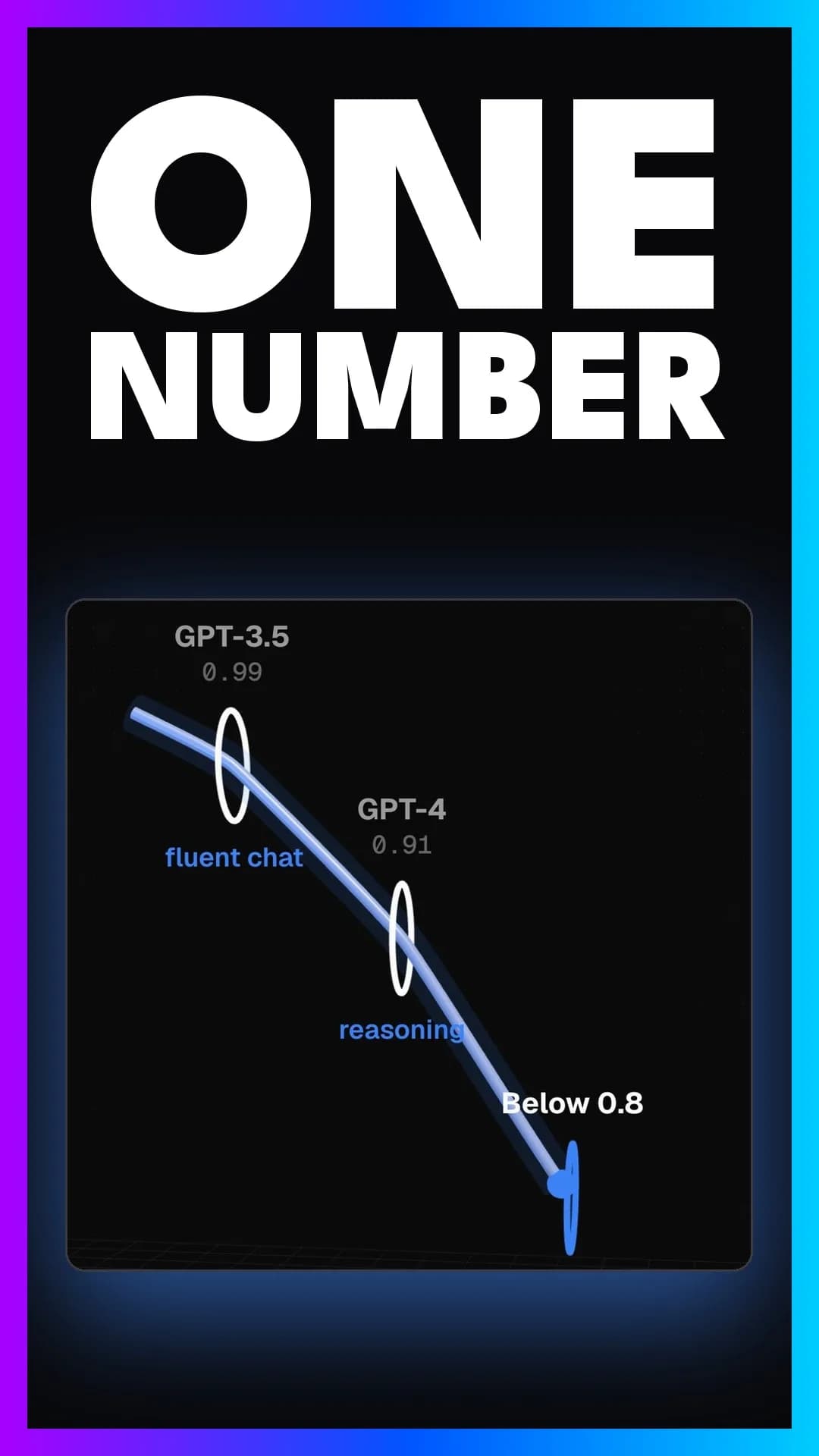
- Self-improvement as the central risk. His focus on AI automating AI research lines up with other recent calls for shared monitoring, such as OpenAI's proposal that every lab publish one capability number and Demis Hassabis's push for a frontier AI standards body.
- The path as a choice. For a longer scenario of how that choice could play out, AI 2040 Plan A walks through one detailed version.
Sources#
- Alexandr Wang, Superintelligence is Arriving - X article, November 22, 2026. All claims in this post come from it.
- Alexandr Wang, follow-up post - November 23, 2026.
- Alexandr Wang: The Riemann Hypothesis Means Superintelligence Is Arriving - the Developers Digest Short.
Continue Reading#
- AI 2040 Plan A: A Detailed Scenario for Navigating Superintelligence - one detailed path through the transition Wang describes.
- Recursive Self-Improvement - what the public data says about models improving themselves.
- The One Number That Predicts What AI Can Do Next - OpenAI's case for a shared capability metric.
- Demis Hassabis Wants a Frontier AI Standards Body - the governance side of the same question.
Get the next deep dive like this in your inbox
One email a week on Superintelligence and the rest of the AI dev stack. Free.
Read next
AI 2040 Plan A: A Detailed Scenario for Navigating Superintelligence
AI 2040 Plan A is the AI Futures Project scenario for a US-China accord that delays superintelligence to 2040. What it proposes and what HN thinks.
7 min readRecursive Self-Improvement: What Fable 5, Dario's Essay, and Anthropic's Own Data Actually Tell Us
Recursive self-improvement explained through Fable 5, Dario Amodei's essay and Anthropic's own data - what the AI-builds-AI loop is and how far along it is.
10 minDemis Hassabis Wants a Frontier AI Standards Body. Here Is the Plan.
Demis Hassabis proposes a FINRA-style Frontier AI Standards Body to test models before release. What the plan says, why now, and where it runs into trouble.
6 min readNew here? Start with
Technical content at the intersection of AI and development. Building with AI agents, Claude Code, and modern dev tools - then showing you exactly how it works.