The One Number That Predicts What AI Can Do Next
TL;DR
OpenAI's chief scientist Jakub Pachocki says perplexity, how well a model predicts the next token, tracks every big jump in AI, and wants every lab to publish it.
Last updated: November 23, 2026
Watch the Short on YouTube: https://youtube.com/shorts/nLzTffg8jOs
There is one number that predicts what AI will be able to do next, and OpenAI's chief scientist just published theirs. In Perplexity and Intelligence, posted on November 22, 2026, Jakub Pachocki makes the case that the most important number in AI is not a benchmark score. It is how well a model predicts the next token.
The number#
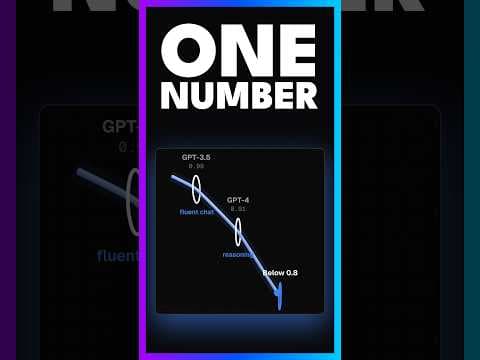
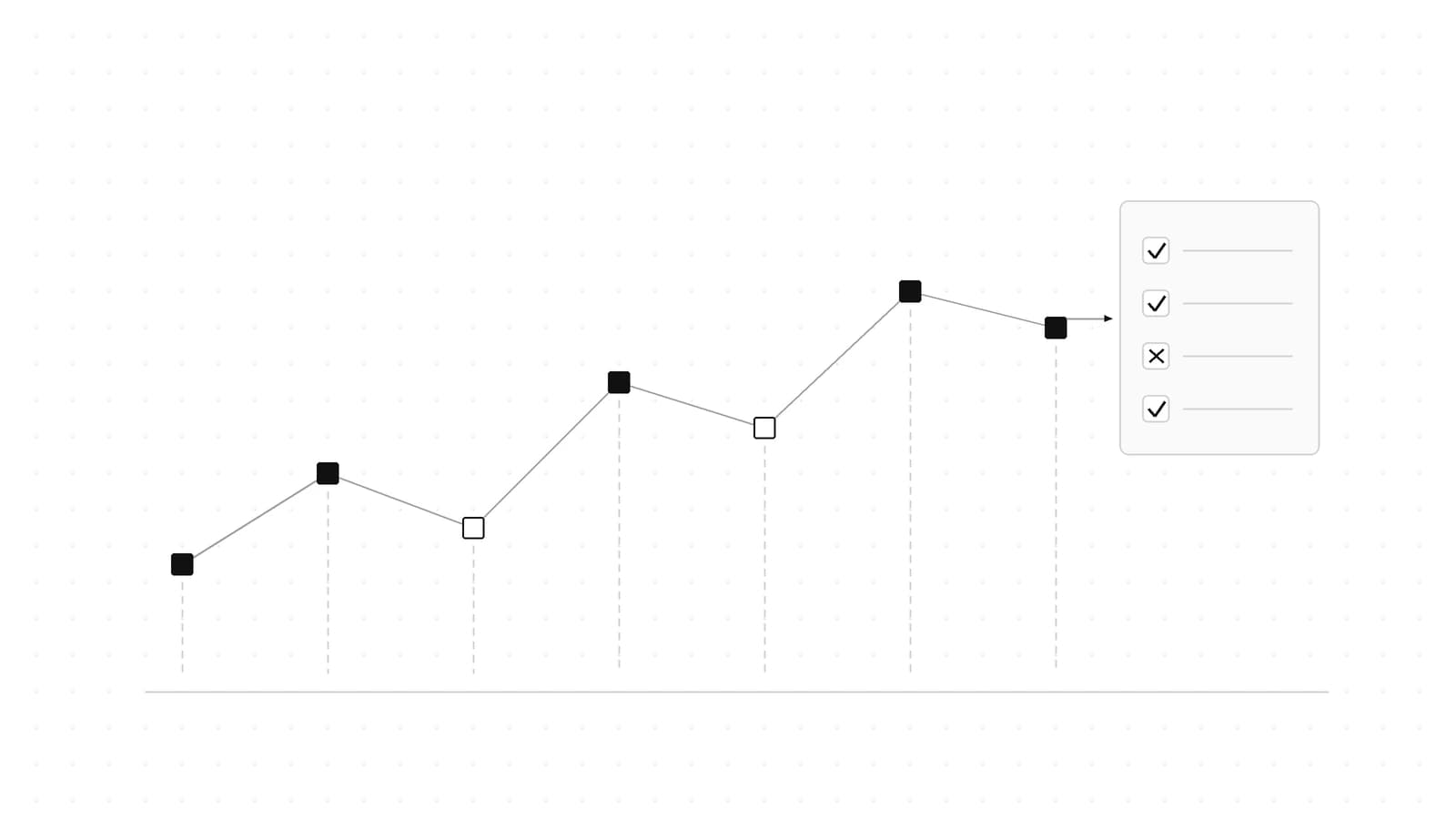
The number is perplexity: a measure of how well a language model predicts the next token in text. Lower is better. The claim in the post is that every big jump in AI capability has lined up with this number dropping.
The milestones, on the scale the post uses:
| Perplexity (approx.) | Model or point | What showed up |
|---|---|---|
| 0.99 | GPT-3.5, the original ChatGPT | Fluent conversation |
| 0.91 | GPT-4 | Step-by-step reasoning |
| Below 0.8 | Real skills in cybersecurity and mathematics | |
| 0.76 | OpenAI's model | Solving open math problems |
| 0.68 to 0.7 | The next window | Unknown |
Nobody planned those jumps#
Here is the part that makes the post interesting. Nobody knew those abilities would show up at those exact points. Conversation, reasoning, cyber and math skills each arrived as the number crossed a threshold, not on a schedule anyone set.
At around 0.76, the post says, OpenAI's model started solving open math problems, one after another, in a single Slack thread. The next window is roughly 0.68 to 0.7. OpenAI expects more jumps like that. It just does not know what they will be.
For developers this reframes how to read model releases. A leaderboard tells you what a model does on tasks someone thought to write down. A next-token number that keeps falling says new abilities are coming that nobody has written a test for yet. That is a good reason to keep your own evals close to your real work, as covered in How to Evaluate AI Agents in Practice, instead of trusting a single public score. What the Frontier Code Benchmark means for AI coding makes the same point from the benchmark side.
The ask: publish it, and agree on limits#
Pachocki then proposes something unusual. Every lab should publish this number. And the labs should agree on limits they will not cross until we can actually monitor what these models are doing.
The reason is timing. As soon as 2027, the post argues, AI could start speeding up its own training research. If capability jumps are tied to one measurable number, publishing it gives everyone an early signal before the next jump lands, rather than after.
It fits a wider push for shared standards across frontier labs. Demis Hassabis's proposal for a frontier AI standards body comes at the same problem from the governance side, and the frontier model landscape shows how many labs a shared metric would need to cover.
Why it matters#
Three takeaways for people building on these models:
- Expect surprises. If abilities appear at thresholds nobody predicted, your product can gain or lose capabilities between model versions. Re-run your evals on every upgrade.
- Watch the number, not just the leaderboard. If labs start publishing it, it becomes a leading indicator of what the next model generation can do.
- The 2027 point is the headline. AI that speeds up its own training research is what the proposed limits are designed for.
So the most important number in AI right now is not a benchmark score. It is how well a model predicts the next word.
Sources#
- Perplexity and Intelligence - Jakub Pachocki, OpenAI, November 22, 2026. All figures and the proposal come from this post.
- The One Number That Predicts What AI Can Do Next - the Developers Digest Short.
Continue Reading#
- Alexandr Wang: The Riemann Hypothesis Means Superintelligence Is Arriving - Wang's case that intelligence is no longer the bottleneck, and AI research is next.
- Demis Hassabis Wants a Frontier AI Standards Body - the governance case for shared rules across labs.
- How to Evaluate AI Agents in Practice - build evals that catch capability changes in your own app.
- What the Frontier Code Benchmark Means for AI Coding - how to read a benchmark score without over-reading it.
- The Frontier Model Landscape - who is shipping frontier models right now.
- Where to Access AI Models (2026) - official APIs, clouds and routers compared.
Get the next deep dive like this in your inbox
One email a week on OpenAI and the rest of the AI dev stack. Free.
Read next
Demis Hassabis Wants a Frontier AI Standards Body. Here Is the Plan.
Demis Hassabis proposes a FINRA-style Frontier AI Standards Body to test models before release. What the plan says, why now, and where it runs into trouble.
6 min readFrontierCode Benchmark Explained: Why AI Coding Quality Scores Are Wrong (And the Fix)
FrontierCode grades AI coding agents on whether maintainers would merge their PRs, not on passing tests. Why SWE-Bench misleads and how to adjust review.
8 min readThe Frontier Model Landscape, July 2026 Edition
Frontier AI model directory for July 2026 covering Claude Fable 5, Opus 5, GPT-5.6, Sonnet 5, Gemini 3.1 Pro, Kimi K3 and DeepSeek V4, with verified pricing.
12 min readNew here? Start with
Technical content at the intersection of AI and development. Building with AI agents, Claude Code, and modern dev tools - then showing you exactly how it works.