Cloudflare OS: The Open Source Agent Workspace That Treats Apps Like Files
TL;DR
On August 5 Cloudflare open sourced Cloudflare OS, the agent workspace it has run internally since May: capability-based Gatekeepers instead of ambient MCP access, apps as private per-user instances, and approvals that simulate outcomes so agents never stall. A concrete blueprint for the company-wide agent platform.
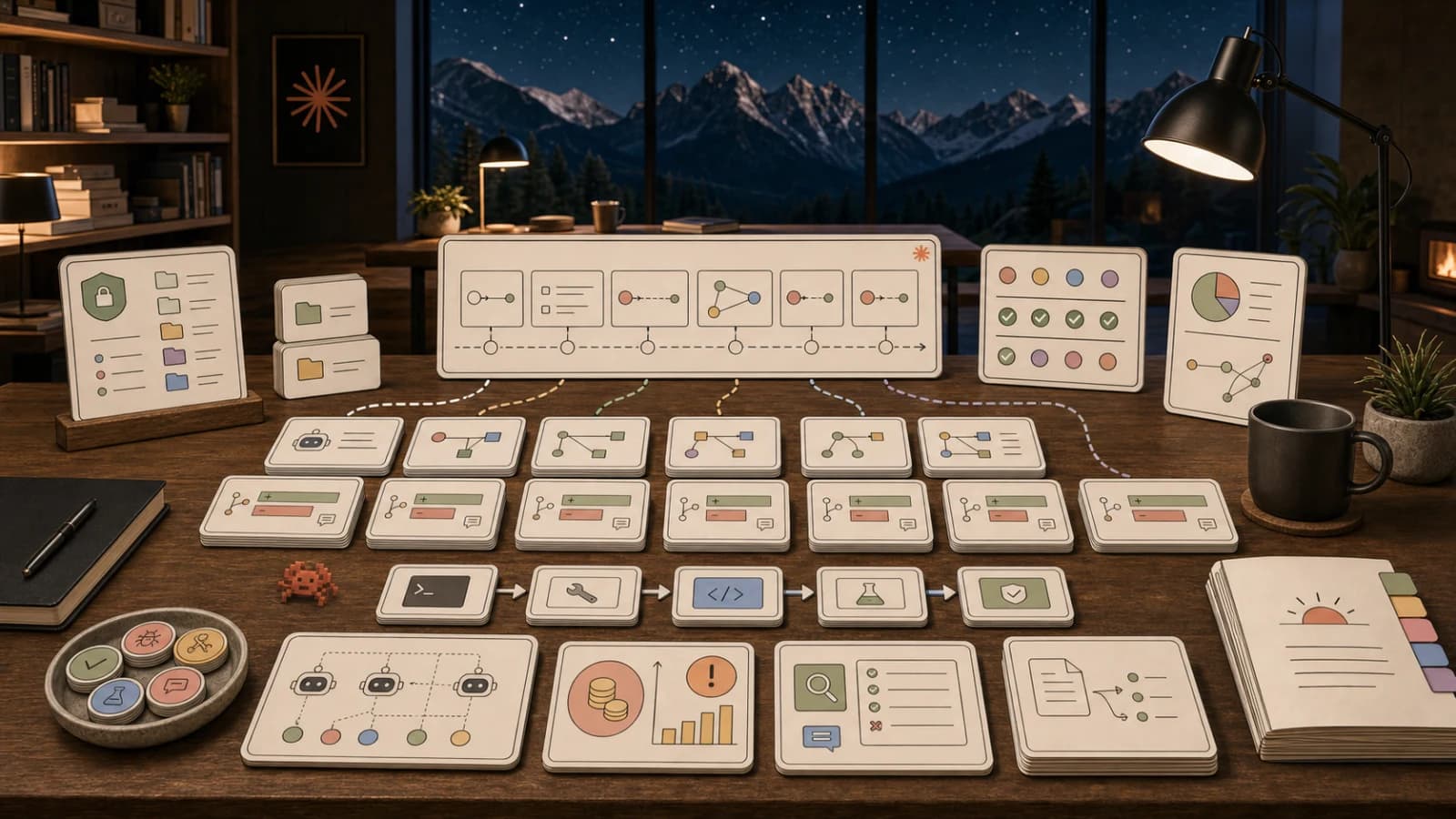
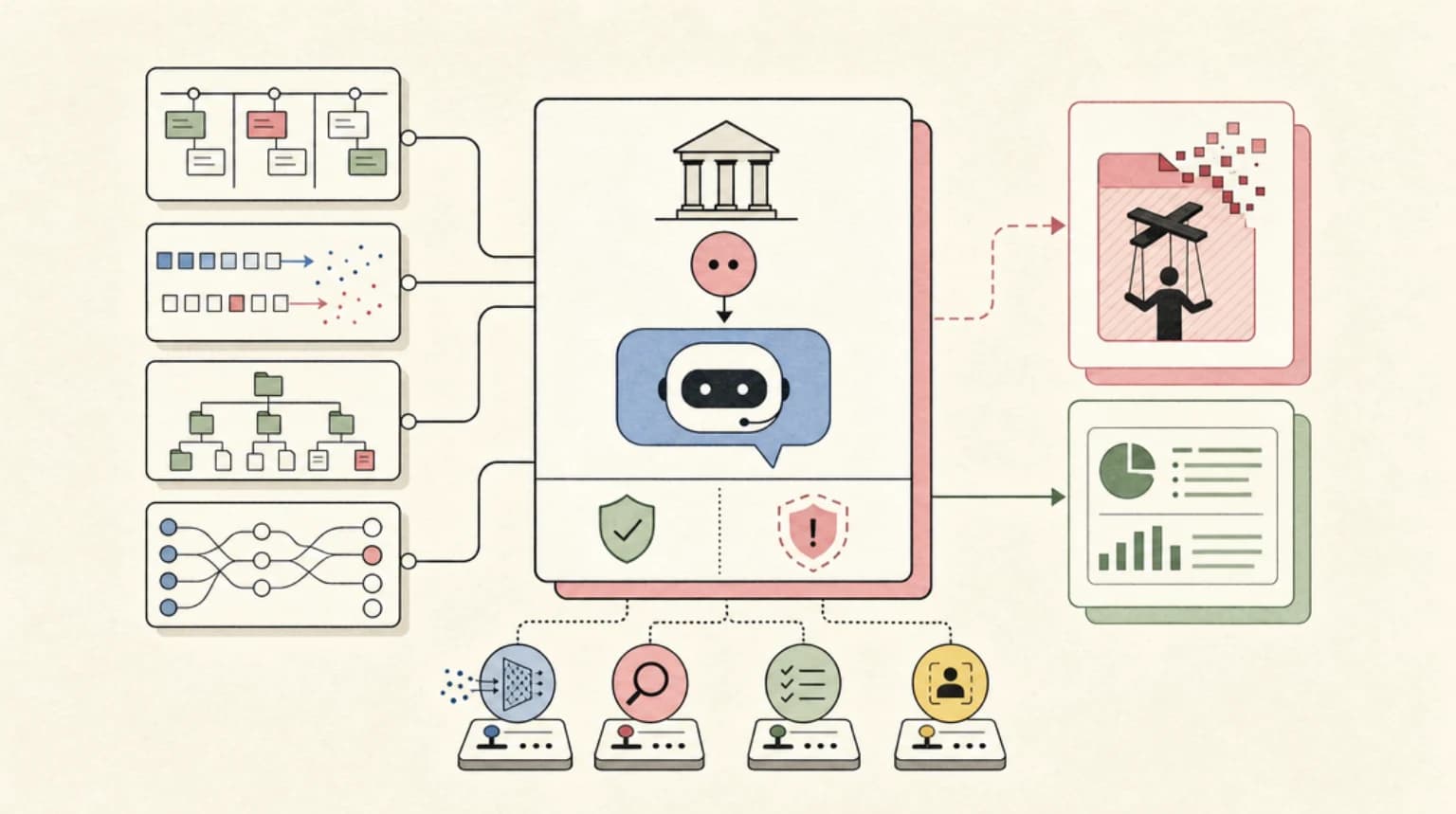
On August 5, the fifth day of Cloudflare's Agents Week, the company open sourced Cloudflare OS, the platform thousands of its employees have used internally since May 2026. It is an agent workspace, a security framework, and an app runtime in one: a browser-based workspace where every "file" is a full-stack application written by an agent, every connection to an external service runs through a capability-granting Gatekeeper, and every agent starts with access to nothing.
Two repositories shipped: cloudflare-os (the core, Apache-2.0) and cloudflare-os-starter, an example deployment shaped like Cloudflare's own internal install. The core runs on Workers and workerd, and the README is explicit that this is v2, a complete rewrite, "early access" with rough edges.
What shipped#
Cloudflare OS combines three parts:
- An agent workspace - conversations grounded in curated company context and skills, with an isolated runtime where the agent writes and executes code; users authenticate through Cloudflare Access.
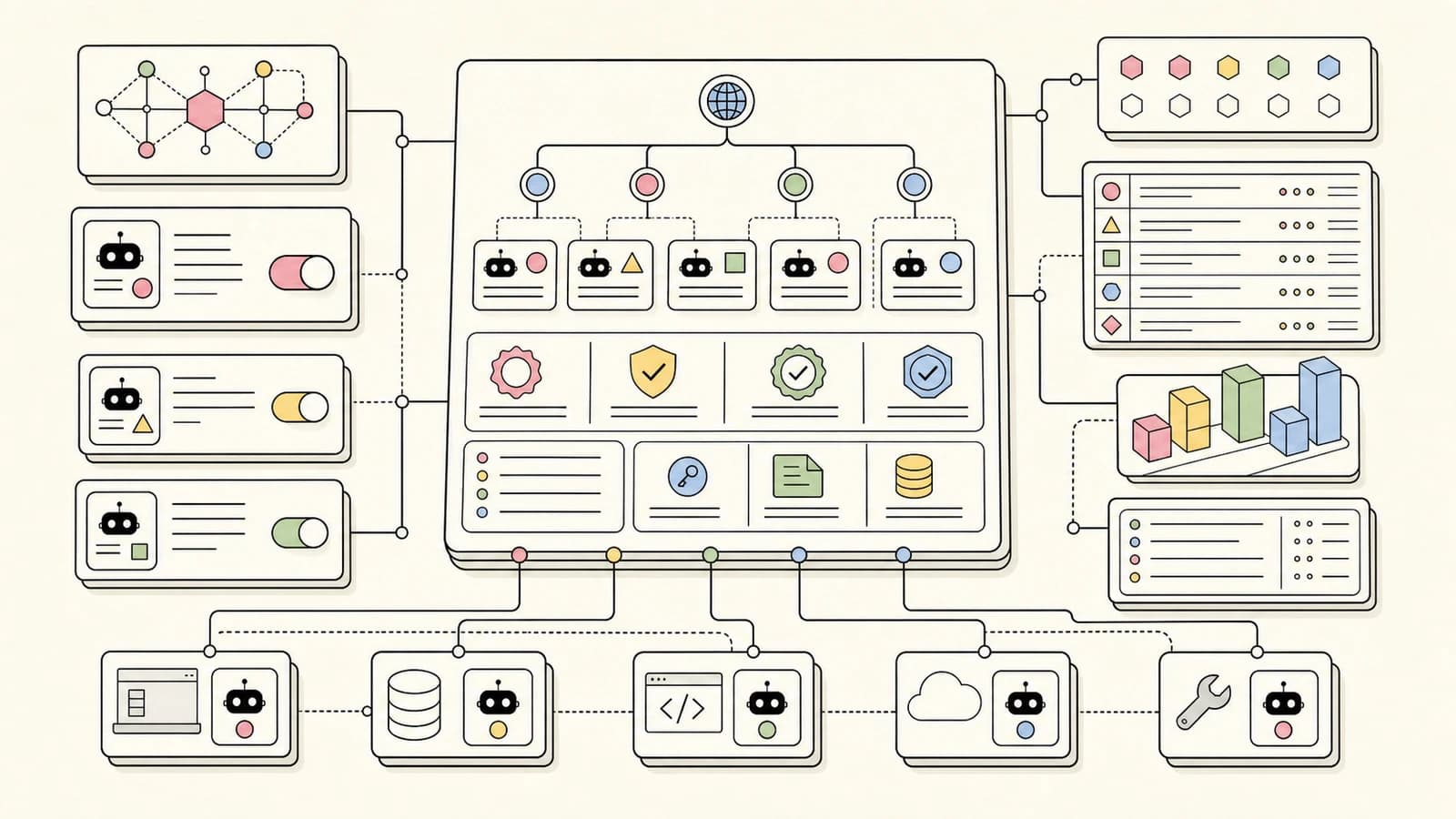
- Gatekeepers - service-specific Workers that hold the OAuth credential for an external service, expose a typed API, log every action, and route side effects through human approval. They ship for GitHub, Google, Slack, Notion, and more.
- Gadgets - the file model. Asking for a slide deck creates a private instance of a slide deck app with its own SQLite database and a sandboxed server; share the gadget to collaborate in real time, or share a blueprint, which copies the code without the data.
For Workers developers the stack is the story: every workspace is a Durable Object, every gadget is a Dynamic Worker, and the client talks to the server over Cap'n Web, Cloudflare's open source object-capability RPC.
Why the security model matters#
The notable decisions are about authorization. MCP servers are supported through Cloudflare's MCP Server Portals, but the default posture is capability-based, not ambient: an agent or gadget has access to nothing until you introduce it to a resource, and the agent can request an introduction it thinks it needs. Generated code receives resources as typed bindings like env.PROJECT, never as keys the model can read. This is the same direction as the Agent Access Model paper Cloudflare published this week, which we covered in Cloudflare's Agent Access Model: Zero Trust for Task-Scoped Agent Runs: the credential never reaches the model, and policy is enforced in the harness and network, not the prompt.
Two mechanisms deserve attention because they attack real failure modes. First, policy follows what the agent has seen: every observed resource is logged and attached to the work, and a user opening a shared workspace is verified against those observations, so a live dashboard cannot smuggle access to the table behind it. Second, Gatekeepers solve approval fatigue: instead of blocking an agent until a human clicks approve, they simulate the outcome, let the agent continue and queue actions, then let the user approve or reject in bulk when convenient. We documented how synchronous approval prompts push users toward --dangerously-skip-permissions in Approval Fatigue Is an Agent Security Bug; this simulated-commit pattern is the most direct fix we have seen shipped.
CIO Sam Rhea's companion post reports internal numbers - all vendor-reported, none independently verified: sales teams saved over 10,000 hours on previously manual tasks in the last month, and users created over 4,000 apps and tools in 30 days. The engineering-side context layer (the "Engineering Codex") flagged nearly 250,000 potential problems and blocked 16,000 merges in four months, again by Cloudflare's own count. Those are adoption claims, not benchmarks, but they are the strongest evidence yet that non-developer teams actually build with agent platforms when the security story stops being their problem.
From the archive
DeepSeek V4 Flash Is 90% Off Through Novita on Vercel AI Gateway: The Cost Math
Aug 5, 2026 • 6 min read
Put an AI Agent Behind a Webhook: Turn GitHub Issues into Pull Requests
Aug 5, 2026 • 10 min read
Kill Your Agent Runs Early
Aug 5, 2026 • 11 min read
LFM2.5-2.6B: Liquid AI's On-Device Agent Model Runs at 220 Tokens/s in Under 2.5 GB
Aug 5, 2026 • 7 min read
What to make of it#
Two implications are bigger than the product. The gadget model is a direct challenge to SaaS: if every user can run their own private instance and prompt an agent to change its code, the centralized shared-app model stops being the only option. Cloudflare OS is not the first to try this, but it is the first credible open source implementation with a real security layer underneath.
And the OS framing is more than marketing. The kernel analogy is technical: backend as kernel, Gatekeepers as device drivers, gadgets as processes, blueprints as executables, and agents as a new first-class entity that traditional OSes do not manage. We argued in Skills Are the New Agent Operating System that the agent platform layer would accrete around context and skills rather than file systems; Cloudflare OS puts the same bet behind company-curated skills and context loaded into every workspace. For teams building their own version, the practical takeaways: start from the starter repo, configure OAuth per gatekeeper, and expect to write your own gatekeepers, because that is where the real work of connecting your systems of record lives.
The honest caveats: this is not production-grade yet, contributions are closed for anything beyond small fixes, and the fully managed product, containers for development workflows, Slack integration, and workerd self-hosting docs are all still on the roadmap.
Continue Reading#
- Cloudflare's Agent Access Model: Zero Trust for Task-Scoped Agent Runs - the reference architecture released earlier this week that Cloudflare OS operationalizes
- Approval Fatigue Is an Agent Security Bug - why synchronous approvals break agent workflows, and what fixing it requires
- Zero-Touch OAuth for MCP: Enterprise Auth Gets Practical - the OAuth primitives behind Gatekeepers and MCP Server Portals
- Skills Are the New Agent Operating System - the context-and-skills layer that Cloudflare OS bakes into every workspace
- DevDigest OS: The Thesis Behind Treating an Empire as One Operating System - our own take on tools that compound into a coherent layer
- lib0xc Is the Opposite of Rewrite Culture - related deep dive
Sources#
Read next
Cloudflare's Agent Access Model: Zero Trust for Task-Scoped Agent Runs
On August 5 Cloudflare published the Agent Access Model: a reference architecture where credentials are short-lived and task-scoped, enforcement lives in the harness and network instead of the prompt, and a Trust Ratchet only narrows an agent's capabilities. The cleanest spec yet for least privilege at agent speed.
7 min readApproval Fatigue Is an Agent Security Bug
Manual approval prompts stop protecting users when coding agents ask too often. The better pattern is risk-aware autonomy: safe defaults, narrow deny rules, and approvals only for meaningful changes.
7 min readZero-Touch OAuth Is the MCP Feature Enterprises Were Waiting For
MCP's new enterprise-managed authorization flow is not just less login friction. It moves agent tool access into identity, policy, and audit systems enterprises already understand.
8 min readShare
Developers Digest
Technical content at the intersection of AI and development. Building with AI agents, Claude Code, and modern dev tools - then showing you exactly how it works.
300+ videos30K+ GitHub stars850+ articles
Related Tools
InfrastructureOpen source

E2B
Open-source cloud sandboxes for AI agents. Isolated environments that start in under 200ms, run code in Python, JavaScri...
View ToolAI Coding

Cline
Open-source autonomous coding agent inside VS Code. Creates files, runs commands, and can use a browser for UI testing a...
View ToolAI Frameworks

Mastra
TypeScript-first AI agent framework. Agents, tools, memory, workflows, RAG, evals, tracing, MCP, and production deployme...
View ToolAI Coding

Codex CLI
OpenAI's open-source terminal coding agent built in Rust. Runs locally, reads your repo, edits files, and executes comma...
View ToolApps from Developers Digest
Developer ToolsIn Progress
agentfs
Give your agents a filesystem that branches like git. Crash-safe by default.
View AppDeveloper ToolsIn Progress
Maintainer Dashboard
Track open-source maintenance signals, release tasks, and repo follow-ups in one dashboard.
View AppSaaS Products
Overnight Agents
Spec out AI agents, run them overnight, wake up to a verified GitHub repo.
View AppRelated Guides
Guide
Building Your First MCP Server
Step-by-step guide to building an MCP server in TypeScript - from project setup to tool definitions, resource handling, testing, and deployment.
AI AgentsGuide
.claude/rules Directory - Claude Code
Path-specific rules that only load for matching files.
Claude CodeGuide
Subagent Persistent Memory - Claude Code
Auto-memory that persists across multiple subagent invocations.
Claude CodeRelated Videos

Buzz: Open-Source Collaboration for Humans + AI Agents
Buzz by Block: Open-Source Slack-Style Collaboration for Humans + AI Agents (Demo & Setup) Check out Arcade: https://arcade.dev.plug.dev/xiDRwlA Repo: https://github.com/block/buzz The video introd...
Video·
Zed: The Open Source Agentic IDE - Use Claude Code, Codex & Gemini CLI in one place
Check out Zed here! https://zed.dev In this video, we dive into Zed, a robust open source code editor that has recently introduced the Agent Client Protocol. This new open standard allows...
Video·
OpenAI Open Sources Codex: The CLI Coding Agent
Exploring Codex: AI Coding in Terminal In this video, I explore Codex, a new lightweight CLI tool for AI coding that runs in the terminal. This tool, possibly a response to Anthropic's CLI,...
Video·
Related Posts
7 min read
News
Cloudflare's Agent Access Model: Zero Trust for Task-Scoped Agent Runs
On August 5 Cloudflare published the Agent Access Model: a reference architecture where credentials are short-lived and...
7 min read
AI Agents
Approval Fatigue Is an Agent Security Bug
Manual approval prompts stop protecting users when coding agents ask too often. The better pattern is risk-aware autonom...
8 min read
MCP
Zero-Touch OAuth Is the MCP Feature Enterprises Were Waiting For
MCP's new enterprise-managed authorization flow is not just less login friction. It moves agent tool access into identit...
9 min read
AI Coding
Skills Are the New Agent Operating System
GitHub trending is full of agent skill frameworks. The real shift is not bigger prompts or more agents. It is turning te...
9 min read
DevDigest
DevDigest OS: The Thesis Behind Treating an Empire as One Operating System
What if your dev tools weren't separate apps but one operating system? The thesis behind /os and /suites - small, shar...
7 min read
News
Cloudflare Gateway Can Now Detect MCP Traffic on the Wire: Shadow MCP Gets a Network Boundary
Cloudflare Gateway now classifies MCP traffic by protocol headers instead of hostname heuristics, ships a shadow-MCP das...
Build with the member tools

Get Smarter About AI Dev
New tutorials, open-source projects, and deep dives on coding agents - delivered weekly.
One email per weekReal code, not theoryFree forever