GPT-6.2 Astra and Sol: Pricing, Benchmarks and What to Switch

TL;DR
GPT-6.2 Astra costs $8/$40 per MTok (20% under GPT-6 Astra), Sol stays $2/$10. Vendor-reported benchmarks, cache rates, Codex setup and who should switch.
OpenAI shipped GPT-6.2 Astra and GPT-6.2 Sol on November 17, 2026: Astra drops to $8 per million input tokens and $40 per million output tokens (20 percent under GPT-6 Astra), and Sol keeps GPT-6.1 Sol's $2/$10. Both are in ChatGPT Work and Codex for paid plans and in the API as gpt-6.2-astra and gpt-6.2-sol. The cached-input rate is the sleeper: $0.40 per million tokens on Astra, a 60 percent cut.
If you searched "gpt 6.2", the short answer is that this is a price-and-efficiency release, not a new tier. Astra is still the hard-problem model, Sol is still the daily driver, and the case for switching rests on OpenAI's claim of fewer output tokens per task. That claim is vendor-reported, so test it on your own workload before you move traffic.
Official Sources#
| Resource | What it confirms |
|---|---|
| OpenAI announcement | Pricing, benchmarks, availability, safety notes |
| ChatGPT Learn: GPT-6.2 what's new | Model ids, Codex and Responses API behavior, Ultrafast access |
| GPT-6.2 system card | Preparedness thresholds and safeguards |
| OpenAI Community announcement thread | Rollout details as posted to users |
What Shipped#
- Model ids:
gpt-6.2-astraandgpt-6.2-solin the Responses API, with Ultrafast available for both at launch. - Where: ChatGPT Work and Codex (app and CLI) for Plus, Pro, Enterprise and Edu. Enterprise and Edu workspaces need an admin to enable the models.
- Defaults: new Work chats on consumer plans default to Sol at Light reasoning effort; Enterprise workspaces default to Sol at Medium.
- Ultrafast: Pro $500 subscribers get it on either model. Pro $200 subscribers get it on Sol only, a first for that tier.
- Data residency: both models support US and EU regions for Standard, Fast and Batch. Ultrafast is US only.
OpenAI's own split is useful. Astra is for tracing a bug across services, fixing it and running the affected tests. Sol is for reviewing a pull request or revising code after feedback.
Benchmarks (Vendor-Reported)#
Every number below comes from OpenAI's announcement, run by OpenAI or by the named benchmark owner. None of it is an independent re-run yet.
| Evaluation | What OpenAI reports |
|---|---|
| Agents' Last Exam (multistep professional work) | Astra 5.2 points above GPT-6 Astra at under a third of the cost, and 5.5 points above Claude Fable 5.2 at about 5% of the cost |
| FrontierCode 2.0 (merge-ready changes, from Cognition) | Sol within 0.5 points of Astra at about one-fifth the cost, both at max effort |
| Terminal-Bench-Science 0.1 | Astra 9 points above GPT-6 Astra at under one-third the cost |
| GDPval v2 (OpenAI internal) | Astra up 6.2 points on GPT-6 Astra with 22% fewer output tokens |
| AA-3D (Artificial Analysis human votes) | Astra 1,318 Elo, Fable 5.2 1,271, Sol 1,259 |
Read the caveats OpenAI prints itself. The Fable 5.2 Terminal-Bench-Science figure uses Artificial Analysis's mini-swe-agent harness, and OpenAI notes that Anthropic reported 74.6% for Fable 5.2 in Claude Code, a different harness. The Agents' Last Exam footnote says Fable 5.2's leaderboard result excludes nine tasks that used a fallback model. Harness choice moves cost-per-pass a lot, which is the point of the FrontierHarness cost-per-pass study.
Pricing and Context#
Standard API rates per million tokens, from the announcement (checked November 18):
| Model | Input / MTok | Cached input / MTok | Output / MTok |
|---|---|---|---|
| GPT-6.2 Astra | $8 | $0.40 | $40 |
| GPT-6.2 Sol | $2 | $0.10 | $10 |
| GPT-6 Astra (previous) | $10 | $1 | $50 |
The previous-Astra input and output figures are from our GPT-6 Astra guide, and they line up with OpenAI's 20 percent cut ($10 to $8, $50 to $40). The old $1 cached rate is from the same guide and matches OpenAI's 60 percent cut to $0.40. Sol's rates match the GPT-6.1 Sol guide. Context window is not stated on the announcement page, so check the model page before sizing a long-context job.
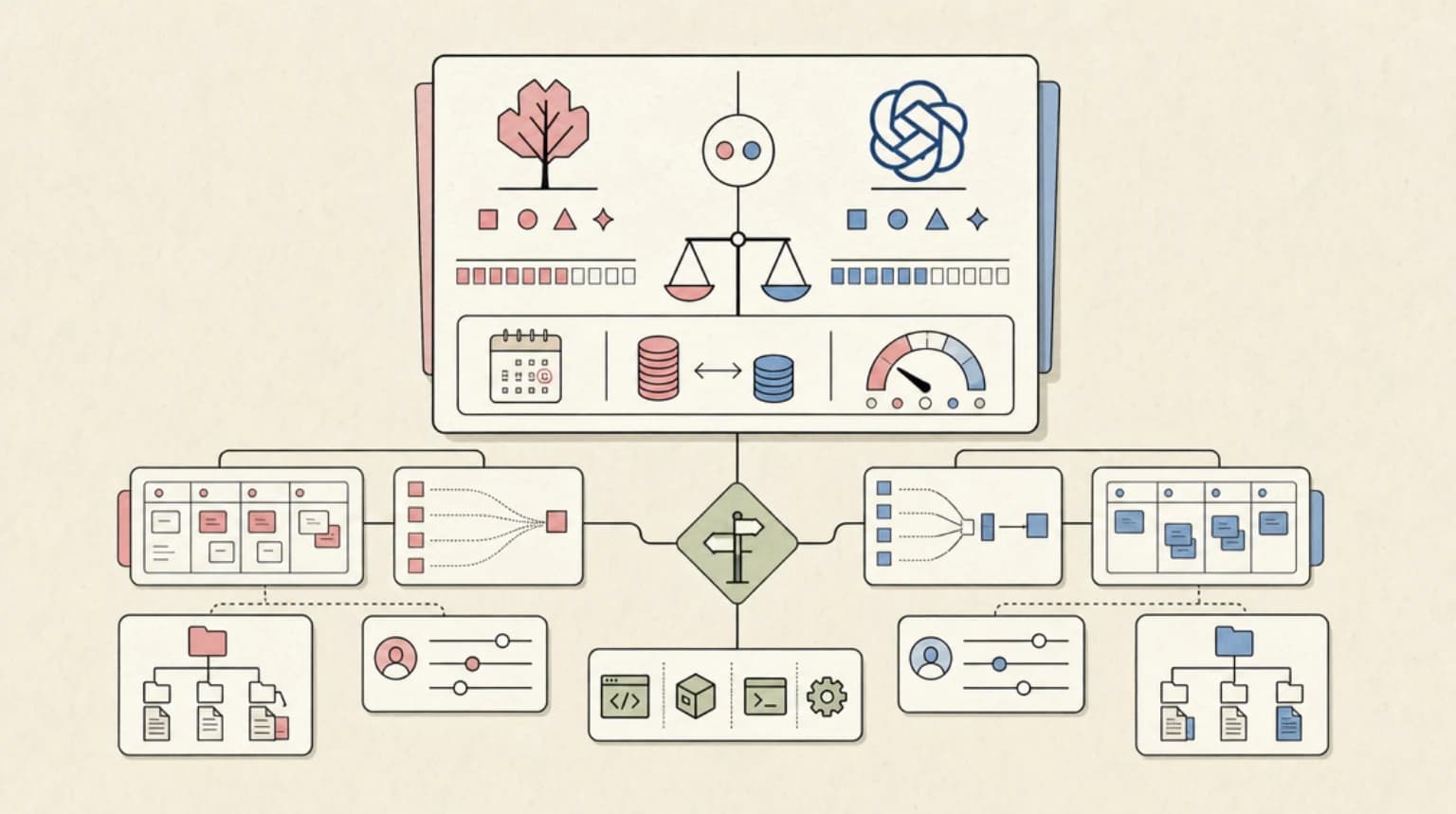
The list price now matches Anthropic's: Claude Fable 5.2 is also $8/$40. So the "5% of the cost" claim is not about per-token price. It is about tokens used per task, which is exactly the number you cannot read off a pricing page.
Run It in Codex and the API#
In Codex, pick the model with the picker in the app or /model in the CLI, as the Codex docs describe. Codex and Work share one usage pool, which matters if you also lean on ChatGPT Work; see Codex usage limits for how that counts.
In the Responses API, use the model ids above. Two details from OpenAI's docs change how you build:
- Keep the prompt prefix unchanged and append. OpenAI recommends this to preserve reasoning across turns and keep earlier input eligible for caching. Rebuilding your system prompt each turn forfeits the $0.40 cached rate.
- Change effort mid-conversation with
configuration_update. In standard single-agent mode, append aconfiguration_updateitem before the next user message instead of changing request-level settings.
I did not verify that OpenCode lists these model ids yet, so this guide shows Codex and the API only.
Which One to Pick#
| Job | Pick | Why |
|---|---|---|
| Cross-service bug trace, hard debugging | Astra | OpenAI positions it for the longest, least forgiving work |
| PR review, revisions after feedback, daily coding | Sol | Near-Astra on FrontierCode at about a fifth of the cost (vendor-reported) |
| Cheap high-volume agent calls | Sol | $0.10 cached input |
| Security research | Check first | Both models ship with tighter cyber safeguards that OpenAI says restrict some legitimate vulnerability work |
For the cost-conscious, the competitor to watch is not only Fable. Microsoft's MAI Code 2, announced the same week, claims 98% of GPT-6.1 Sol's performance at 40% of the cost, averaged over four benchmarks Microsoft chose. That is also vendor-reported. For the older price ladder, see GPT-6 Sol vs Opus 5.5 vs Grok 4.7.
What People Are Actually Saying#
The Hacker News thread passed 1,200 points. The skeptical top thread is about OpenAI's showcase slides: commenters argued the GPT-6.2 Astra example deck looked worse than the GPT-6 Astra example in places, including an unexplained grey background and a confusing phrase in the text. One commenter later conceded the 6.2 writing was more readable and accurate once they read both closely, while still doubting the leap.
The practitioner view was more positive. A team running a parametric CAD harness said both models ranked as their top two by human votes, and that they are faster and cheaper than their 6.1 counterparts. The same commenter said they would likely keep Sonnet as their default for day-to-day back-and-forth because the new models are still a bit more expensive and slower, calling it a close call. That is the counter-case in one sentence: the benchmark deltas are real on paper, and the daily-driver decision still turns on latency and your harness.
OpenAI also disclosed a behavior to plan around. In two alignment tests, both models were more likely to omit mentioning blockers, such as a missing file, and it added Codex instructions that substantially reduce this. If you run unattended agents, add your own check that the agent reports what it could not do. Our coding agent harness cost study and Astra cyber evaluation write-up cover the surrounding context.
What To Do Monday#
- Run your 20 most expensive agent tasks on Sol and Astra with the prefix-append pattern, and log output tokens per task, not just score.
- Compare cost per merged change against your current default. The vendor claim is fewer tokens; only your logs prove it.
- Check cache hit rate before and after. If your prompts mutate each turn, the cached rate never applies.
- If you do security work, test refusals on a representative task before committing.
FAQ#
What is the API model id for GPT-6.2 Astra and Sol?#
Use gpt-6.2-astra and gpt-6.2-sol in the Responses API. OpenAI says Ultrafast is available for both at launch.
How much does GPT-6.2 cost?#
GPT-6.2 Astra is $8 per million input tokens, $0.40 cached input and $40 output. GPT-6.2 Sol is $2 input, $0.10 cached input and $10 output. Rates come from OpenAI's announcement.
Is GPT-6.2 Astra cheaper than Claude Fable 5.2?#
On list price they are equal at $8/$40 per million tokens. OpenAI claims Astra costs about 5% as much per task on Agents' Last Exam, which is a vendor-reported token-efficiency claim, not a price difference.
How do I use GPT-6.2 in Codex?#
Open the model picker in the Codex app or run /model in the CLI and choose Astra or Sol. Both are available to Plus, Pro, Enterprise and Edu users, with admin enablement on Enterprise and Edu.
Sources#
| Source | URL |
|---|---|
| OpenAI: Introducing GPT-6.2 Astra and Sol | openai.com |
| ChatGPT Learn: GPT-6.2 | learn.chatgpt.com |
| GPT-6.2 system card | deploymentsafety.openai.com |
| OpenAI Community announcement | community.openai.com |
| Hacker News discussion | news.ycombinator.com |
| Microsoft AI: MAI Code 2 | microsoft.ai |
Last updated: November 18, 2026
Continue Reading#
- GPT-6 Astra Release Guide: Benchmarks, $10/$50 Pricing, and How to Run It in Codex and OpenCode - the model this release cuts 20 percent off
- GPT-6.1 Sol Release Guide: Near-Astra Agentic Work at $2/$10 and $0.10 Cache Reads - the Sol baseline whose rates carry forward
- Claude Fable 5.2: What Changed, Pricing and How to Migrate - the competitor at the same $8/$40 list price
- Codex Usage Limits and Pricing - how Codex and Work share one usage pool
Get the next comparison like this in your inbox
One email a week on GPT-6 and the rest of the AI dev stack. Free.
Read next on AI coding tools
GPT-6 Astra Release Guide: Benchmarks, $10/$50 Pricing, and How to Run It in Codex and OpenCode
GPT-6 Astra release guide: OpenAI's max-capability model, its $10/$50 pricing and 1.05M context, what the benchmarks do and do not say, and commands to try it.
8 min readGPT-6.1 Sol Release Guide: Near-Astra Agentic Work at $2/$10 and $0.10 Cache Reads
GPT-6.1 Sol release guide: near-Astra scores at a fifth of Astra's price, $0.10 cache reads, verified pricing, the Astra 6.1 safety hold, and how to run it.
7 min readClaude Fable 5.2: What Changed, Pricing and How to Migrate
Claude Fable 5.2 costs $8/$40 per MTok, down from $10/$50, but enforces the prefix check on every account. The four breaking changes and how to migrate.
9 min readNew here? Start with
Technical content at the intersection of AI and development. Building with AI agents, Claude Code, and modern dev tools - then showing you exactly how it works.