GVS5H: Can Qwen3.8-27B Match Fable 5 on Coding?
TL;DR
GVS5H claims five Qwen3.8-27B instances match Fable 5 on LiveCodeBench Hard. What the harness does, why Hacker News doubts the benchmark, and what to copy.
A new open-source harness called GVS5H claims that five fresh instances of Qwen3.8-27B, coordinating through files on disk, match Claude Fable 5 on the hardest LiveCodeBench problems. If you search for the best local LLM for coding, this is the headline of the weekend: a model that fits on one 24 GB to 32 GB GPU, lifted from 66.8% to 92.4% by orchestration alone. It is also a result on one saturated benchmark, and the Hacker News thread said so loudly.
Last updated: October 25, 2026
What the GVS5H repository actually claims#
Everything below comes from the GVS5H README and abstract and is author-reported. I did not rerun the benchmark.
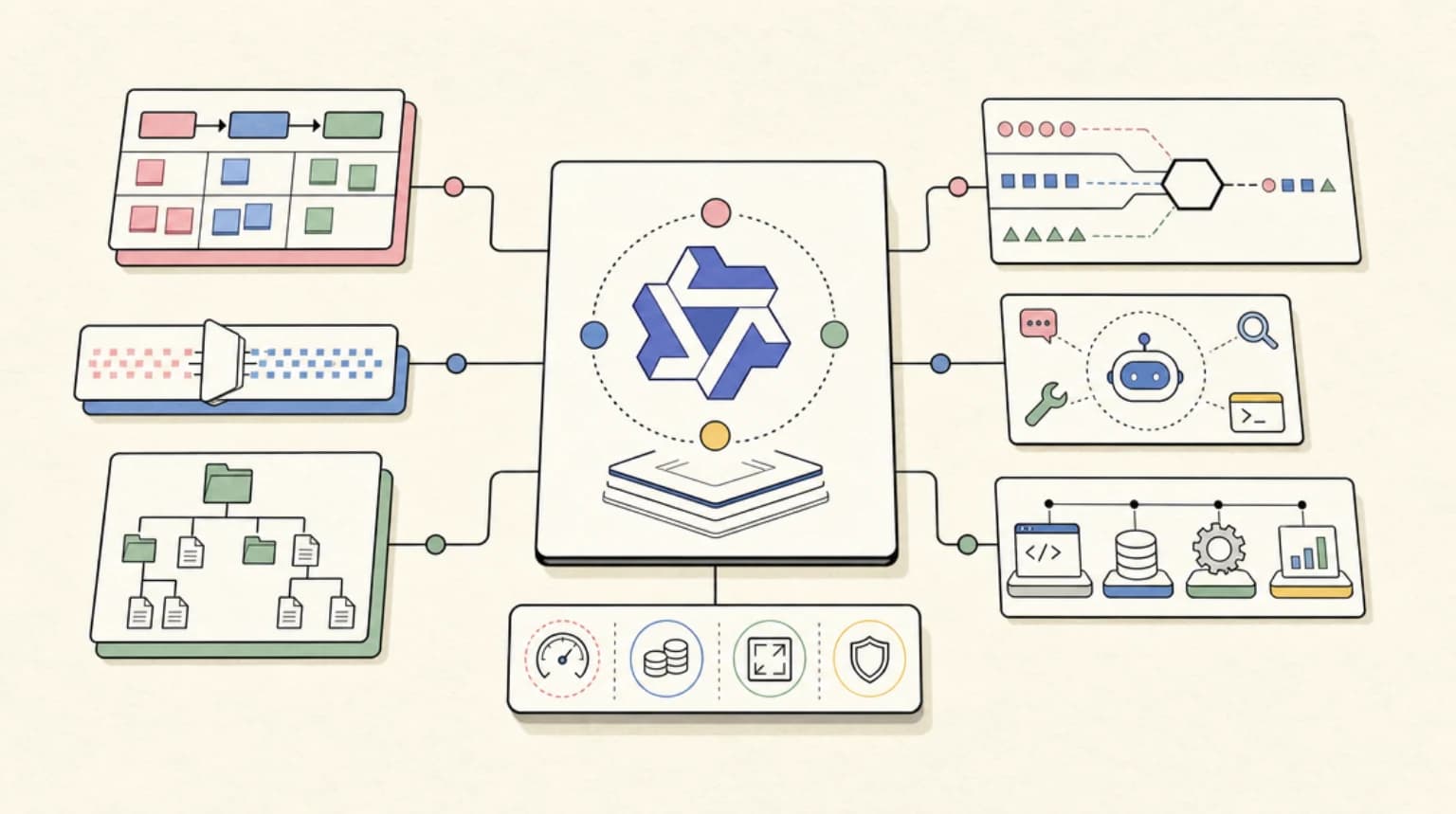
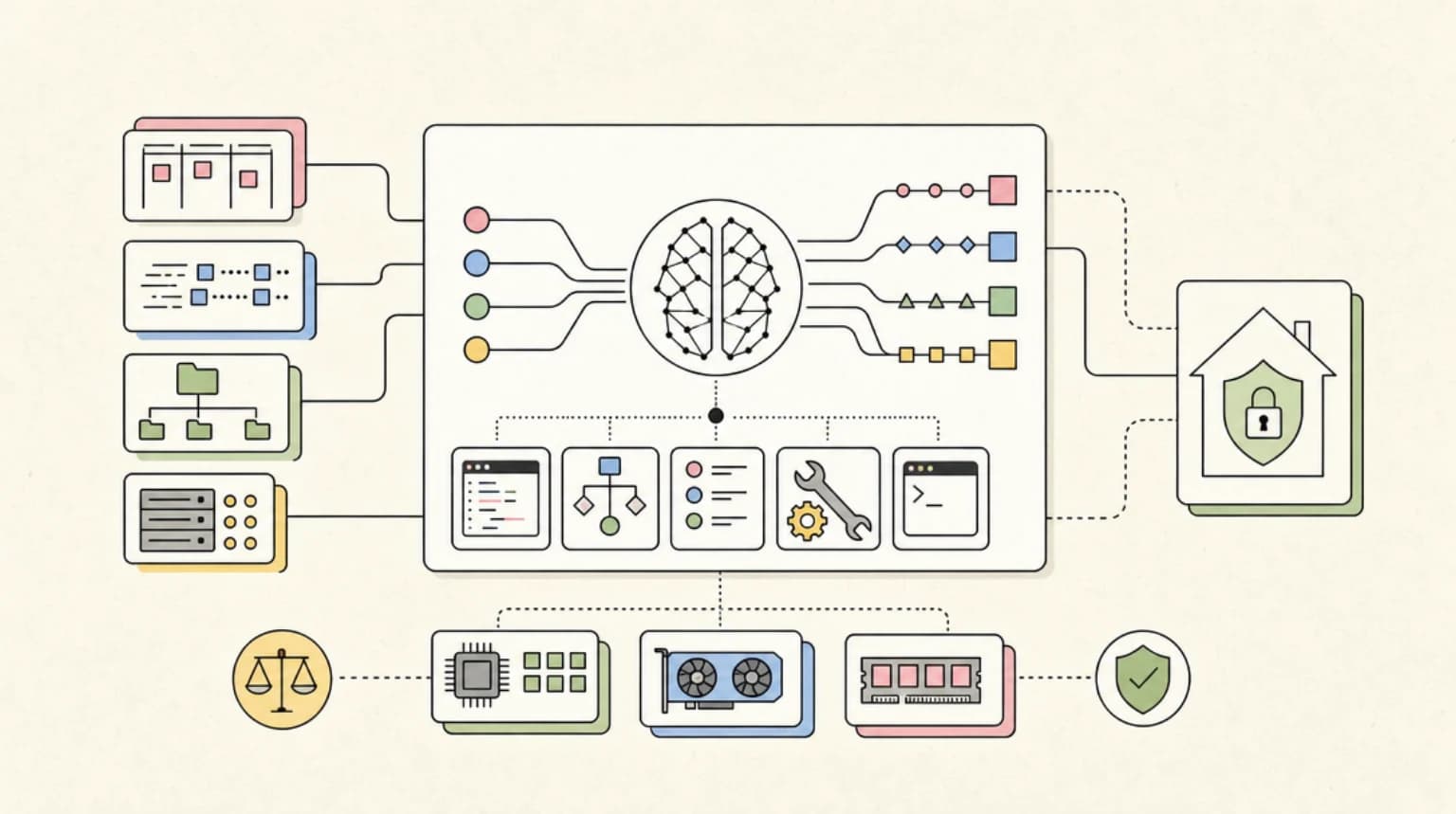
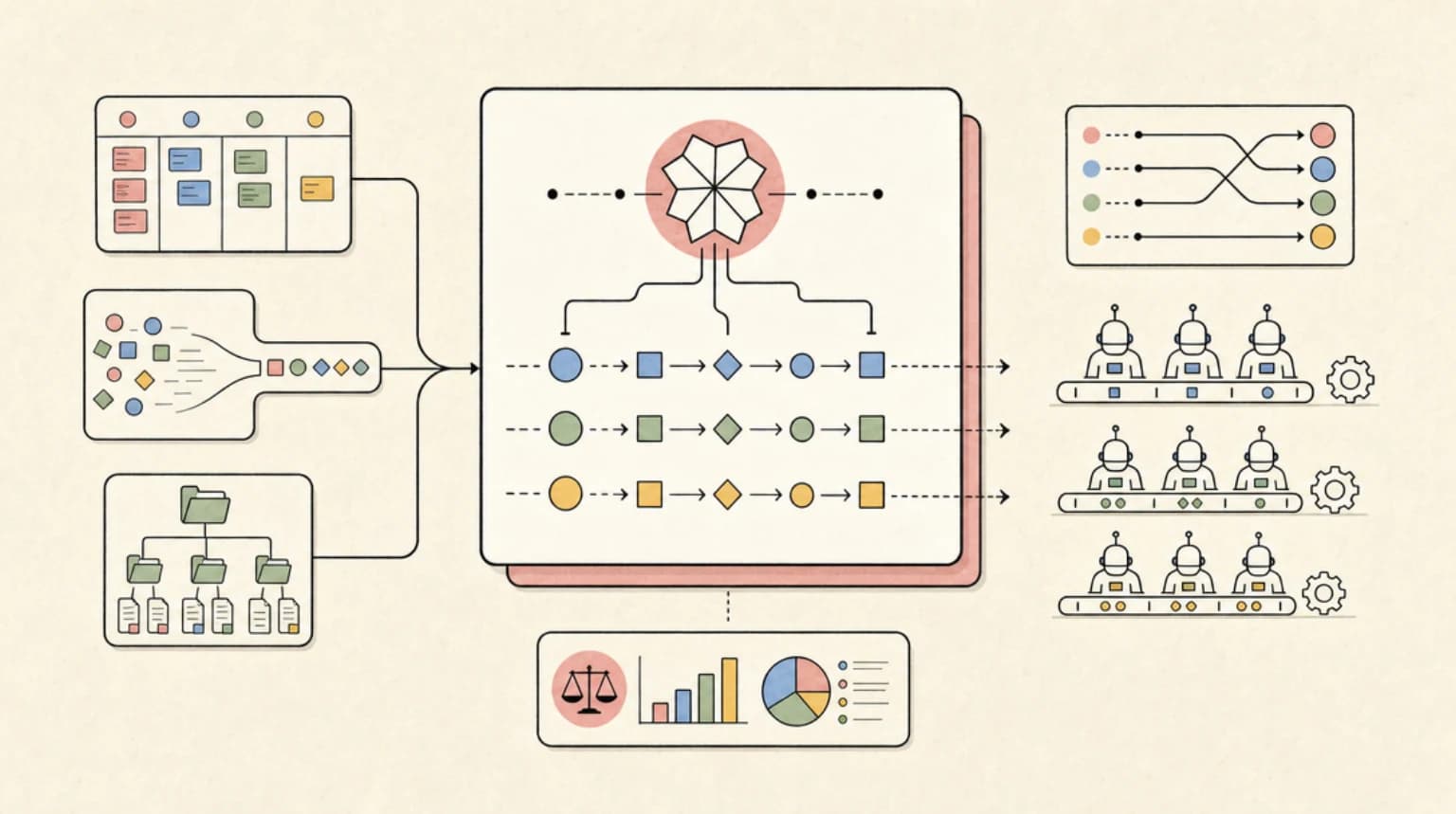
- The method is "ledger-based zero-shot self-orchestration": it is training-free. Fresh instances of one model decompose a problem and coordinate through a shared filesystem holding a plan, notes and the current solution.
- The test set is the 100 latest hard problems from LiveCodeBench, across eleven open and closed-weight models.
- Orchestrated Qwen3.8 Flash Next reaches 93.0% pass@1 against Fable 5's single-call 90.4%, at 9% of the cost, per the authors.
- Locally served, open-weight Qwen3.8-27B rises from 66.8% to 92.4%.
- Gains are not universal. The abstract says some models are unchanged or worse, and attributes the gain to decomposition and persistent context.
- Code is MIT. The paper, figures and run data are CC BY 4.0. The run command is
python escalation/run_bench.py --engine multiagent --only lcb --lcb 100 --parallel 8, and--engine singlegives the one-call baseline.
The repository had 852 stars when I read it, and the Hacker News submission had 137 points and 48 comments a few hours after posting.
The angle: harness engineering is the cheap lever#
The interesting claim is not "Qwen beats Fable". It is that a plan file, a notes file and a fresh context per worker moved a 27B model by 25 points. That is the same pattern many builders already use by hand, and it maps directly onto how you run a local model behind a coding agent.
What a builder does Monday:
- Stop treating the model as the only variable. Run your local model through one harness for every comparison, so you isolate model problems from harness problems.
- Give the agent durable state on disk: a
PLAN.md, aSTATUS.mdand a notes file it can reread after context resets. One HN commenter describes exactly this triplet working well with Qwen3.8 27B. - Use fresh-context workers for bounded subtasks and keep the manager's plan small. Our orchestrator model playbook covers the cloud version of the same split.
- Measure on your own repository before trusting any leaderboard number, including this one.
The cost story needs the same care. Five passes of a 27B model are cheap in dollars if you own the GPU, but they are not cheap in time. Another commenter asked whether it takes ten times as long, and the replies pointed to hardware speed: a dense 27B is slow on unified-memory boxes and fast on a bandwidth-rich GPU. Our VRAM guide has the memory math, and the Qwen3.8-27B coding post has the model-level benchmarks.
What people are actually saying#
The reception was skeptical, and the skepticism is specific.
- The benchmark is old. One top commenter notes LiveCodeBench's dataset covers problems from May 2023 to April 2025, calls contamination close to guaranteed, and points out there is no comparison against newer frontier models or a benchmark that reflects agentic work.
- The comparison is lopsided. Others ask why harnessed Qwen is not compared to harnessed Fable, and one commenter argues the harness gives a model delegation and a Python tool on a benchmark designed for one-shot answers.
- It may be overfitting. A short thread suggests the harness is tuned to the problem set, and another commenter argues that a smarter model needs less harness anyway.
- The pattern rings true to practitioners. One user running Qwen3.8 27B locally describes a near-identical plan, status and gotchas file workflow without a formal harness, and another says everyone is converging on coordinating through shared written state.
- Confabulation at small sizes. A commenter argues you need roughly 500B weights before hallucinations are under control, and a reply says it still happens at the frontier.
The practical local-setup threads are worth reading too: one commenter shares a full llama-server command for Qwen3.8 27B at a Q4 quantization with a 131k context on a 24 GB card, and the replies compare 24 GB and 32 GB GPUs against 128 GB unified-memory machines. For which runtime to put under your agent, see local LLM runtimes for coding agents.
Verdict#
Treat GVS5H as a strong, reproducible prompt for your own testing, not as proof that a 27B model equals Fable 5 on real work. The number to take away is the lift from orchestration, 25.6 points at best by the authors' count, and the caveat is that it comes from one coding-contest benchmark. If you run local models, copy the file-based ledger idea this week. If you pay for a frontier model, do not cancel anything on this evidence.
FAQ#
Does Qwen3.8-27B really match Fable 5?#
On the authors' LiveCodeBench Hard run of 100 problems, five orchestrated Qwen3.8-27B passes score 92.4% against Fable 5's single-call 90.4%. That is author-reported on one benchmark with possible contamination, so test it on your own code.
What is GVS5H?#
A training-free, MIT-licensed harness in which fresh instances of one model plan, work and verify through shared files on disk. The repository includes the paper and the benchmark run data.
Can I run it locally?#
The README says you need uv and an API key for the model under test, and it lists OpenAI, Anthropic, DashScope and OpenRouter backends. The paper reports a locally served Qwen3.8-27B result, but check the repository for the exact serving setup before planning hardware.
Is this better than the best local coding LLM I already use?#
Not necessarily. It is a harness, not a model. It may lift your current model too, but the abstract says some models are unchanged or worse, so benchmark before adopting. Our best local coding LLMs list covers the models themselves.
Continue Reading#
- Qwen3.8-27B vs Opus 4.6 Max - the model-level benchmarks, hardware and cost
- The Best Local Coding LLMs in 2026 - hardware tiers and cloud versus owned-hardware cost
- How Much VRAM Do You Need for a Local LLM - the memory math for weights plus long contexts
- Fable 5 Orchestrator Model Playbook - the cloud version of manager and worker splits
- Cheap Subagents With Visible Work - delegating bounded tasks to smaller models
- Flint on Ollama - another new local coding model to test
Sources#
| Source | URL |
|---|---|
| GVS5H repository and abstract (slee-persis) | https://github.com/slee-persis/GVS5H |
| Hacker News: Five Qwen3.8-27B models match Fable 5 Using GVS5H Harness | https://news.ycombinator.com/item?id=50228167 |
| LiveCodeBench dataset note, quoted in the HN thread | https://news.ycombinator.com/item?id=50228389 |
Get the next deep dive like this in your inbox
One email a week on News and the rest of the AI dev stack. Free.
Read next on local and open-weight models
Qwen3.8-27B vs Opus 4.6 Max: Local Agentic Coding Benchmarks
Qwen3.8-27B is a 27B dense Apache-2.0 model that beats Opus 4.6 Max on SWE-bench Pro (61.7 vs 53.4). Benchmarks, hardware, cost and when to run it.
10 min readThe Best Local Coding LLMs in 2026: Run Enterprise-Grade AI Without the Cloud
Best local coding LLMs in 2026: which models to run on what hardware, how they benchmark, owned hardware versus cloud API costs, and setups by team size.
8 min readHow much VRAM do you need to run a local LLM in 2026?
How much VRAM a local LLM needs: Q4 weights are about 30% of BF16, plus a KV cache that grows per token. Real numbers from 8 GB to 256 GB.
13 min readNew here? Start with
Technical content at the intersection of AI and development. Building with AI agents, Claude Code, and modern dev tools - then showing you exactly how it works.