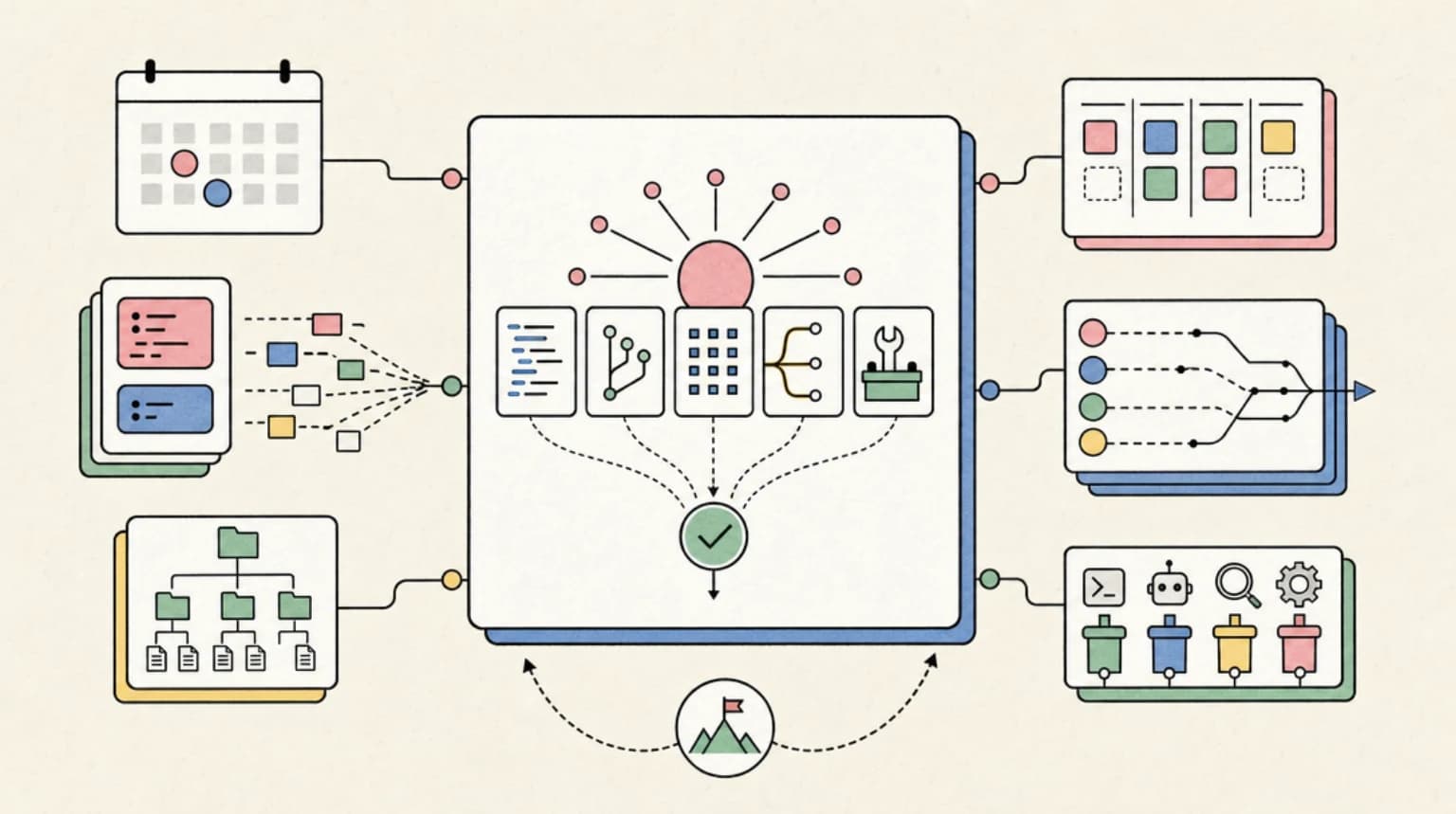
OpenAI DevDay 2026 Recap: What Shipped and What to Test
TL;DR
Everything OpenAI announced at DevDay 2026: GPT-6.1 Sol at $2/$10, Ultrafast, Decisions API, Agents API, cloud Codex, and what to test first.
OpenAI's DevDay 2026 recap lists more than 20 announcements, and for developers three of them change what you build this month: GPT-6.1 Sol, which OpenAI says nearly matches GPT-6 Astra on agentic coding at one-fifth of Astra's price; Ultrafast, a speed tier that is gated to the new Pro 500 and Enterprise plans; and the Decisions API, a fast classifier-style endpoint that is still in limited preview. The rest is mostly ChatGPT product surface: Dots, Spaces, and a marketplace. This post sorts the announcements by what you can use today and what to test first.
Last updated: October 2, 2026
This follows our pre-event post, which sorted the rumors from the confirmed. Several of the rumored items held up: the always-on assistant (Dots), a faster API tier (Ultrafast), and a new top Pro tier (Pro 500) all shipped.
What shipped for developers#
| Announcement | What it is | Availability (per OpenAI) |
|---|---|---|
| GPT-6.1 Sol | Upgrade to GPT-6 Sol, API id gpt-6.1-sol | API, plus Plus, Pro, Business, Enterprise and Edu in ChatGPT Work and Codex. Not yet in Chat |
| Ultrafast | Up to 8x faster generation (300 tokens per second) in Codex, up to 6x in the API | GPT-6 Astra Ultrafast today on Pro 500 and Enterprise. GPT-6.1 Sol Ultrafast "coming soon" |
| Decisions API | Luna answers from a set of answers you define: classify, route, or pick an agent's next action | Limited preview, broad release planned "in the coming days" |
| Agents API with computer use | Computer use plus Codex's multi-agent, tool search, tool calling and context compaction, with OpenAI running the infrastructure | API, and Codex and ChatGPT Work on Pro 500 and Enterprise |
| Codex in the cloud | Run Codex on a computer, from a phone, or in the cloud, with reusable environments | Plus, Pro, Business, Healthcare, Education, Enterprise |
| Codex Security Cloud | Scheduled or on-demand repository scans, deduplicated findings, patches prepared in the cloud | Pro, Business, Enterprise and Edu, desktop and web |
| Bedrock Managed Agents | OpenAI agents running entirely in AWS | Via AWS |
| Sign in with ChatGPT | Use your ChatGPT plan allowance in 16 partner tools, including Devin, Notion, Vercel and T3 | Plan usage for Plus and Pro in participating tools |
| Pro 500 | New plan at 25 times the ChatGPT Plus allowance, includes Ultrafast | Available now |
The ChatGPT-side launches are Dots (always-on agents, on Pro and Business Premium in eligible markets), ChatGPT Space and Pages for shared work, plugin extensions, and an enterprise Marketplace with 32 launch partners. Those matter if you sell into teams that live in ChatGPT. They do not change how you call a model.
GPT-6.1 Sol: the price is the story#
Our GPT-6.1 Sol release guide has the full benchmark table, the safety hold on Astra 6.1 and the run instructions. This section stays on cost. OpenAI's Sol launch post frames it as "near-Astra intelligence for a fifth of the price". Prices per million tokens, last verified October 2, 2026 on that page:
| Model | Input | Cached input | Output |
|---|---|---|---|
| GPT-6 Astra | $10 | $1 | $50 |
| GPT-6.1 Sol | $2 | $0.10 | $10 |
| GPT-6 Luna | $0.10 | $0.01 | $0.50 |
The cached-input row is the one agent builders should read twice. Sol's cached rate is a tenth of Astra's, while its fresh input and output rates are a fifth.
Here is what that does to one agent run. This is an illustrative calculation with our own assumptions, not an OpenAI figure: 20 turns, each with 30,000 input tokens of which 27,000 are cached, and 1,000 output tokens.
| Per-run cost | Astra | Sol 6.1 |
|---|---|---|
| Cached input (540,000 tokens) | $0.54 | $0.054 |
| Fresh input (60,000 tokens) | $0.60 | $0.12 |
| Output (20,000 tokens) | $1.00 | $0.20 |
| Total | $2.14 | $0.37 |
That is about 5.7x cheaper for the same token shape, a little better than the headline 5x because the cached-read discount is 10x rather than 5x. The question is whether Sol's quality holds on your tasks.
On quality, the numbers are OpenAI's own. On DeepSWE v1.1, OpenAI says Sol matches Astra at roughly one-fifth of the cost. On OSWorld 2.0 it says Sol lands within 2.1 points of Astra at maximum effort at about one-seventh the cost per task. OpenAI also says Astra "still achieves the highest score" on its scientific research benchmark and should be used for the hardest science tasks. Treat all of this as vendor-reported until you have run your own evals. Our Opus 5.5 vs Sol vs Grok 4.7 pricing post has the wider price-war context, and the Astra release guide covers the model Sol is chasing.
What to test Monday#
- Swap Sol into one agent loop and compare cost per solved task. Keep your task set fixed and record pass rate, not just price. A model that is 5x cheaper and fails twice as often is not cheaper.
- Try Decisions API if you run a classification or routing step. It is in limited preview, so apply for access now. OpenAI says the model behind it is Luna. A developer on Hacker News reported a batch test of Luna against Jev on an 800-row dataset: about 1.6x the throughput at 1.2x the cost with near-identical classifications. That is one team's internal test, not a benchmark. Our Jev release guide covers the model it is being compared to.
- If you ship a small app, look at Sign in with ChatGPT. It lets your users spend their own plan allowance instead of you billing tokens. It is available globally for identity and to Plus and Pro for plan usage in participating tools.
- If you run agents on AWS, read the Bedrock Managed Agents page. It is OpenAI's hosted-agent answer for teams that cannot leave AWS. We covered the earlier version in OpenAI Codex, Managed Agents, and AWS.
Where it breaks#
- Ultrafast is gated. Today it covers Astra on Pro 500 and Enterprise. The 8x speedup applies to Codex, and the API figure is 6x. Sol Ultrafast is "coming soon", so the cheap-and-fast combination does not exist yet.
- The Ultrafast price multiplier is not in OpenAI's written recap. Simon Willison's live blog quotes Sam Altman on stage saying it costs 6x the standard price. Check the API docs before you budget.
- Sol is not in Chat yet. It is in ChatGPT Work and Codex and in the API, per OpenAI.
- Decisions API is not generally available. "Limited preview" with a broad release planned "in the coming days" is a plan, not a ship date.
- Dots had a rough first day for at least one hands-on reviewer. Willison tried the create-a-dot link and was told to switch to a desktop computer, after a live demo stalled on stage.
- Plan limits are disputed. Some commenters say the $200 plan's usage was cut when Pro 500 launched. We did not verify that against OpenAI's pricing page, so check your own plan's limits.
What people are actually saying#
- Agreement on the platform pieces. One Hacker News commenter who does not use Codex called cloud agents, Sign in with ChatGPT and the Slack integration reasons to consider switching from Cursor (Hacker News).
- The sharpest disagreement. Another commenter on the same thread called the cloud agents and Dots copies of competitors' products, questioned why no benchmarks were shown against Sonnet 5.5, and found the live demos weak (Hacker News). OpenAI's Sol page does publish benchmarks, though mostly against its own models and Opus 5.5, so the complaint is really that the keynote showed none.
- Decisions API as validation. Several commenters read it as OpenAI's answer to Jev, with one calling it validation for the whole space and another asking whether OpenAI will match Jev's lower per-token price (the commenter put Luna's input at $0.10 per million against $0.04 for Jev; we have not verified Jev's number) (Hacker News).
- The live blog read. Willison called Sign in with ChatGPT something he had wanted for years, and confirmed in the Hacker News thread that the front dozen rows of the room were reserved for OpenAI employees, a useful note when reading reports of the crowd's reaction (live blog, comment).
- Reddit runs both ways. One commenter in a r/singularity thread calls 6.1 Sol a clean Sonnet replacement, while a commenter in the r/ChatGPTPro thread predicts Dots will fail the way the earlier marketplace did.
Takeaway#
If you build agents, the action item is one experiment: run your own task set through Sol and compare cost per solved task. If you do bulk classification, apply for Decisions API. If your product lives inside ChatGPT, the plugin and marketplace changes are where the new distribution is. Everything else in the recap is product surface you can ignore for now.
FAQ#
What is GPT-6.1 Sol and how much does it cost?#
It is OpenAI's upgrade to GPT-6 Sol, available in the API as gpt-6.1-sol at $2 per million input tokens, $0.10 per million cached input tokens, and $10 per million output tokens, per OpenAI.
What is Ultrafast and who can use it?#
Ultrafast is a premium speed tier: up to 8x faster generation in Codex and up to 6x in the API. GPT-6 Astra Ultrafast is available now on Pro 500 and Enterprise plans, and GPT-6.1 Sol Ultrafast is coming soon, per the DevDay recap.
What is the Decisions API?#
A preview endpoint that uses Luna to answer from a set of answers you define, so you can classify content, route requests, or choose an agent's next action. It is in limited preview with a broad release planned in the coming days.
Is GPT-6.1 Sol better than Claude?#
OpenAI reports it ahead of Opus 5.5 on several of its chosen benchmarks at lower cost, but those are vendor-run comparisons. Run your own tests, and see our Opus 5.5 release guide and Sonnet 5.5 release guide for the Anthropic side.
Continue Reading#
- OpenAI DevDay 2026: What to Expect - the pre-event sort of confirmed, reported and rumored
- GPT-6.1 Sol Release Guide - the full Sol benchmark table, safety hold and run instructions
- GPT-6 Astra Release Guide - the model Sol is measured against
- GPT-6 Sol vs Claude Opus 5.5 vs Grok 4.7 - the September price war in one table
- Typesafe Jev Release Guide - the classifier-style model Decisions API is compared to
Sources#
- DevDay 2026 Recap: OpenAI's list of announcements and availability (primary)
- Introducing GPT-6.1 Sol: pricing, model id, benchmarks and availability (primary)
- Bedrock Managed Agents powered by OpenAI: AWS page linked from the recap (primary)
- OpenAI DevDay 2026 live blog: Simon Willison's on-site notes, source for on-stage statements
- DevDay 2026 Recap on Hacker News: community discussion
- r/singularity and r/ChatGPTPro: community discussion (search excerpts only; threads not read in full)
Get the next deep dive like this in your inbox
One email a week on News and the rest of the AI dev stack. Free.
Read next on AI coding tools
OpenAI DevDay 2026: What to Expect - Confirmed, Reported, and Rumored
OpenAI DevDay 2026 is Tuesday, September 29 at Fort Mason in San Francisco, with Sam Altman's keynote livestreamed free at 10:00 a.m. PT. What OpenAI has confirmed, what Fortune and BleepingComputer have reported, which rumors are still unconfirmed, and what each would change for developers.
8 min readGPT-6 Astra Release Guide: Benchmarks, $10/$50 Pricing, and How to Run It in Codex and OpenCode
GPT-6 Astra is OpenAI's max-capability model: 1.05M context, $10/$50 per million tokens, the first OpenAI model rated Critical for cyber, and new highs on Terminal-Bench 4.0 and OSWorld 2.0. What it is, what the benchmarks do and do not say, and the verified commands to try it.
8 min readGPT-6 Sol vs Claude Opus 5.5 vs Grok 4.7: The September 2026 Price War
Three frontier launches in 48 hours repriced the agentic workhorse tier: Grok 4.7 at $2/$6 (Sep 21), Claude Opus 5.5 at $4/$20 with $0.20 cache reads (Sep 22), and GPT-6 Sol at $2/$10 with Luna at $0.10/$0.50 (Sep 22). Same-day-verified rates, honest benchmark attribution, and a decision guide.
9 min readNew here? Start with
Technical content at the intersection of AI and development. Building with AI agents, Claude Code, and modern dev tools - then showing you exactly how it works.