Ox Alpha on OpenCode: The Free Stealth Model, Specs, Privacy Split, and How to Run It

TL;DR
OpenCode dropped Ox Alpha as a free stealth model on August 20, 2026: 1M context, multimodal, near-unlimited for about a week.
OpenCode put a nameless coding model on the menu on August 20, 2026, called it Ox Alpha, and priced it at zero for about a week. The pitch: 1 million tokens of context, text plus image plus video in, near-unlimited usage, and on OpenCode a zero-retention claim. OpenRouter listed the same model the same hour as stealth/ox-alpha. Nobody has claimed it.
A free 1M-context reasoning model with tool calling is useful this week even if the lab stays quiet. The catch is that OpenCode and OpenRouter do not describe the data policy the same way, the free window is already congested, and the identity guesses are still guesses.
This post covers what is confirmed and the fastest way to run it: through OpenCode. We verified a one-shot opencode run --model opencode/x-preview-f-free against the live endpoint on August 21, 2026. It answered.
Official Sources#
| Resource | Description |
|---|---|
| OpenCode announcement | Free for the next week, 1M context, multimodal, zero data retention, 100T tokens/day capacity |
| OpenCode Go follow-up | Same model on Go for the next 6 days, free, does not count against Go usage |
| OpenCode Go | Referral signup: $5 credits plus $5 off the first month with code M6HEHM4JM5 |
| OpenCode Zen docs | Model id x-preview-f-free, free pricing, zero-retention note |
| OpenRouter: Ox Alpha | Model id stealth/ox-alpha, 1,048,576 context, 131,072 max output |
| OpenRouter stealth terms | Default stealth program EULA (July 6, 2026) |
| OpenCode usage: ox-alpha | Public token volume, users, cache ratio |
Ox Alpha (stealth model) is free for the next week - 1M Context - Multi-modal - Zero Data Retention Generous rate limits, near unlimited usage We have capacity for 100T tokens per day, lets see what you can do
That post is the contract for the OpenCode path. Numbers below trace to it, the Zen docs, or the OpenRouter model page. Treat identity threads as color, not evidence.
What Shipped#
Ox Alpha is a stealth preview: a third-party lab serving a reasoning model through OpenCode and OpenRouter without putting its name on the card. OpenRouter's model page calls it a model "designed for coding, sustained agentic work, and production workloads." Released August 20, 2026.
Confirmed capabilities, from OpenCode's local model catalog (opencode models --verbose) and the OpenRouter model page on August 21, 2026:
| Spec | Value |
|---|---|
| Context | 1,000,000 tokens (OpenRouter lists 1,048,576) |
| Max output | 131,072 tokens |
| Input | Text, image, video |
| Output | Text |
| Tool calling | Yes |
| Structured output | response_format JSON, no JSON-schema enforcement (OpenRouter) |
| Reasoning variants | low, high, max |
| Price this window | $0 / $0 / $0 (input / output / cache read) |
| OpenCode Zen id | opencode/x-preview-f-free |
| OpenCode Go id | opencode-go/ox-alpha-free |
| OpenRouter id | openrouter/stealth/ox-alpha |
There is no vendor benchmark card, Artificial Analysis page, or model card. Anyone quoting SWE-bench numbers for "Ox Alpha" is measuring a nameless endpoint. Skip those until a lab owns the weights.
The free window is short. OpenCode's first post said "the next week" on August 20. The Go follow-up on August 21 said "the next 6 days" and that it will not count against Go usage. Plan on it disappearing around August 27, 2026, and confirm against the Zen pricing table.
The Privacy Split#
This is the part most writeups skip, and it is the part that decides whether you should point it at a real repo.
On OpenCode, the Zen privacy section is explicit: Ox Alpha Free's provider "follows a zero-retention policy and does not use your data for model training." Ox Alpha is not on the exception list that covers Big Pickle, MiMo-V2.5 Free, Hy3 Free, the NVIDIA Nemotron trial endpoints, OpenAI's 30-day retention, Anthropic's 30-day retention, or Muse Spark's contributor tier. OpenCode's launch post said the same thing in four words: zero data retention.
On OpenRouter, the model page banner says the opposite of ZDR: "Prompts and completions for this model are retained by the provider and are not used for training." OpenRouter's own follow-up on the announcement:
Notes for this stealth model: It is free This time, the provider does not train on your prompts or completions
"This time" is doing work. The default Stealth Program EULA (updated July 6, 2026) is a training-data license: you grant OpenRouter and the unnamed provider rights to use your prompts and completions to train and improve the stealth model, in exchange for free access. Ox Alpha's model page and that tweet walk the training part back. They do not walk retention back. The supplemental terms list has no Ox Alpha entry, so there is no third document that reconciles the two.
Same weights (probably). Two hosts. Two data stories. If the reason you are here is "free frontier-adjacent coding," use OpenCode. If the reason you are here is "I want this in a harness that already speaks OpenRouter," know you are on the retain-not-train path, not ZDR.
Do not put customer data, secrets, or a private product repo through either path just because the token price is zero. A stealth preview is still an unnamed third party.
Who Is It? (Unconfirmed)#
The honest answer is: we do not know, and you should not build a workflow that depends on the guess.
The public guesses, as of August 21, 2026:
- GLM-5.3 Flash (Z.ai / Zhipu). The most repeated claim on X and in the Hacker News thread. Timing fits: GLM-5.3 launched August 14 with a 1M window. Z.ai has not announced a Flash variant. OpenRouter's app chart lists ZCode in the top five by tokens, which is a hint, not a fingerprint.
- Xiaomi MiMo V3. Capacity and vision arguments. OpenCode already has a separate free
mimo-v2.5-freeendpoint. - Tencent Hy4, MiniMax, others. Same genre of stylometry.
Until a lab claims it, treat Ox Alpha as an unnamed endpoint with a free week. If it turns out to be a GLM-5.3 sibling, the durable writeup is our GLM-5.3 free and cheap access map, not this preview.
Running It in OpenCode#
Install from the OpenCode docs:
curl -fsSL https://opencode.ai/install | bash
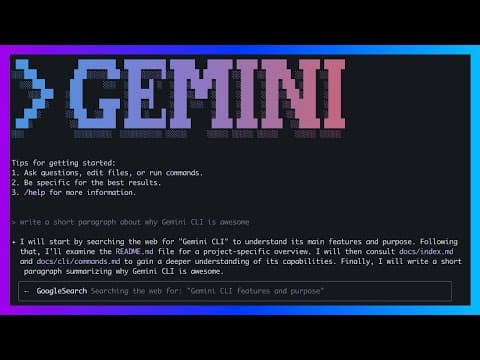
Connect a provider in the TUI with /connect. For this model, pick OpenCode Zen (or OpenCode Go). Then /models and select Ox Alpha Free (Unlimited).
The one-shot path we actually ran:
# Zen (verified 2026-08-21: returned "pong")
opencode run --model opencode/x-preview-f-free \
  "Reply with the single word pong and nothing else."

# Longer agent loop at max reasoning
opencode run --model opencode/x-preview-f-free --variant max \
  "find the flaky test in this repo and explain why it fails"
On OpenCode Go the id is different and, for this window, does not count against Go usage:
opencode run --model opencode-go/ox-alpha-free --variant max \
  "review the last commit and list the three riskiest changes"
Variants are low, high, and max. Use max for multi-step agent work. Use high or low when you are iterating on a single file and do not want a long thinking trace. The catalog marks this model as a reasoning model with interleaved reasoning_content.
OpenRouter works as a provider inside OpenCode too (openrouter/stealth/ox-alpha). Use that only if you already live on OpenRouter keys and you have read the retention banner. The OpenCode-native ids are the ones that match the ZDR claim.
This is the same OpenCode setup we used for the DeepSeek V4 Flash 0731 guide and the GLM 5.2 walkthrough. If you are new to the agent itself, the OpenCode developer guide is the longer tour.
What the First Day of Traffic Looks Like#
OpenCode's public ox-alpha usage page, fetched August 21, 2026, already had it at rank 6 by token volume: 1.8T tokens observed, 57K unique users, 865K completed sessions, 2.1M tokens per session on average, 94% of input tokens cached, $0.00 total spend. The chart axis on that page starts in June, which is the page's default window, not the model's lifetime. Ox Alpha only appeared August 20.
OpenRouter's model page, same day, showed a single stealth provider, 30 tokens/s throughput (P50), 3.15s latency (P50), and 99.05% availability. Top apps by tokens included Hermes Agent, Claude Code, and ZCode. Replies under OpenCode's Go post reported lag, ~20 tokens/s, and dropped connections. "Near unlimited" is the marketing line; the live endpoint is a free preview under a crowd. If a run stalls, retry, or drop to high.
When to Use It, When to Skip It#
Use Ox Alpha this week when:
- The repo is yours, open, or otherwise fine to send to an unnamed provider
- You want a 1M-context, multimodal coding agent without spending
- You are evaluating a cheap default for agent loops before paying GLM-5.3 or DeepSeek V4 Flash rates
- You can live with congestion and a hard stop around August 27
Skip it when:
- The repo has secrets, customer data, or anything you would not paste into a stranger's form
- You need an SLA, a named model, or a paper trail
- Your current paid default is already faster. A free preview at 20-30 tps is not a promotion if you wait on every stream
- You were about to point a fleet at it as a silent default. The four-way agent comparison is still the harness decision. This is only a model slot.
After the window closes, fall back to GLM-5.3 on OpenCode Go, DeepSeek V4 Flash if you want the cheaper MIT-licensed option, or whatever named model you already trust. A stealth drop is a week of samples, not a new default.
FAQ#
What is Ox Alpha?#
A stealth reasoning model for coding and long-horizon agent work, listed on OpenCode and OpenRouter on August 20, 2026. The lab has not identified itself. Confirmed specs: 1M-token context, 131K max output, text/image/video input, tool calling, low/high/max reasoning variants.
Is Ox Alpha free?#
Yes, for a limited window. OpenCode said "the next week" on August 20 and, on August 21, "the next 6 days" on Go with no charge against Go usage. OpenRouter lists $0 / $0. Check the Zen pricing table before you depend on it.
How do I run Ox Alpha in OpenCode?#
Install OpenCode, /connect to OpenCode Zen or Go, then:
opencode run --model opencode/x-preview-f-free --variant max "your task"
On Go, use opencode-go/ox-alpha-free. In the TUI, /models and pick Ox Alpha Free.
Does Ox Alpha keep my prompts?#
On OpenCode, Zen's docs say the provider is zero-retention and does not train on your data. On OpenRouter, the model page says prompts and completions are retained and are not used for training. Those are different policies. Prefer the OpenCode ids if retention is the reason you are reading this.
Is Ox Alpha GLM-5.3 Flash?#
Unconfirmed. It is the most common guess, and GLM-5.3's August 14 launch plus ZCode traffic on the OpenRouter app chart make it plausible. Z.ai has not said so. Run it as an unnamed preview, not as a GLM-5.3 substitute.
Should I use this on a work repo?#
Only if your company would accept an unnamed third-party provider, and only on the OpenCode ZDR path if you are going to do it at all. For anything proprietary, wait for a named model.
Sources#
| Source | URL | Fetched |
|---|---|---|
| OpenCode announcement | https://x.com/opencode/status/2090544355824038300 | 2026-08-21 |
| OpenCode Go follow-up | https://x.com/opencode/status/2090758645499728234 | 2026-08-21 |
| OpenRouter announcement | https://x.com/OpenRouter/status/2090544970923184269 | 2026-08-21 |
| OpenRouter model-specific note | https://x.com/OpenRouter/status/2090544983141142722 | 2026-08-21 |
| OpenRouter Ox Alpha page | https://openrouter.ai/stealth/ox-alpha | 2026-08-21 |
| OpenRouter stealth EULA | https://openrouter.ai/terms/stealth | 2026-08-21 |
| OpenCode Zen docs | https://opencode.ai/docs/zen/ | 2026-08-21 |
| OpenCode ox-alpha usage | https://opencode.ai/data/unknown/ox-alpha | 2026-08-21 |
| OpenCode install docs | https://opencode.ai/docs/ | 2026-08-21 |
| OpenCode Go | https://opencode.ai/go?ref=M6HEHM4JM5 | 2026-08-21 |
| Hacker News: Ox Alpha | https://news.ycombinator.com/item?id=49381896 | 2026-08-21 |
| Z.ai: GLM-5.3 | https://z.ai/blog/glm-5.3 | 2026-08-21 |
Local opencode models --verbose plus a live opencode run --model opencode/x-preview-f-free | this machine | 2026-08-21 |
Last updated: August 21, 2026
Some links to tools above are referral links - see our affiliate disclosure.
Continue Reading#
- OpenCode Developer Guide 2026 - install, providers, and how the agent actually works
- Where to Run GLM-5.3 Free and Cheap - the named model this preview is most often compared to
- DeepSeek V4 Flash 0731 on OpenCode - the cheap MIT-licensed fallback once the free week ends
- Claude Code vs Codex vs Cursor vs OpenCode - pick the harness first, then slot the model
- GLM 5.2 in 9 Minutes - the previous GLM generation, same OpenCode-centered format
Get the next deep dive like this in your inbox
One email a week on opencode and the rest of the AI dev stack. Free.
Read next on AI coding tools
OpenCode Developer Guide: The Open Source AI Coding Agent with 160K Stars
OpenCode is the fastest-growing open-source AI coding agent - 160K GitHub stars, 7.5M monthly users, 75+ model providers. Here is how to set it up, configure models, and use it effectively in your workflow.
11 min readWhere to Run GLM-5.3 Free and Cheap: Flash, Batch and Provider Prices (2026)
GLM-5.3 routes compared, verified October 1, 2026: OpenRouter hosts list it from $0.12 per million input tokens, GLM-5.3-Flash costs $0.15 input and $0.50 output from Z.ai, batch drops to $0.45/$2.00, and the Coding Plan starts at $18 per month.
10 min readDeepSeek V4 Flash 0731: The Official Release, Benchmarks, and How to Run It in OpenCode
DeepSeek shipped the official V4 Flash release on July 31, 2026. The re-post-trained 0731 build beats V4-Pro-Preview on agent benchmarks at $0.14/$0.28 per million tokens. Here is what changed and how to run it through OpenCode today.
7 min readNew here? Start with
Technical content at the intersection of AI and development. Building with AI agents, Claude Code, and modern dev tools - then showing you exactly how it works.