DeepSeek V4 Flash 0731: The Official Release, Benchmarks, and How to Run It in OpenCode
TL;DR
DeepSeek V4 Flash 0731 is the official V4 Flash API release, re-post-trained to beat V4-Pro-Preview on agent benchmarks. How to run it in OpenCode today.
DeepSeek moved V4 Flash out of preview on July 31, 2026. The official API release, build name DeepSeek-V4-Flash-0731, keeps the exact same architecture and size as the preview - the changelog is explicit that it "was only re-post-trained" - and yet the agent benchmark numbers now "far exceed V4-Pro-Preview," the much larger model in its own family. The small model beating the big one on agentic work, at roughly a third of the output price, is the story.
This post covers what shipped, what it costs, and the fastest way to actually run it: through OpenCode, the same setup we used for our GLM 5.2 walkthrough. It is also the model our own site automations run on, so the numbers below are backed by daily production use, not a one-off demo.
Official Sources#
| Resource | Description |
|---|---|
| DeepSeek API Change Log | The official 0731 release entry with benchmarks and API notes |
| DeepSeek release note on X | Scope of the update: Flash API only, V4-Pro official release "coming ASAP" |
| OpenCode Docs | Install and configuration for the coding agent used below |
What Shipped in 0731#
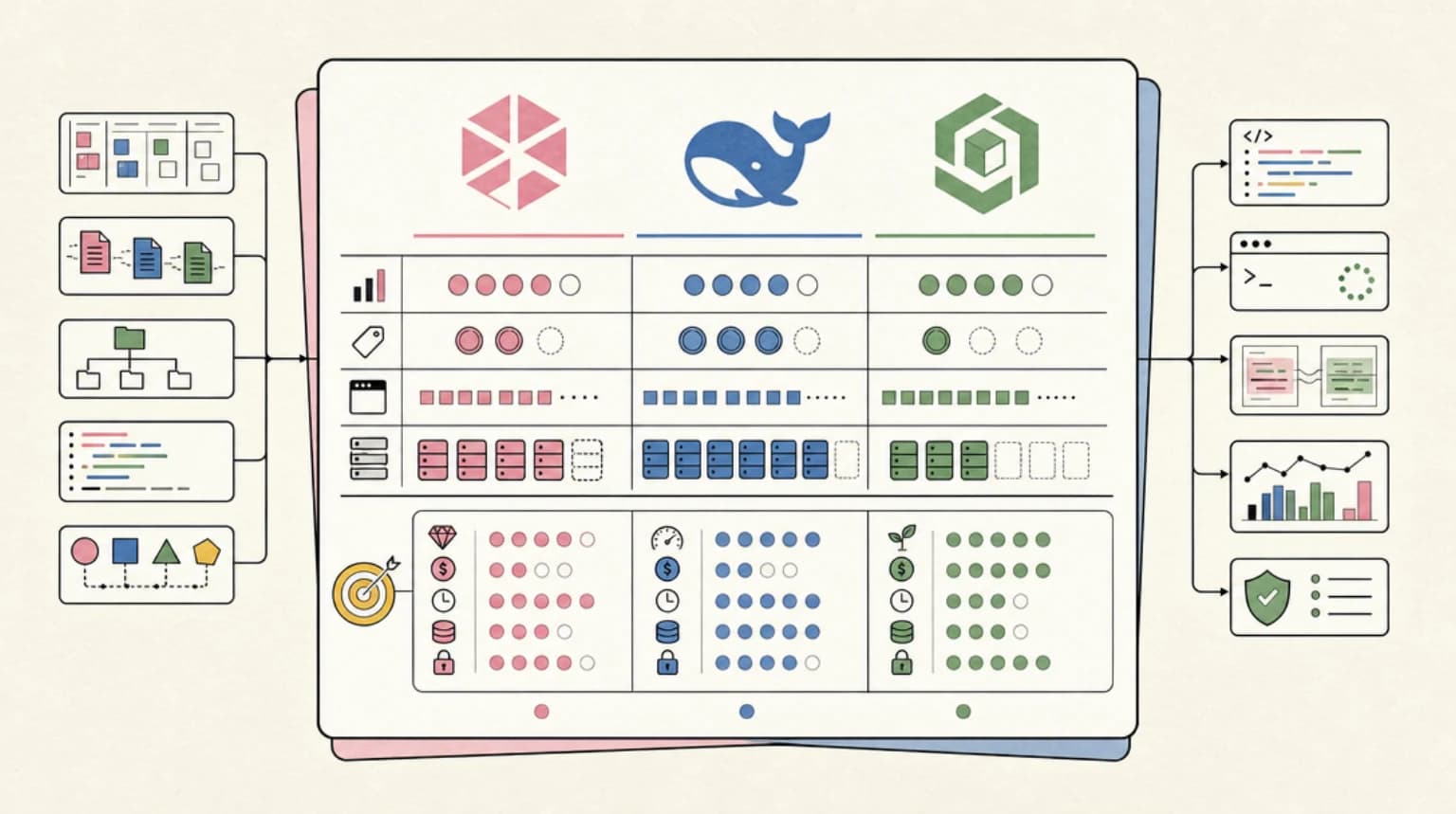
DeepSeek V4 Flash first appeared on April 24, 2026 as the smaller half of the V4 family: a 284B-parameter MoE with 13B active per token, a 1M-token context window, and MIT-licensed weights, next to the 1.6T-parameter V4 Pro. The 0731 build is the official API release of that model, now in public beta.
Three things changed, per the official changelog:
- Re-post-training, not a new model. Same architecture, same size. All the gains below come from post-training.
- Native Responses API support, and the build is "specifically adapted for Codex" - meaning harnesses built on OpenAI's Responses format work without an adapter.
- Agent benchmark scores that pass V4-Pro-Preview. DeepSeek's own framing, and the reason this release matters more than a typical point update.
The update applies only to the deepseek-v4-flash API model. The V4-Pro API and the app/web models are unchanged; DeepSeek says the official V4-Pro release is coming soon.
The Benchmarks#
From the official changelog, the 0731 numbers on agent tasks:
| Benchmark | DeepSeek-V4-Flash-0731 |
|---|---|
| Terminal Bench 2.1 | 82.7 |
| Cybergym | 76.7 |
| Toolathlon (verified) | 70.3 |
| DeepSWE | 54.4 |
| NL2Repo | 54.2 |
For scale: Terminal Bench 2.1 at 82.7 is above the 76.1 Kimi K3 posted at its launch two weeks ago, and K3 was already leading every proprietary model we tracked on that benchmark. Treat cross-announcement comparisons with the usual caution - different labs, different harnesses - but the direction is unmistakable: the open-weight models now own long-horizon terminal work.
Independent measurement agrees. Artificial Analysis scores the 0731 reasoning build (max effort) at 50 on Intelligence Index v4.1, ranking #2 of 162 models measured, against a median of 17. Their one caveat: it is verbose, generating 210M tokens across the eval suite versus a 62M median, so real costs run higher than the sticker price implies.
Pricing and Context#
First-party API pricing, unchanged in this release:
| Price per 1M tokens | |
|---|---|
| Input (cache miss) | $0.14 |
| Input (cache hit) | $0.003 |
| Output | $0.28 |
That output rate is roughly a third of V4 Pro's $0.87, and the cache-hit input rate is a 98% discount - the same cache-first economics we broke down in the DeepSeek V4 developer guide. Context is 1M tokens with 384K max output, which means whole repositories and long agent traces fit without aggressive compaction.
The verbosity caveat matters here: a reasoning model that emits 3x the median token count erodes some of the per-token advantage. It is still one of the cheapest frontier-adjacent options on the market, but budget on tokens generated, not price per token.
Running It in OpenCode#
The fastest way to put 0731 through real work is OpenCode. Install it with the official one-liner from the OpenCode docs:
curl -fsSL https://opencode.ai/install | bash
The model is available as opencode-go/deepseek-v4-flash (and on the opencode provider as deepseek-v4-flash). It supports two reasoning variants, high and max, selected with --variant:
# One-shot run at max reasoning effort
opencode run --model opencode-go/deepseek-v4-flash --variant max \
  "find the flaky test in this repo and explain why it fails"

# Interactive session with the model preselected
opencode --model opencode-go/deepseek-v4-flash
Our take after running it as the default model for this site's own automations: max is the right variant for multi-step agent tasks - the Terminal Bench-style loops where the model plans, runs commands, and self-corrects. high is noticeably faster and cheaper for single-file edits and review passes, and given the verbosity numbers above, dropping to high when the task does not need long-horizon planning is the easiest cost lever you have.
The Codex adaptation in 0731 is worth noting even if you live in OpenCode: it means the same model slots into Responses-API harnesses without translation glue, so switching harnesses does not mean switching models.
Flash vs Pro: Which One Now?#
The awkward truth of this release is that DeepSeek's own numbers put the 284B Flash ahead of the 1.6T Pro preview on agent benchmarks. Until the official V4-Pro release lands, the decision guide is short:
Use V4 Flash 0731 when:
- Agentic coding is the workload - terminal loops, repo navigation, tool calling
- You are cost-sensitive and can exploit the $0.003 cache-hit rate
- You want MIT-licensed weights and a self-hosting path
- You run a fleet - the cost-quality math tilts hard toward Flash at scale
Wait for or use V4 Pro when:
- Your workload is broad reasoning or knowledge work rather than agent loops
- You need the strongest single-shot answers and cost is secondary
- The official Pro release ships with its own post-training pass - DeepSeek says it is imminent
For how the V4 family stacks up against the other open-weight contenders, our GLM 5.2 vs DeepSeek V4 vs Qwen3 showdown is the fuller comparison.
What This Means for Frontier Labs#
Zoom out from the setup guide and 0731 is a data point in a squeeze that is now visibly reshaping frontier lab pricing. An MIT-licensed 284B model at $0.14/$0.28 per million tokens posting a Terminal Bench score above every proprietary model we track sets a floor: any lab charging real money for agentic coding now has to explain what the premium buys.
OpenAI has already moved. One day before this release, it cut GPT-5.6 Luna by 80% to $0.20/$1.20 per million tokens and Terra by 20%, putting its entry tier within sight of open-weight pricing. The mechanism behind that cut matters as much as the number: OpenAI says GPT-5.6 Sol rewrote its own production kernels and cut end-to-end serving cost by 20%. Models making models cheaper to run is a compounding loop, and it is the only way a closed lab keeps pace with a competitor that gives the weights away.
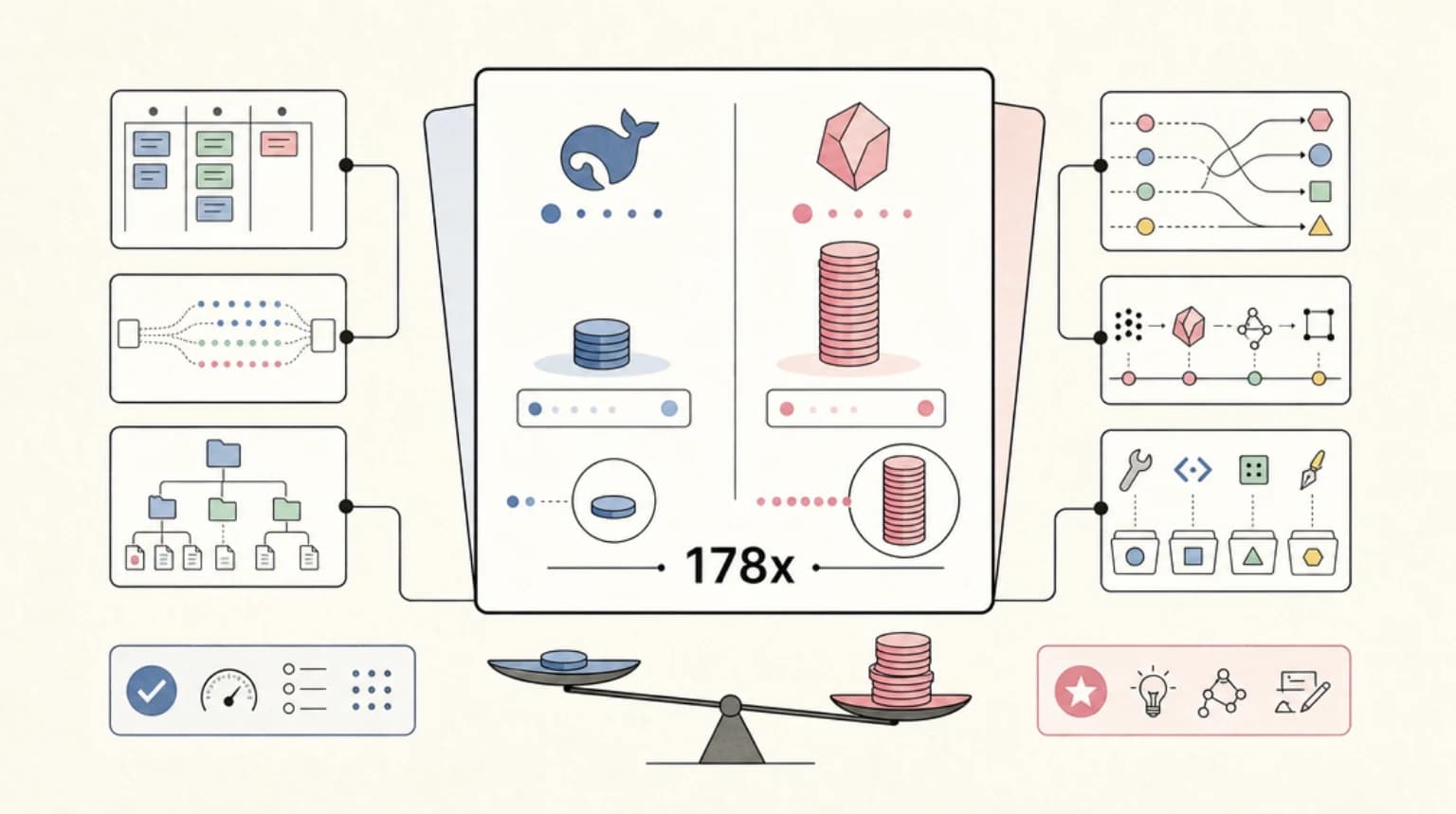
The contrast at the other end of the market is stark. Anthropic's Fable 5 lists at $10/$50 per million tokens - a 178x gap on output against Flash 0731, stretching past 3,500x on cached input, as we broke down in Fable 5 vs DeepSeek V4: cost vs quality. That spread only holds if the quality gap lands in the part of your workload that pays for it. On extraction, classification, and increasingly the terminal-loop agent work this release targets, it does not; on frontier reasoning and high-stakes single-shot answers, it still can.
So the likely shape of the next year: the middle collapses. Labs either race Luna down toward open-weight economics or defend a shrinking premium tier with capabilities the open models cannot yet match - and each 0731-style release moves that line. The winners of the squeeze in the meantime are unambiguous: anyone running fleets of agents on models like this one.
FAQ#
What is DeepSeek-V4-Flash-0731?#
The official API release of DeepSeek V4 Flash, shipped July 31, 2026 in public beta. It keeps the preview's architecture (284B MoE, 13B active) and was re-post-trained, which lifted its agent benchmarks past V4-Pro-Preview. You access it with the model id deepseek-v4-flash.
What does DeepSeek V4 Flash cost?#
$0.14 per million input tokens (cache miss), $0.003 on cache hits, and $0.28 per million output tokens on the first-party API. Note the model is verbose - Artificial Analysis measured 210M generated tokens on its eval suite versus a 62M median - so effective costs run above the per-token rates.
What is the context window?#
1 million tokens, with up to 384K output tokens.
How do I run DeepSeek V4 Flash in OpenCode?#
Install OpenCode (curl -fsSL https://opencode.ai/install | bash), then run opencode run --model opencode-go/deepseek-v4-flash --variant max "your task". The model supports high and max reasoning variants; use high for quick edits and max for long agent loops.
Does the 0731 update change V4 Pro?#
No. DeepSeek states the upgrade applies only to the V4-Flash API; the V4-Pro API and app/web models are unchanged, with the official V4-Pro release to follow.
Sources#
| Source | URL |
|---|---|
| DeepSeek API Change Log (0731 entry) | https://api-docs.deepseek.com/updates/ |
| DeepSeek announcement on X | https://x.com/deepseek_ai/status/2083084419515220191 |
| Artificial Analysis: DeepSeek V4 Flash | https://artificialanalysis.ai/models/deepseek-v4-flash |
| TechNode: DeepSeek puts V4-Flash API into public beta | https://technode.com/2026/07/31/deepseek-puts-v4-flash-api-into-public-beta/ |
| OpenCode Docs | https://opencode.ai/docs/ |
Last updated: July 31, 2026
Continue Reading#
- DeepSeek V4 Developer Guide - the full V4 family reference: API setup, caching, and migration notes
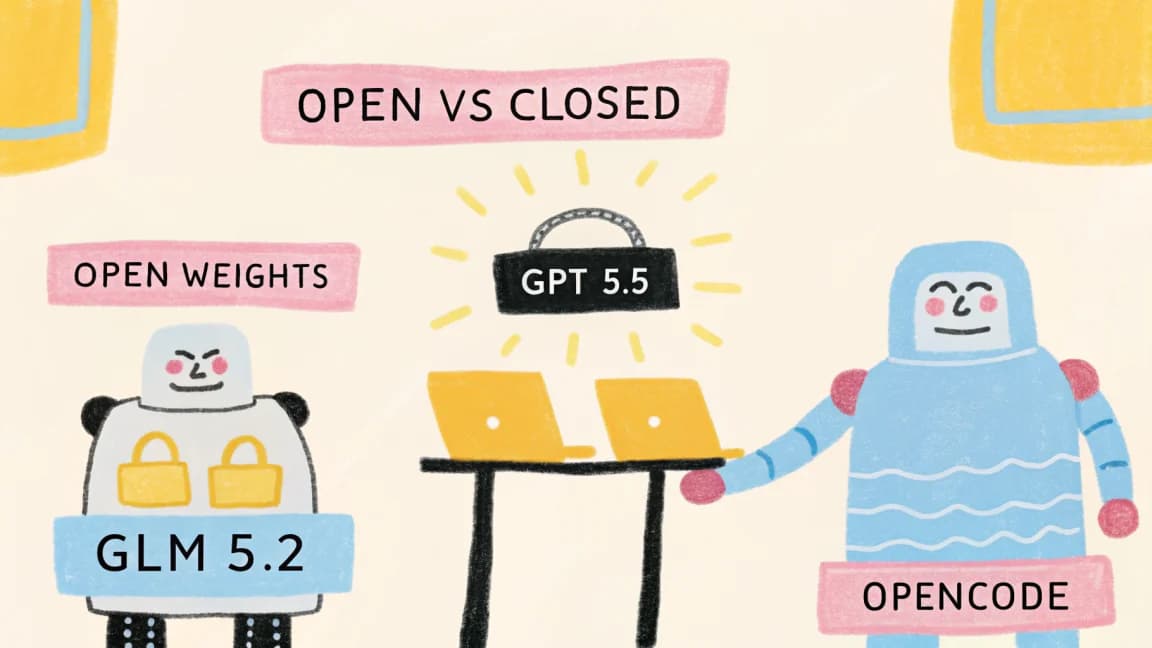
- GLM 5.2 in 9 Minutes - the same OpenCode-centered format for Zhipu's open-weight rival to GPT-5.5
- Kimi K3 in 10 Minutes - Moonshot's 2.8T open model, whose Terminal Bench lead this release just challenged
- GLM 5.2 vs DeepSeek V4 vs Qwen3 - the open-weights coding showdown
- Fable 5 vs DeepSeek V4: Cost vs Quality - when the cheap model is the right model
- DeepSeek V4 Flash Vision Exp: Experimental Vision, Limits, and How to Run It in OpenCode - DeepSeek's experimental vision model, its image input contract, and how to run it in OpenCode
Get the next deep dive like this in your inbox
One email a week on deepseek and the rest of the AI dev stack. Free.
Read next on AI coding tools
DeepSeek V4: The Developer's Guide to Flash and Pro
DeepSeek V4 developer guide: Flash vs Pro, pricing, OpenAI SDK setup with thinking mode and tool calling, and when to pick V4 over Claude or GPT.
10 min readGLM 5.2 in 9 Minutes: The Open-Weight Rival to GPT-5.5
GLM 5.2 in 9 minutes: a companion guide to the video on the open-weight GPT-5.5 rival, covering benchmarks, pricing and a live OpenCode demo.
6 min readKimi K3 in 10 Minutes: Moonshot AI's 2.8T Open Model, API Setup, Pricing, and Benchmarks
Kimi K3 from Moonshot AI is a 2.8T open model with a 1M-token context and an OpenAI-compatible API. How to call it, what it costs, and how it benchmarks.
6 min readNew here? Start with
Technical content at the intersection of AI and development. Building with AI agents, Claude Code, and modern dev tools - then showing you exactly how it works.