Gemini Robotics ER 2: Video-Feeding Embodied Reasoning Model Opens to All Developers

TL;DR
Google DeepMind's Gemini Robotics ER 2 is now publicly available via the Gemini API. It watches live video feeds to track task progress, orchestrates VLA models as tools, and coordinates multiple robots. The numbers: 57.4% progress classification, 91.3% moment finding at 0.96s offset.
On July 30, Google DeepMind launched Gemini Robotics ER 2, its second-generation "embodied reasoning" model. Unlike a vision-language-action (VLA) model that maps images straight to motor commands, ER 2 is positioned as a high-level brain: it streams live video, plans multi-step tasks, tracks its own progress, and hands motor execution off to any lower-level VLA model or robotics API. It is the first model in this family available to every developer, not just research partners - access is public through the Gemini API, Google AI Studio as gemini-robotics-er-2-preview, and in private preview on the Gemini Enterprise Agent Platform.
What changed under the hood#
The headline upgrade over Gemini Robotics ER 1.6 is temporal intelligence: the model consumes continuous video feeds instead of static snapshots. DeepMind calls out two new capabilities that follow from that:
- Progress classification. ER 2 assigns each video frame a progress level in five buckets (0-20% through 80-100%). It hits 57.4% accuracy on their progress classification evaluation, ahead of prior-generation models and other frontier models. The practical effect: a robot can tell a light bulb is only half-tightened and keep working, or retry a failed step instead of restarting the whole workflow.
- Moment finding. Given a task like "stop pouring when the cup is full," the model identifies the exact video frame where the event completes. It achieves 91.3% accuracy with a 0.96s mean absolute distance to the ground-truth moment, at roughly 4x the execution speed of much larger model families and a fraction of their compute. DeepMind argues sub-second latency is the actual requirement for safe physical operation.
Both capabilities feed the same loop: the robot watches itself, knows whether the current step succeeded, and decides when to advance. That self-correction loop is what separates this from a reactive VLA pipeline.
How developers actually use it#
ER 2 is built like an agent, not a control loop. Developers declare low-level control interfaces - a VLA model, a navigation API, a manipulator controller - as tools, then stream multimodal audio, video, or text into the model. It can also natively call Google Search or any user-defined function mid-task.
Two integration points matter for latency:
- Gemini Live API. ER 2 runs on the bidirectional streaming endpoint optimized for real-time work, which removes the jarring "stop-and-think" pauses between reasoning and action.
- Tool orchestration. DeepMind evaluated ER 2 against ER 1.6 across three control modes - real VLA, simulated VLA, and human tele-operation - and reports it outperforms ER 1.6 in all three.
The reference demos are concrete. A Boston Dynamics Spot demo uses ER 2 to orchestrate Spot's navigation and manipulator APIs so the robot fetches objects on natural-language commands. A multi-robot example pairs Apptronik's Apollo 2 with a Franka F3 Duo: robots with completely different form factors communicate through a shared semantic understanding and hand off sub-tasks. A Getting Started notebook shows the prompt-plus-tools configuration pattern, and the full robotics overview in the Gemini API docs covers setup.
From the archive
GitHub Actions Self-Repository Syntax: Reference Your Own Actions at the Running Commit
Jul 31, 2026 • 6 min read
GitHub Case-Folds 480TB of Code at >45 GiB/s: The Branchless Casefold Crate
Jul 31, 2026 • 8 min read
GitHub Adds Enterprise Team Model Policy Targeting: Admin Control Over Which AI Models Each Team Gets
Jul 31, 2026 • 5 min read
GitHub Models Is Retired: What to Use for Model Access Now
Jul 31, 2026 • 6 min read
Why this matters for agent developers#
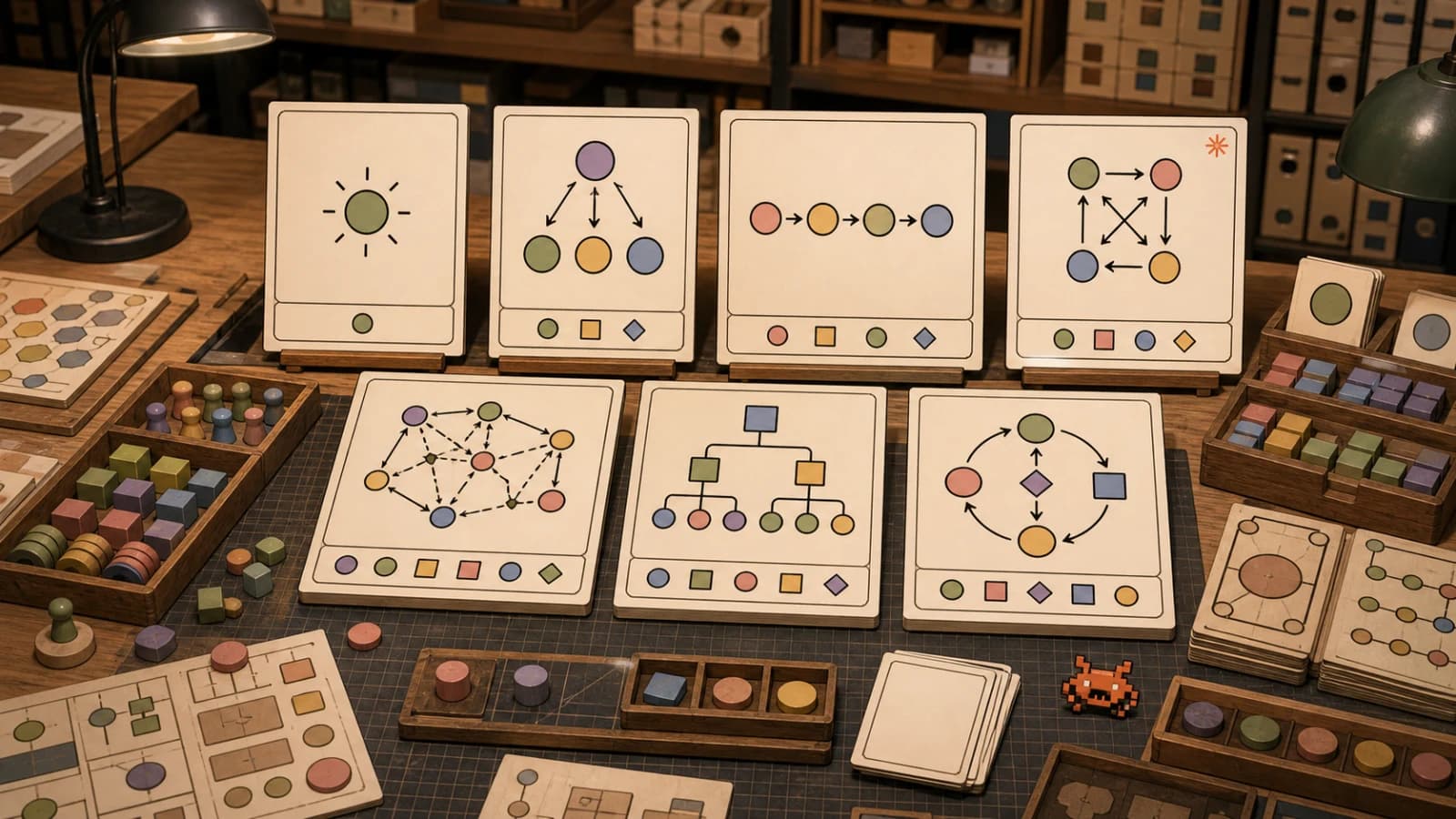
The interesting shift is architectural, not just "a better robot model." ER 2 treats a physical robot the way a coding agent treats a terminal: the model is the planner, and the hardware is a tool. That is the same pattern as agent orchestration in software - the planner model consumes multimodal context streams, selects tools, checks results, and retries - which means the seven agent orchestration patterns you already use in software map almost one-to-one onto physical systems. Tool-calling, progress tracking, and verification loops are identical problems; only the actuators differ.
That convergence shows in the safety work. DeepMind paired ER 2 with a new benchmark for "safe VLA orchestrators" that scores a foundation model on enforcing safety constraints, monitoring the environment, assessing physical feasibility, and seeking human clarification. On Safety Instruction Following and Human Proximity benchmarks, ER 2 beats ER 1.6 and other frontier models, and the demo shows a humanoid halting when a person enters its space and resuming only when clear. The safety technical report is published alongside the model.
The catch for most readers: robotics still needs the VLA layer, the robot, and the integration work. ER 2 is a brain without a body - you bring the motor control. If you are not in robotics, the durable takeaway is the temporal-progress pattern: a model that watches its own output stream and scores its own progress is a generically useful agent design, and ER 2 is the strongest public demonstration of it so far. The agent loop runs on video feeds and physical tools instead of diffs and sandboxes, but the verification discipline is the same one we track in our capability-ledger analysis.
Continue Reading#
- Gemini Robotics 2: Whole-Body Intelligence, Hacker News Analysis - the companion VLA release that ships the lower-level control layer ER 2 can orchestrate
- Mistral Robostral: A Navigation Model for Physical AI - the open-weights alternative to Gemini's robotics stack
- Seven AI Agent Orchestration Patterns - the software-side patterns ER 2's tool orchestration mirrors
- Omnigent: Meta's Harness for Agent Orchestration - a harness-based take on the same planner-plus-tools design
- Agent Containment and the Capability Ledger - why watching your agent's own progress matters for safety
- MiniMax H3: An Omni-Modal Video Model With Native Audio, 2K Output, and Open Weights Coming
Sources#
Read next
Gemini Robotics 2: Google DeepMind Brings Whole-Body Intelligence to Humanoid Robots
Google DeepMind's Gemini Robotics 2 family gives humanoid robots whole-body control, dexterous hands, and multi-robot teamwork - with an ER 2 model devs can try today. The HN thread (575 points, 459 comments) debated how real the progress is.
9 min readMistral Releases Robostral Navigate: An 8B Robotics Navigation Model
Mistral's new 8B parameter model enables robots to navigate complex environments using only a camera and natural language commands. Here's what it does, how it works, and what the benchmarks actually mean.
5 min read7 AI Agent Orchestration Patterns Every Developer Should Know
From single-agent baselines to multi-level hierarchies, these are the seven patterns for wiring AI agents together in production. Each with a decision rule, an implementation sketch, and the tradeoffs that actually matter.
10 min readShare
Developers Digest
Technical content at the intersection of AI and development. Building with AI agents, Claude Code, and modern dev tools - then showing you exactly how it works.
300+ videos30K+ GitHub stars850+ articles
Related Tools
AI Models

Gemini
Google's frontier model family. Gemini 2.5 Pro has 1M token context and top-tier coding benchmarks. Gemini 3 Pro pushes...
View ToolAI Models

DeepSeek V3.2
DeepSeek's reasoning-first model built for agents. First model to integrate thinking directly into tool use. Ships along...
View ToolAI Coding

Aider
Open-source AI pair programming in your terminal. Works with any LLM - Claude, GPT, Gemini, local models. Git-aware ed...
View ToolAI CodingOpen source

OpenCode
Open-source AI coding agent for terminal, desktop, and IDE. Works with 75+ LLM providers including Claude, GPT, Gemini,...
View ToolApps from Developers Digest
Related Guides
Guide
Run AI Models Locally with Ollama and LM Studio
Install Ollama and LM Studio, pull your first model, and run AI locally for coding, chat, and automation - with zero cloud dependency.
Getting StartedGuide
Model Aliases - Claude Code
Use opus, sonnet, haiku, and best to switch models easily.
Claude CodeGuide
Effort Levels - Claude Code
Low, medium, high, xhigh, and max for adaptive reasoning control.
Claude CodeRelated Videos
Gemini 2.5 Pro 05-06 in 6 Minutes: The Best Coding Model?
Google has released an updated version of Gemini 2.5 Pro, enhancing its capabilities in coding and more. This video covers the announcement details, benchmarks, and how to leverage the model....
Video·
Gemini Flash API: 10-Minute Multimodal Crash Course
Leveraging Gemini Models for Multimodal Queries in Node.js In this video, I provide a detailed guide on how to utilize the new Gemini series, including Gemini Flash and Gemini Pro, to handle...
Video·
Google's Gemini Pro Model API in 8 Minutes
In this video, I show you how you can quickly get up and running with the new Google Gemini models that were just released today. I touch on Gemini Pro, Gemini Pro Vision as well as give a...
Video·
Related Posts
9 min read
News
Gemini Robotics 2: Google DeepMind Brings Whole-Body Intelligence to Humanoid Robots
Google DeepMind's Gemini Robotics 2 family gives humanoid robots whole-body control, dexterous hands, and multi-robot te...

5 min read
News
Mistral Releases Robostral Navigate: An 8B Robotics Navigation Model
Mistral's new 8B parameter model enables robots to navigate complex environments using only a camera and natural languag...
10 min read
AI Agents
7 AI Agent Orchestration Patterns Every Developer Should Know
From single-agent baselines to multi-level hierarchies, these are the seven patterns for wiring AI agents together in pr...
8 min read
ai-agents
Omnigent: Databricks' Meta-Harness for Orchestrating Claude Code, Codex, and Custom Agents
Databricks open-sourced Omnigent, a meta-harness that sits above individual agent CLIs so your sessions, policies, and s...
10 min read
Research
FLUX 3: Black Forest Labs Ships a Unified Multimodal Foundation Model for Image, Video, Audio, and Robotics
Black Forest Labs released FLUX 3, a single multimodal model trained jointly on images, video, and audio that also drive...
7 min read
News
Gemini's Agentic Video Understanding Cuts Video Tokens by 88%: How It Works and What Breaks
Google shipped agentic video understanding on Gemini 3.7 Flash, 3.6 Flash, and 3.5 Flash-Lite: the model decides which f...
Build with the member tools

Get Smarter About AI Dev
New tutorials, open-source projects, and deep dives on coding agents - delivered weekly.
One email per weekReal code, not theoryFree forever