FLUX 3: Black Forest Labs Ships a Unified Multimodal Foundation Model for Image, Video, Audio, and Robotics
TL;DR
FLUX 3 from Black Forest Labs is one multimodal model for image, video, audio, and robot actions. What it does, how it works, and how to try it.
Last updated: July 24, 2026
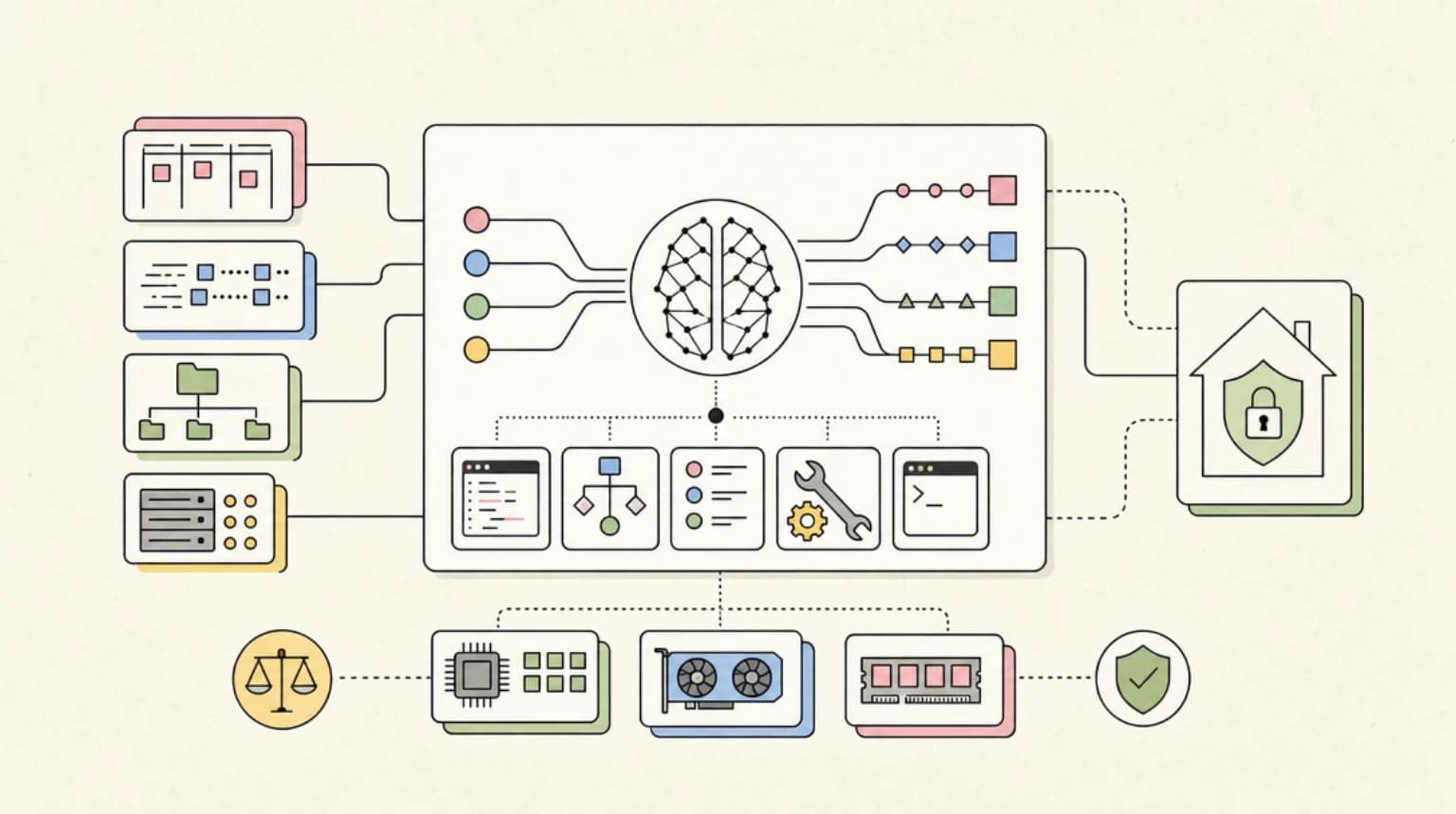
Black Forest Labs released FLUX 3 on July 23, and it is not just another image model update. FLUX 3 is a single multimodal foundation model trained jointly on images, video, and audio from the start - and its backbone is already driving robots on real Audi production lines through a partnership with mimic robotics.
The announcement hit 428 points on Hacker News and introduces what the company calls "Real World Models": a unified approach where one underlying representation of the world supports image generation, video synthesis, audio prediction, and physical action. The thesis is that these are not separate problems. They are different projections of the same reality, and a model that learns from all of them simultaneously builds a better understanding than any single-modality approach.
What FLUX 3 Actually Does#
FLUX 3 is built on Self-Flow, BFL's architecture for aligning multimodal generation and understanding within the same model. The key insight: if you train one model on images, video, and audio jointly, each modality constrains the others. The sound has to match the impact. The motion has to obey the mass. The future has to follow from the past. Those mutual constraints produce a better world model than training on any single modality.
The model is the scaled-up production version of Self-Flow, trained on tens of millions of hours of general video content plus hundreds of thousands of hours focused on human and robot manipulation tasks.
Video + Audio Generation#
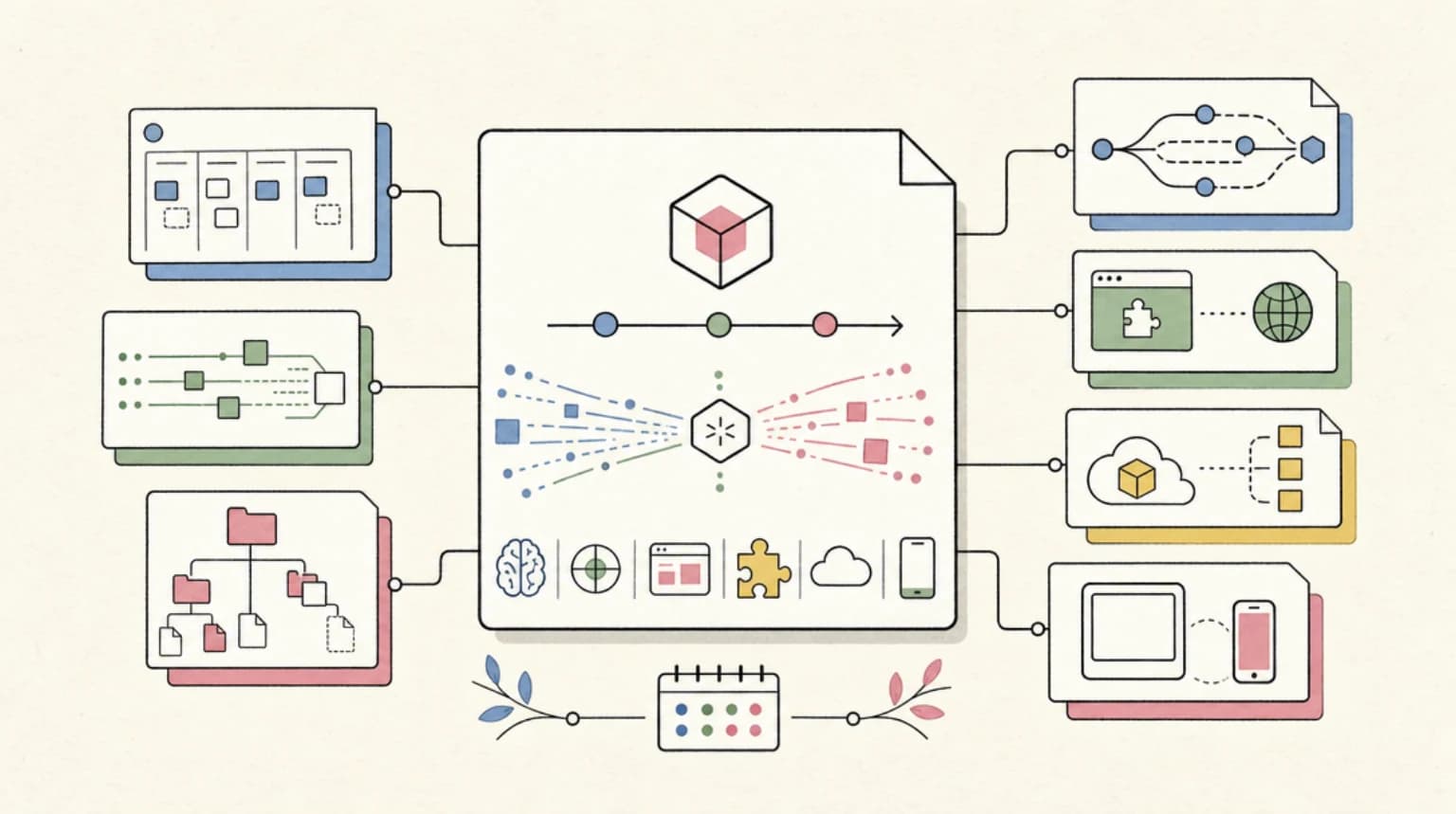
FLUX 3 generates video with synchronized audio up to 20 seconds in a single pass. It handles text-to-video, image-to-video (animating a still frame or using images as visual references), video-to-video (carrying a character into a new scene), keyframe-to-video for controlled transitions, and agentic chaining that stitches clips into multi-shot sequences. It supports multilingual dialogue, a wide range of visual styles from camcorder footage to animation, and strong typography generation.
Early preference evaluations show FLUX 3 Video winning against most competitors:
| Comparison | Preference Rate |
|---|---|
| vs Grok Imagine Video | 69% |
| vs Kling v3 Pro | 60% |
| vs Happy Horse v1 | 59% |
| vs Happy Horse 1.1 | 57% |
| vs Seedance 2.0 / Gemini Omni Flash | 52% |
| vs Runway Gen-4.5 | 77% |
| vs Luma Ray 3.2 | 93% |
The tightest race is against Gemini Omni Flash, which Google pushed to 1.1 and made generally available on August 27, 2026 with scene extension, keyframe control, and 4K upscaling - the same editing controls FLUX 3 advertises for its agentic chaining. Expect that 52% number to move as both models iterate.
The company notes these are preliminary results and expects improvements during the early access phase. The model is already strong at human facial expressions, associating sounds with physical events, and multilingual output. Combined sequences can run several minutes with consistent characters.
Image Generation#
FLUX 3 Image shows significant improvement over the FLUX 2 series, particularly in handling complex prompts and text rendering. It produces high-accuracy text in multiple languages across a wide range of styles and aspect ratios. Image early access opens in the coming weeks.
Action Prediction and Robotics (FLUX-mimic)#
The most surprising capability: FLUX 3's world understanding extends to physical action. BFL gave mimic robotics early access to the backbone, and together they built FLUX-mimic, a video-action model deployed on Audi production lines.
The approach trains a lightweight action decoder on top of intermediate features from FLUX 3's video prediction path. Because the backbone already understands physics - mass, motion, contact, cause and effect - the action decoder only needs to map tasks onto what the model already knows. This yields dramatically better sample efficiency: the Self-Flow approach reaches a given success rate in half the training steps, and FLUX-mimic reports up to 10x sample efficiency over vision-language-action models.
Benchmarks show the action decoder outperforms previous VLA models even with a completely frozen FLUX backbone. When finetuned together, FLUX-mimic achieves state-of-the-art success rates on manipulation tasks.
The backbone runs at under 80ms on a single NVIDIA RTX 5090. With mimic's optimized deployment stack, the end-to-end system reaction time is 101ms - in the same order of magnitude as human visual reaction time. This makes it viable for real-time production work.
On the factory floor, FLUX-mimic is handling tasks that conventional automation cannot touch: kitting parts into structured trays, inserting electronic control units into tight fixtures, assembling components, and handling soft, flexible materials like seals and cables. The model naturally recovers from failure - a missed grasp corrects itself and completes the task, behavior that was never in the demonstration set.
How to Try FLUX 3#
FLUX 3 Video with audio generation is available now through early access. You can request access via BFL's API or private weight access. The API follows a standard REST interface documented at docs.bfl.ai.
Image generation early access opens in the coming weeks. An open-weight version called FLUX 3 Dev is planned.
The API supports text-to-video and image-to-video generation with synchronous audio output. Typical usage:
curl -X POST https://api.bfl.ai/v1/generate \
  -H "Content-Type: application/json" \
  -H "X-Key: YOUR_API_KEY" \
  -d '{
    "prompt": "A chef plating a dish in a busy kitchen, cinematic lighting",
    "width": 1280,
    "height": 720,
    "duration": 10
  }'
Check the docs for the current endpoint shapes, which may change during early access.
Why This Matters for Developers#
FLUX 3 represents a shift in how foundation models are built. The unification of image, video, audio, and action into a single backbone has implications for anyone building AI applications:
-
One model, many outputs. Instead of stitching together separate image, video, and audio models, FLUX 3 produces synchronized multimodal output from a single call. This simplifies pipelines for content creation, simulation, and media generation.
-
The content-robotics convergence. If content generation and physical action run on the same representation, then advances in video quality directly improve robotics capabilities and vice versa. The 101ms reaction time on commodity GPU hardware suggests this is not just theoretical.
-
Open-weight roadmap. The planned FLUX 3 Dev release means developers will eventually be able to run, fine-tune, and deploy the model on their own infrastructure. When combined with the 80ms inference on an RTX 5090, this opens on-device and edge use cases.
-
Self-Flow as a paradigm. The approach of aligning generation and representation quality within one model could influence how future multimodal models are designed. The evidence that adding action prediction temporarily degrades generation quality but fully recovers while gaining new capability is notable for anyone building general-purpose models.
Limitations#
FLUX 3 is in early access, not a stable product. The benchmarks are preliminary. Video evaluations use 10-second 720p clips with audio. Image generation is not yet publicly available. The open-weight version is announced but not shipped. Latency and quality will change as the serving infrastructure matures. Pricing has not been published. Treat today's numbers as directional, not contractual.
FAQ#
What is FLUX 3?#
FLUX 3 is Black Forest Labs' single multimodal foundation model, trained jointly on images, video, and audio from the start. It is the scaled-up production version of BFL's Self-Flow architecture, and the company frames it as a "Real World Model" that supports image generation, video synthesis, audio prediction, and physical action from one representation.
How long can FLUX 3 videos be?#
FLUX 3 generates video with synchronized audio up to 20 seconds in a single pass. Agentic chaining can stitch clips into multi-shot sequences that run several minutes with consistent characters.
How can developers try FLUX 3, and is it open weight?#
FLUX 3 Video with audio is available through early access, requested via BFL's API or private weight access. Image early access opens in the coming weeks. An open-weight version called FLUX 3 Dev is planned but has not shipped, and pricing has not been published.
How does FLUX 3 control robots?#
Through FLUX-mimic, built with mimic robotics. A lightweight action decoder is trained on intermediate features from FLUX 3's video prediction path. The backbone runs in under 80ms on a single NVIDIA RTX 5090, end-to-end reaction time is 101ms, and the system is deployed on Audi production lines.
Sources#
- Black Forest Labs, "FLUX 3 - Real World Models" (July 23, 2026): https://bfl.ai/blog/flux-3
- Black Forest Labs, "FLUX 3 x mimic: The Next Generation of Video-Action Models" (July 23, 2026): https://bfl.ai/blog/flux-3-mimic
- BFL Self-Flow research: https://bfl.ai/research/self-flow
- FLUX 3 early access signup: https://bfl.ai/models/flux-3
- BFL API documentation: https://docs.bfl.ai
- Hacker News discussion (428 points): https://news.ycombinator.com/item?id=49031796
- FLUX-mimic announcement (mimic robotics): https://www.mimicrobotics.com/blog/introducing-flux-mimic
Continue Reading#
- Llama 4 Developer's Guide - another major model release breakdown
- GLM-5.2: Cost Math and Open Weights - open-weight model economics compared
- Frontier Model API Pricing June 2026 - how the model pricing landscape is shaping up
- Self-Hosting Open-Weight Models: Break-Even Math - when running your own backbone makes sense
- Meta Muse Image Developer Guide - another image generation model comparison point
- Grok Imagine Image 2.0 Ships: xAI's Typography-Aware Image Model Is Already on Vercel's AI Gateway
Get the next deep dive like this in your inbox
One email a week on Research and the rest of the AI dev stack. Free.
Read next
MiniMax H3: An Omni-Modal Video Model With Native Audio, 2K Output, and Open Weights Coming
MiniMax H3 turns text, image, video and audio input into 2K video with native stereo sound at 0.80 CNY per second, with open weights promised to follow.
8 min readGemini's Agentic Video Understanding Cuts Video Tokens by 88%: How It Works and What Breaks
Gemini agentic video understanding lets Flash models pick the frames, audio and transcripts to inspect, cutting tokens up to 88%. How it works and its limits.
7 min readGemini Omni 1.1 Flash Goes GA: Scene Extension, Keyframe Control, and 4K in the Gemini API
Gemini Omni 1.1 Flash is GA in the Gemini API with 10-second scene extension, first and last frame interpolation, 360p drafts and 4K upscaling, plus pricing.
8 min readNew here? Start with
Technical content at the intersection of AI and development. Building with AI agents, Claude Code, and modern dev tools - then showing you exactly how it works.