MiniMax H3: An Omni-Modal Video Model With Native Audio, 2K Output, and Open Weights Coming
TL;DR
MiniMax launched H3, an omni-modal generation model that takes text, image, video, and audio input and outputs 2K video with native stereo sound at 0.80 CNY per second. Open weights are promised in the coming days.
MiniMax launched H3 on July 31, 2026, and it is the most interesting video model release in months for one reason: it is not a video model. H3 is a general-purpose omni-modal generation model that takes text, images, video, and audio as input and produces video with native stereo audio at up to 2K resolution and 15 seconds, priced at 0.80 CNY per second at 2K. MiniMax says open weights are coming in the next few days, which would make it the first open-weight model in this tier to ship joint video and audio generation in one forward pass.
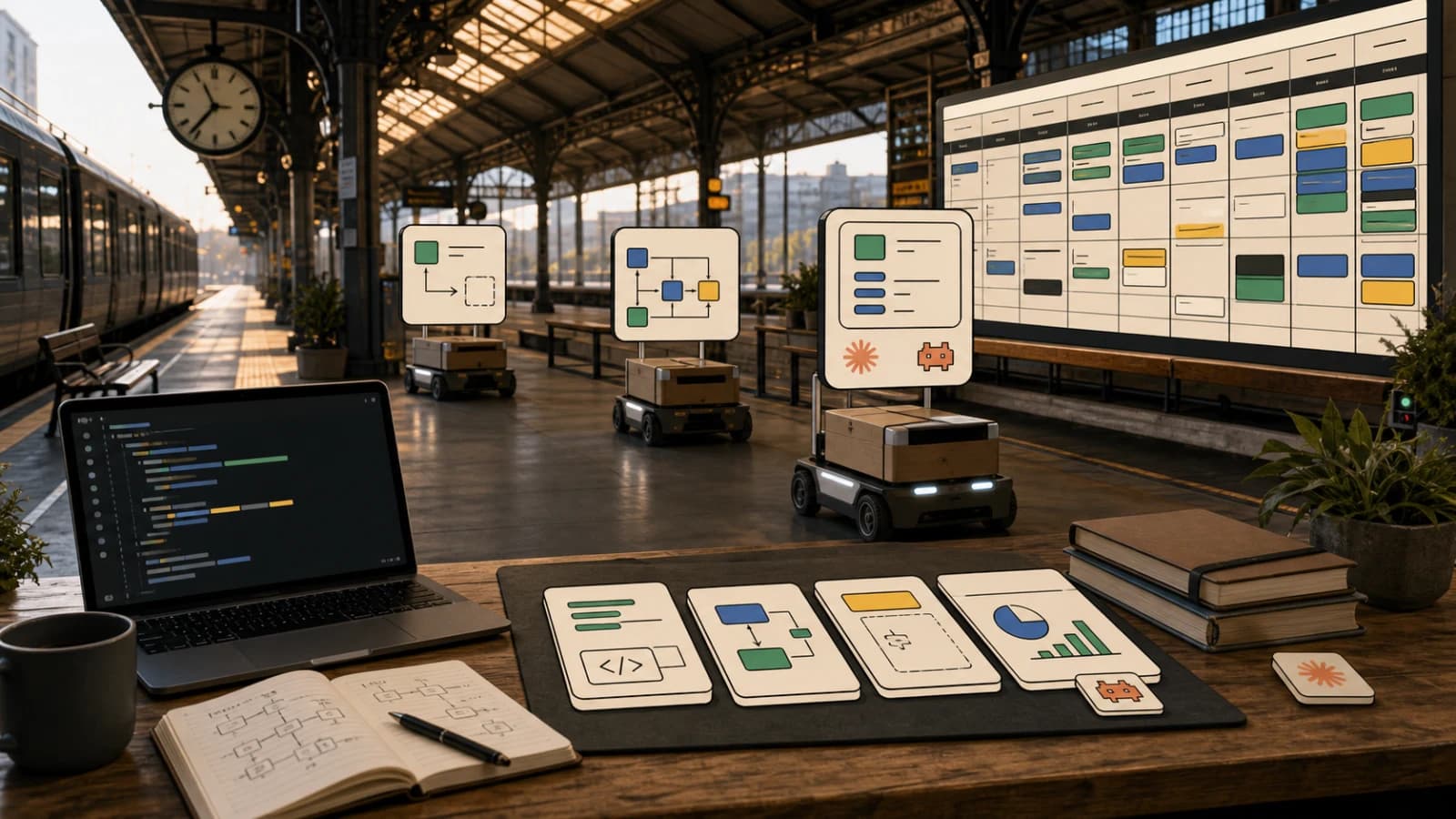
Image: MiniMax (via the H3 launch post)
Official Sources#
| Resource | Description |
|---|---|
| MiniMax H3 launch post | Official announcement: capabilities, architecture, pricing claims |
| MiniMax video generation docs | Model specs, input limits, generation modes, API workflow |
| MiniMax V2 video API reference | POST /v2/video_generation, model id MiniMax-H3 |
| MiniMax pricing page | Verified per-second rates: 0.80 CNY at 2K, 0.50 CNY at 768P |
| Vercel AI Gateway changelog | Availability as minimax/minimax-h3 through the AI SDK |
What Shipped#
H3 accepts a multimodal content array - text, image, video, and audio in any combination - and returns a video clip. The headline capabilities from the launch post:
- Native stereo audio. Voice, sound effects, and music are modeled jointly, not layered on afterward. The output video carries its own soundtrack.
- 2K output by default, up to 15 seconds per clip.
- Accurate text and brand presentation. MiniMax cites instruction following and legible rendered text as first-class outputs, aimed at advertising and e-commerce work.
- V2V motion transfer. A reference video's camera moves and action can be transferred to a new subject.
The generation modes, from the official docs:
| Mode | Inputs | Notes |
|---|---|---|
| Text-to-video | prompt only | ratio required, cannot be adaptive |
| First/last-frame | prompt + 0, 1, or 2 images | controls start and end frames |
| Omni-reference | prompt + up to 9 images, 3 videos, 3 audio clips | up to 12 files total; audio requires an image or video reference |
Output is MP4 at 2K, 4 to 15 seconds in the MiniMax docs (Vercel lists 5 to 15), in ratios including 21:9, 16:9, 4:3, 1:1, 3:4, and 9:16, or adaptive to a supplied image. Reference and keyframe modes are mutually exclusive.
The Architecture Bet#
Three design choices are worth reading carefully, because they are the difference between "another video upgrade" and a genuine attempt to unify the category:
-
Contextual Omni Representation. MiniMax replaced the "one task, one expert model" split - separate T2I, editing, subject reference, and style reference models - with language as the bridge. The captioning pipeline consumes roughly 100K tokens of source material and distills it to about 4K tokens of structured description. This is how one model handles "reference the camera move in Video 1, have the person in Image 2 sing with the voice from Audio 3" as a single request.
-
H3-VAE. A new tokenizer that delivers a 4x gain in effective sequence length, which is what makes native 2K output affordable without a dedicated upscaler.
-
In-context regeneration. Instead of a super-resolution module, the base model regenerates its own low-resolution output in-context, drawing on the original multimodal context. MiniMax's claim: small text and fine detail recover better than a traditional SR pass can guess.
MiniMax also says it abandoned the Hailuo-02 architecture entirely because it "would introduce unnecessary complexity for a model built around task generalization," and that separating understanding and generation compute lifted training throughput by nearly 30%. This is a deliberate convergence with the FLUX 3 approach: one foundation model, many output modalities.
From the archive
OpenAI's Efficiency Ledger: Serving Costs Down 20%, ARC-AGI-3 Up 3x With No Model Change
Jul 31, 2026 • 7 min read
OpenAI Disrupts a Cambodia Scam Network That Ran on ChatGPT
Jul 31, 2026 • 7 min read
Put an AI Agent on a Cron Job: Automating Dev Chores with OpenCode
Jul 31, 2026 • 11 min read
ORCA-bench: Frontier Agents Score 10% on Hard Oncall RCA
Jul 31, 2026 • 6 min read
Pricing, Verified#
From the MiniMax pricing page (fetched July 31, 2026), H3 is billed per second of generated video:
| Resolution | Price per second | Notes |
|---|---|---|
| 2K | 0.80 CNY (~$0.11) | default; output |
| 768P | 0.50 CNY (~$0.07) | currently in closed beta, contact sales |
Input material: audio is free, up to 5 images are free (0.20 CNY each beyond that), and input video is billed at the same per-second rate as output at the chosen resolution. For comparison, a 10-second 2K clip costs 8.00 CNY (~$1.11). MiniMax's own framing: at 2K the per-second price is less than a third of mainstream models, and at 768P it is less than half the price of mainstream models at 720P. Treat those relative claims as vendor marketing until independent measurement lands, but the absolute numbers are on the page.
How to Use It#
H3 is an API model, available two ways today.
MiniMax API (async task flow, from the docs):
Python
import os
import requests

api_key = os.environ["MINIMAX_API_KEY"]
headers = {"Authorization": f"Bearer {api_key}"}
BASE_URL = "https://api.minimaxi.com"

payload = {
    "model": "MiniMax-H3",
    "content": [
        {"type": "text", "text": "A white kitten chases a butterfly across a sunlit garden."}
    ],
    "resolution": "2K",
    "duration": 5,
    "ratio": "16:9",
}
resp = requests.post(f"{BASE_URL}/v2/video_generation", json=payload, headers=headers)
The API is asynchronous: create a task, poll for status, download the result from the returned URL.
Vercel AI Gateway, from the changelog:
JavaScript
import { experimental_generateVideo as generateVideo } from "ai";

const { videos } = await generateVideo({
  model: "minimax/minimax-h3",
  prompt: "A white kitten chases a butterfly across a sunlit garden.",
  aspectRatio: "16:9",
  duration: 5,
});
One honest note: this model is not available in OpenCode, and we are not going to fake that section. OpenCode is a coding agent, not a video pipeline, and H3 has no place in it. If you want to wire video generation into an agent workflow, the practical pattern is the one OpenMontage demonstrated: the coding agent owns script, storyboard, and render orchestration, and calls the video API as a tool.
Decision Guide#
H3 is competing with closed video APIs (Veo 3, Sora 2, Kling 2.x) and there are no independent benchmark numbers yet, so the guide is short:
Use H3 when:
- Your output needs synchronized audio. Native stereo in one request removes the separate voice-over and SFX pipeline entirely.
- You want text and brand elements rendered inside the video. That is H3's stated strength and the reason it is aimed at ads and e-commerce.
- Cost is the constraint. 0.80 CNY per second at 2K is a step change from the mainstream closed APIs, if the pricing holds.
- You want a self-hosting escape hatch. Open weights are promised in the coming days; the break-even math changes fast when that happens.
Wait when:
- You need proven reliability at production scale. This is launch day; the closed incumbents have months of hardening.
- Quality parity is unproven. MiniMax's demo clips are impressive but they are demos. Wait for third-party measurement.
- You only need text-to-video with no audio or reference work. Simpler, cheaper models already cover that lane.
FAQ#
What is MiniMax H3?#
An omni-modal generation model launched July 31, 2026. It takes text, images, video, and audio as input and generates video up to 2K resolution and 15 seconds, with native stereo audio, at 0.80 CNY per second.
How much does MiniMax H3 cost?#
0.80 CNY ($0.11) per second of video at 2K, 0.50 CNY ($0.07) at 768P (currently in beta). Up to 5 input images and all input audio are free; extra images cost 0.20 CNY each; input video bills at the same per-second rate.
Is MiniMax H3 open source?#
MiniMax says it plans to open the weights "in the coming days," subject to applicable laws and regulations. No weights or model card are published as of July 31, 2026.
What is the model id?#
MiniMax-H3 on the MiniMax API (POST /v2/video_generation) and minimax/minimax-h3 on Vercel AI Gateway.
How long can generated clips be?#
Up to 15 seconds per clip in MiniMax's docs (4 to 15 seconds on their API, 5 to 15 per Vercel's listing). Generation is asynchronous via task polling.
Sources#
| Source | URL |
|---|---|
| MiniMax H3 launch post | https://www.minimax.io/blog/minimax-h3 |
| MiniMax video generation docs | https://platform.minimaxi.com/docs/guides/video-generation.md |
| MiniMax V2 video API reference | https://platform.minimaxi.com/docs/api-reference/video-generation-v2-create.md |
| MiniMax pricing page (per-second rates) | https://platform.minimaxi.com/docs/guides/pricing-paygo.md |
| Vercel AI Gateway changelog: MiniMax H3 | https://vercel.com/changelog/minimax-h3-now-available-on-vercel-ai-gateway |
All prices verified July 31, 2026. USD figures are conversions at approximately 7.2 CNY/USD.
Continue Reading#
- FLUX 3: A Unified Multimodal Foundation Model - Black Forest Labs' take on one model for image, video, and audio
- Gemini Omni 1.1 Flash Goes GA - Google's answer in the same price band: scene extension, keyframes, 4K
- OpenMontage: Agentic Video Production - how coding agents should orchestrate video pipelines
- Gemini's Agentic Video Understanding Cuts Video Tokens by 88% - Google's cost answer on the video analysis side of the same problem
- MiniMax M2.5 Developer Guide - the LLM side of MiniMax's model family
- Kimi K3 Open Weights Release - the open-weights trend H3 joins
- Self-Hosting Open-Weights Models - the economics when weights actually drop
Last updated: July 31, 2026
Read next
FLUX 3: Black Forest Labs Ships a Unified Multimodal Foundation Model for Image, Video, Audio, and Robotics
Black Forest Labs released FLUX 3, a single multimodal model trained jointly on images, video, and audio that also drives robots on Audi production lines. Here is what it does, how it works, and how to try it.
10 min readMiniMax M2.5 for Developers: The Anthropic-Compatible Budget Frontier Model
MiniMax M2.5 hits 80.2% on SWE-bench Verified and plugs into the Anthropic SDK with two environment variables. Here is what you need to know before switching.
7 min readOpenMontage Shows the Real Future of AI Video: Agents, Not Editors
OpenMontage is trending because it treats video production like a repo-shaped agent workflow: scripts, assets, render pipelines, review loops, and coding agents working across the whole process.
7 min readShare
Developers Digest
Technical content at the intersection of AI and development. Building with AI agents, Claude Code, and modern dev tools - then showing you exactly how it works.
300+ videos30K+ GitHub stars850+ articles
Related Tools
AI Models

DeepSeek
Open-source reasoning models from China. DeepSeek-R1 rivals o1 on math and code benchmarks. V3 for general use. Fully op...
View ToolAI Models

Qwen3-Coder
Alibaba's flagship open-weight coding model. 480B total parameters, 35B active (MoE). Native 256K context, scales to 1M....
View ToolLocal AI

Jan
Open-source ChatGPT alternative that runs 100% offline. Desktop app with local models, cloud API connections, custom ass...
View ToolLocal AI

LocalAI
Open-source OpenAI API replacement. Runs LLMs, vision, voice, image, and video models on any hardware - no GPU require...
View ToolApps from Developers Digest
Developer ToolsPlus $20/mo
TraceTrail Plus
Share agent traces with a link. Keep history long enough to find the bug.
View AppDirectories
AI Models
Pick a model in 30 seconds. Built for the answer, not the marketing.
View AppDirectories
Demos
Try AI models in the browser before paying for a single token.
View AppRelated Guides
Guide
Run AI Models Locally with Ollama and LM Studio
Install Ollama and LM Studio, pull your first model, and run AI locally for coding, chat, and automation - with zero cloud dependency.
Getting StartedGuide
Git Integration - Claude Code
Stage, commit, branch, and open PRs without leaving the session.
Claude CodeGuide
Getting Started with DevDigest CLI
Install the dd CLI and scaffold your first AI-powered app in under a minute.
Getting StartedRelated Videos
OpenAI's Sora Video Generation Model in 6 Minutes
Exploring OpenAI's New Sora Video Generator: Subscription Tiers and Features In this video, I dive into OpenAI's newly released Sora, part of their third day of the '12 days of OpenAI'. Sora...
Video·
NVIDIA's NEW Open Source Nemotron Nano 2 VL Model in 5 Minutes
NVIDIA just released Nemotron Nano 2 VL - an open-source vision language model that's 4x more efficient than previous models. In this video, I break down what makes this 12-billion parameter...
Video·
Introducing Fire Enrich: An Open-Source Clay Alternative with AI-Powered Data Enrichment
Github ⭐ https://github.com/mendableai/fire-enrich Introducing Fire Enrich: Open Source Email Enrichment Tool Explained In this video, I'm thrilled to announce Fire Enrich, an open-source...
Video·
Related Posts
10 min read
Research
FLUX 3: Black Forest Labs Ships a Unified Multimodal Foundation Model for Image, Video, Audio, and Robotics
Black Forest Labs released FLUX 3, a single multimodal model trained jointly on images, video, and audio that also drive...
7 min read
ai-tools
MiniMax M2.5 for Developers: The Anthropic-Compatible Budget Frontier Model
MiniMax M2.5 hits 80.2% on SWE-bench Verified and plugs into the Anthropic SDK with two environment variables. Here is w...
7 min read
AI Agents
OpenMontage Shows the Real Future of AI Video: Agents, Not Editors
OpenMontage is trending because it treats video production like a repo-shaped agent workflow: scripts, assets, render pi...

7 min read
News
Kimi K3 Weights Land on HuggingFace: 2.8T Open Frontier Model You Can Actually Download
Moonshot AI released the full Kimi K3 weights on HuggingFace today - 2.8T parameters, 1M context, native MXFP4 quantizat...
11 min read
pricing
Self-Hosting Open-Weights Models: The Real Break-Even Math
Open weights are free to download, but inference is not free to run. Here is the honest break-even math on when self-hos...
8 min read
News
Gemini Omni 1.1 Flash Goes GA: Scene Extension, Keyframe Control, and 4K in the Gemini API
Google made Gemini Omni 1.1 Flash generally available today: 10-second scene-extension context, first and last frame int...
Build with the member tools

Get Smarter About AI Dev
New tutorials, open-source projects, and deep dives on coding agents - delivered weekly.
One email per weekReal code, not theoryFree forever