The TypeScript AI Agent Stack in Mid-2026: Mastra vs Vercel AI SDK vs OpenAI Agents SDK vs LangGraph.js

TL;DR
The TypeScript AI agent stack compared - Mastra, Vercel AI SDK, OpenAI Agents SDK and LangGraph.js, which layer each covers, and how to pick or combine them.
Official Sources#
| Framework | Documentation |
|---|---|
| Vercel AI SDK | ai-sdk.dev |
| Mastra | mastra.ai/docs |
| OpenAI Agents SDK | openai.github.io/openai-agents-js |
| LangGraph.js | langchain-ai.github.io/langgraphjs |
TypeScript developers building agents today face an enviable problem: too many excellent options. (For the cross-language view, our agent frameworks comparison covers the Python side.) A year ago the honest advice was "wrap fetch calls in a loop and manage state yourself." Today four mature frameworks compete for the same problem space, each with distinct opinions, genuine production deployments, and active doc sites that answer questions faster than a Stack Overflow thread ever did.
This is a good problem to have. The TypeScript AI ecosystem has quietly caught up with its Python counterpart, and in some areas - React streaming integration, edge deployment, TypeScript-first ergonomics - it has pulled ahead. Whether you are adding an AI feature to a Next.js app or building a standalone multi-agent service, there is a framework that fits your exact situation.
Last updated: October 18, 2026
Updated October 18, 2026: The stopWhen sample said generateText defaults to 20 steps. Per the AI SDK type definitions and the loop control docs, generateText and streamText default to stepCountIs(1); the 20-step default belongs to ToolLoopAgent. The comment and the maxSteps FAQ answer now say so.
The Four Contenders at a Glance#
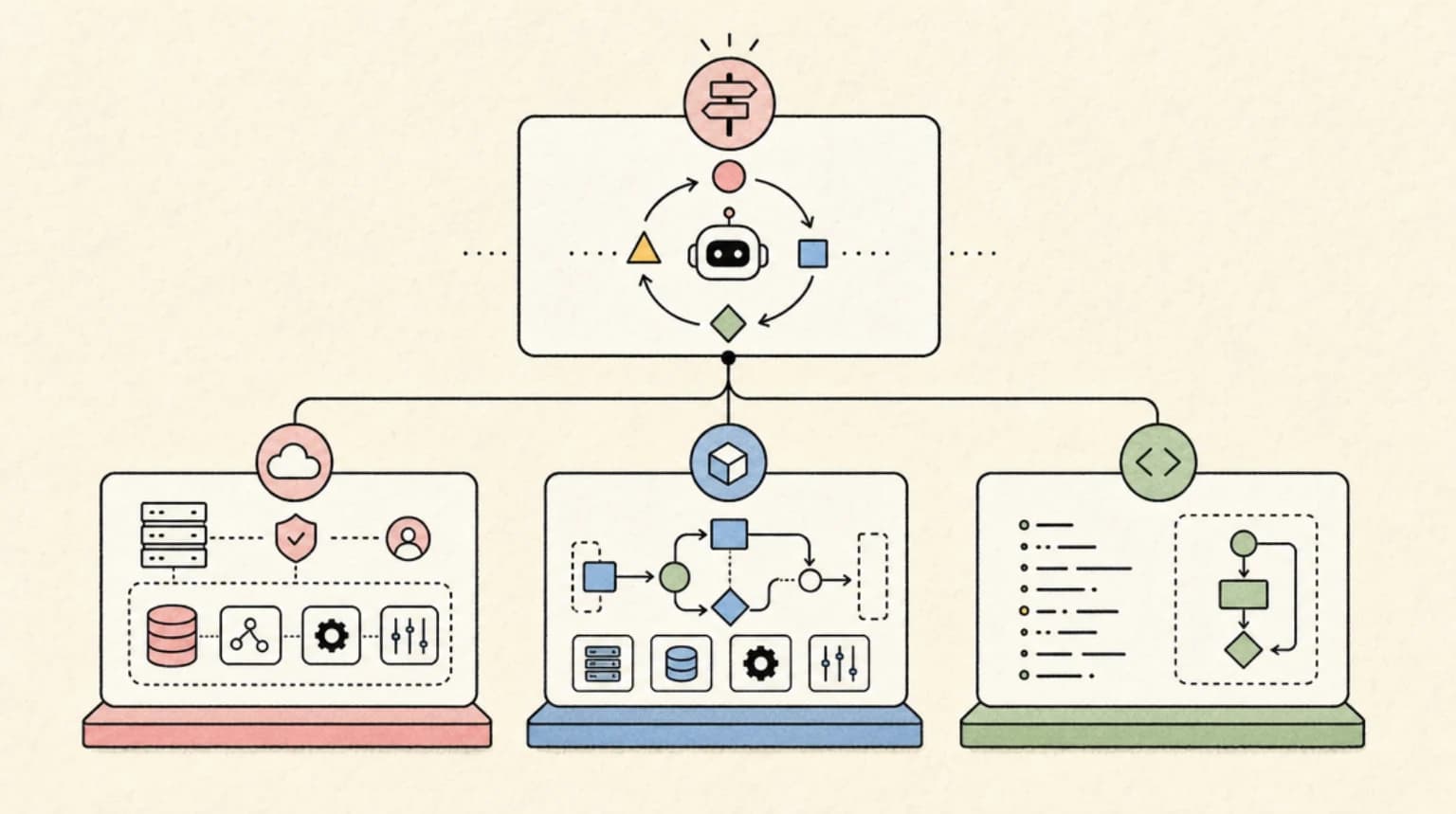
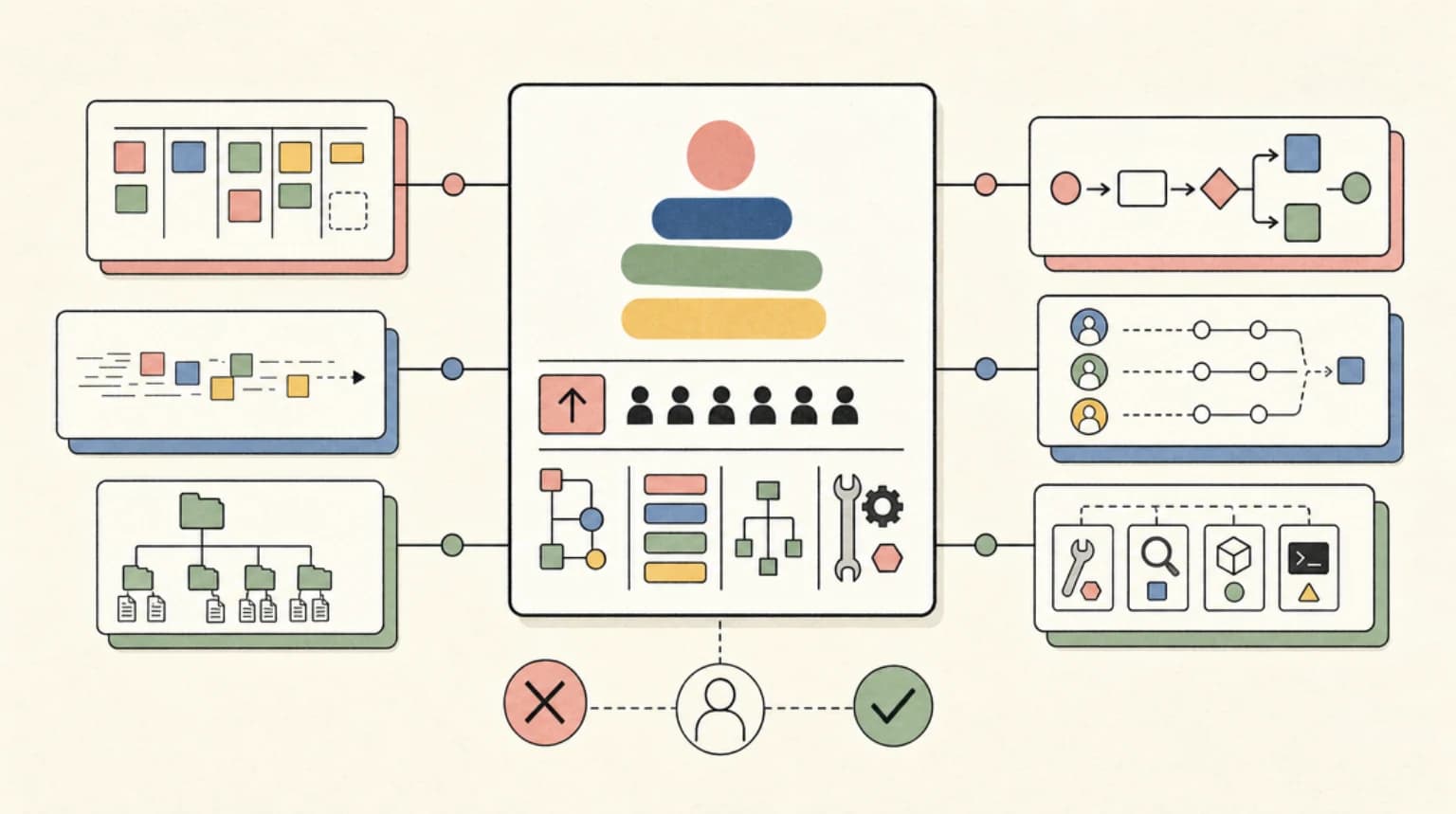
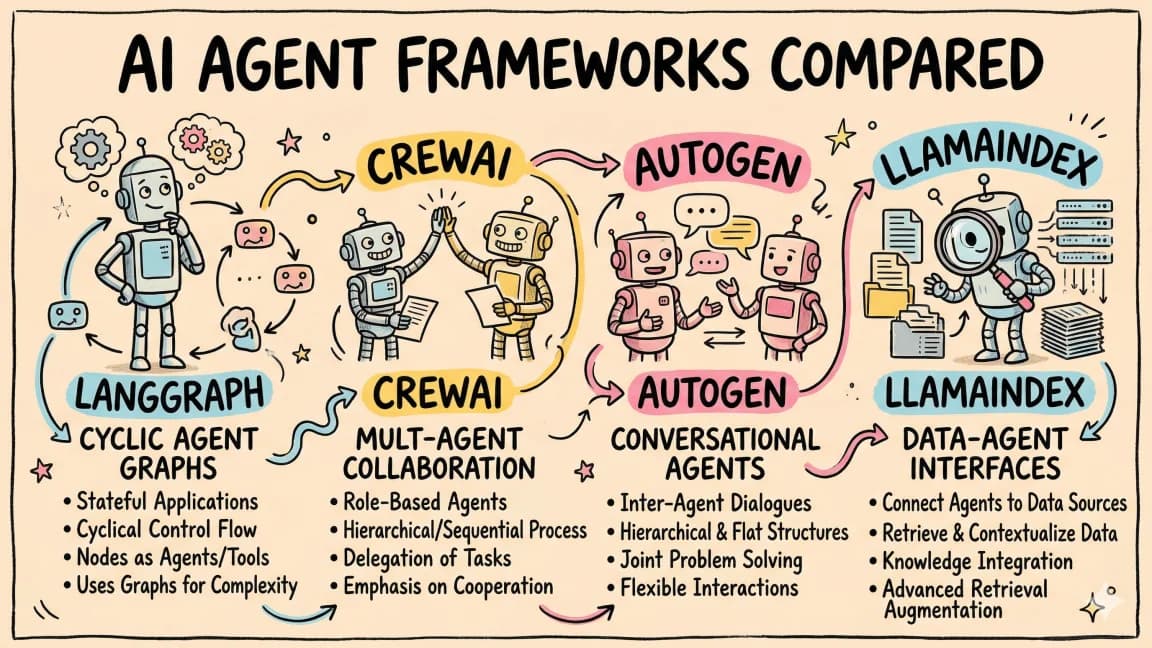
Before diving into each framework individually, it helps to understand the altitude at which they operate. These are not four competing implementations of the same thing. They sit at different layers of the stack and, as we will see at the end, they compose rather than compete.
- Vercel AI SDK (v6,
npm i ai) - low-level primitives:generateText,streamText,useChat. The React streaming story for AI. Agnostic across 100+ models. - Mastra (
npm create mastra) - batteries-included TypeScript framework: agents, workflows, memory, evals, MCP, deployment. Built by the Gatsby team. - OpenAI Agents SDK (
@openai/agents) - handoffs, guardrails, and a typed context object. OpenAI-native but supports custom model implementations. - LangGraph.js (
@langchain/langgraph) - explicit state graphs with durable checkpoints. Maximum control over agent topology.
Vercel AI SDK (v6)#
The AI SDK is the foundational layer that most of the TypeScript ecosystem already uses, often without labeling it as an "agent framework." Its core exports are two functions: generateText for request-response generation, and streamText for token streaming. Both accept a model-agnostic model parameter - swap a string and you swap providers.
import { generateText } from 'ai';

const { text } = await generateText({
  model: 'anthropic/claude-sonnet-4.5',
  prompt: 'What is love?',
});
The agent story in v6 centers on loop control inside generateText and streamText. The loop continues until one of four conditions is met: the model stops calling tools, a tool has no execute function, a tool call needs human approval, or a stop condition fires. You control that last case with stopWhen:
import { generateText, stepCountIs, isLoopFinished } from 'ai';

const { text } = await generateText({
  model: 'openai/gpt-5.4',
  tools: { searchWeb, writeFile },
  stopWhen: stepCountIs(50), // generateText defaults to stepCountIs(1)
});
The built-in stop condition helpers are stepCountIs(n), hasToolCall(toolName), and isLoopFinished() (no step limit). The prepareStep callback lets you swap model, tools, or messages between steps - useful for cost optimization where early reasoning uses a larger model and later steps use a smaller one.
The second pillar is AI SDK UI: React hooks (useChat, useCompletion) that wire streaming responses directly into your component tree. This is the most seamless path to production in a Next.js app. The useChat hook handles message persistence, stream resumption, and generative UI patterns (rendering React components from streamed JSON) out of the box.
Sweet spot: Adding AI features to an existing Next.js or React app; building model-agnostic utility functions that other code consumes; or serving as the low-level inference layer inside a higher-level framework.
Mastra#
Mastra is what happens when a team that shipped Gatsby decides to build a full-featured agent framework. It is built by the Gatsby founders, ships as an open-source Apache 2.0 package, and is already deployed by companies including Replit, Sanity, and WorkOS.
The Agent class is clean and readable:
import { Agent } from '@mastra/core/agent';

const chefAgent = new Agent({
  id: 'chef-agent',
  name: 'Chef Michel',
  instructions: 'You are Michel, a practical home chef.',
  model: 'openai/gpt-5-mini', // "provider/model-name" format
  tools: { fetchIngredients, printRecipe },
});
Models are specified as "provider/model-name" strings through Mastra's own model router, which covers 4,000+ models from 124 providers - completely independent of the Vercel AI SDK. You register agents in a central Mastra instance that wires up shared memory, logging, and observability:
import { Mastra } from '@mastra/core';

export const mastra = new Mastra({
  agents: { chefAgent },
});

// Then call it anywhere
const agent = mastra.getAgentById('chef-agent');
const response = await agent.generate('Help me organize my day');
// or stream:
const stream = await agent.stream('What can I cook with eggs and flour?');
for await (const chunk of stream.textStream) {
  process.stdout.write(chunk);
}
The feature that separates Mastra from "just an agent wrapper" is its workflow engine. Workflows use .then(), .branch(), and .parallel() to describe deterministic multi-step processes with explicit control flow. They support human-in-the-loop suspension: a workflow can pause indefinitely, serialize its state to storage, and resume where it left off when a human approves the next step. This makes Mastra practical for business processes (content approval, customer onboarding, compliance reviews) where you cannot run a continuous process.
Beyond agents and workflows, Mastra ships built-in evals (model-graded, rule-based, and statistical scorers), guardrails for input/output sanitization, MCP server authoring, conversation memory, RAG tooling, a local dev Studio for visualizing agent runs, and deployers for Vercel, Netlify, and Cloudflare. It integrates as a route handler in Next.js or Hono, or ships as a standalone server.
The honest note: Mastra has its own model routing layer, not the Vercel AI SDK. The two are parallel choices at the model-communication level, and Mastra's abstraction is deliberately self-contained.
Sweet spot: Standalone agent services; anything that needs workflows with suspend/resume; projects where you want a single framework covering agents, memory, evals, and deployment without assembling the pieces yourself.
OpenAI Agents SDK (@openai/agents)#
The OpenAI Agents SDK is the TypeScript port of the Python Agents SDK and brings the same two killer features: handoffs and guardrails. If you were at all impressed by the Python version, the TS version is ready and the API is nearly identical.
An Agent is defined with instructions, an optional model, and tools. The runner executes the agent loop:
import { Agent, tool, run } from '@openai/agents';
import { z } from 'zod';

const getWeather = tool({
  name: 'get_weather',
  description: 'Return the weather for a given city.',
  parameters: z.object({ city: z.string() }),
  async execute({ city }) {
    return `The weather in ${city} is sunny.`;
  },
});

const agent = new Agent({
  name: 'Weather bot',
  instructions: 'You are a helpful weather bot.',
  model: 'gpt-4.1',
  tools: [getWeather],
});

const result = await run(agent, 'What is the weather in Tokyo?');
Handoffs let a triage agent hand off the entire conversation to a specialist. The SDK handles context passing automatically:
const bookingAgent = new Agent({ name: 'Booking expert', instructions: '...' });
const refundAgent  = new Agent({ name: 'Refund expert',  instructions: '...' });

const frontlineAgent = new Agent({
  name: 'Customer-facing agent',
  instructions: 'Route booking questions to booking_expert, refunds to refund_expert.',
  tools: [
    bookingAgent.asTool({ toolName: 'booking_expert', toolDescription: '...' }),
    refundAgent.asTool({  toolName: 'refund_expert',  toolDescription: '...' }),
  ],
});
The inputGuardrails and outputGuardrails properties accept guardrail functions that run in parallel with the model call and can trip a GuardrailTripwireTriggered exception - a clean pattern for content safety without adding latency to the happy path.
Agents are generic on a typed context: Agent<TContext, TOutput>. The context is dependency injection - you create it and pass it to run(), and every tool and guardrail receives it. This is genuinely useful for per-request state like user authentication, feature flags, or a database connection.
The SDK is OpenAI-native (it uses the Responses API by default and OpenAI structured outputs for typed outputType), but it does expose a Model interface for custom implementations - so other providers are possible with additional wiring.
Sweet spot: Multi-agent systems where clean handoff semantics matter; OpenAI-centric production deployments; teams that want strong typing on the context passed through an agent chain.
LangGraph.js#
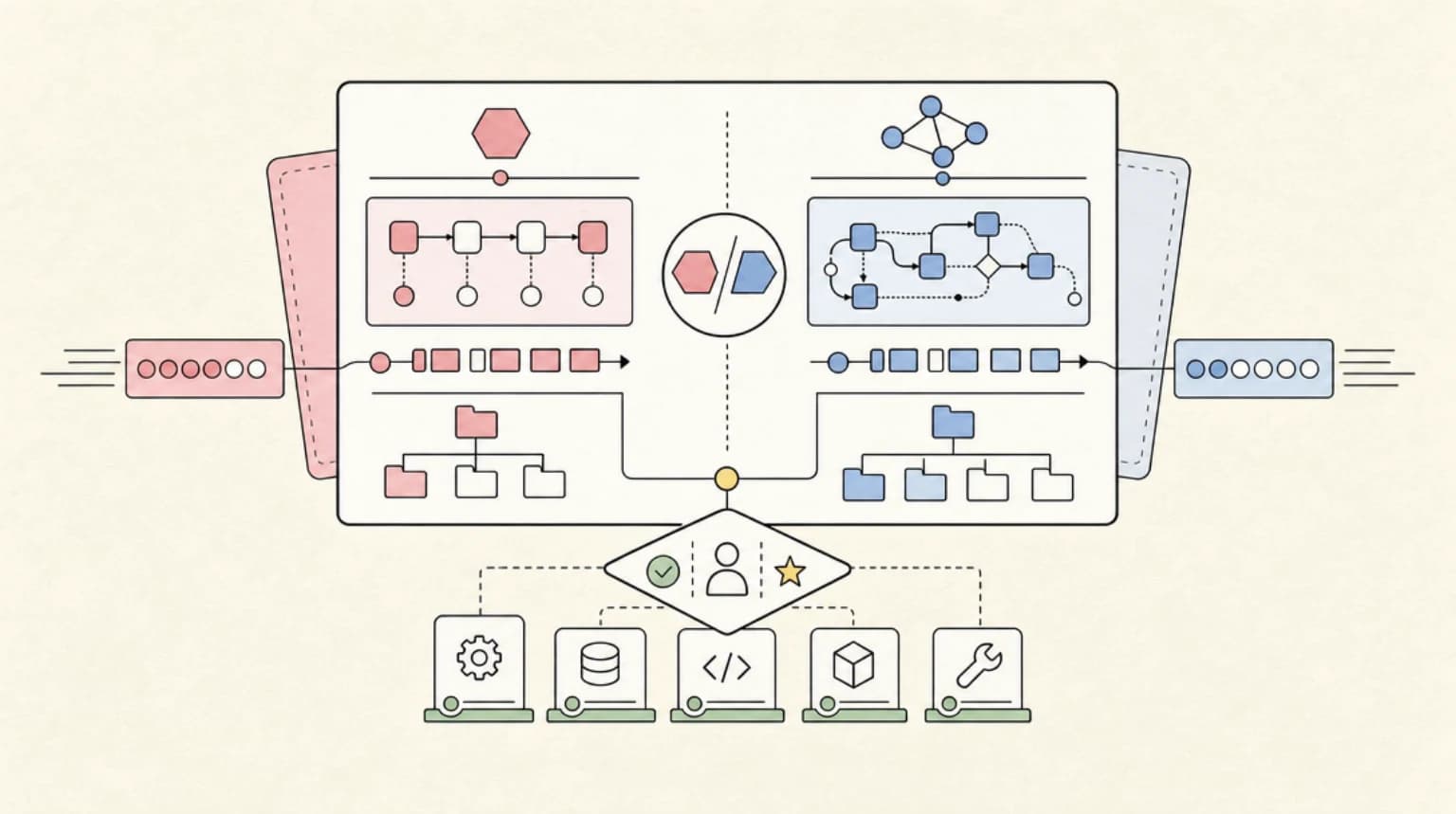
LangGraph.js is for developers who want to see exactly what their agent is doing at every step. Where the other frameworks hide the loop, LangGraph makes you draw it. You define a StateGraph, add nodes, add edges, and compile. The result is a named, inspectable, resumable execution graph.
import {
  StateGraph, StateSchema, MessagesValue,
  ReducedValue, START, END,
} from '@langchain/langgraph';
import { z } from 'zod/v4';

const MessagesState = new StateSchema({
  messages: MessagesValue,
  llmCalls: new ReducedValue(
    z.number().default(0),
    { reducer: (x, y) => x + y }
  ),
});

const agent = new StateGraph(MessagesState)
  .addNode('llmCall', llmCall)
  .addNode('toolNode', toolNode)
  .addEdge(START, 'llmCall')
  .addConditionalEdges('llmCall', shouldContinue, ['toolNode', END])
  .addEdge('toolNode', 'llmCall')
  .compile();

const result = await agent.invoke({
  messages: [new HumanMessage('Add 3 and 4.')],
});
The MessagesValue is a built-in reducer that appends messages - you get append semantics for free. Custom state fields use ReducedValue with explicit reducer functions. This explicit state management is the core feature: you always know what is in the state, how it got there, and what the next node will see.
LangGraph's checkpoint system is where it pulls ahead for long-running or fault-tolerant work. Checkpoints serialize state after every node execution. A graph that processes a 10-step approval workflow can crash on step 7, resume from step 7 on the next request, and the caller never knows anything went wrong. The cloud-hosted LangGraph Platform (separate product) adds a visual debugger, trace viewer, and managed deployment.
The tradeoff is verbosity. A simple react loop takes 30-40 lines in LangGraph versus 5 in the AI SDK. That verbosity is exactly the point for teams that need auditability, but it is overhead you pay on every graph.
Sweet spot: Enterprise workflows where every state transition needs to be logged and auditable; long-running agents that must survive infrastructure failures; teams already invested in the LangChain ecosystem; research work where iterating on graph topology is part of the process.
How They Compose#
The more you work with these tools, the more you notice they are designed to be used together:
- Vercel AI SDK inside Next.js + Mastra as the backend service. The frontend uses
useChatfor streaming UI, the backend is a Mastra server handling workflows and memory. The AI SDK never needs to know Mastra exists. - OpenAI Agents SDK for the agent logic + LangGraph for durable checkpoints. LangGraph has a node runner interface that can host any callable, including an OpenAI Agents SDK runner.
- Mastra for rapid prototyping, LangGraph for production hardening. Build the workflow concept fast in Mastra's intuitive
.then()/.branch()syntax, then port the topology to a LangGraphStateGraphwhen you need fine-grained checkpoint control.
None of these frameworks lock you into their full stack. The AI SDK is already the standard inference layer for the JS ecosystem - 14 million weekly downloads do not lie.
Comparison Table#
| Vercel AI SDK v6 | Mastra | OpenAI Agents SDK | LangGraph.js | |
|---|---|---|---|---|
| Abstraction level | Primitives / hooks | Full framework | Agent + orchestration | Graph runtime |
| Model support | 100+ via providers | 4,000+ via own router | OpenAI-native, custom Model interface | Provider-agnostic (LangChain models) |
| State / memory | Bring your own | Built-in memory + storage | Typed context object | Explicit StateSchema + reducers |
| Multi-agent | Subagents via tools | Supervisor agents, agent-as-tool | Handoffs + manager pattern | Graph nodes as agents |
| React / UI story | Best-in-class (useChat, generative UI) | Integrates with Next.js via server adapters | None built-in | None built-in |
| Deployment | Vercel native; edge-ready | Vercel, Netlify, Cloudflare, standalone Hono | Self-managed or any Node runtime | LangGraph Platform or self-managed |
| Best for | Next.js features, streaming UI, model-agnostic utilities | Standalone agent services, batteries-included apps | Handoff-heavy multi-agent, OpenAI-centric production | Durable workflows, enterprise auditability, graph-topology research |
Decision Guide by Project Type#
Building a Next.js app feature (chatbot, copilot sidebar, inline assistant): Start with the Vercel AI SDK. useChat + a route handler is 20 lines of code and works on the edge. Add Mastra as a separate service if the backend logic grows into workflows or multi-step memory.
Building a standalone agent service (API endpoint, background worker, CLI tool): Mastra is the natural fit. You get the local dev Studio, evals, MCP support, and deployers without assembling them from parts. The workflow engine covers the cases where you need deterministic multi-step execution alongside open-ended agent calls.
Building a multi-agent system (triage + specialist routing, customer support with departments): OpenAI Agents SDK if you are OpenAI-centric and want clean handoff semantics. Mastra supervisor agents if you need provider flexibility and a full framework around it.
Building an enterprise workflow (audit trail required, human approval gates, long-running processes that must survive failures): LangGraph.js. The explicit graph + checkpointing combination is the right architecture here, and the LangGraph Platform adds the observability tooling that enterprise deployments need.
FAQ#
Is Mastra production ready?#
Yes. Mastra is used in production by Replit, Sanity, WorkOS, SoftBank-backed teams, and others. The core framework is Apache 2.0 open-source with a separate enterprise license for advanced features. It ships a 1.0 stable API and the team has invested heavily in the local dev Studio and eval tooling that indicate production readiness.
Vercel AI SDK vs OpenAI Agents SDK - which should I use?#
Different tools for different layers. The Vercel AI SDK is model-agnostic inference primitives plus React streaming hooks - it does not have opinions about agent topology or multi-agent orchestration. The OpenAI Agents SDK is specifically about structuring agent-to-agent relationships (handoffs, guardrails, typed context), and it is opinionated about OpenAI as the primary provider. Many production systems use both: AI SDK for the inference calls and streaming, OpenAI Agents SDK for the orchestration layer when deploying to OpenAI's platform.
Does LangGraph.js require LangChain?#
LangGraph.js uses LangChain model abstractions (like ChatAnthropic) in its examples, but the graph engine itself (StateGraph, nodes, edges, checkpoints) does not require LangChain models. You can use any model that returns message-shaped objects. That said, if you are not already in the LangChain ecosystem, the startup cost is real - you are learning both the graph model and the LangChain message types simultaneously.
Can I use Mastra with Claude or Gemini instead of OpenAI?#
Yes. Mastra's model router supports 124 providers including Anthropic, Google, Mistral, and more. You specify models as "provider/model-name" strings (e.g., "anthropic/claude-sonnet-4-5") and Mastra reads the corresponding API key from your environment. Provider lock-in is explicitly something Mastra is designed to prevent.
What happened to maxSteps in Vercel AI SDK?#
The v4 maxSteps parameter was replaced by stopWhen in v5, and v6 keeps it. stopWhen accepts stop condition helpers: stepCountIs(n), hasToolCall(toolName), and isLoopFinished(). generateText and streamText default to stepCountIs(1), so pass a stop condition to get a multi-step tool loop; the ToolLoopAgent class defaults to stepCountIs(20) as a safety limit on runaway loops. Use stopWhen: isLoopFinished() to let the agent run until the model naturally stops calling tools, or stopWhen: stepCountIs(50) to set an explicit limit.
Continue Reading#
- Apache Burr vs LangGraph vs CrewAI: Choosing an AI Agent Framework in 2026
- Codex Record & Replay: Turn Screen Recordings Into Reusable Automation Skills
Sources#
Documentation scraped and verified June 10, 2026:
- Mastra - https://mastra.ai and https://mastra.ai/en/docs/agents/overview (agents overview, model router, workflow syntax, deployment options)
- Vercel AI SDK - https://ai-sdk.dev and https://ai-sdk.dev/docs/ai-sdk-core/overview and https://ai-sdk.dev/docs/agents/loop-control (v6
generateText,streamText,stopWhen,stepCountIs,isLoopFinished) - OpenAI Agents SDK for JS - https://openai.github.io/openai-agents-js/guides/agents (Agent constructor,
tool(),run(), handoffs via.asTool(),inputGuardrails,outputGuardrails, typed context) - LangGraph.js - https://langchain-ai.github.io/langgraphjs/ and https://langchain-ai.github.io/langgraphjs/tutorials/quickstart/ (
StateGraph,StateSchema,MessagesValue,ReducedValue,addConditionalEdges,compile)
Get the next comparison like this in your inbox
One email a week on typescript and the rest of the AI dev stack. Free.
Read next on AI coding tools
Managed Agents vs LangGraph vs Rolling Your Own: Who Should Run Your Agent Loop in 2026
Managed agents vs LangGraph vs a DIY while-loop - compare state, sandboxing, cost, lock-in and compliance to decide who should run your agent loop in 2026.
9 min readApache Burr vs LangGraph vs CrewAI: Choosing an AI Agent Framework in 2026
Apache Burr vs LangGraph vs CrewAI compared: what each agent framework does, how they handle state, when each wins, and when to skip frameworks entirely.
9 min readMastra vs LangGraph.js: TypeScript Agent Frameworks Compared
Both Mastra and LangGraph.js are serious TypeScript agent frameworks - but they start from opposite philosophies. Here is what that means for your next project.
8 min readNew here? Start with
Technical content at the intersection of AI and development. Building with AI agents, Claude Code, and modern dev tools - then showing you exactly how it works.