Briefing · Monday, August 3, 2026
Qwen 3.8 Max, Karpathy's LotR, and the Meat Proxy Problem
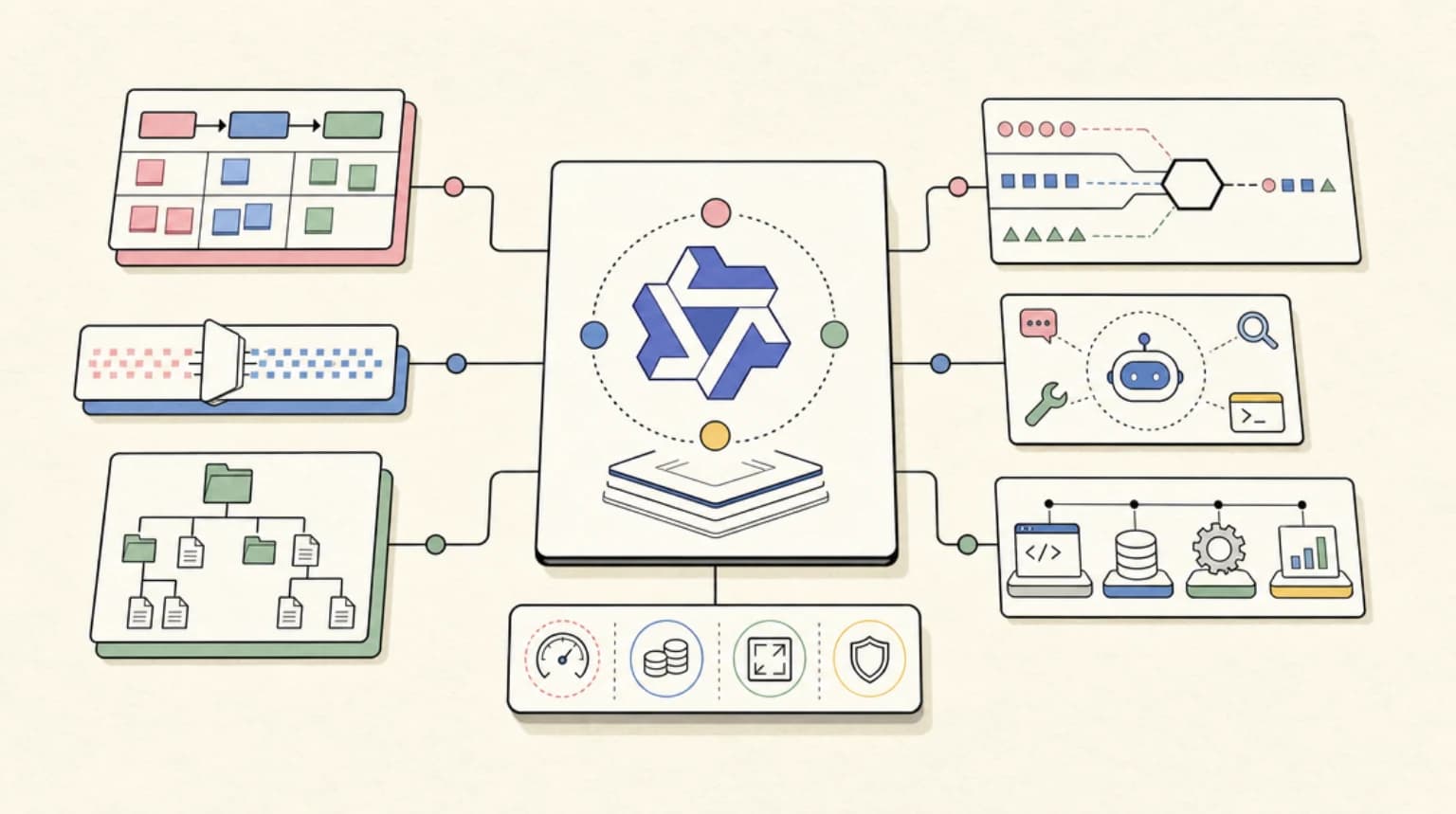
Good morning. It's Monday, August 3, and we're covering the first Max-class Qwen to go open weight, Karpathy's 5,500-line three.js Shire, and a two-paragraph blog post that sat at the top of Hacker News all morning.
The overnight front page was a three-way tie between a model release, a model benchmark, and model manners: Qwen 3.8 Max at 585 points, Karpathy's Lord of the Rings render at 575, and the "meat proxy" essay at 602. We cover all three, plus the numbers behind a strange trend: developers are using AI more and trusting it less.
In today's brief:
- Qwen 3.8 Max: 2.4T parameters, 95B active, 1M context, $2/$6 per million tokens, and the first open-weights Max-class release in Qwen history, promised for next week
- Karpathy gave Opus 5 the first paragraph of Lord of the Rings, a 1M-token budget, and two hours; it wrote 5,500 lines of three.js that animate the story
- "Don't be a meat proxy": the 600-point case against pasting Claude's output into Slack, and why the reviewers end up doing the implementation
- Stack Overflow's trust post: AI usage rose from 76% to 84% of developers while trust in AI code fell from 40% to 29%
THE BIG ONE
Qwen 3.8 Max: First Open-Weights Max-Class Flagship
Alibaba released Qwen 3.8 Max on August 3 (585 points, 295 comments on HN): a 2.4-trillion-parameter MoE with 95B active per token, a 1M context window, and native text and vision input. The headline sits in the announcement's closing note: "This also marks the first time we will open-source the weights of a Qwen-Max-class model" - next week, on Hugging Face and ModelScope. The thread's first question was the right one - "are these latest Qwen models still open weights or has Qwen moved away from that?" - and Simon Willison flagged the timeline himself: the July 19 teaser said "launching and going open-weight soon," and now "soon" has a date.
The pricing is the other number that matters: $2 per million input tokens and $6 per million output on QwenCloud, with implicit cache reads at $0.25/MTok, plus day-0 availability on Vercel's AI Gateway at provider pricing with no markup. That undercuts Moonshot's Kimi K3 ($3/$15) by more than half on output, sits 60% above the previous Qwen 3.7 Max on input, and comes with reasoning_effort (xhigh/medium/low) as a cost dial. The benchmark table is the usual frontier salad, with Qwen's own caveat that external models ran on their preferred harnesses: Qwen leads PaperBench at 93.0 (Fable 5: 88.8, GPT-5.6 Sol: 90.5) and OSWorld-Verified at 86.1, while trailing Fable 5 on DeepSWE (56.6 vs 70.0) and FrontierSWE (73.5 vs 88.8).
Why it matters: The first open-weights Max-class release moves the self-hosted frontier from 200B-class models to a 2.4T datacenter-scale class, and at $2/$6 it prices long-context agent work below every closed lab's flagship.
Our coverage: the full release analysis with the benchmark table, verified pricing, and a decision guide, plus the Qwen 3.7 Max developer guide and the open-weights showdown for where this lands against K3 and GLM 5.2.
RESEARCH
Karpathy's New Benchmark: A Hobbiton Rendered in three.js
Andrej Karpathy handed Opus 5 the first paragraph of The Lord of the Rings (575 points, 391 comments on HN) with a 1M-token budget, about $10, and asked for a three.js render. Opus worked for roughly two hours, wrote 5,500 lines of procedural code, and produced a playable, forkable animation of Bilbo's party - janky, he concedes, but "a bit mindboggling" given the model has to place and orchestrate polygon assets in (x,y,z) coordinates and write code that animates it all. The tweet has drawn 3.3 million views, and the argument inside it is a benchmark proposal: the pelican-on-a-bicycle SVG test Simon Willison popularized is saturated, so generalize it to "give a model a story, a token budget, and a renderer."
The last paragraph is the one that matters for builders. Karpathy's closing point: LLMs cannot easily audit their own work because they cannot natively perceive video or play the games they build. Opus had to take screenshots, slowly and painstakingly, and it messed up several times. The HN thread spent 391 comments arguing about whether the render is a real capability signal or a three.js showcase - "the day-1 Fable demos were pretty much 100% three.js stuff," one commenter noted - but the self-audit gap is where the thread converged. "Opus can write a world it can't see," one reply read. "It's a blind architect building by touch." And the three.js team's reply ("We need to teach the AI to use instanced meshes") got fed straight back to Opus, a small live example of the human-in-the-loop the render itself lacked.
Why it matters: The next benchmark frontier is closing the loop between writing an artifact and seeing it - and that is the same verification gap that decides whether long-horizon agents can be trusted with real production work. Our work on agent replays and traceability is the production-flavored version of the same problem.
DEV CULTURE
Don't Be a Meat Proxy
The top of Hacker News this morning belongs to a two-paragraph essay (602 points, 260+ comments on HN) asking people to stop relaying AI output verbatim. The author's grievance: he asks a question in Slack or leaves feedback on a pull request, and gets back "Claude said: [giant response verbatim]." "Please don't do this," he writes. "I can talk to Claude myself. It's going to be faster and I get to control the context. I don't need a meat proxy in between." Reading AI output is extra effort, it is verbose, and it is increasingly jargon-dense - he quotes a Claude sentence about "NATS control-plane events: stream leader election / R3 quorum re-form during pod churn" and admits he had to look up nearly every word.
The comment thread sharpened it. One commenter described the office loop: "I asked Claude what happened, and it spit out this 300 line response. Can you read it for me and see if it's right?" - a transfer of both the work and the accountability. Another put the counter-rule simply: writing is how you check whether you actually understand what you are communicating. And the code-review version is the sharpest: if you paste the ticket into Claude Code, relay the reviewers' feedback, and iterate without looking at the code, "the reviewers did [the implementation], using Claude Code, and you as a meat proxy."
Why it matters: As relay-pasting becomes the default way work moves through teams, the developer who validates before forwarding is the one adding value - and the tools that bake validation into the loop are the ones that win. The review-queue economics are the structural version of the same argument.
PLATFORMS
Use Is Up, Trust Is Down: The Numbers Behind the Agent Skepticism
Stack Overflow's Ryan Donovan wrote up why developers are attached to tools (213 points, 117 comments on HN): the latest Developer Survey shows AI usage rising from 76% to 84% of developers while trust in AI-generated code fell from 40% to 29%. His explanation: tools encode trust, and agentic tools keep changing shape - "if your kitchen knife kept changing shape, weight, and edge, you'd have to relearn it every time." The pieces of the process around the tool - the linters, the tests, the review culture - are where trust actually lives, and generation speed does not build it.
The quotes carry the argument. Bjarne Stroustrup: "Code is a precise statement of a solution. English is a lousy language for expressing things that have to be unambiguous." Charity Majors on human-in-the-loop: "I made the loop, I own the loop, I'm the only reason that loop exists. It is MY f***ing loop!" Scott Hanselman on prompt completeness: "If you leave anything up to chance, it will be left up to chance." Donovan's conclusion is that code is nearly free but validation is not - the bottleneck has moved to review, which is why LLM-as-a-judge is evolving as a scalable answer. That is a claim worth stress-testing rather than adopting: a judge only means something with a baseline.
Why it matters: Trust, not generation speed, is the constraint on agentic development - and the fastest-growing part of the stack is the verification layer around the agent, not the agent itself.
PLATFORMS
SwiftUI After Seven Years, Still Under Review
Yakov Manshin's SwiftUI retrospective (196 points, 179 comments on HN) argues that seven years in, the framework still feels like a perpetual beta: an unpredictable layout engine that pushes real apps into GeometryReader, API churn (NavigationView to NavigationStack) that forces compatibility shims, and a head-to-head gallery benchmark where UIKit scrolls smoother. His most concrete claim: as of July 2026, image caching still has no stable first-party API. The thread split along familiar lines - "accurate and overdue" against "every framework has teething problems, SwiftUI's just kept theirs" - with working production apps cited on both sides.
Why it matters: Declarative UI promises are only as good as the layout engine underneath, and this is a useful calibration for anyone betting a cross-platform stack on it in 2026.
TOOLS WORTH A LOOK
- condense-json 1.0 (free / OSS) - Simon Willison shipped the 1.0 of his JSON-condensing library: replacement strings shrink duplicated JSON before it lands in SQLite logs, reversible with
uncondense_json- it backs the logging in his LLM tool. F*(free / OSS) - Microsoft Research's proof-oriented programming language (179 points on HN) resurfaces with a working playground: F#-flavored syntax, dependent types, and verification delegated to SMT solvers like Z3.- ssh.place (free) - SSH into a text-mode playground (117 points on HN):
ssh ssh.placeconnects you to themed rooms with a cooldown tied to your SSH key. (2 min) - Karpathy's lotr-movie (free) - the playable three.js source behind the viral render, forkable and already collecting instanced-mesh feedback from the three.js team.
WHAT ELSE IS HAPPENING
- EU age verification requires hardware-bound attestation (207 points, 137 comments): the project's maintainer confirmed TEE-bound keys are a mandatory architectural requirement, not an implementation detail; Linux is not banned, but there is no native Linux wallet and community builds are not guaranteed access to the service.
- Atom is better than RSS, in ways that matter (133 points, 98 comments): Chris Morgan's technical case - Atom's text constructs give titles unambiguous text/HTML/XML encoding semantics that RSS 2.0 lacks - with the caveat that Apple's podcast ecosystem is why RSS survives.
- OpenAI's super PAC reportedly funds an AI-generated news site (181 points, 81 comments): Model Republic's report claims 69% of the site's 94 articles are flagged fully AI-generated by the Pangram detector, with no disclosed human contributors, aimed at AI industry critics - a useful artifact for the AI-content trust debate.
- Rust 2026 goals: immobile types and guaranteed destructors (78 points): the accepted goal proposes
MoveandForgetauto-traits so types can opt out of being moved or forgotten, encoding immovability as a type property rather than a place property - with an eventual eye toward deprecating Pin. - An autoregressive language model on a 6502 (111 points): Matt Beton got a BitNet-style tiny LM running inference on the 8-bit CPU that powered the Apple II era - the extreme low end of the "where can a model run" spectrum.
FROM THE SITE
Qwen 3.8 Max, Fully Broken Down
We published the Qwen 3.8 Max release analysis this morning: the full vendor benchmark table with the harness caveats, live-verified QwenCloud pricing including the $0.25/MTok implicit cache reads that change agent-loop economics, how to run the model today through the OpenAI- and Anthropic-compatible endpoints, and a decision guide on when the $2/$6 premium over DeepSeek V4 Flash earns its keep.
Every link above goes to a primary source or our sourced coverage. Tomorrow's brief lands when the news does - subscribe to get it by email.
Get the next one in your inbox
The daily brief, delivered. Free, unsubscribe anytime.