Best AI Coding Tools July 2026: Updated After Opus 5 and Fable 5 API-Only
TL;DR
Best AI coding tools for July 2026, re-ranked after Opus 5 launched at half Fable 5's price and Fable 5 went API-only - pricing, picks and stacks by profile.
Official Sources#
| Resource | Link | Verified |
|---|---|---|
| Claude Opus 5 announcement | anthropic.com | July 29, 2026 |
| Claude Fable 5 announcement | anthropic.com | July 29, 2026 |
| Anthropic API pricing | docs.anthropic.com | July 29, 2026 |
| Claude Code overview and pricing | docs.anthropic.com | July 29, 2026 |
| Cursor pricing and plans | cursor.com | July 29, 2026 |
| GitHub Copilot plans and billing | github.com | July 29, 2026 |
| OpenAI Codex pricing | openai.com | July 29, 2026 |
| Windsurf pricing | windsurf.com | July 29, 2026 |
| Faros AI: Best AI Coding Agents 2026 | faros.ai | July 29, 2026 |
Last updated: July 29, 2026
What Changed on July 29, 2026#
Since this post was first published on June 10, the AI coding tool landscape shifted significantly:
- Opus 5 launched July 24 at $5/$25 per MTok - near-Fable-5 intelligence at half the Fable 5 API price. Opus 5 is available in Claude Code (Max plan) and via the Anthropic API.
- Fable 5 went API-only on July 9. Subscription plan access ended July 7. Fable 5 is now available only through the Anthropic API at $10/$50 per MTok or through GitHub Copilot with Fable 5 enabled.
- Sonnet 5 is the default Claude model since July 1 with promotional pricing ($2/$10 per MTok through August 31).
- Cursor v3.11 introduced Side Chats for parallel agent conversations, Conversation Search, and Cloud Agent Hooks.
- Claude Code 2.1.207+ added auto-mode permission mode, Opus 5 support on Max plans, and agent teams maturation.
- GPT-5.6 Sol went GA on July 9 with three tiers (Sol $5/$30, Terra $2.50/$15, Luna $1/$6 per MTok).
- Windsurf introduced Max tier at $60/mo with unlimited premium model calls and GPT-5.6 Sol access.
The AI coding tool landscape changed twice in six weeks. First Fable 5 landed on June 9 and reset the frontier. Then Opus 5 launched on July 24 at near-Fable-5 quality for half the price, while Fable 5 itself went API-only on July 9. If your tool stack math was set before July, every number needs a second look.
This guide cuts through the noise. Every pricing figure comes from a primary source linked above. All data verified July 29, 2026.
Why This Guide Is Different: Post-Opus 5 Rankings#
Most "best of" lists were written pre-Opus 5 and pre-Fable-5-API-only and have not caught up. Opus 5 matches Fable 5 on most benchmarks at half the API price ($5/$25 vs $10/$50 per MTok), while Fable 5 is now restricted to API-only access since July 9. That changes the cost-per-task math for every tool that routes to Anthropic models.
The practical effect: Opus 5 is now the recommended default frontier model for most teams. Fable 5 remains the top-end option for the hardest tasks where the extra cost is justified.
The 2026 Tool Matrix#
| Tool | Underlying Model | Price (July 2026) | Best For |
|---|---|---|---|
| Claude Code | Opus 5 / Sonnet 5 (configurable) | $20/mo (Pro), $100/mo (Max) | Deep agentic work, multi-file refactoring, CI |
| Cursor | User-selectable (Opus 5, Sonnet 5, GPT-5.6 Sol, etc.) | $20/mo (Pro), $60/mo (Pro+), $200/mo (Ultra) | In-editor day-to-day, Side Chats, visual diff |
| GitHub Copilot | GPT-5.x + Fable 5 (user-selectable) | Usage-based with included credits ($10/mo Pro) | Enterprise, inline autocomplete, IDE breadth |
| Codex (OpenAI) | GPT-5.6 Sol / Terra / Luna | Varies by usage | Agent-first, deterministic multi-step tasks |
| Cline | User-selectable | Free (bring your own API key) | VS Code power users who want model freedom |
| Windsurf | Proprietary + GPT-5.6 Sol | Free tier; Pro $15/mo; Max $60/mo | Autocomplete-first teams, privacy-sensitive contexts |
| Amazon Q Developer | Amazon models | Free tier; Pro at $19/user/mo | AWS-centric teams, enterprise governance |
Sources: Qodo comparison, Faros AI guide, individual vendor pricing pages.
How Opus 5 and Fable 5 API-Only Change the Rankings#
The model landscape shifted twice since June. Opus 5 launched July 24 at $5/$25 per MTok with near-Fable-5 benchmark performance. Fable 5 went API-only on July 9 after subscription plan access ended July 7.
The practical effect on tool selection:
Claude Code now uses Opus 5 as its top-tier model on Max plans ($100/$200 per month). Sonnet 5 is the default model. Fable 5 is accessible via the Anthropic API but not included in subscriptions. The cost-per-task math favors Opus 5 for most workloads.
Cursor Pro+ and Ultra users can route to Opus 5, Sonnet 5, GPT-5.6 Sol, and other models via their own API keys. Cursor v3.11 added Side Chats for parallel agent conversations, narrowing the multi-task gap with Claude Code.
GitHub Copilot still offers Fable 5 for Pro+, Max, Business, and Enterprise subscribers. The 30-day data retention policy remains: Anthropic retains prompts and outputs for up to 30 days to operate safety classifiers. Enterprise admins must enable Fable 5 manually - it defaults off.
Codex with GPT-5.6 Sol ($5/$30 per MTok) offers strong competition at the frontier level. The GPT-5.6 family (Sol, Terra, Luna) went GA on July 9, giving Codex users a three-tier pricing ladder from $1/$6 to $5/$30 per MTok.
Autocomplete vs Agentic: Why Tool Type Matters More Than Model#
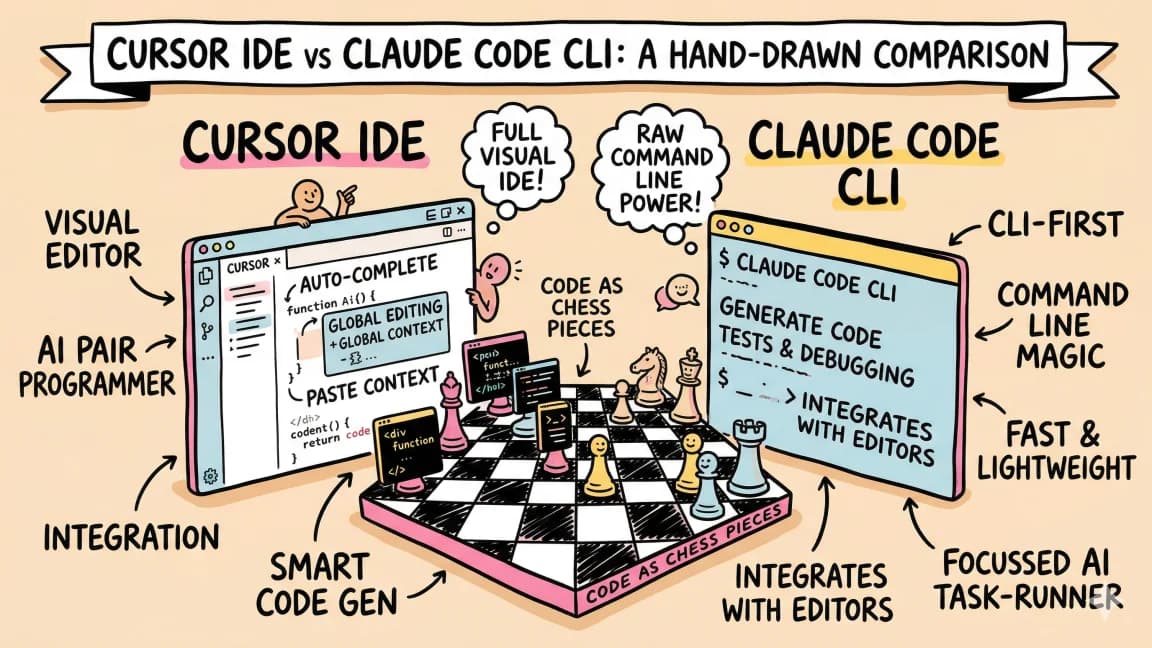
The most common mistake in tool selection is comparing tools across categories. Cursor's inline autocomplete and Claude Code's multi-file agent mode are not the same product competing on the same axis.
Autocomplete tools (Cursor's Tab, Copilot inline, Codeium) work at line-level latency - sub-second, scoped to the current file. Agentic tools (Claude Code, Codex, Cline in agent mode, Copilot agent mode) take a task description and run for minutes, touching many files.
The paradigm mismatch problem: developers who evaluate Cursor's autocomplete against Claude Code's agentic output are comparing apples to infrastructure. The right question is which workflow you spend most of your time in.
- If most of your coding is incremental edits in a single file, autocomplete is the right category.
- If most of your work is "implement this feature across these five services," agentic is the right category.
- Most real teams need both, which is why multi-tool stacks are the norm in 2026.
See our comparison of AI coding tools in 2026 for a longer breakdown of workflow fit by team type.
Buyer's Guide by Use Case#
Solo developer: Cursor Pro ($20/mo) plus Claude Code Pro ($20/mo) is the most common high-productivity stack we see. Cursor handles daily in-editor flow; Claude Code handles larger refactors and automation. Total: $40/mo. For the rest of a one-person stack (hosting, database, auth), see the solo developer's AI toolkit.
Startup team (5-20 engineers): GitHub Copilot Business with Fable 5 enabled gives everyone access to top-tier model capability inside their existing IDE without per-person tool sprawl. The new usage-based billing means cost scales with actual use rather than seat count. Watch the spending controls.
Enterprise: GitHub Copilot Enterprise or Amazon Q Developer depending on whether the team is AWS-centric. Both offer the governance, audit trails, and admin controls enterprise procurement requires. Fable 5's 30-day data retention policy is an important disclosure to run past your legal team.
Privacy-first: Codeium and some Cline configurations offer local or privacy-preserving modes. Amazon Q Developer has documented enterprise data handling. The question is whether you trust each vendor's data handling claims - check their current data policy pages, not this post.
Pricing Reality Check#
The shift to usage-based billing is the most disruptive pricing change in the space this quarter.
Opus 5 API pricing: $5 per million input tokens and $25 per million output tokens - the same as Opus 4.8, with near-Fable-5 performance. This is the best price-performance ratio at the frontier today.
Fable 5 API pricing: $10 per million input tokens and $50 per million output tokens - still the top-end option for the hardest tasks, but now double the cost of Opus 5.
Sonnet 5 promotional pricing: $2 per million input tokens and $10 per million output tokens through August 31, 2026. After that, $3/$15 per MTok.
GitHub Copilot billing (June 1, 2026): All Copilot plans use usage-based billing with GitHub AI Credits. Subscribers get a monthly included allocation; use beyond that is billed at the month end. Copilot Max tier adds premium model access. New individual plan sign-ups resumed after the June pause.
Claude Code: Pro at $20/mo (Sonnet 5 access) and Max at $100/mo (Opus 5 priority, higher limits). A $200/mo Max Teams tier was added with separate usage pools. Opus 5 is included in Max plans.
Token anxiety is real. Faros AI's developer research flagged rate limits and cost unpredictability as significant pain points. Set spending caps in every tool that offers them. See our full AI coding tools pricing guide for detailed per-tool cost breakdowns.
Context Window Truth Table#
Advertised context and usable context are not the same thing. Based on the Qodo Claude Code vs Cursor analysis:
| Tool | Advertised Context | Usable in Practice |
|---|---|---|
| Claude Code | 200k tokens | 200k (reliable) |
| Cursor (standard) | Up to 200k | 70k-120k (truncation in practice) |
| Cursor (Pro+/Ultra) | 200k | Closer to 200k, with per-model limits |
| GitHub Copilot | Varies by model | Model-dependent, Fable 5 routing improves reliability |
| Codex | GPT-5.6 Sol: 128k | Model-dependent, strong on structured tasks |
Claude Code's edge here is context reliability. Claude Code applies fixes across files automatically with sustained context while Cursor lists issues and requires manual approval per change. That distinction matters more on large refactors than on single-file edits. Cursor v3.11's Side Chats partially addressed this by allowing parallel conversations for different aspects of a refactor.
For more on this topic, see our Claude Code vs Cursor deep dive.
The Verdict: Recommended Stack for Each Developer Profile#
There is no universally best tool in 2026. The answer depends on how you work.
If you want the best autonomous coding agent available right now: Claude Code with Opus 5 is the strongest single-tool answer for complex, multi-file work. Opus 5 matches Fable 5 on most benchmarks at half the cost. Claude Code Max ($100/mo) includes Opus 5 access.
If you want the best in-editor experience with access to top models: Cursor Pro+ ($60/mo) or Ultra ($200/mo) with Opus 5 or GPT-5.6 Sol via API key. Cursor v3.11 Side Chats add parallel conversation support.
If you want the most model flexibility at lowest cost: Cline lets you bring your own API key and switch between Opus 5, Sonnet 5, GPT-5.6 Sol, or any other model. It requires more setup but offers the most control.
If you are in an enterprise already standardized on AWS: Amazon Q Developer is the lowest-friction path to governance-compliant AI coding assistance.
If you are on GitHub Enterprise: GitHub Copilot with Fable 5 enabled gives everyone frontier model access inside their existing IDE. The usage-based billing means cost scales with actual use.
The practical July 2026 stack for a solo developer or small team: Cursor for daily editing plus Claude Code for agentic heavy lifting. Use Opus 5 for most frontier work. Budget for usage spikes and set spending caps.
The tools are genuinely good now. The main risk is choosing the wrong category (autocomplete vs agentic) rather than the wrong tool within a category. Start there before debating model benchmarks.
Continue Reading#
For more on the AI coding tool landscape and how to pick the right stack for your team:
- AI Coding Tools Comparison Matrix 2026 - the full head-to-head feature comparison across every major coding tool
- AI Coding Tools Pricing 2026 - detailed per-tool pricing breakdowns with up-to-date plan costs
- Claude Opus 5 vs Opus 4.8 vs Fable 5 Comparison 2026 - benchmark, pricing, and decision framework for the Anthropic model lineup
- Claude Code vs Cursor 2026 - deep-dive comparison of the top two agentic coding tools
- Best AI Coding Tools 2026 - our original directory post for a broader tool-by-tool breakdown
Frequently Asked Questions#
What is Claude Opus 5?#
Claude Opus 5 is Anthropic's July 2026 release, launched July 24, 2026. It delivers near-Fable-5 performance at half the price ($5/M input, $25/M output tokens). It is available via the Anthropic API, in Claude Code Max plans, and in Cursor with an API key.
Is Fable 5 still available?#
Fable 5 is API-only as of July 9, 2026. Subscription plan access ended July 7. You can access it through the Anthropic API ($10/M input, $50/M output tokens) or through GitHub Copilot with Fable 5 enabled for Pro+, Max, Business, and Enterprise subscribers.
What changed with GitHub Copilot billing?#
GitHub moved all Copilot plans to usage-based billing with GitHub AI Credits on June 1, 2026. Subscribers get included monthly usage and are billed for anything beyond that. New individual plan sign-ups resumed after the initial June pause. Copilot Max tier adds premium model access.
Does Fable 5 in GitHub Copilot have any privacy restrictions?#
Yes. Unlike other Claude models in Copilot, Fable 5 requires data retention. Anthropic retains prompts and outputs for up to 30 days to operate safety classifiers. Data is deleted after 30 days and is not used for model training. Enterprise admins must manually enable it.
Which tool is best for solo developers in late July 2026?#
There is no single answer, but the most common high-productivity setup is Cursor Pro ($20/mo) for daily editing combined with Claude Code Pro ($20/mo) or Max ($100/mo with Opus 5) for larger agentic tasks. Route both through Opus 5 via API for the best price-performance balance.
Get the next comparison like this in your inbox
One email a week on AI Coding Tools and the rest of the AI dev stack. Free.
Read next on Cursor
The 10 Best AI Coding Tools in 2026
From terminal agents to cloud IDEs - these are the AI coding tools worth using for TypeScript development in 2026.
8 min readEvery AI Coding Tool Compared: The 2026 Matrix
Every AI coding tool compared: 15 terminal, IDE, cloud and browser tools side by side on pricing, model surface, strengths, weaknesses and best use cases.
18 min readAI Coding Tools Pricing Comparison 2026
AI coding tools pricing, verified Sep 28, 2026: Claude Code, Codex, Cursor, Copilot, Antigravity, Windsurf and more. Free tiers, pro plans and hidden costs.
12 min readNew here? Start with
Technical content at the intersection of AI and development. Building with AI agents, Claude Code, and modern dev tools - then showing you exactly how it works.