Grok Bot's Meta Controls: Oversight as a Product Primitive
TL;DR
Grok Bot ships controls over agents rather than controls by agents: approval gates, a chief-of-staff structure, and escalation learning stand in for a settings page.
Official Sources#
| Resource | Link |
|---|---|
| Introducing Grok Bot (August 11, 2026) | x.ai/news/introducing-grok-bot |
| Grok Bot is now included with more plans (August 21, 2026) | x.ai/news/grok-bot-more-plans |
| Grok Bot product page | x.ai/bot |
| InfoQ: SpaceXAI Launches Grok Bot for Autonomous AI Agents (August 17, 2026) | infoq.com |
| Hacker News discussion (350 points, 334 comments) | news.ycombinator.com |
| Grok.com user guide (help center) | docs.x.ai/grok/user-guide |
Last updated: August 23, 2026
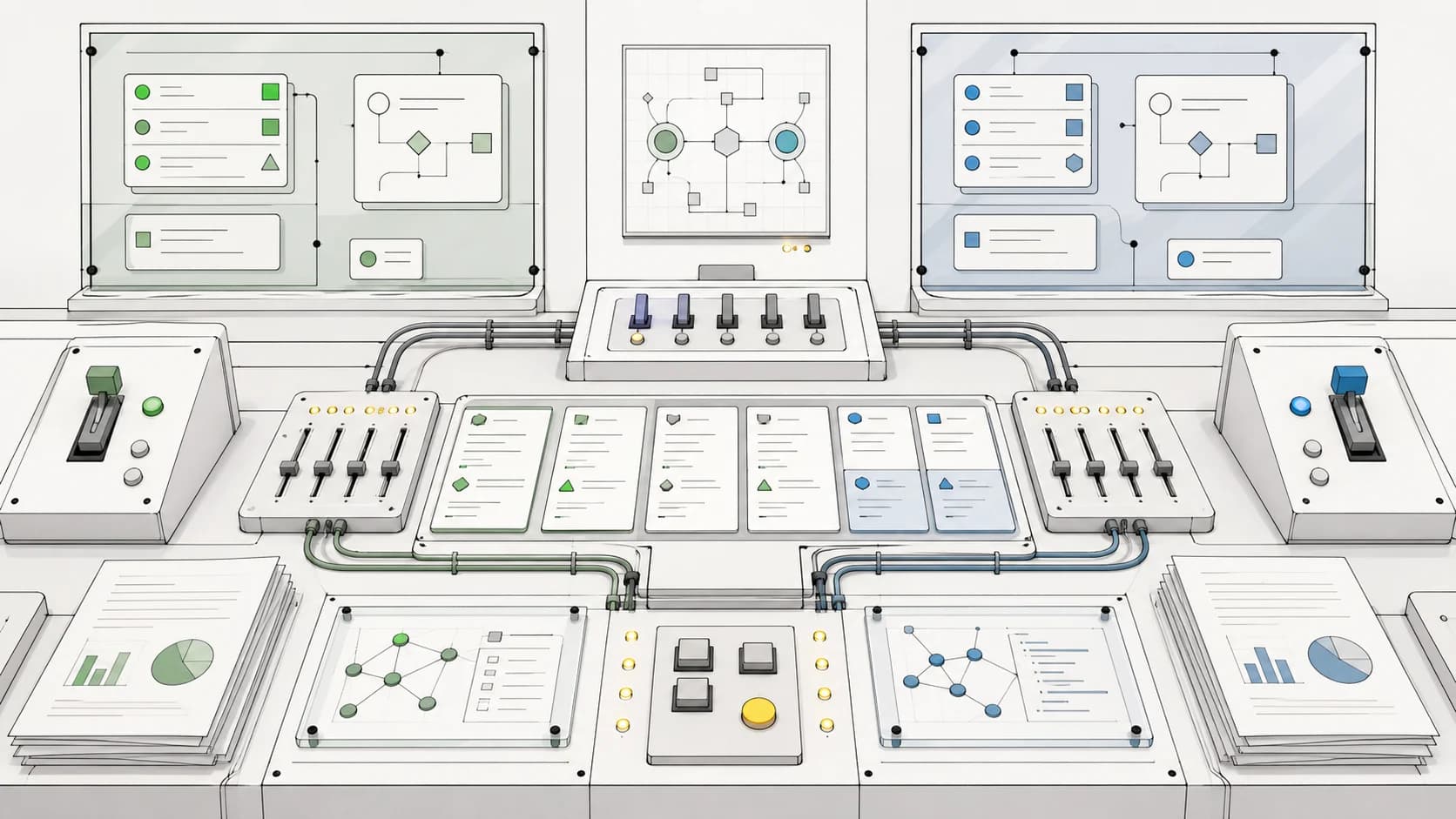
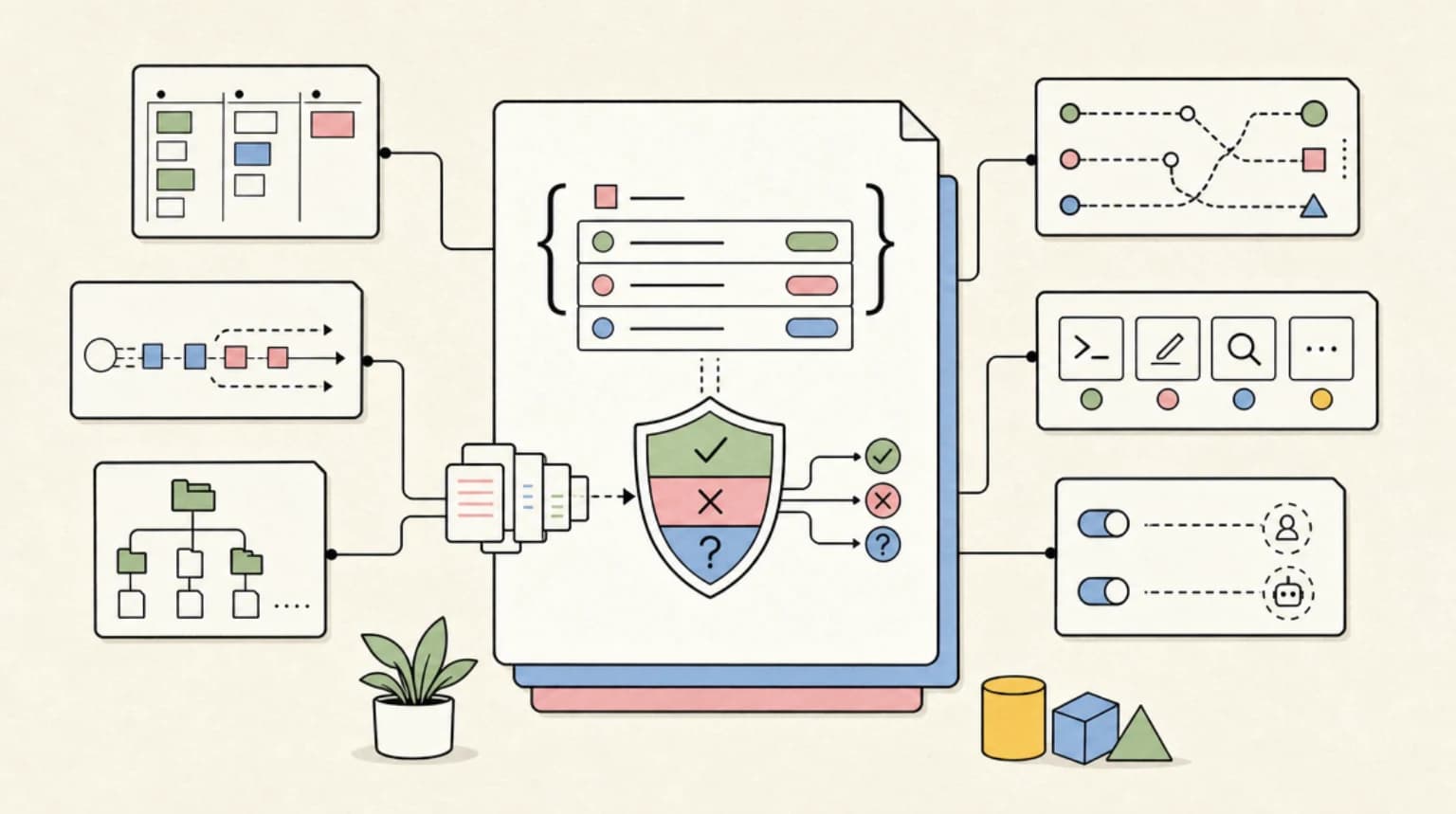
When most agent products talk about control, they mean a settings page: checkboxes that decide which tools an agent may touch. Grok Bot, xAI's always-on agent product that entered beta on August 11 and reached more subscription tiers on August 21, builds its control layer differently. The primary control surface is not configuration. It is management: approval gates wrapped around finished jobs, an org chart that structures delegation across specialist bots, and bots that learn when to escalate to a human and when to keep going.
Call these meta controls: controls over agents rather than controls by agents. The interesting part of the Grok Bot announcement is not any individual feature. It is that harnesses for oversight ship as a first-class primitive, built into how work flows, instead of being relegated to a preferences screen nobody opens twice.
Layer One: Approval-Gated Autonomy#
The baseline contract appears early in the launch announcement: bots "finish jobs end to end, and only come back when something needs your approval." The follow-up post repeats the shape from the other side: bots "work across apps and inboxes, keep going when you step away, and only pull you in for judgment calls."
Two things make this a control mechanism rather than marketing copy. First, the unit of control is the job boundary, not the tool call. You are not approving each command; you are approving outcomes at defined checkpoints, such as an email leaving your inbox. Second, the gate is conversational. Approval requests arrive in the same text thread where you assigned the work, on mobile or desktop, so the act of supervising looks like replying to a colleague rather than navigating a dashboard.
Compare that with developer-grade harnesses, where control means explicit allowlists and permission modes set before the agent runs. Grok Bot's bet is that for everyday jobs, the review moment matters more than the pre-set switch, and that shipping the review moment as the default is what makes end-to-end autonomy tolerable.
Layer Two: An Org Chart Instead of a Settings Page#
The second layer is structural. The announcement describes teams running "multiple Bots in parallel, with one to manage the others":
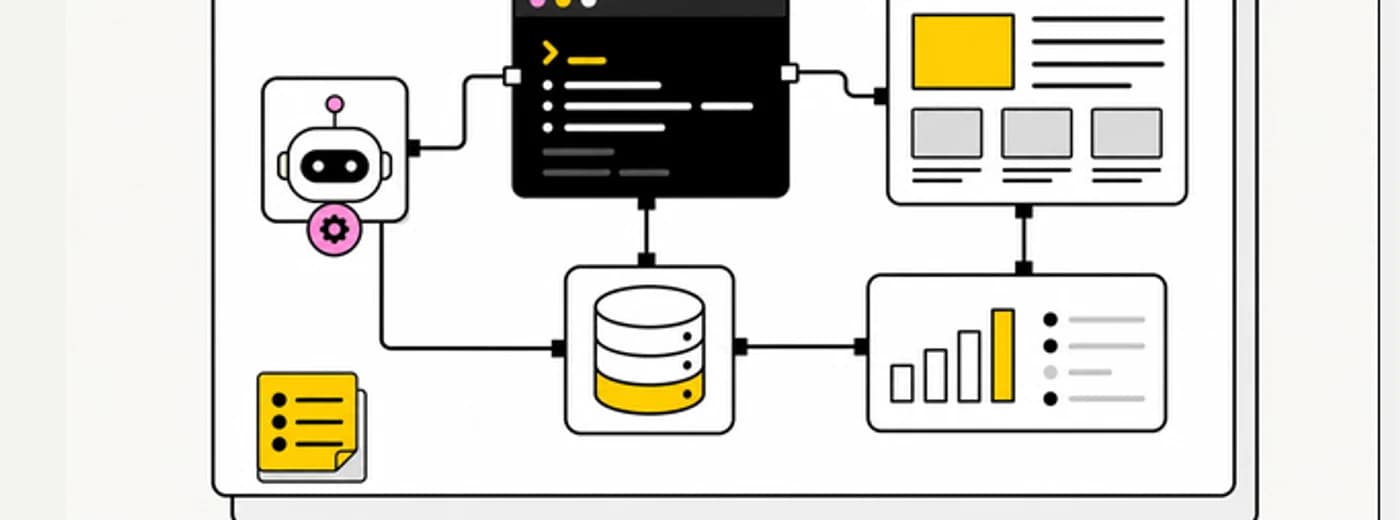
A chief of staff sits on top, with a specialist for each lane: inbox management, expenses, recruiting, bug fixes, or operations. Instead of multiple agents you have to manage, Grok Bot gives you a small team that can work in parallel so you're not the middleman.
Coordination between bots is explicitly supported. They "independently message each other and share context in threads," and when projects overlap they "stay aligned on the same account or project without requiring you to paste notes between chats." A group chat mode goes further: bots "pass work, assign ownership, and only pull you in for judgment calls." The August 21 update summarizes the pitch in one line: put a researcher, writer, and chief of staff in a group chat so "they pass work between themselves, and you're not in the middle."
This is oversight delegated and structured at the same time. The human sets lanes, hands out jobs, and adjudicates escalations. The routing between specialists, the ownership assignments, and the context sharing happen below the human's attention line by design. You supervise a team; you do not micromanage agents.
Layer Three: Escalation Learning#
The third layer changes over time. Bots, according to the announcement, "keep context on how you like work done. After a few tasks, they pick up your voice, your edge cases, and know when to ping versus keep going." And: "Over time they become more proactive, picking up work before you need to ask and knowing when something needs your attention."
That is the escalation threshold itself becoming a learned artifact. Early on, a bot interrupts often and trust is low. As corrections accumulate, the bot raises its own bar for what deserves a ping, and the operator's supervision cost drops. The Emma quote from Operations makes the arc concrete:
When I first started, I was checking in on them every 15 minutes and micromanaging the Bots to the point where they asked me why I kept asking so many questions. Now I let it do its thing and it's just gotten better with time.
Notice what she stopped doing: not delegating, checking in. Micromanagement was the failure mode, and the product's answer was a bot that calibrates interruptions downward as evidence accumulates. Trust escalation over time is the quiet core of the whole control model.
The Consent Rails Are Already in the Job List#
None of this stays abstract, because xAI's own job catalog bakes consent rails into specific roles:
- The sales prospector drafts personalized outreach but "leaves every send for you to approve in your inbox or navigator."
- The digital declutterer audits "email, Drive, and paid subscriptions around the clock," but "only discards or unsubscribes if you say so."
- The customer support bot connects into your payments provider and handles "all the routine refunds within your policy."
Three different consent patterns sit side by side: human approves every outbound send, human authorizes every destructive action, machine acts freely inside a stated policy boundary. These are not global toggles you flip once. Each job description carries its own default risk posture, tuned to the blast radius of the domain. Deleting emails gets a harder rail than drafting them; refunding customers gets a bounded scope rather than a per-case queue.
Why This Feels Like Managing People, Not Configuring Software#
Put the three layers together and the control surface turns out to be conversational and structural: who talks to whom, who approves what, and when a bot escalates. There is no permissions matrix anywhere in that list. There is a briefing, a checkpoint, and a working relationship.
That is closer to how people already manage people than to how people configure software. Nobody manages an employee through a checkbox labeled "may send email"; they set expectations, review important output, and gradually widen latitude as judgment proves out. Grok Bot maps those existing instincts directly onto agents, which is exactly why early users described it as feeling "less like prompting an agent, and more like giving work to a highly capable teammate," and why InfoQ's coverage framed it as general-purpose delegation rather than a developer tool. For non-technical users, the familiar mental model is the feature. You already know how to be someone's manager. Grok Bot assumes you can be theirs.
What xAI Has Not Answered Yet#
The positive framing survives contact with the documentation, but the documentation is thin, and it is worth stating plainly what is missing.
Per-permission granularity is undocumented. Neither announcement describes scoping what an individual bot can access inside a connected account. The Grok.com user guide covers workspaces, licenses, and conversation sharing, and says nothing about bot-level permission models. Hacker News commenters filled the gap themselves: one noted that "I don't want the agents to share my permissions in general since I'm often the admin. I want to give them limited scopes whenever possible," while another proposed that service providers offer "some kind of 'create bot account' function where you can give granular permissions for a new account to interact with your data."
Audit trails are undocumented. If a bot worked overnight across your inbox, Drive, and payment provider, neither page describes a log you can replay afterward to see every action taken. Approval gates tell you what was held for you, not everything that was not. Fleets acting without receipts are a known failure class, and until xAI documents an inspection surface, the trust case rests entirely on the escalation-learning behavior.
Spend controls are undocumented. A declutterer auditing subscriptions "around the clock" and bots with "their own computer in the cloud" imply continuous background consumption, yet neither post describes budget caps, usage ceilings, or per-job cost visibility. InfoQ's review captured the open state of the conversation accurately: "discussions have also raised questions about deployment flexibility, pricing, permissions, and how much control users retain over agents operating continuously."
These are open questions because public answers do not exist yet, not because the answers are known to be bad. A beta that leads with conversational oversight and follows with scoped audit and spend surfaces would be a complete control story. Today only the first half is visible.
FAQ#
What are "meta controls"?#
Controls over agents rather than controls by agents: mechanisms that govern who delegates to whom, what requires approval, and when a bot escalates. In Grok Bot these take the form of approval gates, a managing chief of staff, and learned escalation habits instead of a settings page of tool toggles.
Does Grok Bot have a permissions page?#
Not that xAI documents publicly. The product pages describe consent behavior per job, and the help center documents workspace sharing and licensing, but no per-bot permission configuration surface is spelled out anywhere.
How does approval gating actually work?#
Bots complete jobs end to end and pause at defined checkpoints. Per the announcement, they "only come back when something needs your approval," with requests arriving in the same message thread you used to assign the work.
What is the chief-of-staff pattern?#
One bot manages specialist bots. xAI's description puts "a chief of staff sits on top, with a specialist for each lane: inbox management, expenses, recruiting, bug fixes, or operations," so the human supervises one coordinator rather than juggling every agent.
Do bots really learn when to interrupt you?#
That is xAI's claim: bots "pick up your voice, your edge cases, and know when to ping versus keep going" and become "more proactive... knowing when something needs your attention" over time (source). It matches the reported user experience of shifting from checking in every 15 minutes to letting the bot run.
Can bots coordinate without involving you?#
Yes, by design. In a group chat, bots "pass work, assign ownership, and only pull you in for judgment calls," and shared threads keep overlapping projects aligned "without requiring you to paste notes between chats."
Are there audit logs or spend caps?#
No public documentation describes either. Community coverage has flagged exactly this gap, asking how much control users retain over continuously operating agents. Until xAI publishes an action-log and budget surface, treat both as unverified.
Who is this control model best suited for?#
People comfortable managing by briefing and reviewing rather than configuring: operators, small business owners, and anyone handing off whole functions like inbox triage, outreach, or support. Developers who want explicit scopes and allowlists will feel the missing knobs immediately.
The deeper takeaway is that agent control is becoming a product category of its own, and Grok Bot's version bets that oversight belongs in the workflow, not the settings. Read the flagship analysis of why this shape works for consumers, the own-computer primitive that creates the need for approval gates, and the routines guide for how captured workflows run inside this trust model. If you want the developer-side counterpoint, see how Codex and Claude Code made agent controls the July 2026 feature and how Claude Code approaches the same problem with explicit permissions files. For the accountability layer Grok Bot does not yet document, our case for receipts for agent swarms covers what an audit surface should capture, our comparison of coding agent security models maps the trust spectrum these products sit on, and the GitHub outage that hit agent fleets in August shows what happens when always-on delegation meets infrastructure you do not control.
Get the next deep dive like this in your inbox
One email a week on AI Agents and the rest of the AI dev stack. Free.
Read next on AI coding tools
Grok Bot Has the Right Shape: Four Primitives, Nothing Else
Grok Bot ships four primitives that compose - a text thread, its own cloud computer, a chief of staff over specialist Bots, and show-it-once routines - and deliberately nothing else. That restraint is the product: you message a coworker instead of configuring an automation platform.
8 min readGrok Bot's Core Primitive: Every Bot Gets a Computer
Every Grok Bot works on a persistent cloud computer with browser and terminal access, and that single primitive explains everything else about the product. Here is why own-computer beats chat drafts, API integrations, and session-scoped agents.
7 min readGrok Bot Routines: Automations Without Automation-Building
Grok Bot's routines flip the automation playbook: do the job once while a Bot follows along, correct it in plain language, then let the Bot own the schedule. Here is how the mechanic works, where it fits, and how approval gates keep it safe.
7 min readNew here? Start with
Technical content at the intersection of AI and development. Building with AI agents, Claude Code, and modern dev tools - then showing you exactly how it works.