Grok Bot Has the Right Shape: Four Primitives, Nothing Else

TL;DR
Grok Bot ships four primitives that compose - a text thread, its own cloud computer, a chief of staff over specialist Bots, and show-it-once routines - and deliberately nothing else. That restraint is the product: you message a coworker instead of configuring an automation platform.
Last updated: August 23, 2026
Official Sources#
| Resource | Description |
|---|---|
| Introducing Grok Bot | Launch announcement, August 11, 2026 |
| Grok Bot is now included with more plans | Access expansion and jobs list, August 21, 2026 |
| Grok Bot product page | Downloads and platform availability |
| Hacker News launch thread | 350 points and 334 comments as of August 23, 2026 |
| xAI joins SpaceX | Background on how xAI became part of SpaceXAI |
Most consumer agent products miss in one of two directions. They either do too little - a chat assistant that drafts an email you still have to carry into your inbox and send yourself - or they do too much, handing you a workflow builder with trigger nodes, retry logic, and a weekend of configuration homework. Both shapes ask the user to stop being a user and become something else: a prompt engineer or an automation architect.
Grok Bot, which launched in beta on August 11, 2026 and opened to all SuperGrok Plus, SuperGrok Heavy, Cursor Pro+, Cursor Ultra, and Cursor Teams subscribers on August 21, picks neither shape. It ships exactly four primitives, they compose into each other, and there is deliberately nothing else. This piece argues that the restraint is the point: Grok Bot is the first mainstream consumer agent whose interface model is "message a coworker" rather than "configure an automation platform".
Just Enough, and Only the Right Primitives#
Here is the complete list of what Grok Bot does, straight from the two announcements:
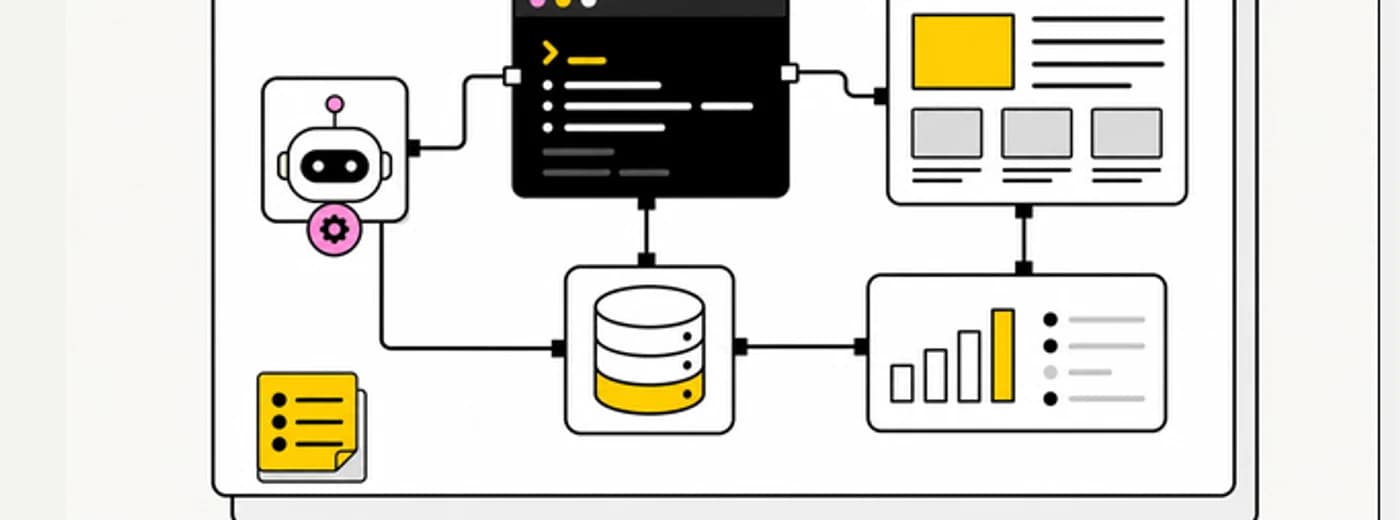
- A text-thread UX - message a Bot the way you would message someone on your team, from mobile or desktop, same thread on both surfaces, nothing to set up first.
- A computer of its own - every Bot shares a cloud machine with browser and terminal access that stays on when you step away.
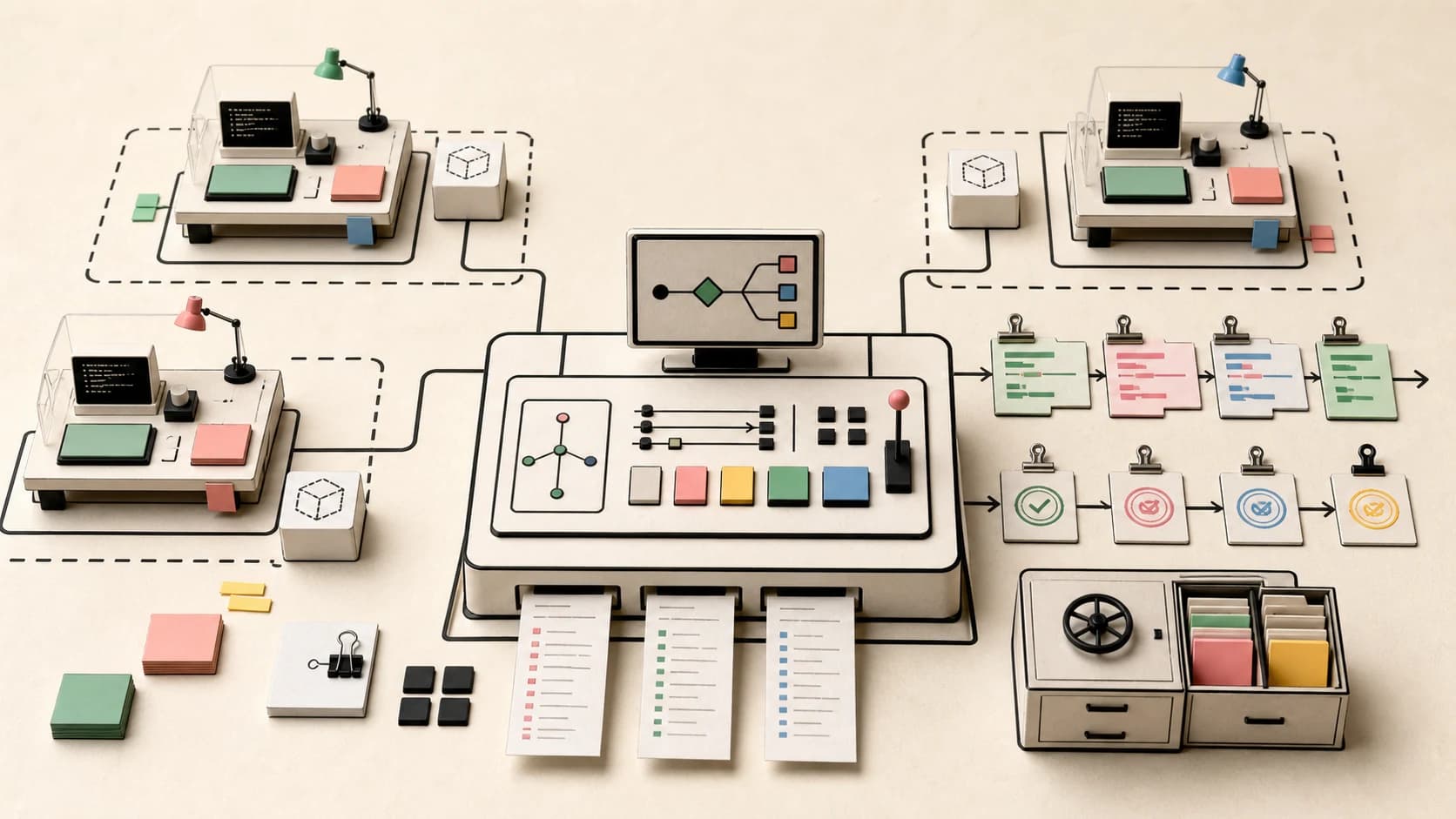
- Many Bots at once - a chief of staff coordinating specialist Bots that message each other, share context, and pass work between themselves.
- Show-it-once routines - a Bot follows along the next time you do a job, saves the steps, takes corrections, then runs it solo.
No node graph. No workflow builder. No setup wizard between download and first job. xAI names the alternative explicitly: "Other AI tools may ask you to set up and build workflows and routines first. With Grok Bot, simply message a Bot to take on a task and it gets it done."
That sentence is the whole strategy. Each primitive below earns its place by replacing something consumers currently have to do themselves - and nothing in the product replaces anything a consumer never asked to learn in the first place.
Primitive 1: Message It Like a Teammate (replaces the setup ritual)#
The onboarding flow for Grok Bot is a conversation. You message a Bot from your phone or desktop, pick up the same thread later on the other surface, and hand off work the way you would text a colleague (xAI, August 11). There is no canvas to lay out, no integration gallery to click through, no naming convention to invent.
This replaces the setup ritual, which is where most automation products quietly lose normal people. Zapier-style tools assume the consumer will translate a job into triggers and actions. Grok Bot assumes the consumer will just describe the job, because describing jobs is what people already do to each other at work. One early user quoted by xAI put it plainly: "There wasn't anything to learn. It was just like bringing on a coworker. No automations to set up, no product quirks, no intricate naming. You're just chatting with a friend."
The text thread also doubles as the audit surface. Because coordination happens in threads you can read, you can scroll back through what a Bot did and why, which matters more in practice than a dashboard of run logs ever has for non-developers.
Primitive 2: A Computer of Its Own (replaces the 90 percent draft)#
Bots share their own computer in the cloud, always on, with browser and terminal access (xAI, August 21). They sign into your existing apps with your credentials - including platforms that have no clean API or MCP server - and work continues after you close the laptop. The Bot comes back only when something needs your approval (xAI, August 11).
That last clause is the primitive doing real work. Chat assistants stop at roughly 90 percent: they produce the draft, the summary, the plan, and the last mile stays with you. xAI's own framing targets exactly this gap. As Roman from the product team put it in the announcement: "There is a huge difference between 90% done and 100% done. Most AI gets you almost there. Grok Bot can finish the swing, because the work lands where a human would put it, in the actual tool."
Signing in like a human instead of integrating like software also removes the integration ceiling that caps most agent products. If a portal has no API, the browser is the API. Inside SpaceXAI, the cited examples are unglamorous on purpose: a sales Bot updating the CRM from call transcripts and drafting follow-ups, an ops Bot processing invoices arriving in Gmail, an engineering Bot reproducing a UI bug, filing the ticket, and handing the fix to a debugging Bot (August 11). Real jobs end inside someone else's software, so that is where the Bot has to finish.
Primitive 3: Many Bots at Once (replaces you as the middleman)#
Single-agent products scale by making you the router: you copy context from the research chat into the writing chat and back again. Grok Bot instead gives you a small org chart. A chief of staff sits over specialists for lanes like inbox management, expenses, recruiting, or bug fixes. Bots independently message each other, share context in threads, coordinate in group chats, pass work, assign ownership, and pull you in only for judgment calls (xAI, August 11).
What this replaces is subtle but heavy: the middleman tax. Multi-agent frameworks have existed for developers for a while - we covered the pattern in Codex automations for recurring engineering work - but they assume an operator who enjoys wiring agents together. Grok Bot's version requires no wiring. You hire a specialist by messaging one into existence, and coordination is emergent rather than configured. For a consumer, "run three things in parallel without being the thing connecting them" is the difference between delegating and dispatching.
Primitive 4: Show It Once (replaces upfront automation building)#
Routines invert how automation normally gets created. Instead of building the workflow before it runs, you do the job once and ask the Bot to follow along. It watches the steps, remembers how you like the work done, saves the sequence as a routine, accepts corrections, and runs it on its own next time (xAI, August 21).
This replaces two things at once: recording automations in advance, and the SOP documents nobody writes. Apprenticeship beats configuration for consumers because it starts from something they were going to do anyway. The learning loop compounds into what xAI calls progressive trust - Bots keep context on your preferences, pick up your voice and edge cases, and learn when to ping versus keep going, becoming proactive over time (August 11). One quoted user went from checking in every 15 minutes to letting Bots run unsupervised within weeks.
Why This Shape Works for Consumers Specifically#
Look at who each existing agent shape serves. Open-source harnesses and CLI agents serve operators. Workflow canvases serve automation hobbyists. Even developer-grade platforms assume tolerance for config screens - we made exactly that case for Vercel's Hermes Agent, which is excellent and thoroughly developer-shaped: bring your own model routing through AI Gateway, run commands in your own sandbox.
Grok Bot's four primitives demand none of that skill. The thread is the interface everyone already knows. The cloud computer removes the "keep my laptop awake" problem. The chief of staff pattern means scaling means hiring, not wiring. Routines mean memory is earned by demonstration, not authored in YAML. Compose them and the consumer shape falls out: hand off a job in a message, let it finish somewhere else, get pulled in only for judgment.
The jobs list from August 21 proves the range is genuinely non-developer: a website builder that purchases the domain and deploys with redirect rules, a digital declutterer auditing email, Drive, and subscriptions around the clock, an office manager booking jobs across Gmail, Slack, ServiceTitan, and Quo, plus inbox manager, meeting stand-in, and refunds manager bots. None of these need a terminal. All of them previously needed either a human or a systems integrator.
The distribution story reinforces the consumer bet. Grok Bot is bundled into SuperGrok and Cursor subscription plans rather than sold as a separate product, and downloads run through Cursor infrastructure - the macOS client is served from downloads.cursor.com. That follows SpaceX's completion of the Cursor acquisition on August 14, 2026, itself downstream of SpaceX acquiring xAI in February. Subscription bundling means no new purchasing decision for millions of existing plan holders - the lowest-friction rollout an agent product has had.
Where Grok Bot Sits Against OpenClaw, Hermes Agent, and Claude Cowork#
Three nearby products make the shape argument concrete.
OpenClaw is the power-user path: an open-source harness you self-host and wire into apps yourself, typically through connector layers like the Composio CLI we covered for pairing OpenClaw with Claude Code. Maximum control, real setup cost.
Vercel's Hermes Agent, again, is the developer substrate play - BYO models via gateway, disposable sandboxes per command. It is plumbing you build on, not a teammate you message.
Claude Cowork (our review) is the closest consumer-intent competitor: agentic file and document work minus the terminal. But Cowork operates on files in front of you on your machine. Grok Bot's Bots sign into live accounts, keep working after the lid closes, and coordinate as a team - closer to staffing than to assisting. Our comparison of ChatGPT work modes versus Claude Cowork covers that lane's current state.
So the honest positioning: OpenClaw maximizes control, Hermes maximizes composability, Cowork maximizes document safety, and Grok Bot maximizes ease of delegation. Nobody else in the lane has shipped the chief-of-staff-plus-routines combination at consumer onboarding cost.
The Honest Limits#
The positive read above comes with real caveats, all verifiable in xAI's own materials. Grok Bot is labeled an early beta, launched August 11, and remains plan-gated: you need one of five paid tiers (SuperGrok Plus, SuperGrok Heavy, Cursor Pro+, Cursor Ultra, Cursor Teams Standard and Premium), enterprise access is waitlist-only, and Android is listed as coming soon alongside desktop and iOS. Usage limits for Bot runs have not been published in either announcement, so heavy users cannot yet budget against a documented ceiling.
Approval latency is the structural price of autonomy. Every guardrail example cuts both ways: the sales prospector leaves every send for approval, and the declutterer only discards if you say so (August 21). Guardrails are correct design - read our agent security checklist before handing any Bot credentials - but they mean judgment calls queue behind you, and a team of Bots can generate an inbox of approvals that becomes its own job. Finally, the strongest outcome claims, including 2-3x efficiency, come from customers quoted in xAI's post rather than independent measurement, and how Bot credential storage is scoped is not documented in the announcements. Trust this product incrementally, exactly as xAI's own progressive-trust framing suggests.
FAQ#
What is Grok Bot?#
A beta product from xAI (now SpaceXAI) launched August 11, 2026: always-on AI teammates with their own cloud computers that work inside your apps and only return for approval. See the launch announcement.
Which plans include Grok Bot?#
As of August 21, 2026: SuperGrok Plus, SuperGrok Heavy, Cursor Pro+, Cursor Ultra, and Cursor Teams Standard and Premium, per the expansion post. Enterprise access is a waitlist.
Is Grok Bot available on mobile?#
Desktop and iOS today; Android is listed as coming soon on the product page. The same thread syncs across phone and desktop.
Does Grok Bot need APIs or MCP servers for my tools?#
No. Bots sign into your existing apps with your credentials and work in the browser and terminal, explicitly including platforms with no clean API or MCP (August 11).
How do routines work?#
Ask a Bot to follow along the next time you do a job. It watches, saves the workflow as a routine, takes corrections, and runs solo afterward (August 21).
How is Grok Bot different from ChatGPT or Claude Cowork?#
Chat assistants draft; Cowork works on local files. Grok Bot's Bots execute inside live accounts, continue when you are offline, and coordinate multiple specialists under a chief of staff - see our Cowork review.
What can Bots actually handle today?#
Published examples include sales prospecting with approval-gated sends, website builds through deployment, subscription decluttering, in-policy refunds, office management across six tools, inbox clearing, meeting attendance, and refund recovery (jobs list).
Is Grok Bot safe to give my credentials?#
It is designed around approvals - sensitive actions come back to you - but credential handling details are not yet public documentation. Start with low-risk jobs and expand trust gradually, following our agent security checklist.
The four primitives hold together precisely because nothing extra got shipped. Go deeper on each in the companions: the own-computer primitive explained, routines as automations you demonstrate instead of build, and meta-controls - oversight as a product primitive. For the adjacent reads: Claude Cowork and ChatGPT versus Cowork map the rest of the consumer lane, Hermes Agent on Vercel shows the developer-shaped alternative, and Grok Build covers what SpaceXAI is doing for developers specifically.
Get the next deep dive like this in your inbox
One email a week on Grok Bot and the rest of the AI dev stack. Free.
Read next on AI coding tools
Grok Bot's Core Primitive: Every Bot Gets a Computer
Every Grok Bot works on a persistent cloud computer with browser and terminal access, and that single primitive explains everything else about the product. Here is why own-computer beats chat drafts, API integrations, and session-scoped agents.
7 min readGrok Bot Routines: Automations Without Automation-Building
Grok Bot's routines flip the automation playbook: do the job once while a Bot follows along, correct it in plain language, then let the Bot own the schedule. Here is how the mechanic works, where it fits, and how approval gates keep it safe.
7 min readGrok Bot's Meta Controls: Oversight as a Product Primitive
Grok Bot ships controls over agents rather than controls by agents: approval gates, a chief-of-staff structure, and escalation learning stand in for a settings page. Here is how that oversight model works, and the control questions xAI has not answered publicly.
7 min readNew here? Start with
Technical content at the intersection of AI and development. Building with AI agents, Claude Code, and modern dev tools - then showing you exactly how it works.