Mendel Godel Machine: Why Self-Improving Coding Agents Need Lineage
TL;DR
A new August 2026 paper argues that coding agents improve faster when they compare attempts across tasks and lineages, not just retry one failed trajectory.
| Research signal | What it says |
|---|---|
| Mendel Godel Machine paper | Submitted August 7, 2026. Introduces comparative evolution for self-improving coding-agent scaffolds. |
| Project page | Authors' overview of the method, experiments, and discovered agent variants. |
| RealLcz/MGM | Apache-2.0 code repository for the paper. |
| Hugging Face paper page | The paper surfaced in the current Hugging Face papers stream. |
| Google Trends check | Attempted August 13, 2026 for exact MGM, self-improving coding-agent, SWE-bench, Polyglot, Qwen, DeepSeek, and AI-agent workflow clusters. Exact MGM demand was effectively absent, but broader demand was present around SWE-bench, AI coding agents, AI agent workflow, and DeepSeek coding. |
Last updated: August 13, 2026
Most self-improving coding-agent loops still act like a developer who only reads the last failed CI log.
Run the agent. Watch it fail. Ask it to patch itself from that one trajectory. Repeat.
The new Mendel Godel Machine paper argues that this leaves too much information on the floor. If an agent system keeps an archive of attempts, variants, tasks, traces, and outcomes, the archive should not only be a leaderboard. It should be a diagnostic instrument.
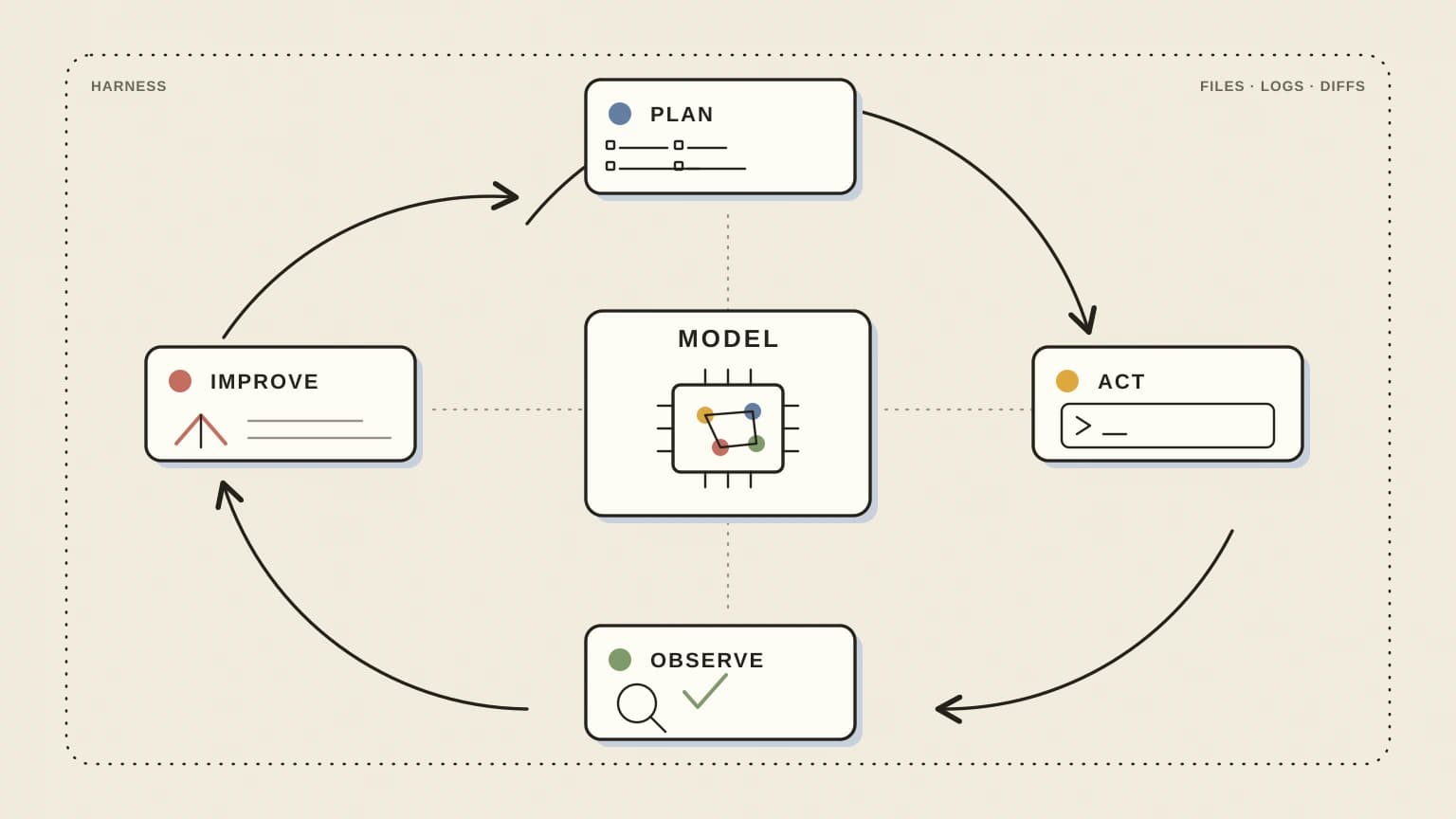
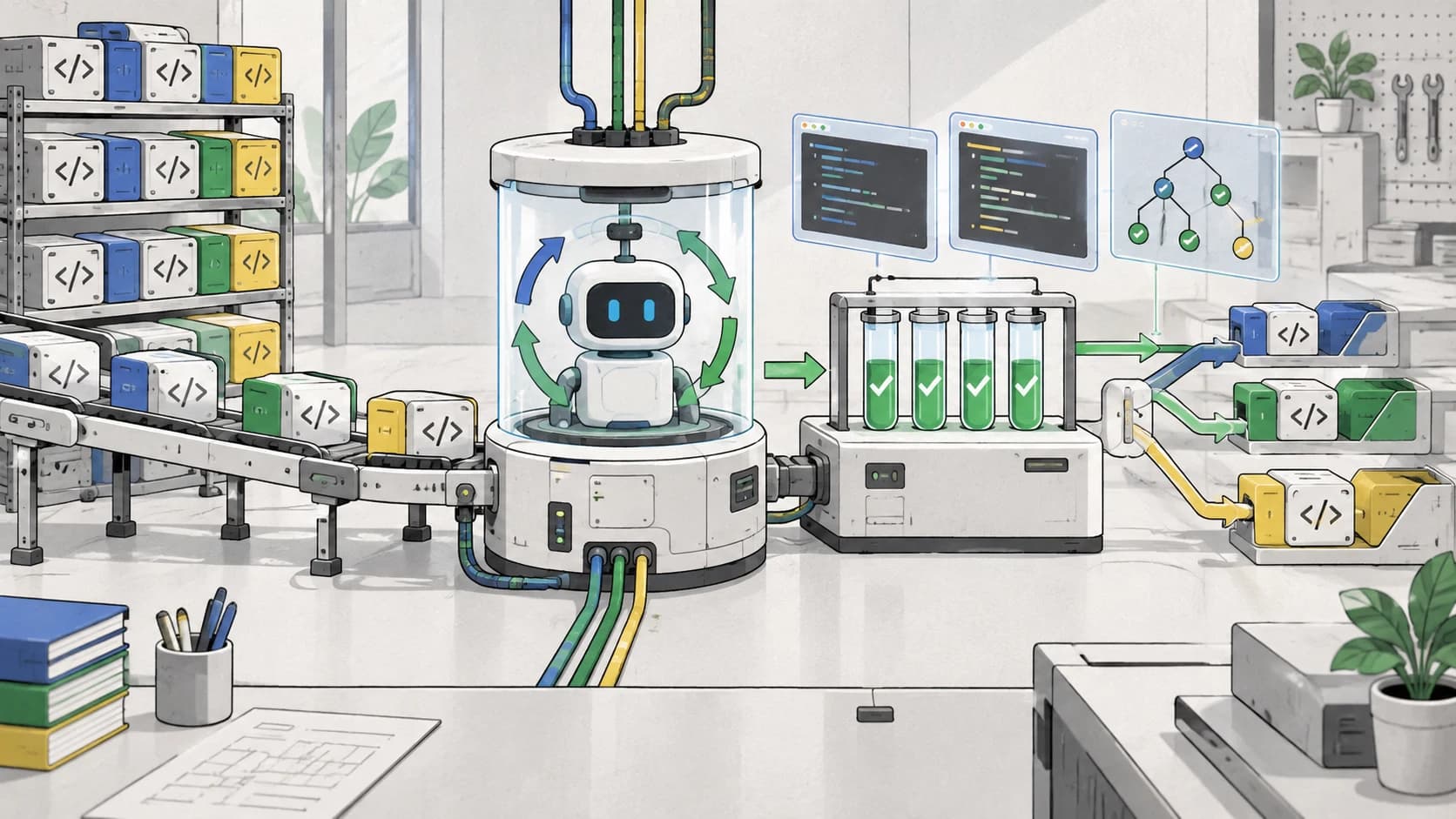
That is the useful idea here. MGM does not claim the base model rewrites its own weights. It evolves the agent scaffold around a model: the source code, procedures, task handling, and self-modification policy that decide how the coding agent works. That puts it directly beside the harness-engineering thesis: near-term recursive improvement starts in the system around the model, because that system is code and can be empirically tested.
The difference is that MGM adds lineage.
The Problem With Single-Failure Retry Loops#
A normal self-modifying agent gets a task, produces a trace, fails, and edits itself from that failure. That can work, but it is a narrow diagnosis.
One failed trajectory cannot easily tell you whether the problem was the task, the test, the prompt, the tool call order, the file-search policy, the patching strategy, or a deeper weakness in the agent design. A single run is noisy. Treating it as the whole truth invites overfitting.
MGM's premise is that a serious agent system already has richer evidence:
- The same agent variant has attempted many tasks.
- Different agent variants have attempted the same task.
- Some variants solved tasks that others failed.
- The source code and trajectories of each variant are preserved.
If that archive exists, the self-edit should use comparisons, not just one local failure. This is the same measurement lesson we keep seeing in agent evals: the benchmark fix is architectural because better evidence changes the loop before the model changes.
MGM Has Three Edit Operators#
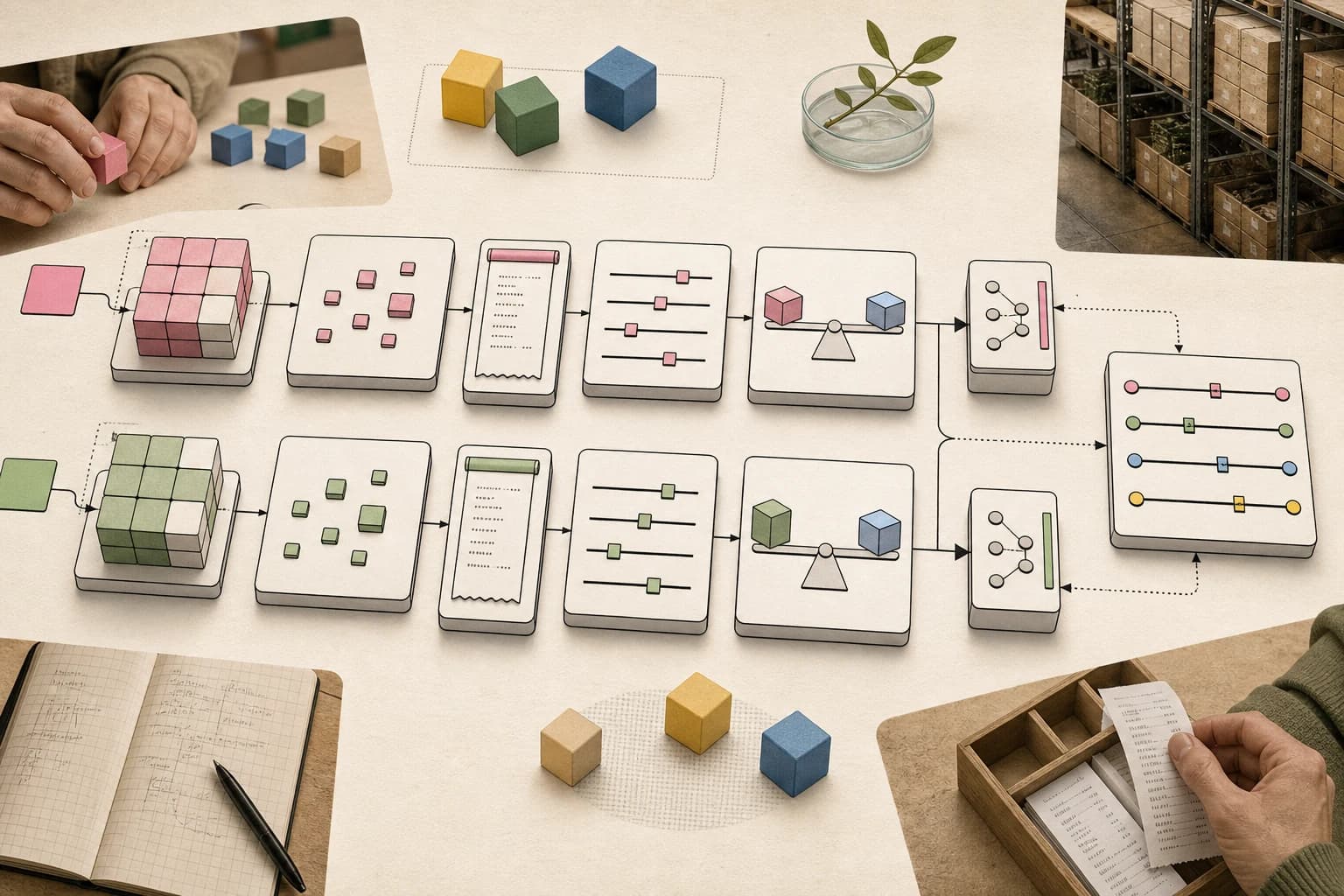
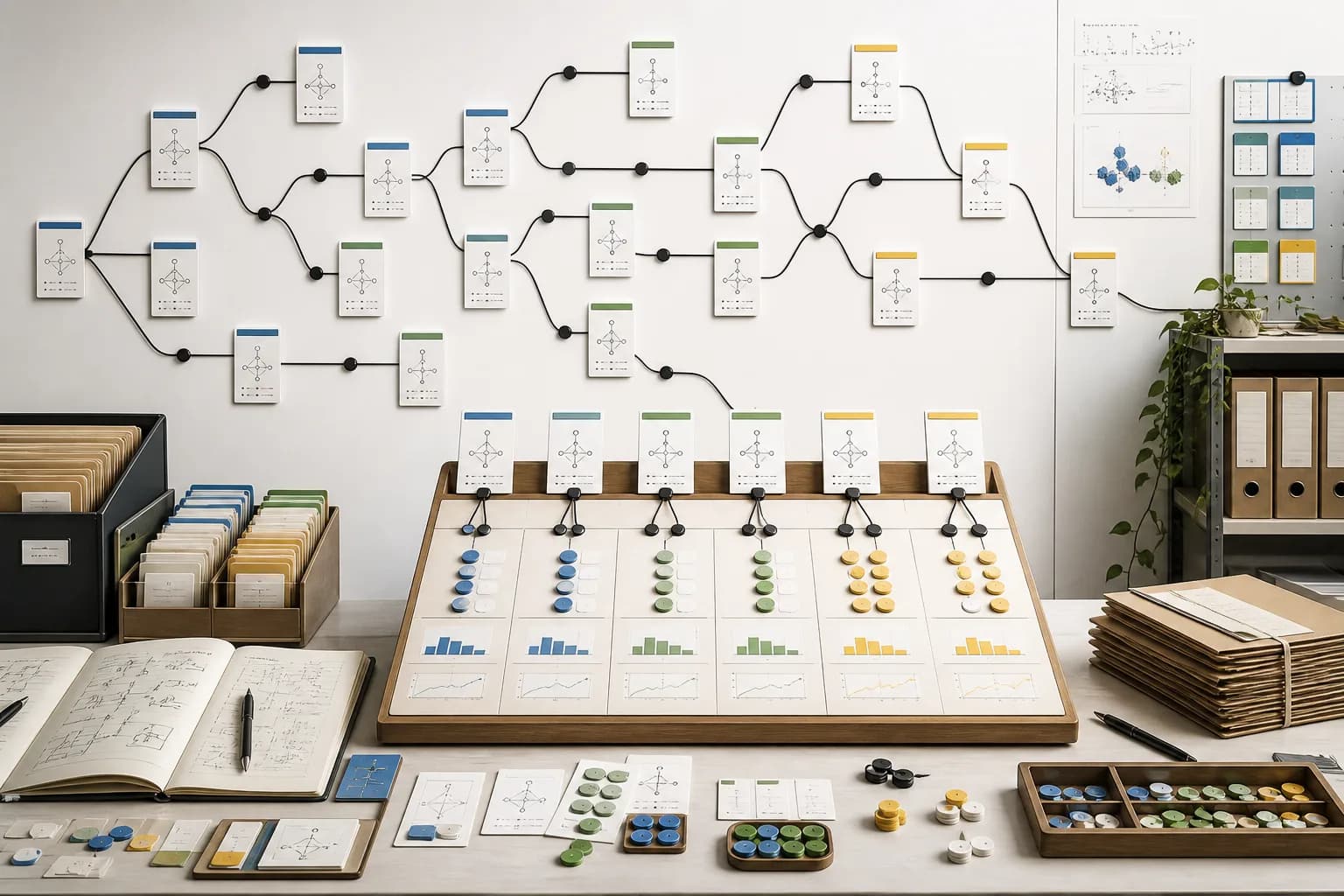
The paper frames an agent's scaffold as a genotype and its task outcomes as phenotype. That terminology sounds decorative until you look at the three edit operators.
Clonal mutation is the familiar baseline: edit the agent based on a single target failure. It is the standard "fix what just broke" loop.
Reaction-norm mutation looks across multiple tasks attempted by the same agent. The point is to separate a one-off accident from a repeatable trait. If an agent repeatedly fails tasks that require preserving hidden constraints, the scaffold probably needs a different memory, search, or verification policy. The edit is conditioned on a pattern across environments.
Cross-lineage hybridization compares two different agent variants on the same task. If one lineage solved a task and another failed it, the failure is no longer just a local error. It becomes a contrastive example. The paper is careful that this is diagnostic: MGM does not simply splice source files together. It uses the reference lineage's trajectory and behavior as evidence for how the target lineage should modify itself.
This is the piece developers should copy even without running MGM. Keep enough structured run history that an agent can ask: "Who solved this kind of task before, what did they observe, and what did this variant miss?"
What The Paper Reports#
The paper evaluates MGM on Polyglot and SWE-bench-style coding-agent tasks. Its headline result is not that a new foundation model wins. It reports gains from evolving the scaffold around existing models.
On Polyglot, the authors report that MGM lifts a Qwen3.6-35B-A3B-based agent from 50.8 percent to 93.3 percent, and that a scaffold evolved with Qwen transfers to DeepSeek-V4-Pro with a reported 96.9 percent. The paper also reports consistent improvements in performance, efficiency, and generalization versus single-trajectory baselines.
Those are striking numbers, but they need the usual benchmark discipline. Polyglot and SWE-bench are useful coding-agent signals, not proof that the resulting agent is generally reliable in production. We have already seen how SWE-bench claims can hide benchmark-quality problems, and the practical reading is narrower: comparative trajectory evidence appears to help agents discover reusable workflow-level improvements.
That narrower claim is still important.
Why Lineage Matters For Real Teams#
Most teams adopting coding agents are not going to run an open-ended evolutionary loop over agent source code tomorrow. But they can adopt the lineage idea.
If your agent only sees the current ticket and the latest failure, it has no institutional memory. If your agent can inspect prior attempts, failed hypotheses, passed checks, review comments, and final diffs, it can make a more grounded edit.
That connects directly to Cursor's SQLite swarm experiment. The code was the visible output, but the more durable artifact was the system around it: task decomposition, version control, review lenses, merge conflict handling, and a field guide that later agents could reuse. MGM adds a research vocabulary for the same operational pattern. A field guide is a lineage artifact. A trace archive is a lineage artifact. A postmortem that says which scaffold change helped is a lineage artifact.
In day-to-day engineering terms, this means:
- Store agent attempts as structured records, not just chat transcripts.
- Preserve failed runs with enough context to compare them later.
- Tag tasks by failure mode, not only by feature area.
- Make scaffold changes small enough that later runs can attribute gains.
- Keep held-out checks so the loop cannot simply overfit its favorite benchmark.
That last point is non-negotiable. A self-improving loop without held-out evaluation is just a machine for becoming persuasive to itself.
The Opposing View#
The strongest critique is that MGM may be another benchmark-shaped improvement. The paper's evidence is tied to coding benchmarks with binary outcomes. That is exactly where self-improvement loops are easiest to measure: did the task pass or fail? Product quality, maintainability, security posture, customer trust, and long-term architecture do not collapse into a clean scalar.
There is also an implementation tax. Comparative evolution needs archived source variants, trajectories, task labels, outcomes, sampling policies, and enough compute to keep evaluating variants. Many teams have not even made their single-agent runs reproducible yet.
The counterargument is that these are not reasons to ignore lineage. They are reasons to start with the smallest useful version: keep structured receipts, compare against previous attempts, and run the counterfactual when a scaffold change seems to help. Long-horizon terminal benchmarks already point in this direction because failure diagnosis over long tasks requires more than the final pass/fail bit.
The Practical Take#
Do not read MGM as "agents can now recursively self-improve themselves into anything." Read it as a better unit of evidence for coding-agent improvement.
The single failed trajectory is too small. The full transcript is too messy. The useful artifact is a lineage: agent version, task, trace, outcome, failure mode, and the scaffold edit that followed.
If you build coding-agent infrastructure, the next step is not a bigger prompt. It is a better archive. Let the agent compare itself against its ancestors and cousins, then make it prove the inherited change on tasks it has not seen.
That is the developer version of comparative evolution: improve the scaffold, keep the evidence, and do not let the loop grade itself.
Continue Reading#
- Harness Engineering and the Path to Self-Improving AI
- Cursor's SQLite Swarm Is a Test of Goal-Driven Software Engineering
- The Fix for Broken Benchmarks Is Architecture, Not Smarter Models
- Long-Horizon Terminal Bench: Agent Evals Need Endurance
- Your Benchmark Is Lying to You
FAQ#
What is the Mendel Godel Machine?#
Mendel Godel Machine is a research method for self-improving coding agents. It evolves the agent scaffold by comparing failures and successes across tasks and across agent lineages, instead of only editing from one failed trajectory.
Does MGM change the model weights?#
No. The paper focuses on evolving the coding-agent scaffold around a base model: source code, workflows, and self-modification behavior. The practical claim is about harness improvement, not autonomous foundation-model training.
Why is lineage useful for coding agents?#
Lineage lets an agent compare variants. If one scaffold solves a task and another fails it, the difference can become diagnostic evidence. That is stronger than asking a failed agent to infer everything from its own last trace.
Should teams use MGM in production?#
Treat MGM as research, not a drop-in production system. Teams can adopt the safer lesson now: preserve structured agent traces, compare attempts, keep held-out checks, and make scaffold changes attributable.
Sources#
- arXiv:2608.07645, Mendel Godel Machine: Recursive Self-Improving Coding Agents via Comparative Evolution, checked August 13, 2026.
- Mendel Godel Machine project page, checked August 13, 2026.
- RealLcz/MGM GitHub repository, checked August 13, 2026.
- Hugging Face Papers: Mendel Godel Machine, checked August 13, 2026.
- Google Trends clusters checked August 13, 2026: exact MGM terms, self-improving coding agents, recursive self improvement, SWE-bench, Polyglot, Qwen coding agent, DeepSeek coding, and AI agent workflow.
Get the next deep dive like this in your inbox
One email a week on AI Agents and the rest of the AI dev stack. Free.
Read next on AI coding tools
Harness Engineering and the Path to Self-Improving AI
Lilian Weng argues self-improving AI won't start with models rewriting their weights - it starts with the harness. Here's what that means for developers building agents.
7 min readCursor's SQLite Swarm Is a Test of Goal-Driven Software Engineering
Cursor's latest agent-swarm experiment rebuilt a SQLite-like database from documentation and passed a held-out conformance suite. The bigger story is the shift from assigning code tasks to specifying, measuring, and governing a goal.
10 min readThe Fix for Broken Benchmarks Is Architecture, Not Smarter Models
Since we published your-benchmark-is-lying-to-you, roughly 25 new results have landed on the eval-integrity question. The surprise: every fix that works is structural - ledgers, counterfactuals, decompositions, personas, readout discipline - and none of them asks the model to be smarter.
11 min readNew here? Start with
Technical content at the intersection of AI and development. Building with AI agents, Claude Code, and modern dev tools - then showing you exactly how it works.