Cursor's SQLite Swarm Is a Test of Goal-Driven Software Engineering

TL;DR
Cursor's latest agent-swarm experiment rebuilt a SQLite-like database from documentation and passed a held-out conformance suite. The bigger story is the shift from assigning code tasks to specifying, measuring, and governing a goal.
| Primary sources | |
|---|---|
| Latest experiment | Cursor: Agent swarms and the new model economics |
| Earlier experiment | Cursor: Scaling long-running autonomous coding |
| Harness evolution | Cursor: Towards self-driving codebases |
| Evaluation suite | SQLite sqllogictest documentation |
| Public artifact | cursor/minisqlite on GitHub |
Last updated: July 21, 2026
Cursor's newest swarm experiment is easy to turn into a bad headline: "AI rewrote SQLite and got 100% test coverage."
That is not what happened, and the distinction matters.
Cursor gave an agent swarm the 835-page SQLite manual and asked it to implement the documented system in Rust. It says the swarm did not receive SQLite's source code, test suites, binary, or internet access. Cursor then evaluated the result against a held-out sqllogictest conformance suite: millions of SQL queries with expected outputs. Its new harness eventually reached 100% on that suite across the reported model configurations. Cursor's write-up is unusually clear that this is a specific measurement, and that it has not deeply audited every line of the public output.
That is still a remarkable result. But it is more interesting as a question about the changing unit of software work than as a claim that a Rust clone is now a drop-in replacement for SQLite.
If a developer can set a goal, attach a specification, define an evaluator, and let an orchestrator keep decomposing and retrying toward the score, what is software engineering becoming?
The Result Is a Conformance Result, Not a Certification#
The first useful reading is the narrow one.
sqllogictest checks whether database engines produce the same result for the same SQL query. It is a serious and appropriate target for a SQL-engine experiment. It is not equivalent to every behavioral, performance, file-format, extension, operational, security, and compatibility property that makes SQLite dependable in production.
The word "held-out" also deserves precision. Cursor says the swarm was not told that the suite existed and that researchers manually checked runs for shortcuts. That makes it a substantially better signal than letting an agent optimize directly against visible tests. It does not eliminate all evaluation questions. SQLite and its documentation are public, the suite comes from a long-lived open-source project, and one test suite cannot represent every production boundary.
So the fair claim is this: Cursor reports that its coordinated agents built a Rust database implementation from documentation that passed all cases in a withheld SQL-result conformance evaluation. That is impressive evidence of capability. It is not an automatic reliability certificate for a database people should put under a production system.
That standard is not a nitpick. It is how we should read every agent benchmark. A score tells us what was measured. Engineering judgment asks what was not measured, who owns the risk, and how the system behaves when the test oracle is incomplete.
The SQLite Run Was Not Cursor's First Attempt#
The new post is the latest entry in an explicit sequence of experiments.
In its earlier long-running autonomous coding work, Cursor had hundreds of agents collaborate on a browser from scratch, plus migrations and internal product work. Its first coordination designs were flat: agents shared a coordination file, claimed work, and tried locks or optimistic concurrency. Cursor reports that these systems got stuck on lock contention, duplicated low-risk tasks, and avoided responsibility for difficult end-to-end work.
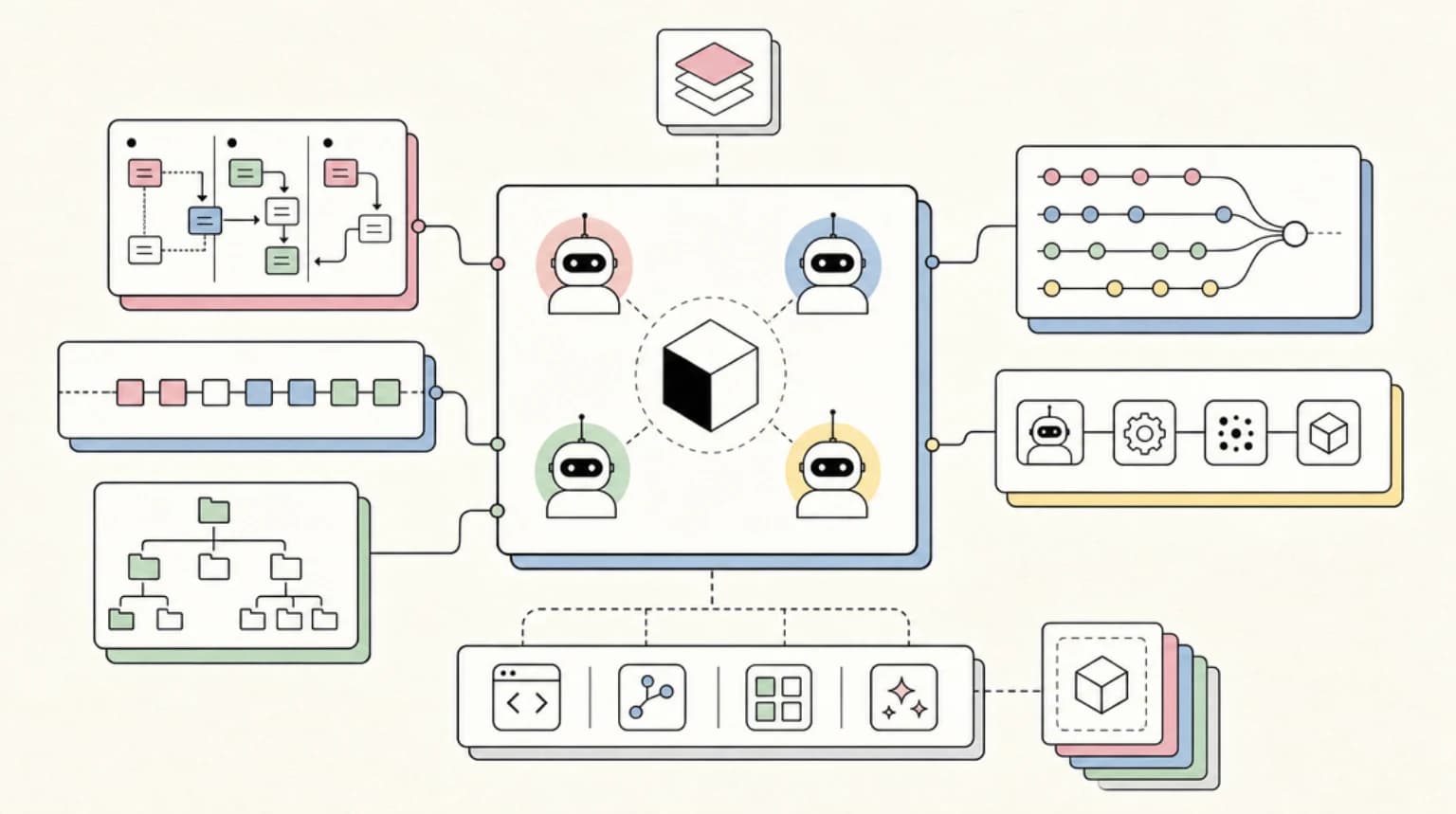
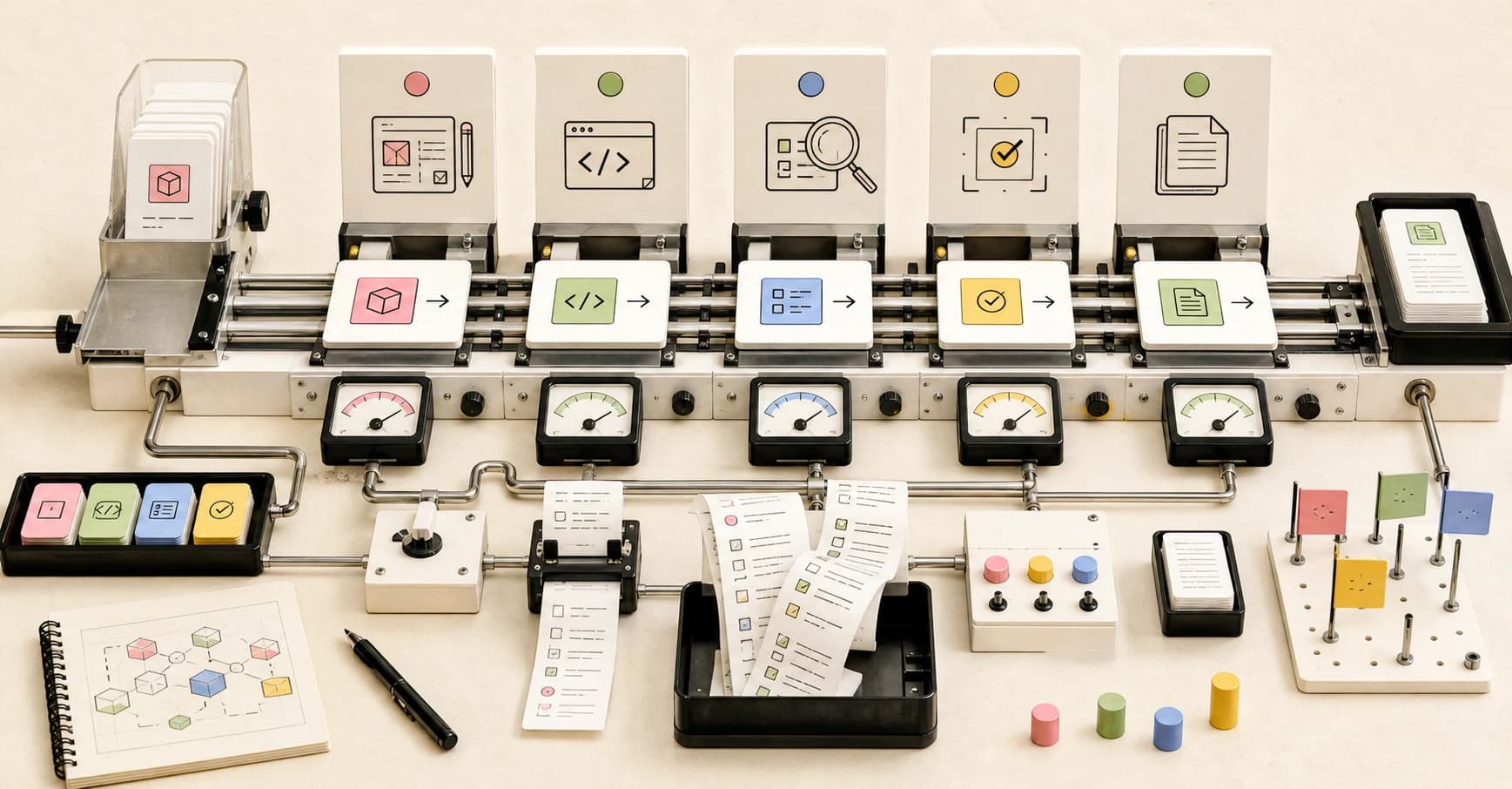
The next iteration separated planning from execution. Planner agents explored the codebase and recursively created tasks. Worker agents concentrated on a bounded task. A judge decided whether another iteration was necessary. This was already a move away from "one smart model writes a lot of code" and toward a control system.
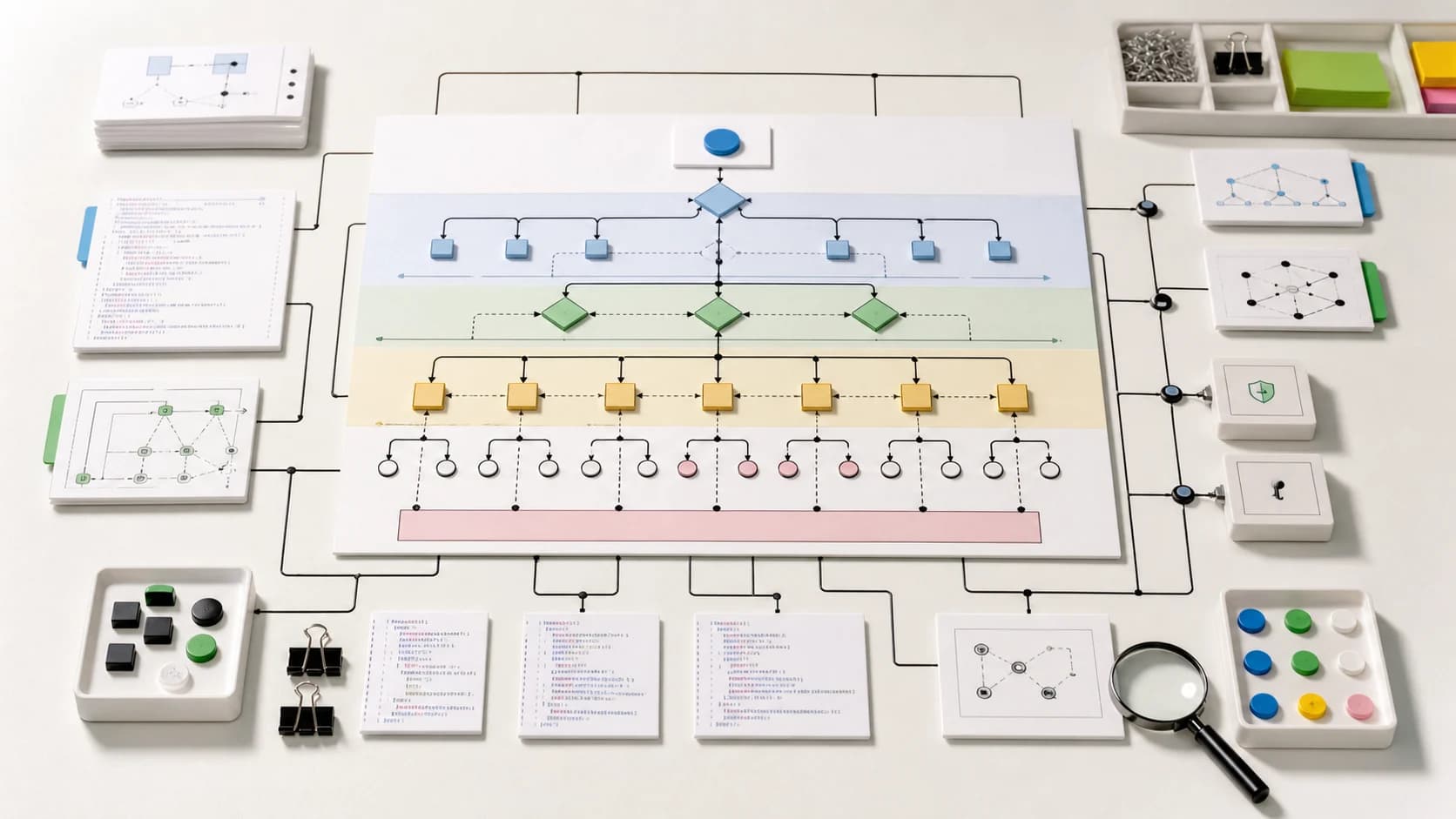
In its follow-up, Cursor describes more experiments with a planner, executor, workers, and judge. It then found that the continuous-executor version accumulated too many jobs at once: planning, research, edits, merges, review, and deciding whether it was done. The final system returned to a root planner that owns the full goal, recursively delegates narrow slices, and never does implementation itself. Workers return a single handoff to the planner that asked for it.
The SQLite experiment adds the machinery that turns that hierarchy into a high-throughput production line: a custom VCS, conflict resolution by an impartial third-party agent, shared design decisions with compile-checked references, review agents with deliberately different lenses, and a shared field guide that agents maintain for their successors. That version-control layer is the same category of problem explored in Cursor Origin's Git forge for AI agents: coordinating changes becomes a product capability when machines create them faster than people can merge them.
Cursor reports a peak around 1,000 commits per second in that system. The most telling comparison is not velocity. In one old Grok 4.5 run, Cursor says 68,000 commits landed in two hours alongside more than 70,000 merge conflicts. The new run produced far fewer conflicts and much smaller implementations while achieving higher scores. That is a useful reminder that activity is not progress. An orchestration system needs a way to detect churn.
The Real Artifact Is the Goal Loop#
The code is the visible artifact. The more consequential artifact is the loop behind it:
- State an intent in enough detail to become a testable specification.
- Turn it into a tree of owned subgoals.
- Give workers bounded tasks, tools, and a current local context.
- Merge, review, measure, and surface conflicts.
- Use the evidence to update the next task tree.
- Stop only when the evaluator says the desired property holds, or escalate when judgment is required.
This is why Cursor calls the swarm a probabilistic compiler for intent. The metaphor is useful, with one important caveat. Traditional compilers preserve specified meaning through deterministic transformations. Agent swarms do not. They infer, forget, make locally plausible choices, and sometimes optimize a proxy. The harness exists because every link in the goal-to-code chain is fallible.
In that world, the scarce work shifts upward. Writing a function matters less when a worker can implement it cheaply. Defining the correct outcome, the boundary conditions, the expected evidence, the permissions, and the stop conditions matters more.
That does not make the engineer a person who only types /goal build sqlite. It makes the engineer responsible for a more consequential interface.
Recursive Improvement Means Improving the System That Climbs#
The most consequential part of Cursor's story is not that many agents can work in parallel. It is that the system can turn lessons from one run into better behavior in the next.
Cursor's own sequence has this shape. A flat swarm creates contention. The team changes ownership and roles. A continuous executor gets overloaded. The team separates planning from implementation again. Commits reveal split-brain design, megafiles, and conflict storms. The harness grows a custom VCS, a neutral merge resolver, design-decision records, review lenses, and a field guide that agents maintain for future agents.
That is recursive applied self-improvement in a practical sense. The system is not only producing application code. It is producing and refining the scaffolding that lets later work happen with less confusion: task trees, durable memory, review policies, code-organization rules, test harnesses, and feedback signals.
The recursion matters because each layer can compound. A better database parser is one local result. A better way to detect when workers are duplicating parser work improves every later parser task. A field guide that captures an obscure failure mode can shorten thousands of future trajectories. A stronger evaluator prevents the system from celebrating the same kind of false success again.
But this is not magic self-improvement. It is an optimization loop, and optimization loops only get smarter about what they can measure. If the system is rewarded for passing queries, it can become excellent at passing queries while remaining weak at durability, performance, operability, or explaining a trade-off to a customer. If it is rewarded for closing tickets, it can close tickets instead of improving the product. If it is rewarded for commit volume, it can produce the 68,000-commit failure mode Cursor describes.
That is why software is increasingly about choosing the hills an agent is allowed to climb.
Every hill is a metric, constraint, or proof obligation that says what counts as progress: compatibility, latency, cost, accessibility, security, simplicity, support burden, user trust, or a production incident avoided. Those hills can conflict. A system that climbs latency may spend too much. A system that climbs coverage may create brittle tests. A system that climbs feature count may make the product harder to use.
The engineer's work is to shape that landscape. Choose a target that corresponds to real value. Add guardrails that prevent a locally successful move from causing downstream damage. Place independent evaluators on the route. Make sure the agent can see enough evidence to change direction. And reserve the steep, ambiguous, high-consequence terrain for explicit human judgment.
The most powerful agent organization may not be the one that can climb the fastest. It may be the one whose hills are hardest to game, whose valleys expose failure early, and whose operators can still decide that a summit is not worth reaching.
What Does a Good Goal Actually Contain?#
A goal like "rewrite SQLite in Rust" is a provocative research prompt. It is not enough for a real product team.
A production goal needs an answer to at least these questions:
- What behavior must be compatible, and what may deliberately differ?
- What is the source of truth: a spec, an existing implementation, a customer workflow, or all three?
- Which evaluators are hidden from the implementer, and which are visible feedback loops?
- What evidence is required beyond tests: profiling, migration rehearsals, accessibility checks, threat modeling, support review, or legal approval?
- What is the authority boundary? Can the system modify a schema, send an email, deploy, or delete data?
- Who resolves a conflict between the metric and the product's real purpose?
- What is the stopping rule, and who is accountable for accepting the residual risk?
These questions are software engineering. In many systems, they are the hardest part of software engineering already. Agents make the gap clearer because they can execute a badly specified objective with enormous persistence.
A goal without a quality definition becomes a throughput target. A test suite without an adversarial or independent check becomes a target for accidental overfitting. A successful run without an owner becomes an unattended system change.
The Engineer's Job Is Moving Toward Governance and Measurement#
There is a temptation to describe this shift as engineers becoming managers. That is too shallow. Good management is useful, but a goal-driven technical system needs deep technical judgment.
Someone has to decide that a parser needs fuzzing rather than another unit-test pass. Someone has to know that a migration should be run against an anonymized production-shaped dataset. Someone has to ask whether a database that returns correct query results also has the required durability behavior under a torn write. Someone has to see that a beautiful green dashboard measures the wrong thing.
The work becomes closer to designing an experimental system:
- specify the claim
- choose independent evidence
- constrain the system's authority
- expose uncertainty and failure modes
- inspect counterexamples
- make the result reproducible
This is the same reason agent evals need baseline receipts. An agent's summary is not proof. A passing test run is not always proof either. The receipt needs the baseline, command, inputs, output, environment, and a clear statement of what the check does and does not establish.
It is also why long-running agents need harnesses. The model is only one part of the system. Memory, task ownership, code search, sandboxing, merge policy, review, and observability determine whether a long-running loop converges or merely produces plausible work forever.
The Open Questions Cursor's Experiment Raises#
Cursor has supplied a strong demonstration of goal decomposition and coordination. The next questions are harder, and they are where product engineering should focus.
Can a swarm know that its goal is wrong? A conformance test can say whether a query result matched. It cannot decide whether the business requirement was misguided, the product should not exist, or an edge case is too risky to ship.
Who writes the evaluator? If the same organization writes the task, harness, and test suite, independent review becomes more valuable. Held-out tests help, but evaluation design needs its own scrutiny.
What happens when success is expensive to observe? Database queries are relatively easy to score. UX quality, incident prevention, maintainability, privacy, and customer trust are much harder. Those require human judgment, diverse reviewers, and slower feedback loops.
Does coordination quality become the new moat? Cursor's results suggest it might. The model mix had large cost differences, but the harness improvement helped every mix. If commodity models can complete bounded leaves, the advantage shifts to planning, memory, version control, evaluation, and review infrastructure.
How do we preserve human agency? A system that can continuously pursue a goal needs visible authority boundaries. The right interaction is not "the swarm is autonomous." It is "the swarm has a bounded mandate, shows its evidence, and asks before it crosses a meaningful line."
The Practical Take#
Do not read the SQLite experiment as a reason to hand a model an underspecified ticket and wait for a miracle.
Read it as a challenge to improve the engineering system around the model. Start with a small, reversible goal. Write down the behavior and non-goals. Give the agent the smallest necessary authority. Make the evaluation harder than the implementation task. Require a reviewable handoff. Keep a human accountable for the decision to ship.
Then iterate on the harness, not only the prompt.
Cursor's experiment says a sufficiently coordinated agent system can make striking progress from a long specification. The more important lesson is that software engineering does not disappear when code generation gets cheap. It becomes more explicit about what it has always been: translating intent into a system that deserves to be trusted.
Continue Reading#
If this experiment changed how you think about coding agents, the next useful question is how to make their output inspectable and controllable:
- Cursor Origin is a Git Forge for AI Agents looks at the coordination and version-control layer behind agent throughput.
- Long-Running Agents Need Harnesses, Not Bigger Prompts explains why memory, tools, permissions, and feedback loops matter as much as the model.
- Agent Evals Need Baseline Receipts turns “the agent says it passed” into a repeatable evidence standard.
- Harness Engineering Is a Token Budget Problem examines the economic and context-management trade-offs inside an agent harness.
FAQ#
Did Cursor really rewrite SQLite with AI?#
Cursor reports that its swarm built a Rust database implementation from the SQLite manual, without receiving SQLite's source code, test suite, binary, or internet access. The public project is called minisqlite. It should not be treated as a production-ready replacement for SQLite based solely on this experiment.
Does 100% on the held-out test suite mean the project has 100% test coverage?#
No. It means Cursor reports that the implementation passed all cases in its held-out sqllogictest evaluation. Test coverage is a different metric, usually describing which lines or branches are exercised. Neither metric alone proves full production compatibility or reliability.
What was different about Cursor's newer agent swarm?#
Cursor describes a recursive planner-worker structure, a specialized high-throughput version-control layer, neutral conflict resolution, shared design records, diverse review lenses, and an agent-maintained field guide. The company says these changes reduced conflict and churn compared with earlier swarm experiments.
What should teams copy from this experiment?#
Copy the discipline, not the scale: clear goals, bounded authority, independent evaluation, evidence-based handoffs, and observability. A team does not need thousands of agents to benefit from a better definition of done.
Sources#
- Cursor, Agent swarms and the new model economics, accessed July 21, 2026.
- Cursor, Scaling long-running autonomous coding, accessed July 21, 2026.
- Cursor, Towards self-driving codebases, accessed July 21, 2026.
- SQLite, sqllogictest, accessed July 21, 2026.
- Cursor minisqlite repository, accessed July 21, 2026.
Get the next deep dive like this in your inbox
One email a week on AI Agents and the rest of the AI dev stack. Free.
Read next on Cursor
Cursor Origin: A Git Forge Built for AI Agents, Not Humans
Cursor Origin, a Git-compatible forge for AI agents built on Graphite: what was announced, what is still a waitlist promise, and why it matters for developers.
8 min readLong-Running Agents Need Harnesses, Not Hope
Long-running coding agents need a harness: task contracts, scoped workspaces, logs, checkpoints, verification gates, and cost limits to recover from failure.
9 min readAgent Evals Need Baseline Receipts
Agent evals need baseline receipts: Hex's data-agent lab compares candidates against stable production baselines, keeps evidence and judges changes by behavior.
8 min readNew here? Start with
Technical content at the intersection of AI and development. Building with AI agents, Claude Code, and modern dev tools - then showing you exactly how it works.