Cursor Origin: A Git Forge Built for AI Agents, Not Humans
TL;DR
At its Compile conference, Cursor announced Origin: a Git-compatible code hosting platform designed around AI agents as first-class users. Built on its Graphite acquisition, it promises agent-driven merge conflict resolution, stacked PRs, and MCP-extensible automation. Here is what was actually announced, what is still a waitlist promise, and why it matters for developers.
Last updated: June 24, 2026
Official Sources#
| Source | What it covers |
|---|---|
| Cursor Origin (cursor.com/origin) | Official product page and waitlist |
| Cursor changelog: Cloud agents window | Same-week agent workflow context |
| eesel AI: What is Cursor Origin? | Feature breakdown, Graphite lineage, demo claims |
| explainx.ai: Cursor Origin git hosting | Announcement framing and feature list |
| Hacker News: A Git forge for the agentic era | Community reaction and trust questions |
| BigGo Finance: Cursor unveils Origin | Announcement coverage |
On June 16, 2026, at its Compile conference, Cursor (Anysphere) announced Origin: a Git-compatible code hosting platform whose pitch is unusually blunt. The premise, as the company framed it: what if the primary users of your version control system are no longer human?
That is the whole bet. GitHub, GitLab, and every forge before them were designed around a human cadence: one engineer opens a branch, pushes a few commits an hour, opens a pull request, waits for a review. Cursor's argument is that agentic coding has broken that cadence. When dozens of background agents are committing in parallel, the bottlenecks move, and a forge tuned for humans starts to creak.
This post sticks to what was actually announced, separates the shipped facts from the demo-stage claims, and flags what is still just a waitlist.
Last verified: June 24, 2026.
What Origin Actually Is#
Origin is a Git forge: repositories, branches, pull requests, and review, the same primitives you already know. It is Git-compatible, so existing tooling and git push workflows are meant to keep working, and Cursor has talked up GitHub migration tooling to ease the move.
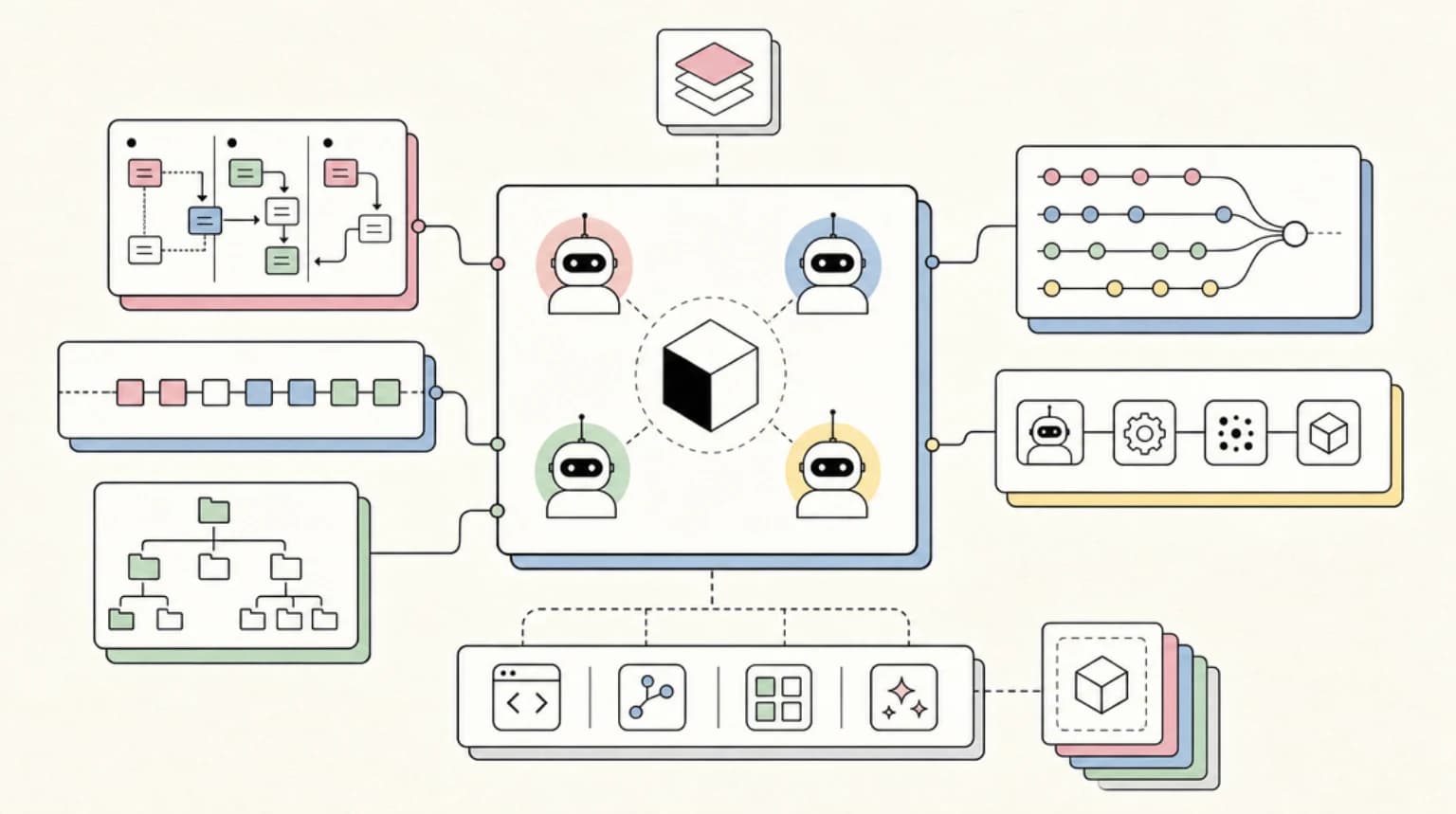
The differentiator is the design center. Where a conventional forge optimizes for human review throughput, Origin is built around agents operating at machine speed: structured, agent-authored diffs, automated review routing for AI-generated PRs, and native integration with Cursor's own background agents.
Crucially, this is not a from-scratch effort. Origin is built on Graphite, the stacked-pull-request platform Cursor acquired, with Graphite co-founder Tomas Reimers leading the demo. That lineage matters: stacked PRs and the review tooling are proven technology, not vaporware. It is the agent-first layer on top that is new.
That is also why Origin belongs next to agent PR governance, parallel coding agent merge discipline, and local coding agent workspaces. The interesting question is not whether agents can generate more branches. They already can. The question is whether the forge can preserve review quality when branch creation becomes cheap.
The Features Worth Tracking#
Across the announcement and early coverage, the features that consistently show up:
- Agent-driven merge conflict resolution. A built-in engine aimed at resolving conflicts automatically, the kind that pile up fast when many agents touch the same files concurrently.
- Agent resolution of CI and build failures. Pushing remediation of broken builds toward automation rather than a human triage queue.
- Stacked pull requests. Inherited directly from Graphite, letting a chain of dependent PRs move together, a workflow agents generate naturally.
- MCP- and API-extensibility. Programmatic control surfaces so agents (and your own tooling) can drive the forge directly, not just click through a UI.
- A storage architecture for scale. Coverage describes a hybrid NVMe-plus-S3 design intended to support large numbers of replicas for high-frequency clone and fetch traffic.
Two of these, merge conflict resolution and CI-failure resolution, are the genuinely agent-native ideas. They target failure modes that barely register for a single human developer but become constant friction once a fleet of agents is committing in parallel.
From the archive
DeepSeek V4 Economics: The Cost-Quality Frontier for Agentic Coding in 2026
Jun 17, 2026 • 9 min read
Epic Games Releases Lore: A Version Control System Built for Game Development
Jun 17, 2026 • 7 min read
Everything Vercel Shipped at Ship 26 (June 2026)
Jun 17, 2026 • 8 min read
Factory Router, Explained: How Automatic Model Routing Cuts Coding-Agent Spend 20-25%
Jun 17, 2026 • 10 min read
Separate the Numbers From the Hype#
Cursor's demo leaned on throughput figures to make the "machine speed" case. The most-quoted is 22.6 commits per second in a single repository, alongside claims of very high clone volumes per hour.
Treat those as demo-stage, vendor-supplied numbers, not independently benchmarked results. They illustrate the design goal, sustaining write and read rates that human-era forges were never built for, but they are staged figures, and some clone-count numbers circulating online have unclear timeframes or units. They are a useful signal of intent. They are not a verified production SLA.
Likewise, treat any third-party rumors of corporate acquisitions tied to the announcement as unverified; they did not come from Cursor's product announcement and are not part of what Origin is.
What Is Real vs. What Is a Promise#
This is the most important section for anyone deciding whether to care today.
Real now: the announcement, the product vision, the Graphite foundation, and an open waitlist at cursor.com/origin.
Not yet: general availability. Origin is slated for fall 2026. Pricing has not been disclosed. Enterprise features, security and compliance posture, and self-host options are unannounced. The throughput claims are demo figures awaiting independent verification.
So this is real in the sense that a credible, well-funded company with proven forge technology (Graphite) has committed publicly to shipping it, with a date. It is a promise in the sense that you cannot run your team on it this week.
The Trust Problem#
The HN thread was small, but it surfaced the right objection: a forge is not just another editor feature. It becomes the system of record for production code, review history, CI results, merge decisions, and incident archaeology.
That makes Origin's unanswered questions more important than its demo throughput:
- What code data is retained, indexed, or used for model improvement?
- How are agent identities represented in commits and reviews?
- Can teams require human approval before agent-resolved conflicts land?
- What audit trail exists when an agent fixes CI and pushes follow-up commits?
- Will enterprise customers get self-hosting, VPC, or dedicated deployment options?
Until Cursor publishes pricing, data terms, compliance details, and the actual product surface, the safest framing is "watch closely," not "migrate." The same caution applies to agent workspace filesystem contracts, Cursor automations, and Cursor versus Codex: agent convenience is only useful if it leaves a reviewable trail.
Why It Matters for Developers#
Even as a waitlist, Origin is a useful signal about where agentic development infrastructure is heading.
The honest tension is governance. A forge that auto-resolves merge conflicts and auto-fixes CI failures is removing exactly the friction points where humans currently catch bad changes. That is the value proposition and the risk in the same sentence. The teams that benefit most from agent-speed infrastructure are also the ones with the most to lose if the safety rails are tuned for throughput over correctness. Expect the interesting questions to be about audit trails, approval gates, and who is accountable for an agent-merged change, not about commits per second.
For now, the practical move is small: if you are already deep in the Cursor ecosystem and running background agents at volume, the waitlist costs nothing. Everyone else can watch for the fall release, independent throughput benchmarks, and a pricing page before forming an opinion. The idea is genuinely interesting. The product still has to ship.
FAQ#
Is Cursor Origin available now?#
No. At verification time, the official Cursor Origin page was still a waitlist. Third-party coverage points to a fall 2026 target, but there is no public general-availability date, pricing page, or full documentation set.
Is Origin replacing GitHub?#
Not today. It is a Git-compatible forge concept aimed at agent-heavy teams. GitHub remains the default system of record for most teams until Origin ships publicly and proves migration, permissions, integrations, compliance, and data handling.
Why does Graphite matter?#
Graphite gives Origin a credible stacked-PR foundation. Stacked changes are a natural fit for agents because agents often split work into dependent branches. The open question is whether the new agent-native layer can preserve review quality at higher throughput.
What should teams watch before trying Origin?#
Watch for pricing, data-use terms, SSO and audit controls, migration tooling, permission models for agents, CI integration, self-host or dedicated deployment options, and whether agent-authored conflict resolutions require human approval.
Continue Reading#
Sources#
Read next
Cursor 2.0 & Composer: The Fastest AI Coding Model
Cursor just dropped their first in-house model. Composer is 4x faster than similar models and completes most coding tasks in under 30 seconds. Here's what actually changed and why it matters.
4 min readCursor Hit $50B -- Here's What the AI IDE Landscape Actually Looks Like Now
Cursor's $50B valuation puts a developer tool above roughly 400 Fortune 500 companies. Here's a clear-eyed look at whether that valuation reflects reality - and which AI IDE actually fits your workflow in 2026.
7 min readCursor Automations Developer Guide: Always-On AI Coding Agents
Cursor Automations lets AI agents run in the background based on triggers, not prompts. Here is how to set them up, configure triggers, and integrate into your workflow.
9 min readShare
Developers Digest
Technical content at the intersection of AI and development. Building with AI agents, Claude Code, and modern dev tools - then showing you exactly how it works.
300+ videos30K+ GitHub stars850+ articles
Related Tools
ProductivityNew
A
AgentCanvas
A hosted infinite canvas your headless AI agents drive over MCP. Any MCP-speaking agent - Claude Code, Codex, Cursor, or...
View ToolAI CodingEssential

Cursor
AI-native code editor forked from VS Code. Composer mode rewrites multiple files at once. Tab autocomplete predicts your...
View ToolAI Coding

Windsurf
Codeium's AI-native IDE. Cascade agent mode handles multi-file edits autonomously. Free tier with generous limits. Stron...
View ToolAI Frameworks
C
Composio
Gives AI agents access to 250+ external tools (GitHub, Slack, Gmail, databases) with managed OAuth. Handles the auth and...
View ToolApps from Developers Digest
SaaS Products
Overnight Agents
Spec out AI agents, run them overnight, wake up to a verified GitHub repo.
View AppDeveloper Tools
Agent Hub
Every coding agent in one window. Stop alt-tabbing between Claude, Codex, and Cursor.
View AppDeveloper ToolsIn Progress
SkillForge CI
Catch broken SKILL.md files in CI before they hit your team.
View AppRelated Guides
Guide
Migrating from Cursor to Claude Code
A concrete step-by-step guide to moving your development workflow from Cursor to Claude Code - settings, rules, keybindings, and the habits that transfer.
Getting StartedGuide
Claude Code Setup Guide
Configure Claude Code for maximum productivity -- CLAUDE.md, sub-agents, MCP servers, and autonomous workflows.
AI AgentsGuide
Prompt Suggestions - Claude Code
Context-aware follow-up suggestions derived from git history.
Claude CodeRelated Videos
GitHub Copilot Spark Launch: New Rival to Cursor + v0? Full Update in 6 Minutes
Learn The Fundamentals Of Becoming An AI Engineer On Scrimba; https://v2.scrimba.com/the-ai-engineer-path-c02v?via=developersdigest Introducing GitHub Spark and Exciting GitHub Copilot Updates!...
Video·

Buzz: Open-Source Collaboration for Humans + AI Agents
Buzz by Block: Open-Source Slack-Style Collaboration for Humans + AI Agents (Demo & Setup) Check out Arcade: https://arcade.dev.plug.dev/xiDRwlA Repo: https://github.com/block/buzz The video introd...
Video·

Open Design: Turn Websites into Design Assets for Cursor & Claude Code
Open Design: Open-Source n8n App That Turns Any Website into a Brand Kit, Design System, HTML + Images The video introduces Open Design, an MIT-licensed full-stack template that combines AI and n8n a...
Video·
Related Posts

4 min read
Cursor
Cursor 2.0 & Composer: The Fastest AI Coding Model
Cursor just dropped their first in-house model. Composer is 4x faster than similar models and completes most coding task...
7 min read
AI IDEs
Cursor Hit $50B -- Here's What the AI IDE Landscape Actually Looks Like Now
Cursor's $50B valuation puts a developer tool above roughly 400 Fortune 500 companies. Here's a clear-eyed look at wheth...
9 min read
Cursor
Cursor Automations Developer Guide: Always-On AI Coding Agents
Cursor Automations lets AI agents run in the background based on triggers, not prompts. Here is how to set them up, conf...

11 min read
AI Agents
Agent Architecture: Building Multi-Step AI Workflows That Survive Production
A practical architecture for multi-step Claude agents. Loop patterns, state management, error recovery, and the producti...

8 min read
ai-coding-tools
Do AI Coding Agents Need Their Own Version Control?
Oak is an early bet that AI coding agents need version control shaped around sessions, virtual workspaces, and token bud...
10 min read
AI Coding
AI Coding Agent Security Models Compared 2026: Permissions, Sandboxing, and Threat Models for Every Major Tool
How Claude Code, Cursor, Codex, GitHub Copilot, Aider, and Windsurf handle permissions, sandboxing, credential protectio...
Build with the member tools

Get Smarter About AI Dev
New tutorials, open-source projects, and deep dives on coding agents - delivered weekly.
One email per weekReal code, not theoryFree forever