Anthropic Scion: Why Anthropic Replaced Git for Agent-Scale Merges

TL;DR
Anthropic went from about 2,500 to over 30,000 merges a day and replaced git with an in-house system called Scion. What the post says, what HN pushed back on, and what to do on your own repo.
Anthropic says it replaced git with an in-house version control system called Scion, because Claude-written code pushed its monorepo past what git's design handles. If you are searching for "Anthropic Scion" or "git for AI agents", the short answer is that this is a case study from the far end of the curve, not a product you can install - and the useful part is which git assumptions broke first.
Last updated: October 13, 2026
What the primary source says#
The post, Redesigning source control at Anthropic, was published October 13, 2026. These are the claims, all vendor-reported:
- Anthropic averaged around 2,500 merged code changes per day in May 2026 and over 30,000 per day by September.
- The main branch history alone is almost 100 GB and a compressed working copy is over 25 GB. CI performs on the order of 25 million checkouts per day.
- At peak the company ran several hundred internal git mirrors. That "bought us time" but got harder to operate as the merge rate rose.
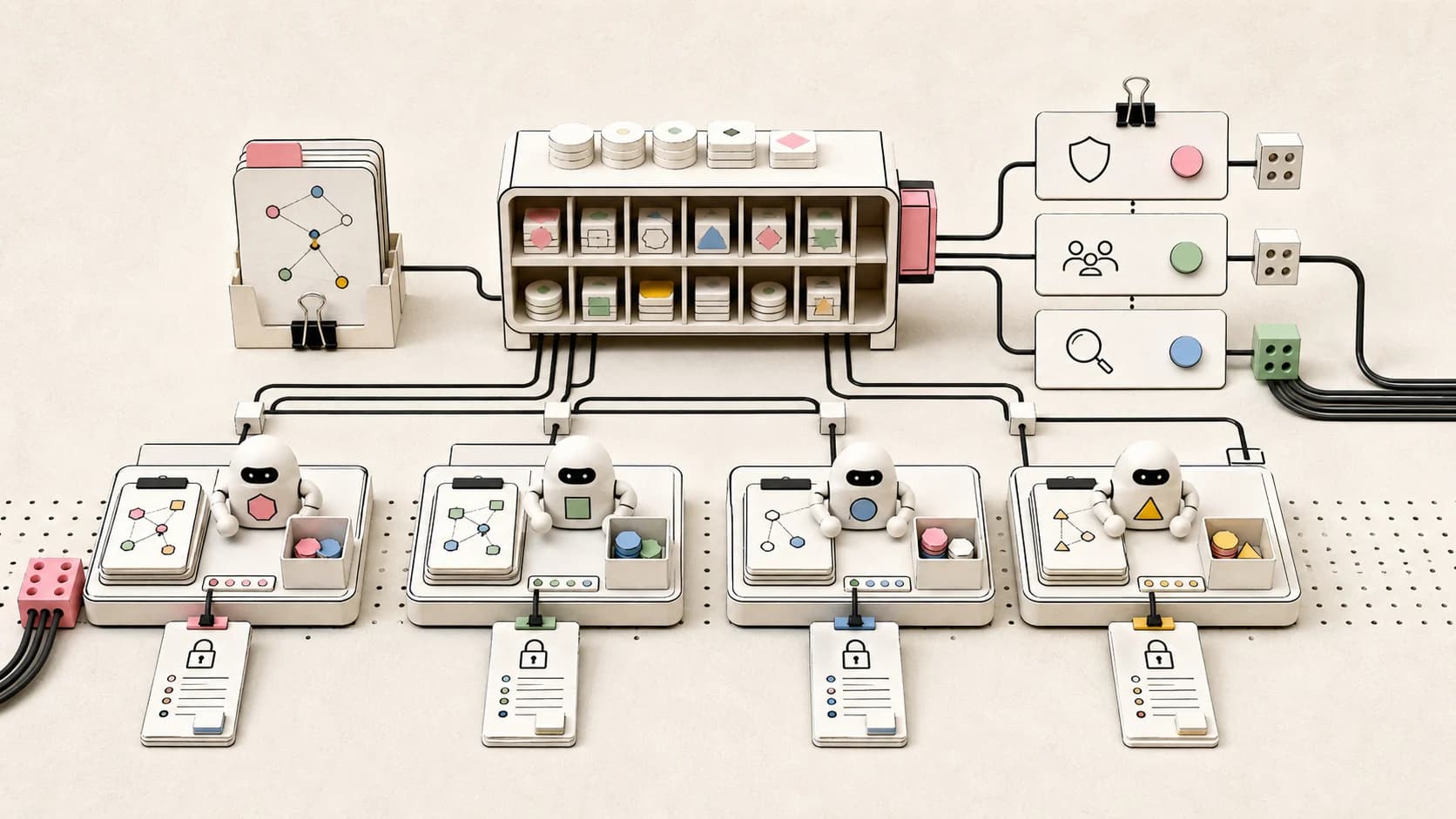
- Scion is server-centric: every commit, rebase and merge happens on the server, clients keep a bounded local cache, and the server exposes blame, history and diff as APIs so CI jobs often need no local clone at all.
- The unit of work is a "changeset" in a write-ahead log. Refs are discouraged except for main and release branches.
- Reported results: the Scion footprint is 200x smaller in CPU and memory than the git mirror fleet, CI and research checkouts are two orders of magnitude faster, and CI alone gained a 25% CPU capacity win.
- A team of seven built Scion and a code review tool called Antique and migrated the monorepo in five months.
Anthropic is explicit that Scion is "by no means a suitable replacement for git for general use" and that it only makes sense for enormous monorepos with swarms of agents. It also says it hopes git platforms adopt the transferable ideas: server-side RPCs, a negotiation protocol that does not look like today's, and sparse and shallow features that compose well.
The angle: the bottleneck moved downstream of the model#
The most quotable line is not about git. It is that coding is no longer the bottleneck, and "developer infrastructure built for human scale: source control, builds, and CI" is. That lines up with what we have seen in smaller form with parallel coding agents that need merge discipline: once generation is cheap, integration is the cost.
Who wins and loses if this pattern spreads:
- Winners: git forges and vendors that sell server-side capacity. Anthropic names GitHub, GitLab and the open source community as partners, and other agent-first VCS attempts such as Oak and Cursor Origin are betting on the same shift.
- Losers: the assumption that the local clone is the unit of work. If your agents are always online, an offline-capable full copy is mostly overhead.
- Open question: merge queues. Anthropic says a proper merge queue "doesn't make much sense at agent scale", that it could not effectively replicate a global repository lock, and so it leans on post-merge and pre-deploy testing instead, accepting that concurrent changes can conflict because Claude can usually fix conflicts faster than people can spot them. That is a real tradeoff, not a free lunch.
What a builder does Monday#
You almost certainly do not have 30,000 merges a day. The portable lesson is to stop paying for history your agents never read. Standard git already gives you a slice-of-the-repo workflow:
git clone --filter=blob:none --sparse <repo-url>
cd <repo>
git sparse-checkout set services/api packages/shared
git sparse-checkout set takes the directories you want, as documented in the git sparse-checkout reference. Pair it with one worktree per agent, covered in our guides to Claude Code worktrees and git worktrees with parallel agents.
Where it breaks: operations that need full history, like blame across moved files, degrade on partial clones. Anthropic reports hitting exactly this before building Scion, and it is why their client asks a server instead. Measure your own agent checkout time before changing anything - if it is seconds, this post is not about you.
What people are actually saying#
The Hacker News thread is skeptical in two directions.
On architecture, one commenter objected that "every commit, rebase, or merge happens on the server" gives up git's core benefit, that you can build up history locally, rework it or throw it away before anything is shared. The same commenter argued that 30,000 merges a day is not many per employee, and suspected the real issues are sprawling cross-cutting changes and slow clones. They also flagged the security risk of agent swarms sharing a mandatory central service.
On review, another commenter asked whether this means shipping code with no human review. The counter-case in the same thread: the post says engineers still review every change request but now examine the intent of the change rather than reading every line, and plenty of teams already rubber-stamp on green tests. The disagreement did not resolve.
Both camps have a point, and neither is checkable from outside: all the throughput and savings numbers are Anthropic's own.
What I would take from it#
- Treat the 200x and 25% figures as directional, vendor-reported, and specific to a workload most teams will never have.
- The design principle that travels is "assume the client is online and ask the server". It already shows up in other agent-era git tools.
- Watch the review model, not the VCS. Anthropic reports using adversarial agent review plus human intent review, and uses Claude Tag agents it calls "superfans" to monitor each component. The post credits an early internal Claude Mythos Preview snapshot with rewriting its ingestion pipeline to use 20x less memory and run 4x faster.
Continue Reading#
- Parallel Coding Agents Need Merge Discipline - ownership and receipts when agents merge in parallel
- Oak: A New Version Control System Built for AI Agents - another agent-first git alternative and the HN reaction
- Cursor Origin: A Git Forge Built for AI Agents - the forge-side take
- Git Worktrees + Claude Code - the practical per-agent checkout setup
Sources#
- Redesigning source control at Anthropic - Anthropic Engineering, October 13, 2026
- git sparse-checkout documentation - git-scm.com
- Hacker News discussion and the comments linked above
FAQ#
What is Anthropic Scion?#
Scion is Anthropic's in-house version control system, described in an October 13, 2026 engineering post. It is server-centric, built for clients that are always online, and replaced git for Anthropic's monorepo after a five-month migration.
Is Scion available to use?#
No. Anthropic says it is difficult to offer Scion in a form useful to other organizations and is sharing the design ideas instead, hoping git platforms adopt the transferable parts.
Should my team leave git for agents?#
Almost certainly not. Anthropic itself says Scion only makes sense for enormous monorepos. Start with sparse checkouts and one worktree per agent.
Get the next deep dive like this in your inbox
One email a week on News and the rest of the AI dev stack. Free.
Read next on Claude Code
Anthropic's False Murder Tip: What the Unintended Actions Report Means for Your Agents
Claude Haiku 4.5 submitted an invented tip to a police form during an Anthropic evaluation. The October 9 report lists four behaviors, and each one maps to a scoping mistake you can check in your own agent setup this week.
8 min readVercel Skill Packs: The Distribution Layer for Agent Skills Just Landed
skills.sh now lets you bundle multiple agent skills into a shareable, unlisted pack and install it with one command. Packs mix public directory skills, private local files, and GitHub repos, then sync with a single update command. Here is how they work, what they mean for team standardization, and where the trust questions are.
6 min readAnthropic Removed 80% of Claude Code's System Prompt. Here Is What They Learned.
Anthropic cut 80% of Claude Code's system prompt for Opus 5 and Fable 5 with zero regression on coding evals. The post landed on HN with 197 points and 133 comments. Here is what the article says, what HN thinks, and what it means for your agent harness.
7 min readTechnical content at the intersection of AI and development. Building with AI agents, Claude Code, and modern dev tools - then showing you exactly how it works.