Reverse Engineer Anything (REA): What the MCP Server Does and Where the Line Is

TL;DR
REA (Reverse Engineer Anything) is an MIT-licensed MCP server that lets Claude Code, Codex or Cursor inspect binaries, Electron apps and APKs. What it does, how to try it, and why it is not the same thing as the ArtCraft Adobe clones.
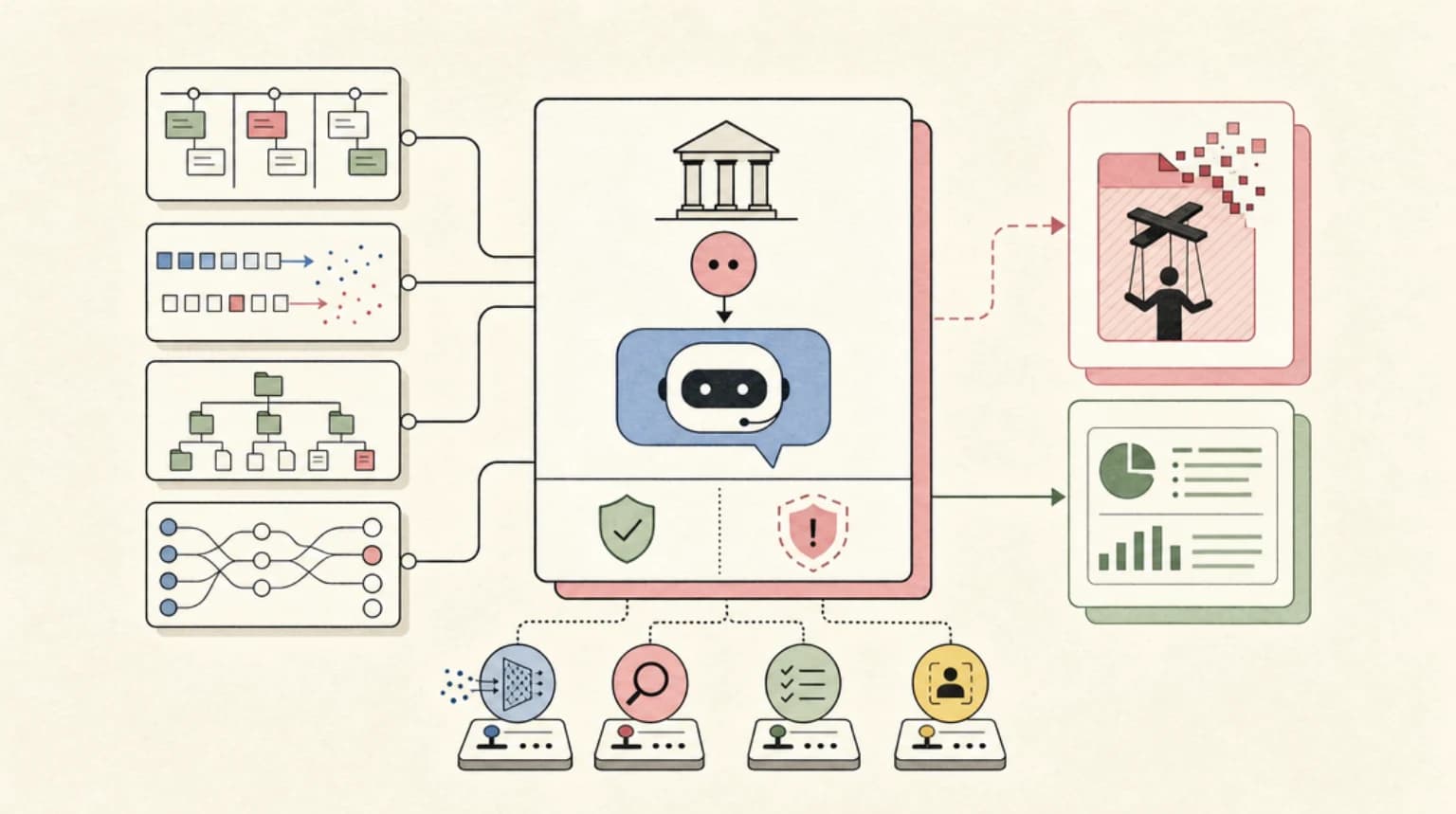
REA, short for Reverse Engineer Anything, is an MIT-licensed MCP server that plugs reverse-engineering tools into Claude Code, Codex, Cursor and other agents. If you searched "reverse engineer anything" this week, this is what you were looking for: a local toolkit that lets an agent inspect a binary, an Electron app or an APK, return evidence, and then write code from what it found. It is not an Adobe clone, and it is not the same project as ArtCraft, although the two keep getting bundled in the same headlines.
Last updated: October 14, 2026
What REA is, per its own README#
The REA repository describes it as "one MCP for reverse engineering across binaries, applications, and runtime behavior". The pitch is: see a feature in an app, ask your agent to investigate it, get an explanation with the evidence, and optionally have the agent build a version for your own project.
What it covers, according to the README's target table:
- Native binaries: pseudocode, assembly, strings, symbols and references, through Hopper, Ghidra or IDA that you install yourself.
- JavaScript and Electron apps: modules, imports, source maps, routes and IPC. This path needs no native analysis engine.
- Other targets: .NET assemblies, Android APKs, WASM, SQLite files, firmware, packet captures and websites.
- Locality: analysis runs on your machine. Your agent receives the tool results, and your model provider's data policy applies to those results.
The README's setup is one command, copied here from the project and not re-run by us:
npx rea-agents setup
You pick your agents (it lists Claude Code, Codex, Cursor, Gemini CLI and others), review the proposed config changes, approve, and restart the agent. There is also a terminal mode. The README's example inspects an extracted Electron app or ASAR:
npx -y rea-agents@latest analyze-javascript-application /absolute/path/to/app --json
Popularity is not a quality signal, but it explains the search spike: the README banner thanks users for 180,000 GitHub stars, and the repo page showed over 200,000 when we opened it. The star count is project-reported and moving fast.
REA and ArtCraft are two stories#
Most of the viral coverage merges them, so separate them first.
ArtCraft is an open-source studio that started as an AI image and video tool. According to CineD's report, it has since released free apps modelled on Premiere Pro and After Effects, written in Rust with AI help. CineD says the FilmCraft README states the app was written from public ITU-T, ISO and IETF specifications with no Adobe code, and that its contributor rules tell agents to observe behaviour by using the app rather than disassembling Adobe bundles. CineD is explicit that this clean-room claim "has not been independently verified". The same piece reports the maintainers' own estimate that FilmCraft is about 56% "ready for real work".
REA is a general analysis tool made by a different project. Nothing in the REA README says it produced the ArtCraft apps. The connection is the news cycle, not the code. That distinction matters if you are deciding what to try: REA is a tool you can run today; ArtCraft is a set of products whose provenance you have to take on trust.
The angle: the cost of understanding someone else's software just dropped#
Decompilers are not new. Ghidra and Hopper have been around for years, and REA still needs one of them for deep native work. What REA changes is who drives the tool. Instead of a human reading pseudocode for weeks, an agent runs the investigation, cites evidence, and checks its reconstruction. REA's own showcase lists a DOS game routine reconstructed in C and compared against the original compiled bytes, which is the same pattern we wrote about in giving agents a PASS/FAIL oracle: the work only holds up when a mechanical check can say yes or no.
Who benefits:
- Security teams and CTF players: triage of unknown binaries and APKs gets faster, and the output includes evidence rather than a bare claim.
- Maintainers of abandoned software: interoperability and preservation work, which REA's disclaimer lists as intended uses, gets cheaper.
- Anyone integrating with an undocumented Electron app: tracing a preload and IPC bridge is exactly the kind of tedious, bounded task agents are good at.
Who should worry: vendors who treat "nobody can figure out how this works" as a moat, and hobby reverse-engineering communities whose craft is now a prompt away (more on that below).
What a builder does Monday#
Start with the safest target class: software you own or are authorized to examine, with no native engine required.
- Take an Electron app you built or maintain, extract it, and run the
analyze-javascript-applicationcommand above. Read the module and IPC output before involving an agent. - Only then run
npx rea-agents setupfor your agent and ask a narrow question about that app, such as where a specific IPC channel is handled. Ask for the evidence, not just the answer. - Treat the MCP server like any other tool you give an agent. It can execute and interact with targets under your user permissions, and its docs say runtime capture "runs or interacts with the selected target". Run untrusted binaries in a VM, and review the agent security checklist before you connect it. For picking your wider toolset, see the MCP server shortlist.
Where it breaks: the README says decompilation and AI-assisted results "may be incomplete or incorrect", native work depends on a third-party engine (Hopper, Ghidra or IDA, with your own licence), and the project's disclaimer says obtaining source-like output does not grant rights to the original program.
The legal line#
REA's disclaimer is unusually direct. The intended uses are security research, malware analysis, interoperability, software preservation and examining software you own or are authorized to examine. It says the project will not help with circumventing DRM, license checks or anti-cheat, copying proprietary software or reproducing its protected code and assets, or bypassing access controls on systems you are not authorized to test.
Two practical consequences. First, a tool that makes analysis easy does not make the output yours. Second, contracts and licences still apply: reverse engineering "may be restricted in your jurisdiction or by the license of the software you analyze", in the project's words. If you plan to ship something derived from another product's behaviour, get legal advice before you start, not after the agent has written the code.
What people are actually saying#
- Excitement and scale. The main Hacker News thread reached roughly 800 points and over 330 comments within days, and a second thread was at about 97 points when we checked. Interest is real.
- Quality is better than feared. One commenter looked at the Touhou 4 reconstruction REA's showcase links to and called it better than most AI decompilations they had seen, with matching output and sensible names, while complaining the file layout is optimised for AI rather than mirroring the original developers' intent.
- Preservation is the pro case. Another commenter argued most software never gets reverse-engineered because few people have the skill and time, so lost games and abandoned tools simply rot, and cheaper decompilation is a net good.
- The counter-case is about community. The most upvoted worry in that thread is not legal but social: that handing a solved puzzle to a $200-a-month subscription removes the reason hobbyists collaborated, and that duplicating the same agent-driven work across many people wastes effort. Others replied that people still play piano after drum VSTs sound better.
- ArtCraft quality is rough. On Reddit, one r/videography commenter reported FilmCraft running on Windows 11 with a lot of buttons and menu items not working, which matches CineD's note about thinner Windows and Linux testing.
FAQ#
What is REA (Reverse Engineer Anything)?#
An MIT-licensed MCP server and CLI that connects agents such as Claude Code, Codex and Cursor to reverse-engineering tools for binaries, Electron apps, APKs and more. It is published at github.com/morluto/rea and as the rea-agents npm package.
Is REA the same as ArtCraft?#
No. ArtCraft is a separate project that released open-source apps modelled on Adobe software. Coverage often mentions both, but REA's README does not claim it built them.
Do I need Ghidra, IDA or Hopper?#
For deep native-binary analysis, yes, you bring one of them. Static JavaScript and .NET inspection works without a native engine, per the README.
Is it legal to use?#
The tool is MIT-licensed, but what you do with it is governed by the licence and law that apply to the target software. The project's own disclaimer limits intended use to lawful, authorized analysis.
Continue Reading#
- Agent Harness Lessons From a 500B-Token Decompile - why a mechanical PASS/FAIL check makes long agent reverse-engineering runs work
- The Agent Security Checklist I Use Before Connecting Tools - what to decide before an MCP server gets access
- Best MCP Servers in 2026 - the shortlist to compare against
- Claude Code Mods: What They Are and How to Write One - another way agents are extending themselves
Sources#
- REA: Reverse Engineer Anything (GitHub README) - primary source, target table, setup, FAQ
- REA DISCLAIMER.md - intended and unsupported uses
- ArtCraft - project site
- CineD: ArtCraft releases free open-source Adobe alternatives - clean-room claims, limitations, maintainers' estimates
- Hacker News: REA Reverse - Engineer Anything and second thread
- r/videography: Anyone tried these open-source apps yet?
Get the next deep dive like this in your inbox
One email a week on News and the rest of the AI dev stack. Free.
Read next on Claude Code
What Is MCP (Model Context Protocol)? The 2026 Developer Guide
MCP is the open standard for connecting AI apps to tools and data: servers expose tools, resources, and prompts over JSON-RPC, and any client can use them. What it is, how the stateless 2026-07-28 spec works, how to install a server in Claude Code or Cursor, and how to build one with the v2 TypeScript SDK.
14 min readWhat Is OpenClaw? Setup, Skills, MCP Server, Claude Code, and Ollama (2026 Guide)
OpenClaw is an open-source, self-hosted personal AI agent you run on your own machine and reach through chat apps like Telegram, Slack, Discord, and WhatsApp. This guide covers install, onboarding, OpenClaw skills and ClawHub, the OpenClaw MCP server, using it with Claude Code, and running it on local models with Ollama.
12 min readCloudflare Gateway Can Now Detect MCP Traffic on the Wire: Shadow MCP Gets a Network Boundary
Cloudflare Gateway now classifies MCP traffic by protocol headers instead of hostname heuristics, ships a shadow-MCP dashboard, and lets admins block any MCP connection that does not arrive through an approved portal. The 2026-07-28 stateless spec is what made it possible.
7 min readTechnical content at the intersection of AI and development. Building with AI agents, Claude Code, and modern dev tools - then showing you exactly how it works.