AI Frameworks

LlamaIndex
LLM data framework for connecting custom data sources to language models. Best-in-class RAG, data connectors, and query engines. Python and TypeScript.
Try LlamaIndexVisit llamaindex.aillamaindex.ai
Share
LlamaIndex is the go-to framework for connecting your own data to large language models. It provides data connectors (LlamaHub) for ingesting from PDFs, databases, APIs, Notion, Slack, and hundreds of other sources. The indexing layer chunks, embeds, and stores your data in any vector database. Query engines handle retrieval-augmented generation with support for recursive retrieval, sub-question decomposition, and multi-document synthesis. It also includes an agent framework with tool use and multi-step reasoning. Available in both Python and TypeScript (LlamaIndex.TS). If your use case is primarily about making LLMs smarter with your own data rather than building autonomous agents, LlamaIndex is more focused and mature than LangChain for that specific problem.
LlamaIndex at a glance
Last verified
- Pricing
- LlamaIndex framework - free and open source (MIT)
- LlamaParse Free - 10K credits included
- LlamaParse Starter - 40K credits included, pay-as-you-go up to $500/mo
- LlamaParse Pro - 400K credits included, pay-as-you-go up to $5,000/mo
- LlamaParse Enterprise - contact sales; credits are 1,000 for $1.25
- Install
pip install llama-indexpip install llama-index-core llama-index-readers-file llama-index-llms-ollama llama-index-embeddings-huggingface- Models
- Out of the box it uses OpenAI gpt-3.5-turbo for generation and text-embedding-ada-002 for embeddings, and the docs recommend passing text-embedding-3-small for new projects. To use another provider, such as Ollama for the LLM or Hugging Face embeddings, install its integration package and pass the model in.
- Recent changes
- v0.14.25 adds native async support to StructuredLLMRerank, stops retrying failed function tools, removes the deprecated ipex-llm and optimum-intel IPEX integrations, and resolves security alerts across integration packages.
- v0.14.24 adds Claude Sonnet 5 and Claude Opus 5 to the Anthropic and Bedrock Converse integrations, GPT-5.6 to the OpenAI integration, and lets Memory accept any AsyncDBChatStore.
Sources: run-llama/llama_index README, llama_index LICENSE, llama_index releases, LlamaIndex installation and setup, LlamaIndex pricing
Similar Tools
AI Frameworks
LangChain / LangGraph
Most popular LLM framework. 100K+ GitHub stars. Chains, RAG, vector stores, tool use. LangGraph adds stateful multi-agent workflows with cycles and persistence.
AI Frameworks
Mastra
TypeScript-first AI agent framework. Agents, tools, memory, workflows, RAG, evals, tracing, MCP, and production deployment for Node.js apps.
AI Frameworks
I
Instructor
Structured data extraction from any LLM using Pydantic models. Automatic retries, validation, and streaming. 3M+ monthly downloads. Available in Python, TypeScript, Go, Ruby, and Rust.
AI Frameworks
H
Haystack
Open-source AI orchestration framework by deepset. Modular pipelines for RAG, agents, semantic search, and multimodal apps. Pipeline-as-graph architecture with explicit control.
Get started with LlamaIndex
LLM data framework for connecting custom data sources to language models. Best-in-class RAG, data connectors, and query engines. Python and TypeScript.
Try LlamaIndexGet weekly tool reviews
Honest takes on AI dev tools, frameworks, and infrastructure - delivered to your inbox.
Subscribe FreeMore AI Frameworks Tools

Vercel AI SDK
The TypeScript toolkit for building AI apps. Unified API across OpenAI, Anthropic, Google. Streaming, tool calling, structured output, multi-step agents. 27K+ GitHub stars.

CopilotKit
Frontend stack for agent-native apps. React hooks, prebuilt copilot UI, AG-UI runtime, frontend tools, shared state, and human-in-the-loop flows.

Claude Agent SDK
Anthropic's SDK for building agents on the same tools, agent loop, and context management that power Claude Code. Python and TypeScript. Subagents, hooks, MCP, and permissions.
Related Guides
Guide
MCP Servers Explained
What MCP servers are, how AI clients like Claude Code call their tools, how to add one through .mcp.json, and how to build your own in TypeScript.
AI AgentsGuide
Building Your First MCP Server
Step-by-step guide to building an MCP server in TypeScript - from project setup to tool definitions, resource handling, testing, and deployment.
AI AgentsGuide
AI Agent Frameworks Compared: LangGraph vs CrewAI vs Mastra vs CopilotKit
Deep comparison of the top AI agent frameworks - LangGraph, CrewAI, Mastra, CopilotKit, AutoGen, and Claude Code.
AI AgentsRelated Posts
13 min read
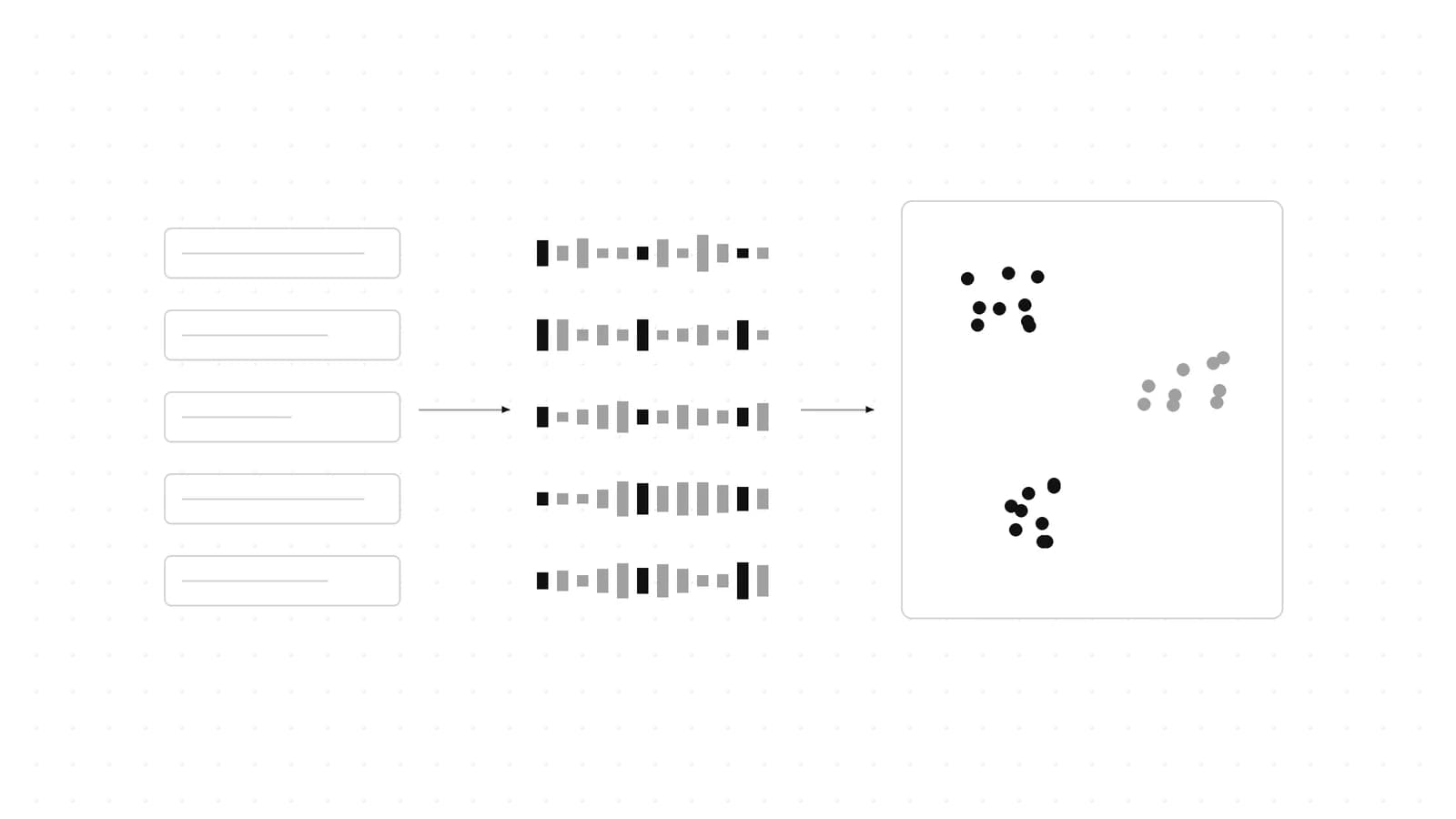
Embeddings
Which Embedding Model Should You Use in 2026? Specs Compared
Which embedding model to use in 2026: 20+ API and open-weight models compared on price per 1M tokens, dimensions, max in...
8 min read
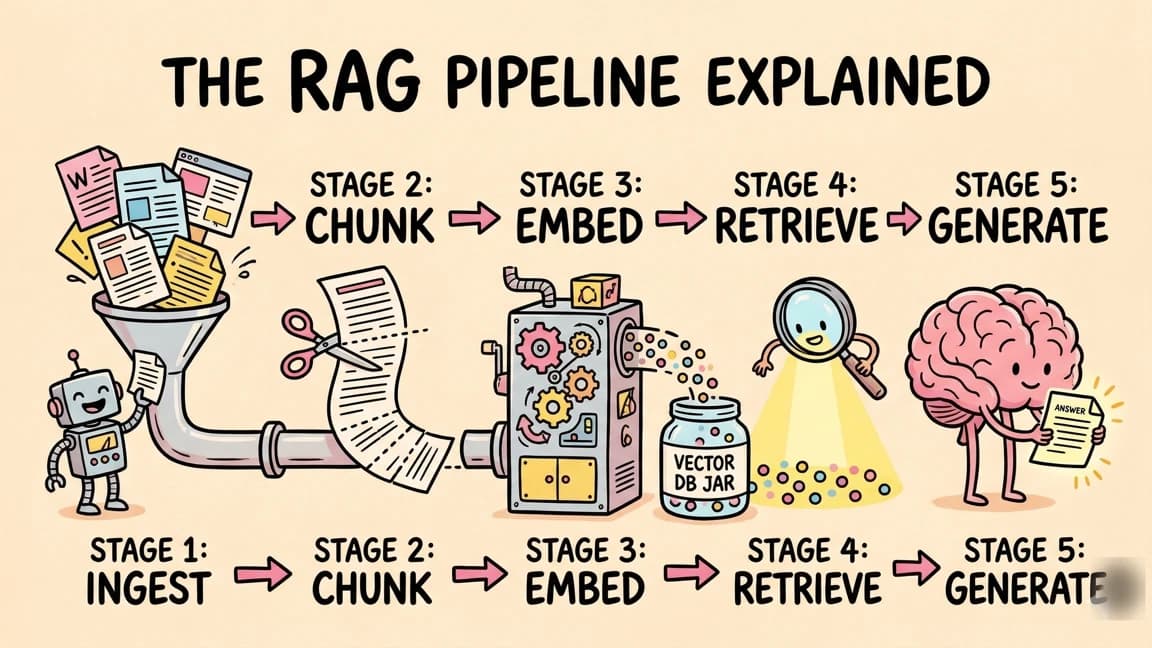
RAG
What is RAG? Retrieval Augmented Generation Explained
How RAG works, why it matters, and how to implement it in TypeScript. The technique that lets AI models use your data wi...

9 min read
Anthropic
Claude API 2026-10-21: Breaking Changes and SDK Migration
Claude API version 2026-10-21 removes temperature, top_p and top_k, and new major SDKs (TypeScript 1.0, Python 2.0) send...
14 min read
AI Agents
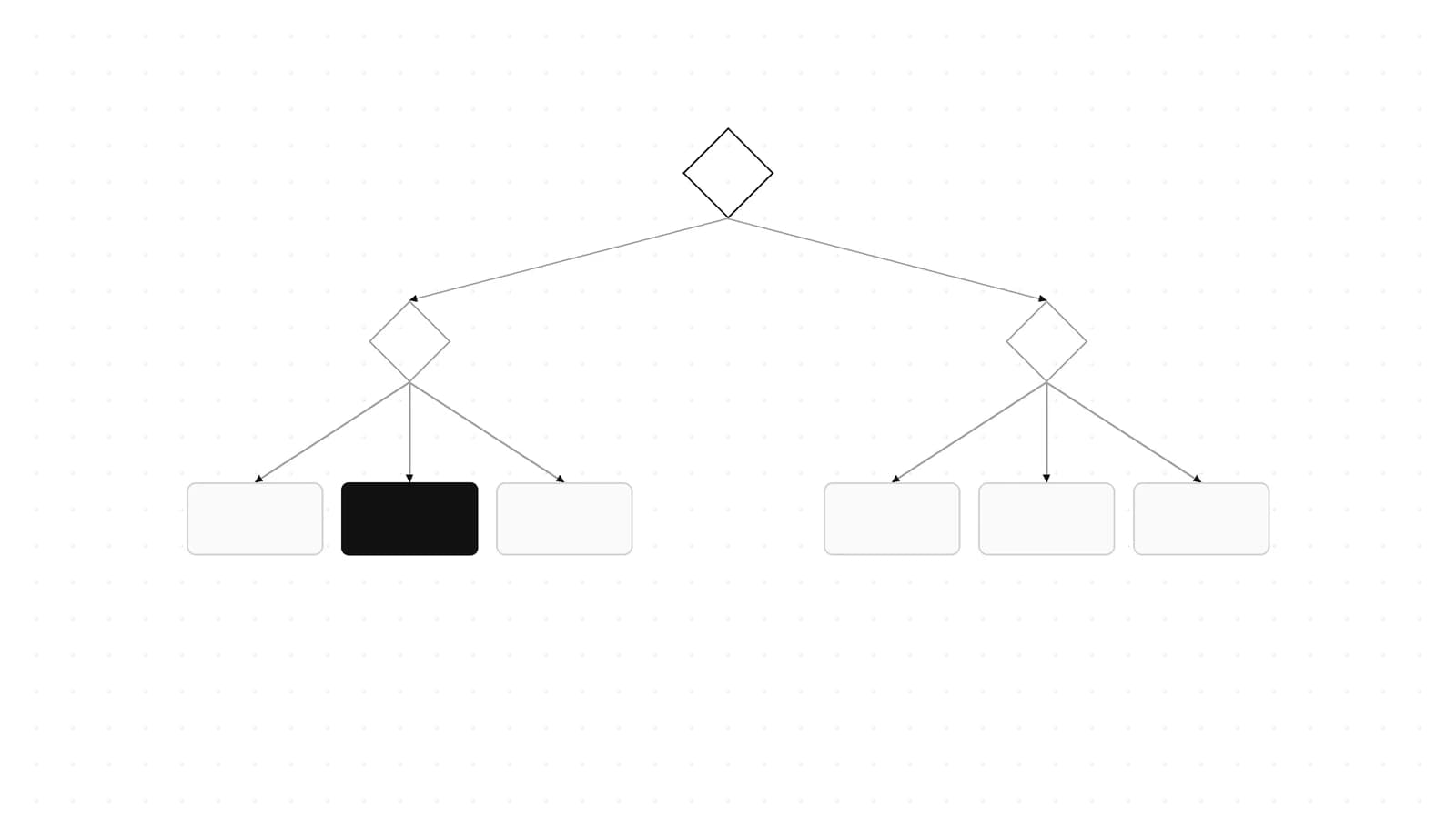
Choosing an Agent Framework in Late 2026: 10 Frameworks Compared by Use Case
Ten agent frameworks, one decision guide: a capability matrix built from official docs and a flowchart that picks by lan...
15 min read
AI Agents
LlamaIndex in 2026: Workflows, Agents, and What Changed
LlamaIndex in late 2026: Python Workflows 2.26 with typed events, human-in-the-loop and DBOS durability, plus LiteParse....
16 min read
OpenAI
OpenAI Agents SDK in Late 2026: What Is New in Python and TypeScript
OpenAI Agents SDK as of Python 0.24 and JS 0.22: sandbox agents, three guardrail layers, compaction sessions, MCP v2 and...
Try the member tools free
Get Smarter About AI Dev
New tutorials, open-source projects, and deep dives on coding agents - delivered weekly.
One email per weekReal code, not theoryFree forever