Ant: A New JavaScript Runtime With Its Own Engine, Package Registry, and Desktop Framework
TL;DR
A solo developer built a complete JavaScript ecosystem from scratch - runtime, engine, package manager, and Electron alternative.
Official Sources#
| Resource | Description |
|---|---|
| Ant Homepage | Official project site |
| Ant GitHub | Source code repository |
| ants.land Registry | Package registry |
| Ant Desktop npm | Desktop framework package |
| HN Discussion | Show HN thread with author Q&A |
The JavaScript runtime wars just got a new contender. Ant is a lightweight JavaScript runtime with its own engine, package manager, package registry (ants.land), and a desktop app framework. The kicker? It's built by a single developer.
The Show HN post describes Ant as "a JavaScript ecosystem built around a runtime with its own JavaScript engine" - not a V8 wrapper like Node, Deno, or Bun, but a ground-up implementation.
What Makes Ant Different#
In a runtime landscape dominated by V8 (Chrome's engine powering Node and Deno) and JavaScriptCore (Safari's engine powering Bun), Ant takes the audacious path of building its own JavaScript engine. The result is a remarkably small footprint.
Size matters:
- V8: Hundreds of megabytes
- Ant: ~8MB including the entire runtime and Node compatibility layer
As the author explained in the HN thread: "its ~8mb including the entire runtime and node-compat work. pretty simple to embed anywhere as well."
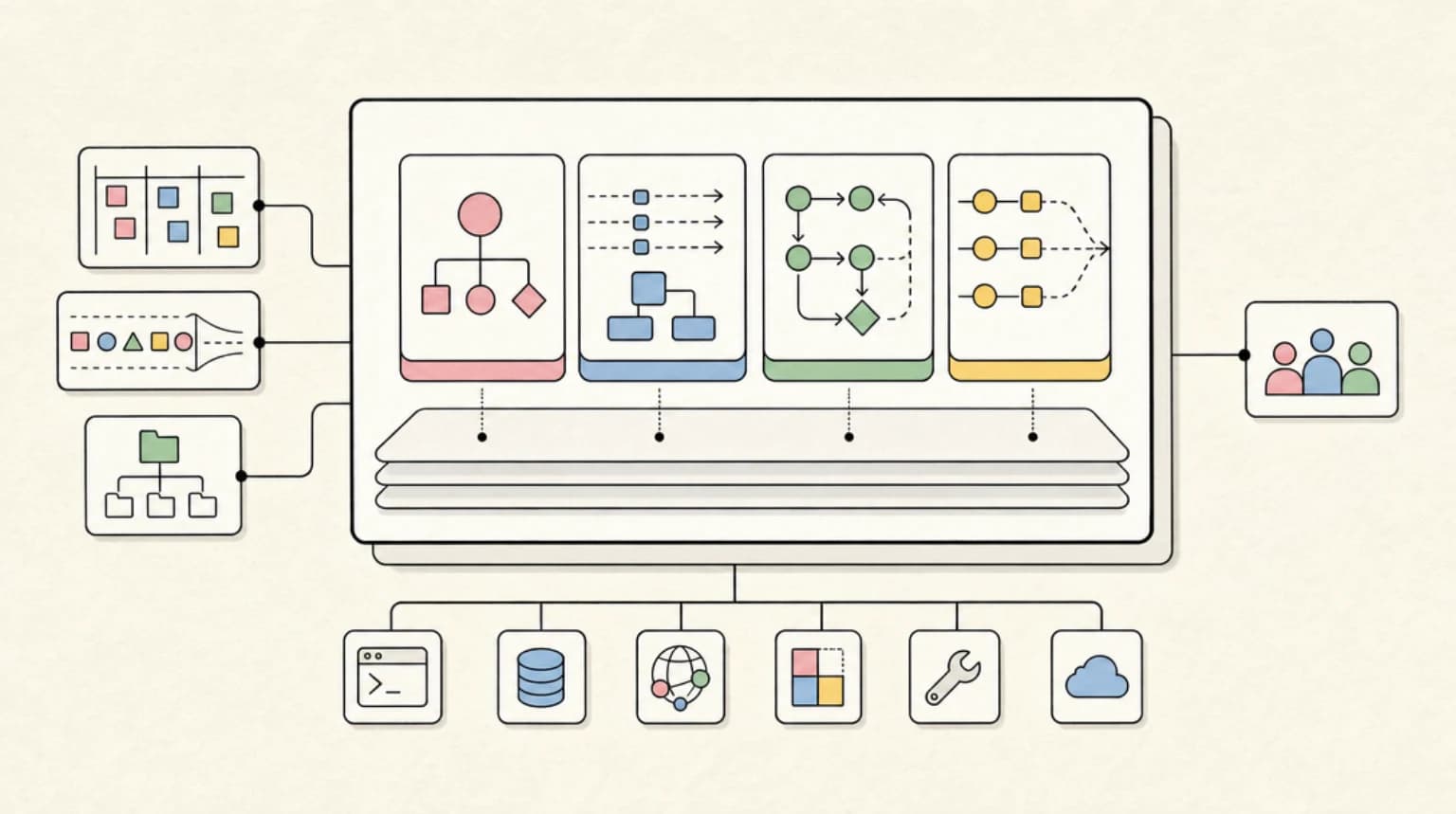
The ecosystem:
- Ant runtime - The core JavaScript execution environment
- apm - Package manager compatible with npm protocols
- ants.land - A dedicated package registry
- Ant Desktop - An Electron alternative for building native desktop apps (just released a stable version)
What HN Is Saying#
The discussion revealed both excitement and skepticism, typical for any project this ambitious.
The embedding use case:
"Holy crap, V8 is that big now? Very interested in this for embedding purposes."
For developers who need to embed JavaScript in other applications - games, desktop apps, IoT devices - the size difference is significant. Shipping V8 means shipping hundreds of megabytes of runtime. Shipping Ant means 8MB.
Performance questions:
One commenter pointed to zoo.js benchmarks showing Ant lagging behind V8 significantly. The author acknowledged this but noted:
"many [improvements], the engine has basically gone through a full rewrite since feb, that was still mostly interpt and missing many jit ops. nightly will include benchmarks soon as well"
The "near-V8 speeds" claim from the project page appears aspirational rather than current reality, but the trajectory is toward closing that gap.
The sandboxing angle:
"The thing that caught my eye immediately was the sandboxing. I have no idea why Node and npm don't have sandboxing by default. It would greatly help with some of these worms and supply chain attacks."
Ant apparently includes sandboxing features that Node lacks out of the box - relevant given the ongoing npm supply chain security concerns.
Registry skepticism:
Several commenters questioned the need for yet another package registry:
"Could you use the JSR package registry instead of setting up a new one?"
Another suggested the economics don't make sense: "Implementing, running, maintaining, scaling a module registry is probably not worth the time. Unless there's a clear technical requirement from the runtime."
The origin story:
An interesting thread surfaced about the project's history. Someone linked to a GitHub issue from March suggesting early versions may have been derived from Elk, an AGPL-licensed embedded JavaScript engine. The author acknowledged the history but noted the current codebase is a complete rewrite:
"this was flagging code from all the way back in dec of 2025, back when this project was just some idea... around feb thats when basically deleted the existing codebase and designed a much more reliable system from the ground up"
The name collision:
Multiple commenters pointed out Ant shares its name with Apache Ant (the Java build tool) and Anthropic's CLI tool:
"i was just joking about Anthropic's
antCLI not caring about Apacheant, and now we're talking about Javascriptant!"
The 2026 Runtime Landscape#
To understand where Ant fits, here's the current state of JavaScript runtimes:
| Runtime | Engine | Package Manager | Key Differentiator |
|---|---|---|---|
| Node.js | V8 | npm | Ecosystem dominance, 85% enterprise traffic |
| Deno | V8 | npm + JSR | Security-first, native TypeScript |
| Bun | JSC | bunx | Speed king, 110k req/s, 18MB memory |
| Ant | Custom | apm | Tiny footprint (8MB), embeddable |
Bun proved there's room for new entrants when it was acquired by Anthropic to power Claude Code, leveraging its sub-10ms cold starts.
Ant's bet is different: sacrifice some performance for radical embeddability. If you're building a desktop app, game, or IoT device where you need JavaScript scripting, 8MB is a lot more palatable than hundreds of megabytes.
Should You Use It?#
Consider Ant if:
- You need to embed JavaScript in another application
- Binary size is a hard constraint
- You're building lightweight desktop apps (Ant Desktop)
- You want to experiment with a non-V8/JSC JavaScript engine
Wait and see if:
- You need production-grade performance
- You depend heavily on npm ecosystem compatibility
- You need stability guarantees
The author is refreshingly honest about the project's state: "It's still early, and I'd appreciate any feedback on the overall direction."
The Solo Developer Question#
Building a JavaScript engine is typically a multi-year, multi-team effort. V8 has hundreds of contributors. JavaScriptCore has decades of Safari development behind it.
Ant's author documented the journey in blog posts: building the first version in a month and the follow-up rewrite. As one HN commenter observed:
"I'm not sure what the economics of building a new runtime and ecosystem from scratch are but it seems we're already in a phase where individual developers are creating software which previously took a whole team. And its only getting started..."
Whether Ant becomes a serious contender or remains a niche tool for embedding use cases, it's a fascinating example of what's possible when one developer decides to build from scratch instead of wrapping V8.
Continue Reading#
- Adam (YC W25): Open Source AI CAD That Generates OpenSCAD from Text
- Your AI Session Is No Longer Yours: How Providers Seal Reasoning, Search, and Subagent State
- Box3D: Erin Catto Releases an Open Source 3D Physics Engine
Sources#
- Ant Homepage - Official project site
- HN Discussion - 45+ comments with author Q&A
- Ant GitHub - Source code
- ants.land - Package registry
- Ant Desktop on npm - Desktop framework
- Zoo.js Benchmarks - JavaScript runtime comparison
- Building a JS Runtime in One Month - Author's development blog
- 2026 Runtime Comparison - Node vs Bun vs Deno analysis
Get the next deep dive like this in your inbox
One email a week on JavaScript and the rest of the AI dev stack. Free.
Read next
Deno Desktop Lets You Build Native Apps with TypeScript
Deno 2.9 ships a desktop app framework that compiles TypeScript projects into native binaries with WebView or bundled Chromium - a new Electron alternative from the Deno team.
8 min readRuff v0.16.0: 413 Default Rules, Markdown Formatting, and What Zero-Config Linting Means for Python
Ruff v0.16.0 ships 413 default rules (up from 59), Markdown code-block formatting, and a new ruff: ignore system. Here is what changed, what HN is saying, and why zero-config linting matters more with AI coding agents.
5 min readColibri: Run GLM 5.2 on a 32GB Laptop With Disk Streaming
A solo developer built a 1,300-line C inference engine that runs the 744B GLM 5.2 model on consumer hardware by streaming routed experts from disk.
6 min readNew here? Start with
Technical content at the intersection of AI and development. Building with AI agents, Claude Code, and modern dev tools - then showing you exactly how it works.