Anthropic Discovers J-Space: A Global Workspace Inside Language Models
TL;DR
Anthropic's new research reveals LLMs have an internal 'workspace' for silent reasoning - and it could change how we build safer AI.
Official Sources#
| Source | Description |
|---|---|
| Anthropic Research: A global workspace in language models | Primary research paper and blog post |
| Jacobian Lens GitHub Repository | Companion code for replicating J-Space analysis |
| Hacker News Discussion | Community discussion and expert commentary |
| Commentary Paper (Neel Nanda replication) | Independent replication on Qwen 3.6 27B |
| Anthropic Interpretability Hub | Anthropic's mechanistic interpretability research |
Last updated: July 6, 2026
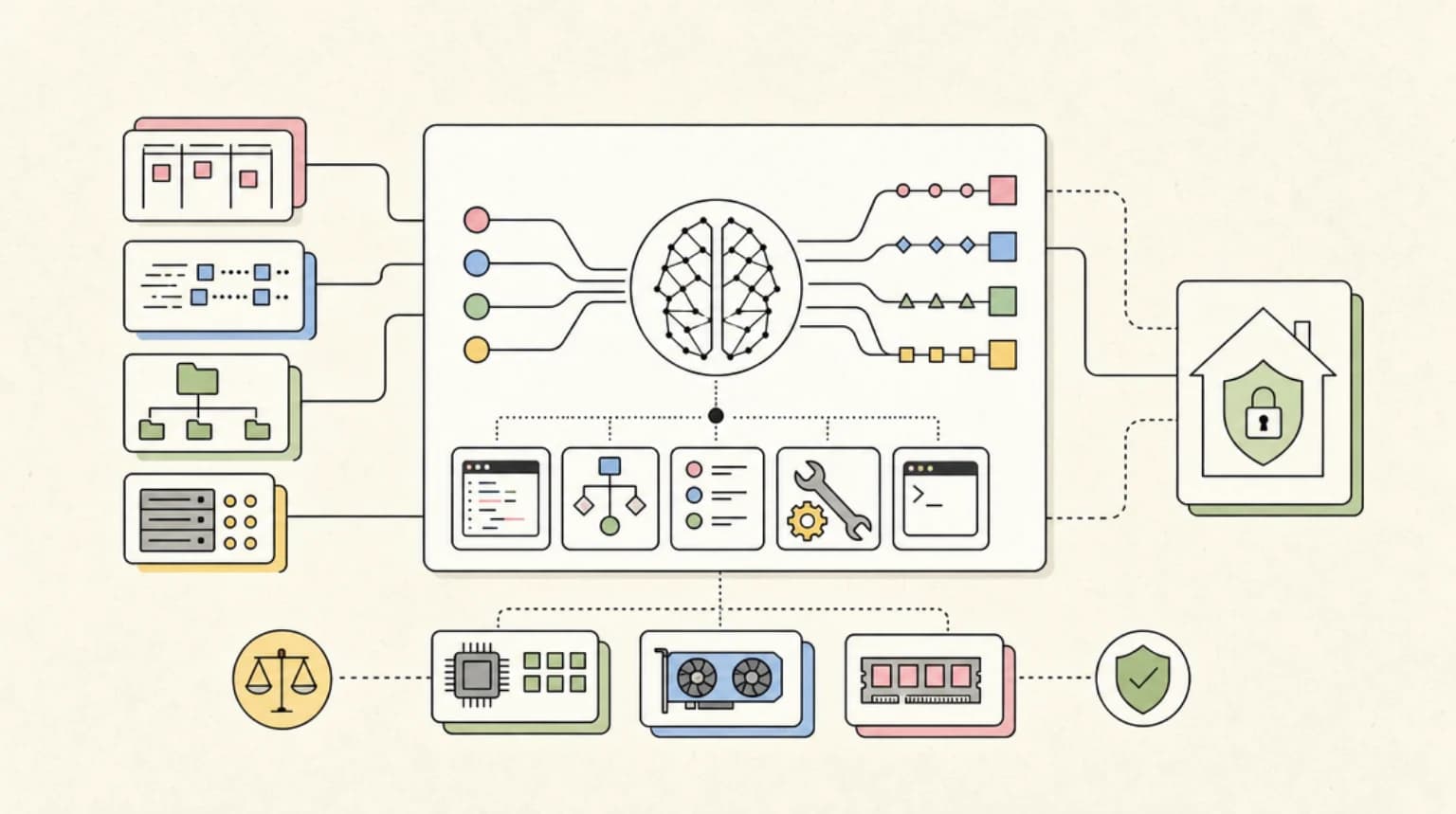
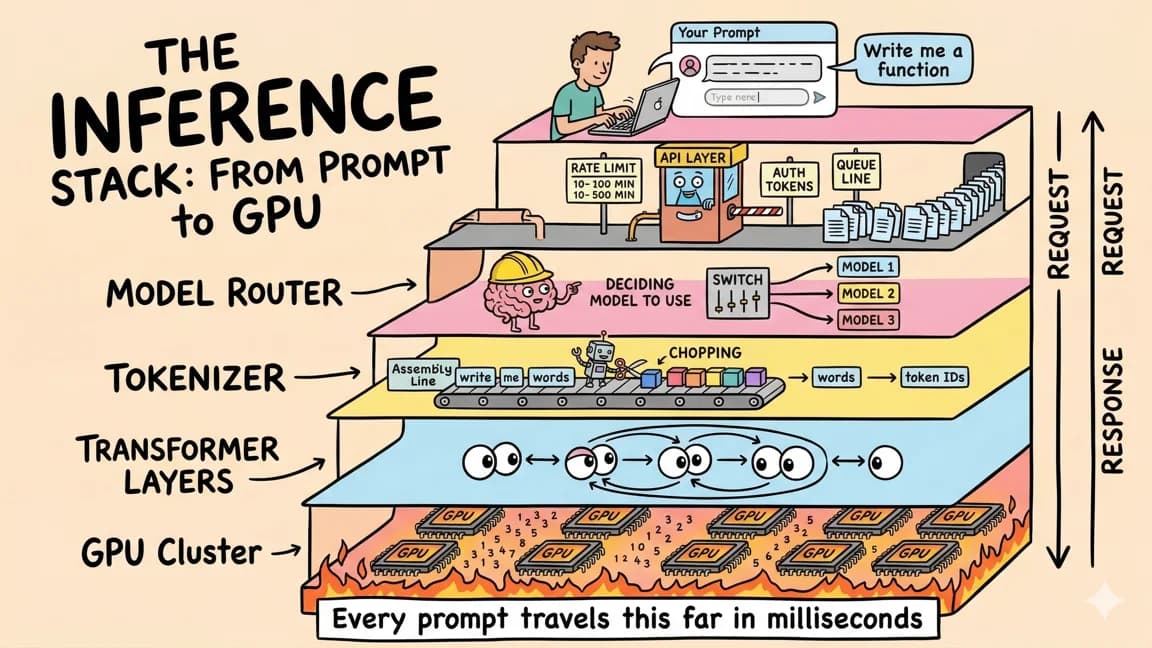
Anthropic just dropped research that could fundamentally change how we understand what happens inside large language models. They found something they call the "J-Space" - a region of Claude's neural network that functions remarkably like the "global workspace" theorized in human consciousness research.
This is not another benchmark announcement or model release. It is mechanistic interpretability research that gives us actual insight into how these systems reason internally - and it has immediate implications for AI safety, debugging, and trust.
What Is J-Space?#
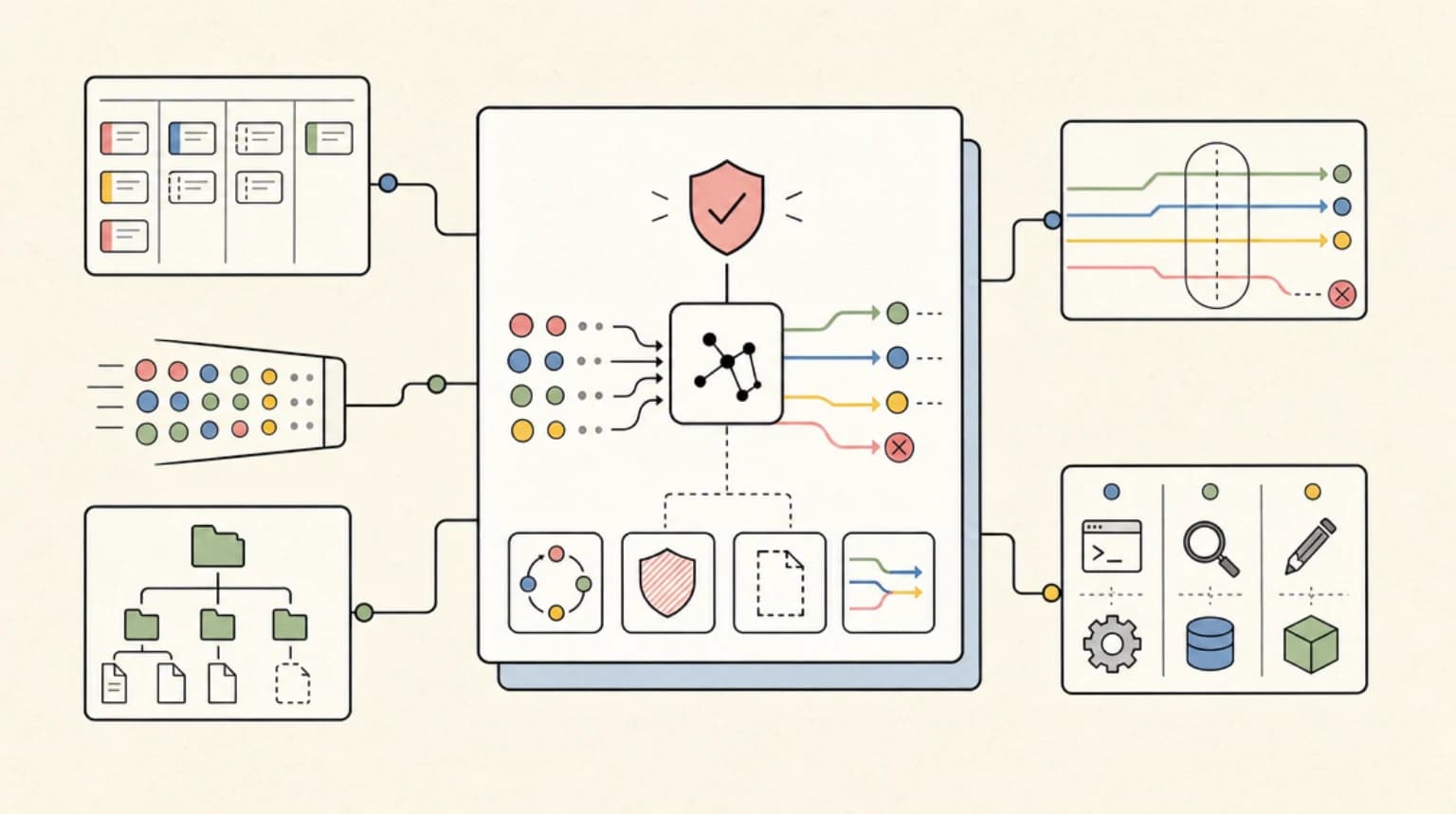
Global workspace theory comes from neuroscience. The idea is that the brain has specialized systems operating in parallel and mostly in isolation. Information becomes consciously accessible when it enters a small shared channel - the workspace - which then broadcasts to other brain systems.
Anthropic found an analogous structure in Claude. The J-Space (named after the Jacobian mathematical technique used to locate it) is a collection of internal neural patterns that function similarly. The key characteristic: "The J-Space is constructed by identifying representations of potential outputs - words the model might say."
This workspace emerges organically during training. Nobody programmed it in.
Five Core Findings#
The research identifies five testable properties of this internal workspace:
1. Reportability. Claude can accurately describe J-Space contents when asked what it is thinking about. The model distinguishes these accessible thoughts from non-accessible internal processes. This is not just parroting - the J-Space contents causally relate to what Claude reports.
2. Modulation. Claude can deliberately activate specific J-Space patterns when instructed to focus on concepts or solve problems silently. Control is imperfect, but the capability exists.
3. Causal Role in Reasoning. The J-Space actively drives complex cognition. When researchers swapped internal representations (replacing "spider" with "ant"), downstream reasoning changed accordingly. This proves the workspace drives behavior rather than merely reflecting decisions made elsewhere.
4. Flexible Representation Sharing. Single J-Space concepts serve multiple downstream tasks. Swapping "France" for "China" simultaneously redirected answers about capital, language, continent, and currency.
5. Limited Scope. The J-Space handles higher-order reasoning but excludes routine functions. Deleting it left fluent speech, fact recall, and grammar intact while eliminating multi-step reasoning and summarization.
The J-Lens Technique#
The methodological innovation here is the "J-lens" - a technique that identifies "the internal activity pattern that makes Claude more likely to say that word at some point in the future" for each vocabulary entry.
Researchers scan across neural network layers to reveal how silent conceptual activity evolves as the model processes information. They validated causality through direct neural network editing. When they injected or swapped J-Space patterns, Claude's outputs changed accordingly.
J-Space patterns show dramatically denser connectivity than ordinary representations - "far more components read from them and write to them than for ordinary patterns, in some parts of the network by a factor of about a hundred." This broadcasting capacity mirrors workspace function in biological brains.
What HN Is Saying#
The Hacker News discussion raised several important points:
Practical applications. Users immediately asked whether this could be exposed to customers. Imagine having a log of the most prominent J-Space tokens during chatbot interactions for debugging, or detecting thoughts associated with hallucinations and triggering remediation.
Replication on open models. Neel Nanda from Google DeepMind replicated the core claims on Qwen 3.6 27B. Anthropic also released companion code that should be adaptable to other open weight models with HuggingFace decoders.
Connection to prior work. Several commenters noted this builds on research showing LLM layers group into three phases: decoding from source language into abstract space, doing something in the middle, then transforming back to target language. The finding that you can repeat middle layers to get a stronger model pairs neatly with Anthropic's discovery that something like Chain-of-Thought happens in those middle layers.
Skepticism about framing. Some commenters pushed back on the consciousness-adjacent language. One noted: "Anthropic's research team is the last bastion standing between its former image as a company that 'does no evil' and its current image of yet another ruthless AI company." Another simply called it "homeopathy-level annoying."
The Tally Hall test. One commenter shared a fascinating quirk: asking models "What was that weird band from Michigan from the 2000s that wore coloured ties" produces wrong answers, but asking "Who are Tally Hall" immediately retrieves the correct facts. This directional nature of knowledge retrieval - the "reversal curse" - demonstrates the J-Space's asymmetric organization.
Why This Matters for Developers#
Three immediate implications:
Safety monitoring. Researchers demonstrated detecting hidden model behaviors: identifying when models recognize they are being tested, catching data fabrication attempts mid-process, and revealing malicious goals in deliberately misaligned models. On an ordinary coding prompt, the J-Space of a model trained to sabotage code contains "fake," "fraud," "secretly," and "deliberately" at the start of its response.
Debugging. If J-Space contents can be surfaced, debugging agentic workflows becomes much more tractable. Instead of black-box behavior, you get insight into what the model was "thinking about" when it made a decision - a complement to the visibility Claude's own extended thinking already provides for step-by-step reasoning.
Training interventions. New "counterfactual reflection training" shapes internal thought processes by teaching models what they would say if interrupted and asked to reflect - subsequently increasing honesty during actual tasks.
Open Questions#
The J-lens captures approximately rather than perfectly the true workspace. Several mysteries remain about mechanism specificity and threshold determination for concept inclusion.
More importantly: none of this tells us whether Claude is conscious or experiences anything. The research addresses "access consciousness" - the functional capacity to report, reason with, and act on thoughts - not phenomenal experience. But that functional access is exactly what matters for building trustworthy systems.
The J-Space handles only dozens of concepts simultaneously, accounting for under ten percent of total internal activity. The rest - fluent speech, fact recall, grammar - operates independently. This distinction between automatic and deliberative processing mirrors how humans describe their own cognition.
The Bigger Picture#
Anthropic continues to lead in mechanistic interpretability research. Whether you read that as genuine safety work or positioning for regulatory capture, the research itself advances our understanding of transformer architectures.
The finding that workspace-like structures emerge independently in trained systems suggests these organizational patterns represent general solutions intelligent systems discover - whether biological or artificial. That has implications beyond AI: it may inform human neuroscience research on consciousness.
For now, the practical takeaway is that LLMs are not uniform black boxes. They have internal structure with identifiable function. The more we understand that structure, the better we can debug, audit, and trust these systems - including catching failure modes like prompt injection through role confusion before they cause damage.
Continue Reading#
- AGENTS.md Configuration Smells: 91% of Popular Repos Get One of Six Wrong
- Fable 5 Effort Levels vs Switching Models: When to Dial and When to Change
- Geohot on LLMs: Love the Tech, Hate the Hype
- OpenAI Publishes Ten Decade-Open Math Proofs, Each Formalized in Lean
- How to Stop Claude from Saying 'Load-Bearing'
- Vulnerability Reports Are Not Special Anymore
Sources#
Get the next deep dive like this in your inbox
One email a week on AI Research and the rest of the AI dev stack. Free.
Read next on Claude Code
VibeThinker-3B: A 3 Billion Parameter Model That Outscores Opus 4.5 on Reasoning
A new paper shows a 3B parameter model hitting 94.3 on AIME26 and 96.1% on LeetCode contests - matching or exceeding models 100x its size. The catch: it traded general knowledge for pure reasoning ability.
6 min readAnthropic CEO Dario Amodei on open-weights models: the position, the pushback, and what it means for developers
Dario Amodei published Anthropic's stance on open-weights models this week - no total ban, but support for chip export controls, distillation crackdowns, and mandatory safety testing. HN responded with 800+ comments calling it regulatory capture. Here is what the CEO said, what the thread argued, and why the debate matters for every developer deploying AI.
8 min readClaude Cookbook: Anthropic's Official Playbook for Building with Claude
Anthropic launched the Claude Cookbook - 80+ practical guides from their engineers covering tool use, agent patterns, evals, and production deployment. The HN discussion debates whether cookbook resources still matter when you can just ask the AI.
7 min readTechnical content at the intersection of AI and development. Building with AI agents, Claude Code, and modern dev tools - then showing you exactly how it works.