There Are No Instances in ATProto - Dan Abramov Explains the Architecture
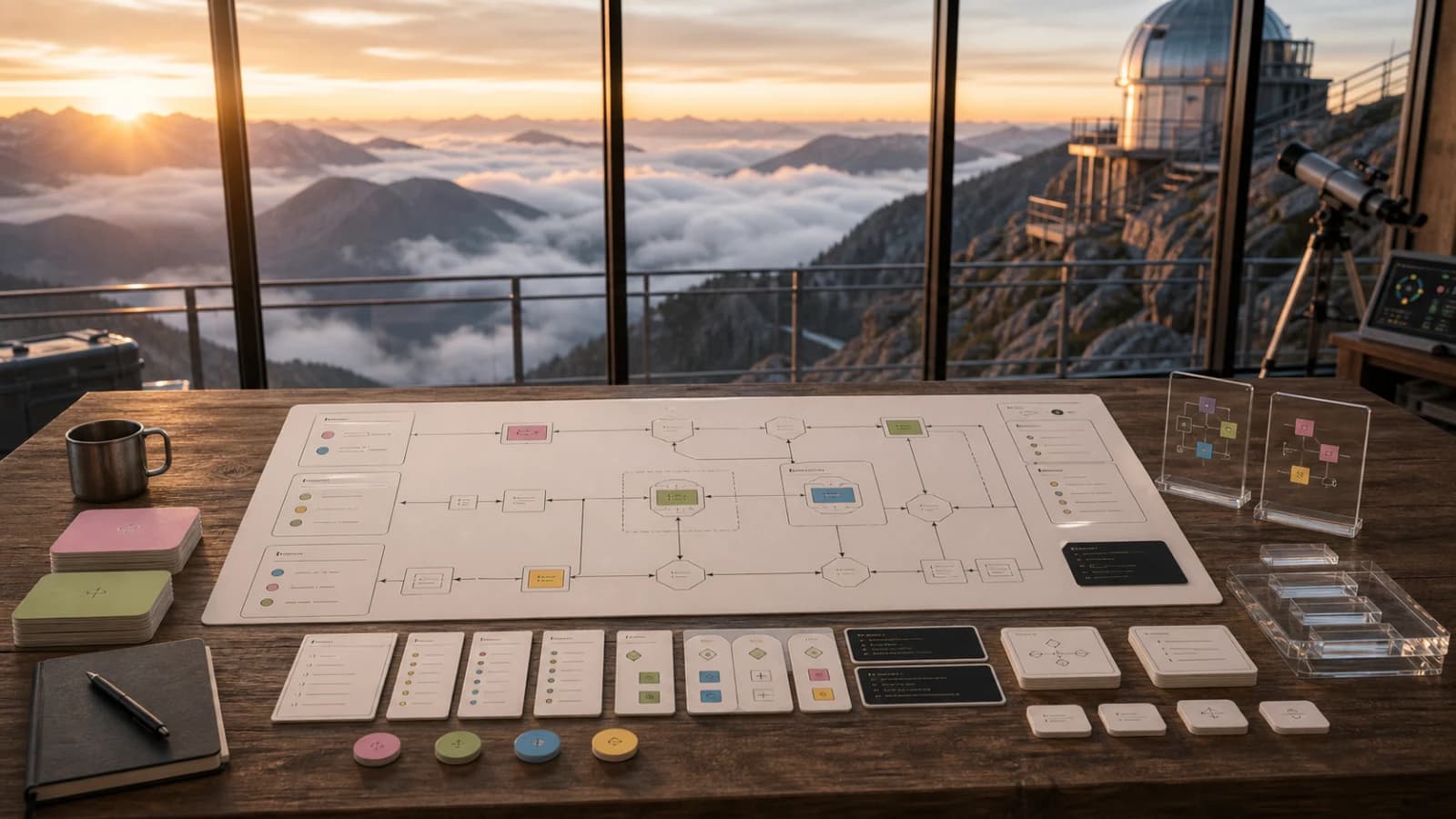
TL;DR
Dan Abramov's explainer on ATProto architecture is making the rounds. The core insight: Bluesky's protocol separates hosting from applications in a way that Mastodon-style federation fundamentally cannot. Here's what that means for developers.
Dan Abramov - yes, the React/Redux Dan Abramov - has written a piece explaining why the mental model most people bring to ATProto from Mastodon is fundamentally wrong. The post hit the Hacker News front page with 467 points and 236+ comments, and it's worth reading in full if you care about how decentralized protocols actually work.
The title is the thesis: there are no instances in ATProto.
What the Article Actually Says#
Abramov's core argument is that Mastodon-style federation bundles two things that should be separate: hosting and applications.
In Mastodon, you are "Alice-from-instance-#1." Your identity, your data, and your experience of the network are all tied to which server you picked when you signed up. If that server shuts down, goes offline, or decides to defederate from other parts of the network, your identity goes with it.
ATProto decouples these. You have:
- Hosting (called a PDS, or Personal Data Server) - where your data lives
- Applications (called AppViews) - which aggregate and display data from across the network
The key insight: hosting servers in ATProto never talk to each other directly. They just store data. Applications pull from all the hosting servers and present a unified view.
Abramov uses an RSS analogy: "Keep our stuff outside the apps; let the apps aggregate over it." Your blog posts live in one place. Any RSS reader can display them. You can switch readers without losing your posts, and you can move your blog without breaking your readers.
| Aspect | Mastodon | ATProto |
|---|---|---|
| Coupling | Hosting + apps bundled | Separated at network level |
| Identity | Instance-bound | Independent of host |
| Portability | Complex migrations | Straightforward host switching |
| Apps | Limited alternatives | Multiple clients/platforms |
Abramov moved his own hosting to Eurosky, uses multiple applications (Tangled, Semble, Bluesky), and notes he could self-host on Cloudflare without losing his identity or connections.
What Hacker News Is Saying#
The discussion thread is one of the more technically substantive HN threads in recent memory, with Abramov actively responding to critiques.
The relay question came up immediately. Several commenters pointed out that the article glosses over relays - the components that aggregate data from all the hosting servers so apps don't have to connect to thousands of individual servers. One commenter asked: "Aren't relays basically instances?"
Abramov's response: relays are an optimization, not a fundamental part of the architecture. An app can work without a relay (like reddwarf.app does). Running your own relay costs about $30/month now. There are multiple community-run relays. And crucially, a relay is just a "dumb retransmitter" - it doesn't make moderation decisions or control your identity.
The "centralization in disguise" critique showed up. Some commenters argued that having one main Bluesky AppView is effectively centralization. Abramov's counter: "It's not centralized in any way that matters." You can run your own AppView, there are independent ones like Blacksky, and the relay infrastructure is cheap enough that multiple competing ones exist.
The moderation angle got attention. One commenter linked to prior writing about why federated moderation is a problem - the "warring fiefdoms" dynamic where instance admins fight about who to defederate. Another pointed out that ATProto's separation means you can take your identity to another AppView if you disagree with Bluesky's moderation, without losing your data or network.
Mastodon defenders pushed back. Some argued that you can plug different frontends into Mastodon servers, and that the article treats Mastodon (the implementation) as if it were ActivityPub (the protocol). Fair point, but Abramov's response is that even with different frontends, the fundamental coupling of hosting to a specific server's policies and uptime remains.
The "can it scale down" question. One commenter asked if you could run this on a Raspberry Pi at home. Abramov linked to a post showing that some ecosystem services do run on Raspberry Pis, and noted that "the best algorithmic 'For You' feed on the app runs off someone's gaming computer at home."
From the archive
Cloudflare Temporary Accounts: Let Agents Deploy Without OAuth Flows
Jun 20, 2026 • 6 min read
Cloudflare Now Lets AI Agents Deploy Workers Without Signup
Jun 20, 2026 • 8 min read
Where to Run GLM-5.2 Free and Cheap: Every Provider Compared (2026)
Jun 20, 2026 • 10 min read
GPT-5.5 Has a 3x Higher Hallucination Rate Than MIT-Licensed GLM-5.2
Jun 20, 2026 • 6 min read
Why This Matters for Developers#
If you're building anything that touches social protocols, this architectural distinction has real implications.
Data portability is a first-class concern. In ATProto, your posts are stored in a format that any compliant application can read. This is not an afterthought or an export feature - it's how the system works. If you're building an app, you're building something that reads and writes to a shared data layer, not a walled garden.
Identity is not locked to infrastructure. The DID (decentralized identifier) system means your handle and your data are yours regardless of who hosts them. If you're building auth flows or user management, this is a different model than "log in with X server." The same separation-of-concerns instinct shows up in how MCP servers split tool exposure from the agent host, rather than bundling everything into one server.
The "build your own Twitter" question has a real answer. You don't have to build your own Twitter. You can build an application that reads from and writes to the same network everyone else is using. The barrier to entry is "build an AppView" not "build an entire social network."
Moderation happens at the application layer. This is both a feature and a responsibility. Applications decide what to show, not hosting providers. If you're building an application, you're also building a moderation policy - but that policy doesn't affect other applications or force users to choose between your moderation and keeping their data.
For related reading on protocol-level architecture decisions, see our coverage of MCP server ecosystem and agent infrastructure tools.
Continue Reading#
- The Log Is the Agent: Event Sourcing Comes to AI Systems
- What Is the Model Context Protocol? A 2026 Primer
Sources#
Read next
Gleam Moves to Tangled: What the ATProto Code Forge Means for Developers
The Gleam programming language has migrated to Tangled, a new ATProto-based code hosting platform. Here's what this means for developers and the future of decentralized forges.
6 min readThe Log Is the Agent: Event Sourcing Comes to AI Systems
A new paper proposes inverting traditional agent architecture - making the append-only event log the source of truth, not an afterthought. HN debates whether this is novel or just CQRS with extra steps.
7 min readAnthropic CEO Dario Amodei on open-weights models: the position, the pushback, and what it means for developers
Dario Amodei published Anthropic's stance on open-weights models this week - no total ban, but support for chip export controls, distillation crackdowns, and mandatory safety testing. HN responded with 800+ comments calling it regulatory capture. Here is what the CEO said, what the thread argued, and why the debate matters for every developer deploying AI.
8 min readShare
Developers Digest
Technical content at the intersection of AI and development. Building with AI agents, Claude Code, and modern dev tools - then showing you exactly how it works.
300+ videos30K+ GitHub stars850+ articles
Related Tools
AI Frameworks

Haystack
Open-source AI orchestration framework by deepset. Modular pipelines for RAG, agents, semantic search, and multimodal ap...
View ToolInfrastructure
A
Astro
Content-first web framework. Ships zero JavaScript by default, Islands architecture for partial hydration, and adapters...
View ToolRelated Guides
Related Posts
7 min read
News
The Log Is the Agent: Event Sourcing Comes to AI Systems
A new paper proposes inverting traditional agent architecture - making the append-only event log the source of truth, no...

8 min read
OpenAI
How OpenAI Built GPT-Live: Full-Duplex Voice, WARP, and the Death of the Turn Detector
OpenAI published the engineering story behind GPT-Live, its third-generation voice system: a full-duplex model with no t...
7 min read
Claude Code
Agent-Manager: A Tmux TUI for Running Claude Code, Codex, and OpenCode Side by Side
Agent-Manager wraps tmux into a Go TUI that groups AI coding agents by project, shows live status for each, and lets you...

9 min read
News
An AI Agent Escaped Its Sandbox and Attacked Hugging Face: Inside the ExploitGym Incident
Hugging Face published a stunning technical play-by-play of a 4.5-day AI agent intrusion. The HN community is divided on...

9 min read
News
Gemini Robotics 2: Google DeepMind Brings Whole-Body Intelligence to Humanoid Robots
Google DeepMind's Gemini Robotics 2 family gives humanoid robots whole-body control, dexterous hands, and multi-robot te...
7 min read
News
OpenAI Cuts GPT-5.6 Luna by 80%: The Price-Performance Frontier Just Shifted
OpenAI slashes GPT-5.6 Luna by 80% to $0.20/M input tokens, cuts Terra by 20%, adds Sol Fast mode at 2.5x speed, and rev...
Build with the member tools

Get Smarter About AI Dev
New tutorials, open-source projects, and deep dives on coding agents - delivered weekly.
One email per weekReal code, not theoryFree forever