Claude PCB Design: Fable 5.2 Built Three Working Prototypes
TL;DR
Anthropic says Claude Fable 5.2 designed three electronics prototypes with Diode Computers. What the claude pcb design research shows, what is vendor-reported, and what a builder can test.
Last updated: November 10, 2026 - based on Anthropic's November 9 research post.
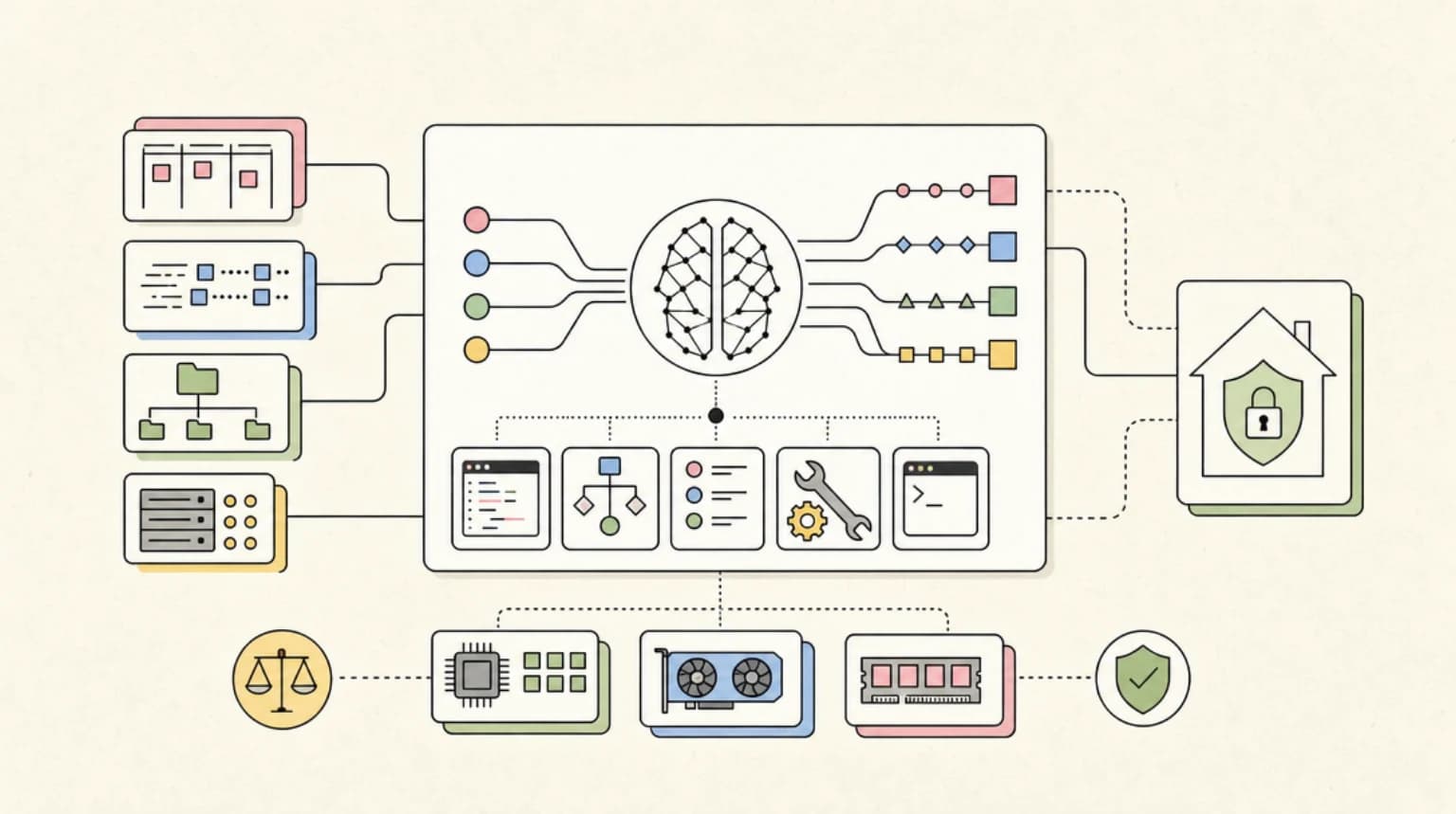
If you searched for "claude pcb design" today, here is the short version: Anthropic says Claude Fable 5.2 took three product descriptions to working circuit-board prototypes, and the interesting part is not the boards, it is the loop. The model revised its own layouts, wrote its own router, and checked manufacturability. Everything below is vendor-reported unless a second source is named.
What Anthropic says it did#
In Claude can design electronic prototypes from start to finish, Anthropic describes a second round of work with Diode Computers, a company that designs and manufactures circuit boards (Anthropic discloses a commercial relationship with Diode). Claude Fable 5.2 was asked to design three devices: a USB-C speakerphone puck with microphones, a speaker and a Bluetooth PCB antenna, a voice-assistant hub, and a battery-powered handheld pet.
From a short prompt, the post says Claude wrote specifications, drew schematics, placed and routed the board, designed a 3D-printable enclosure, wrote firmware and prepared a parts list. Diode's engineers assembled the boards and ran the firmware under Claude's direction, and their prompting was mostly short directives such as "clean up the schematic" and "continue." The post says Diode manufactured all three boards straight from the design files with no manufacturing back-and-forth, and that the speakerphone still works after weeks of use.
The numbers, all from the same post:
- PCB Gym (Diode's internal layout benchmark): Fable 5.2 scored 69%, against 25% for Fable 5.
- BenchCAD 2.1 (a public benchmark for rebuilding 3D parts and boards from drawings): 83.5%, nearly double Fable 5.1.
PCB Gym is internal, so treat the 69% as a marketing-grade signal, not a reproducible score. BenchCAD is public, which makes it the number you can actually check.
The part that matters: the agent loop#
The post's most useful detail is behavioral. Earlier models, it says, rarely revised their work, and Diode ended up with many boards that were 95% complete and unusable. Fable 5.2 changed course unprompted:
- On the speakerphone it reassigned signals between pins on two chips so tracks under the touch wheel stayed on one layer.
- On the hub it noted tracks were "getting too tangled to trace visually," deleted them and rerouted dozens of times.
- When KiCad's one-track-at-a-time router would have needed too much guidance for the 100-pin connector, it wrote its own grid-search router in about half an hour.
- It wrote code to check that the 3D board model fit the enclosure, found the mute switch hit the back wall, and added a 25-degree tilt step to the assembly instructions.
That is the same plan, act, verify shape covered in loop engineering: the win comes from the model having checks it can run (design-rule checks, a collision test, a sourcing check) and the judgment to act on them. Claude also sorted its manufacturing flags into real problems and ignorable ones, such as a deliberate ground connection the automated checker misread.
What this means for builders#
Who gains. Small hardware teams and software engineers who can specify a device but do not do layout daily. The expensive skill being compressed is placement and routing, which was the stated weak point of earlier models.
Who should hold back. Anyone shipping a product. Anthropic itself says the devices have not had electrical validation, antenna tuning, thermal testing or certification, were not built for mass production, and that Claude was not connected to test equipment. Diode still built and tested everything physically.
What to try Monday. You cannot reproduce the exact setup - the Diode harness is not published. You can replicate the pattern with tools you have: give an agent a KiCad project, expose the design-rule check and a fit check as commands it can run, and require it to report which flags it fixed and which it ignored. The model upgrade is the same one covered in the Fable 5.2 migration guide, and the scoring-by-loop idea applies to code agents as much as boards.
What people are actually saying#
I could not find a Hacker News or Reddit thread on the post at publish time, so this is thin on community signal and I am not inventing any. Two secondary write-ups exist. Adafruit's blog summarizes the claims under the headline "Claude claims it can now..." - a fair reminder that the evidence is Anthropic's own and partner-built. MLQ restates the same figures. The counter-case worth holding onto: three hand-assisted prototypes with a commercial partner is a long way from a repeatable engineering workflow, and the post itself lists denser, faster boards and simulation as future work. For comparison, text-to-CAD tools have drawn the same split of enthusiasm and doubt, as in the CADAM thread analysis.
Continue Reading#
- Claude Fable 5.2: What Changed, Pricing and How to Migrate - the model behind the research
- Loop Engineering: How to Design Agent Loops That Converge - the verify step that made this work
- Adam (YC W25): Open Source AI CAD - text-to-CAD and the HN debate
- Claude Code Subagents vs Agent Teams vs Workflows - structuring long agent jobs
- Best AI Coding Tools (2026) - Claude Code, Codex, Cursor and more, ranked
Sources#
Get the next deep dive like this in your inbox
One email a week on Claude and the rest of the AI dev stack. Free.
Read next on Claude Code
Claude Fable 5.2: What Changed, Pricing and How to Migrate
Claude Fable 5.2 costs $8/$40 per MTok, down from $10/$50, but enforces the prefix check on every account. The four breaking changes and how to migrate.
9 min readLoop Engineering: How to Design Agent Loops That Actually Converge
Loop engineering patterns: plan/act/verify cycles, convergence criteria, retries, budget-bounded loops, and loop-until-dry, so agents stop when they should.
11 min readAdam (YC W25): Open Source AI CAD That Generates OpenSCAD from Text
Adam (YC W25) open-sources CADAM, a browser tool that turns text into parametric OpenSCAD models, and HN debates whether text-to-CAD is useful or a demo.
6 min readTechnical content at the intersection of AI and development. Building with AI agents, Claude Code, and modern dev tools - then showing you exactly how it works.