Google AI Pro vs Gemini API: What Developers Actually Get

TL;DR
Google AI Pro costs $19.99 a month and has no API key, but includes $10 of monthly Cloud credits. When the subscription wins and when to pay per token.
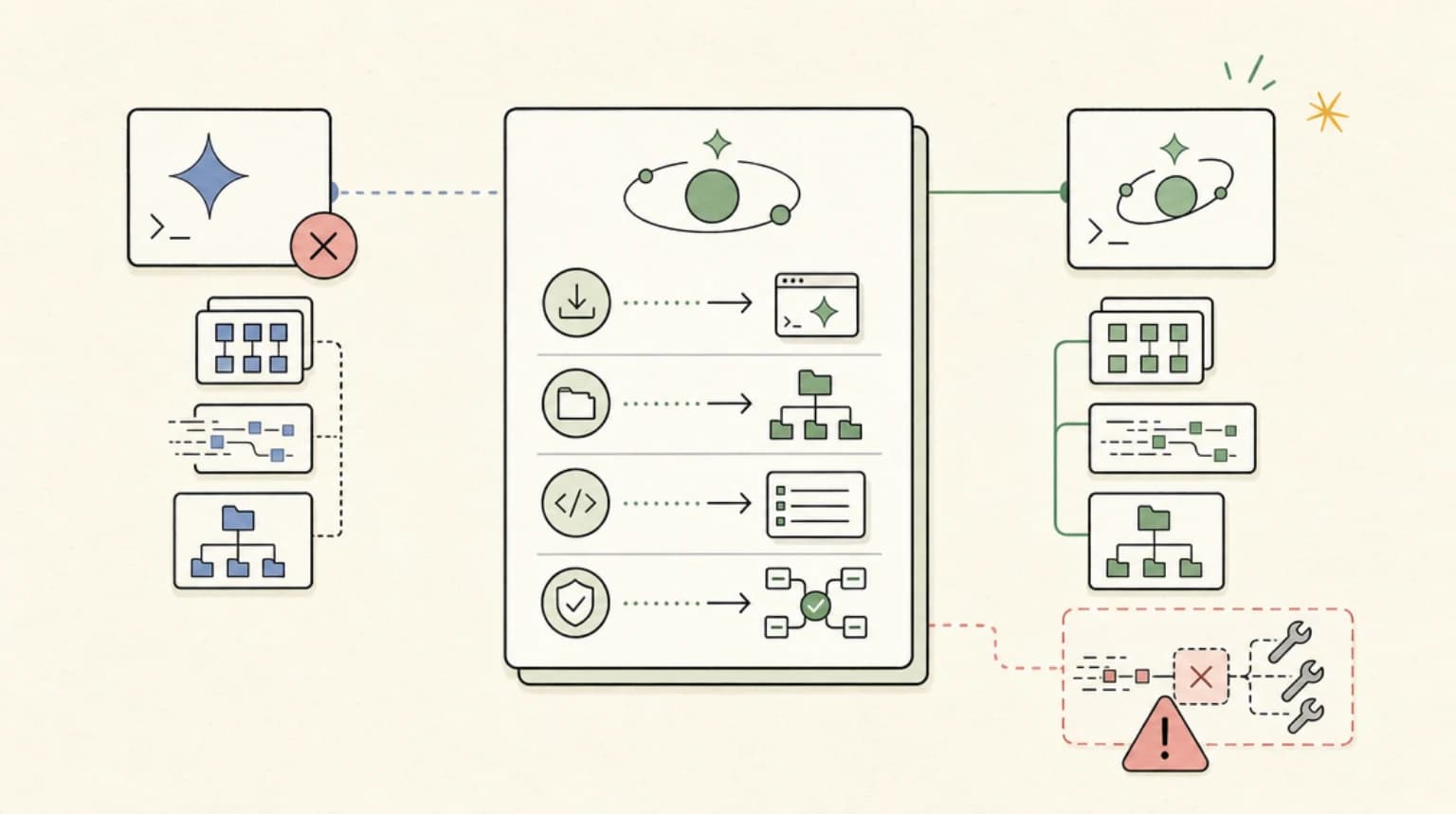
Pick Google AI Pro ($19.99 a month) if you want Gemini inside Google's own tools: the Gemini app, Antigravity and Jules. Pick the Gemini API if your own code or a third-party agent calls the model. The subscription does not include an API key; it includes $10 a month in Google Cloud credits.
Official Sources#
| Resource | What it confirms |
|---|---|
| Gemini subscriptions page | AI Plus $4.99, AI Pro $19.99, AI Ultra $99.99 and $199.99 per month, and what each plan includes |
| Google One AI plans page | Monthly Google Cloud credits: $10 on Pro, $40 on Ultra 5x, $100 on Ultra 20x |
| Google Developer Program benefits FAQ | How the credit is applied to a billing account, and that it expires a year after grant |
| Google blog, January 27, 2026 | Developer Program premium folded into AI Pro and Ultra; credits usable toward the Gemini API |
| Gemini API pricing | Free, Paid and Enterprise tiers, per-token prices by model |
| Antigravity plans | Quota by plan, AI credit overages, no bring-your-own-key |
| Antigravity FAQ | Third-party tools may not use an Antigravity login |
| Gemini Apps Help: model access changes | From October 9, 2026, Pro models in the Gemini app need AI Pro or Ultra |
The question comes up every time someone upgrades. This week a post on r/AI_Agents, How to use Gemini Pro Subscription for creating and running AI Agents, asked how to turn a new Pro plan into API access for automation scripts. The short answer is that Google sells two separate things, and only one of them is metered per token.
Why this matters today#
Today is the day the Gemini app's model lineup splits by plan. Per Google's help page, the change starts on October 9 for people without a subscription, and AI Plus subscribers get an email saying when it reaches them:
| Plan | Flash-Lite | Flash | Pro |
|---|---|---|---|
| No plan | Yes | No | No |
| AI Plus ($4.99) | Yes | Yes | No |
| AI Pro ($19.99) | Yes | Yes | Yes |
| AI Ultra (from $99.99) | Yes | Yes | Yes |
The same page says each model gets low, medium and high effort settings, and that higher effort uses more of your limit. Usage in the app is compute-based: it refreshes every 5 hours until you hit a weekly cap, with AI Pro at 4x the no-plan limit and Ultra at 5x or 20x the Pro limit.
The Gemini API is unaffected by any of this. It has its own free tier, its own per-token prices, and it does not care which consumer plan you are on.
At a Glance#
| Google AI Pro | Gemini API | |
|---|---|---|
| Price | $19.99/month flat | Free tier, then per token |
| How you call it | Gemini app, Antigravity (IDE and agy CLI), Jules, AI Studio playground | API key from AI Studio, any SDK or HTTP client |
| Limits | Compute-based, 5-hour refresh up to a weekly cap | Rate limits per tier; paid tier raises them |
| Third-party agents | Not with your login (Antigravity FAQ) | Yes, that is what the key is for |
| Data use | Consumer plan terms | Free tier: content used to improve Google products. Paid tier: not used |
| Developer extras | $10/month Google Cloud credit | Batch API at 50% off, context caching (paid tier) |
Two details in that table do most of the work.
The credit is real money for the API. Google's January announcement says you can "use the credits towards Gemini API," and the Developer Program FAQ says Cloud credits "may be spent on any Google Cloud Platform or Google Maps Platform product." You activate it on the My Benefits page, pick a Cloud billing account, and can tick "Always use this billing account" so future months apply on their own. Credits expire a year after each grant.
The subscription is not a key. Antigravity's docs are blunt: using third-party software with an Antigravity login "is a violation of our Terms of Service" and "can result in suspension or termination of your account." Google's recommendation for a third-party coding agent is "a Gemini Enterprise or Google AI Studio API key." The plans page also lists no bring-your-own-key option for extra Antigravity quota.
What $10 of credit buys on the API#
Prices below were checked on October 9, 2026 against the Gemini API pricing page, standard tier, per million tokens:
| Model | Model id | Input | Output | Cache read | Free tier |
|---|---|---|---|---|---|
| Gemini 3.8 Flash | gemini-3.8-flash | $0.75 (to Dec 31), then $1.50 | $3.75, then $7.50 | $0.075, then $0.15 | Yes |
| Gemini 3.5 Flash-Lite | gemini-3.5-flash-lite | $0.30 | $2.50 | $0.03 | Yes |
| Gemini 3.1 Pro Preview | gemini-3.1-pro-preview | $2.00 (up to 200k prompt) | $12.00 | $0.20 | No |
Note the 3.8 Flash row: it is promotional pricing that doubles on January 1, 2027.
Now a worked task. Assume a coding agent run of 30 turns, each sending 40k input tokens (32k of it a repeated prefix billed at the cache-read rate, 8k new) and producing 1.5k output tokens. Storage fees for explicit caches are extra and not included.
| Model | Per turn | Per 30-turn task | Tasks per $10 credit |
|---|---|---|---|
| 3.8 Flash, 2026 promo | $0.0140 | $0.42 | about 23 |
| 3.8 Flash, from Jan 2027 | $0.0281 | $0.84 | about 11 |
| 3.5 Flash-Lite | $0.0071 | $0.21 | about 46 |
| 3.1 Pro Preview | $0.0404 | $1.21 | about 8 |
To redo the 3.8 Flash promo row: 8,000 x $0.75/M + 32,000 x $0.075/M + 1,500 x $3.75/M = $0.0060 + $0.0024 + $0.0056 = $0.0140 per turn.
So the credit covers a few dozen real agent runs a month, not a daily-driver workload. If you run an agent all day, the per-token bill will pass $19.99 quickly, and the flat plan in Google's own tools is the better deal. If you run a nightly script or a small internal bot, the $10 credit plus the free tier may cover all of it.
When the subscription wins#
- You live in Antigravity. Every plan gets Gemini 3.1 Pro and 3.8 Flash as the agent model, but AI Pro gets "a high, generous quota, refreshed every five hours until the weekly limit is reached" versus a weekly quota on the free plan. Past the baseline, Pro and Ultra can spend purchased AI credits at Gemini Enterprise consumption pricing, and you choose Never or Always for overages. Our Antigravity CLI vs Claude Code vs Codex field guide covers how that CLI compares day to day.
- You script the official CLI. Headless mode is documented:
agy -p "In one sentence, what is a git rebase?" --output-format jsonruns once and exits, using cached credentials from an interactive sign-in. A reply on the Google AI developer forum says driving the unmodifiedagybinary from your own script is fine for personal work, as long as no tokens are extracted, and that heavy unattended loops belong on an API key. That reply comes from a forum regular rather than a policy page, so treat it as guidance. - You also want the consumer stack. Pro bundles the Gemini app's Pro models (now gated as of today), Jules, 5 TB of storage and Gemini in Gmail and Docs. If you would pay for some of that anyway, the developer value is a bonus.
When the API wins#
- Your own product calls the model. There is no other legitimate route. Create a key in AI Studio and call the Interactions API from the quickstart:
export GEMINI_API_KEY="YOUR_API_KEY"

curl -X POST "https://generativelanguage.googleapis.com/v1beta/interactions" \
  -H "x-goog-api-key: $GEMINI_API_KEY" \
  -H 'Content-Type: application/json' \
  -d '{
    "model": "gemini-3.8-flash",
    "input": "Explain how AI works in a few words"
  }'
- You use a third-party agent. OpenCode or any other agent outside Google's apps needs a key. Plugging your Google login into one is exactly what the Antigravity FAQ prohibits.
- You need privacy guarantees. The pricing page marks free-tier content as used to improve Google's products and paid-tier content as not used. Attaching billing (or your monthly credit) moves you to the paid side.
- Your traffic is batchable. The paid tier's Batch API is listed at 50% off, which a flat plan cannot match for offline jobs.
Google and OpenAI chose opposite doors#
This week makes the contrast hard to miss. OpenAI's Sign in with ChatGPT lets approved third-party agents spend a Plus or Pro allowance directly. Google keeps the consumer plan inside its own surfaces and gives developers a fixed monthly Cloud credit instead.
Each side gets something. OpenAI makes the subscription the default wallet for the agent ecosystem, which is good for retention but means third parties now compete for the same plan limits. Google keeps its quota math predictable and pushes builders into Cloud billing, where the credit acts as an on-ramp to a paid account. For developers, Google's model is less convenient but easier to reason about: one bill for products you use, one meter for code you ship.
The open question is Gemini 4 Argon. Google's announcement says broader access starts "with paid API customers and Google AI Ultra subscribers," at an introductory $2 input and $10 output per million tokens, and a 9to5Google report notes Google has not said where it fits in the plan lineup. As of today it is not in the Gemini API changelog. If it lands API-first, AI Pro subscribers who want it early will be paying per token anyway, and the $10 credit is the cheapest way to try it.
Pick by Task#
| Task | Pick | Why |
|---|---|---|
| Daily coding in Antigravity IDE or CLI | Google AI Pro | 5-hour refreshing quota beats per-token for heavy interactive use |
| Shipping an app or bot that calls Gemini | Gemini API | Only a key is allowed outside Google's apps |
| Running OpenCode or another third-party agent on Gemini | Gemini API | Antigravity FAQ bans using your login in third-party tools |
| A nightly script or small internal tool | Gemini API, paid with AI Pro's $10 credit | About 23 Flash agent runs a month fit in the credit at 2026 prices |
| Bulk offline processing | Gemini API Batch | Listed at 50% off standard rates |
| Gemini 3.1 Pro in the Gemini app after October 9 | Google AI Pro | AI Plus and free users lose Pro models in the app |
| Trying Gemini 4 Argon first | Gemini API or AI Ultra | Google names paid API customers and Ultra as the first wave |
FAQ#
Does Google AI Pro include Gemini API access?#
Not as an API key or raised API limits. It includes $10 a month in Google Cloud credits through the Google Developer Program, which you apply to a Cloud billing account and can spend on Gemini API usage. The key itself comes from AI Studio, like everyone else's.
Is Google AI Pro cheaper than the Gemini API?#
For heavy interactive use inside Antigravity, yes: $19.99 flat with a 5-hour refreshing quota. For light scripted use, the API is cheaper. A 30-turn agent task on Gemini 3.8 Flash costs about $0.42 at 2026 promo prices, so the included $10 credit covers about 23 of them.
Can I use my Google AI Pro login in Claude Code or OpenCode?#
No. Antigravity's FAQ says using third-party software with an Antigravity login violates the terms and can get the account suspended, and it recommends an AI Studio or Gemini Enterprise API key instead. Running the official agy CLI in headless mode from your own script is a different case.
Do the AI Pro Cloud credits roll over?#
Each monthly grant expires one year after it is issued, per the Developer Program FAQ. Credits are not applied automatically until you pick a billing account on the My Benefits page, so check it after you subscribe.
Which Gemini models are on the free API tier?#
Per the pricing page on October 9, 2026, Gemini 3.8 Flash and 3.5 Flash-Lite have a free tier, while Gemini 3.1 Pro Preview does not. Free-tier prompts may be used to improve Google's products.
Sources#
Last updated: October 9, 2026
Continue Reading#
- Gemini 4 Argon: What Developers Can Actually Use - what Google announced, the access timeline, and what to watch before planning around it
- Antigravity CLI vs Claude Code vs Codex: The Terminal Agent Field Guide - how the CLI your AI Pro quota pays for compares with the other two terminal agents
- Sign in with ChatGPT: Run Coding Agents on Your Plan - the opposite approach, where a consumer plan pays for third-party agents
- Codex Usage Limits and Pricing in 2026 - the same subscription-versus-meter question on OpenAI's side
- Gemini CLI to Antigravity CLI Migration Guide - why AI Pro's terminal agent is now
agyrather thangemini
Get the next comparison like this in your inbox
One email a week on Gemini and the rest of the AI dev stack. Free.
Read next
Gemini 4 Argon: What Developers Can Actually Use
Google's Gemini 4 Argon is a frontier model launch with strong coding and enterprise-workflow claims, but access starts narrow. Here is what shipped, what is verified, and what to watch before planning around it.
8 min readAntigravity CLI vs Claude Code vs Codex: The Terminal Agent Field Guide (July 2026)
Google's Antigravity CLI replaced Gemini CLI on June 18, 2026. Here is how it compares to Claude Code and Codex on architecture, pricing, multi-agent workflows, and daily coding experience.
9 min readSign in with ChatGPT: Run Coding Agents on Your Plan (2026)
Sign in with ChatGPT lets third-party coding agents spend your Plus or Pro allowance instead of an API key. How the OAuth flow works, the per-app cap to set first, and why a shrinking Pro 200 allowance makes it matter.
8 min readNew here? Start with
Technical content at the intersection of AI and development. Building with AI agents, Claude Code, and modern dev tools - then showing you exactly how it works.