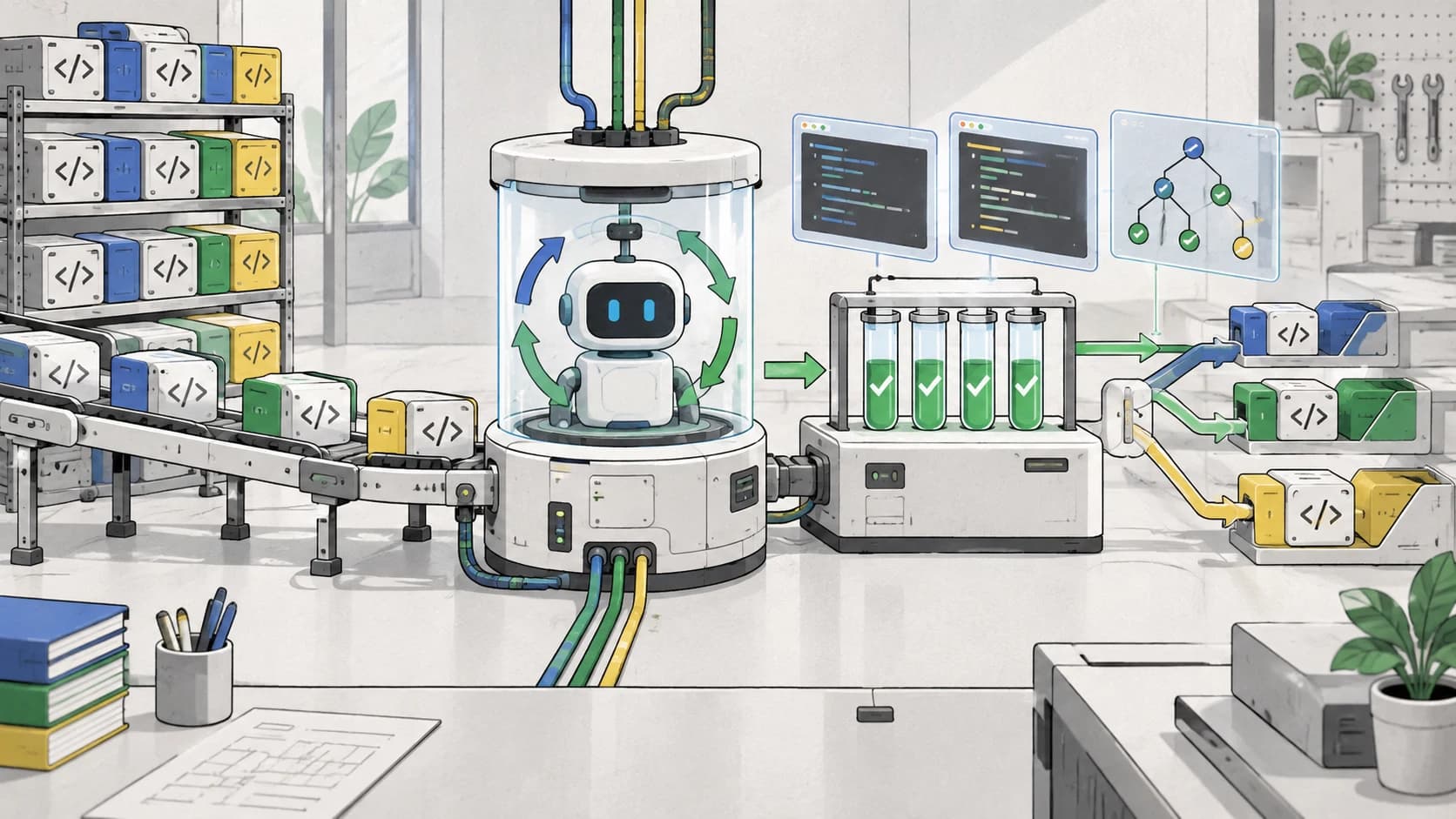
Coding Agents Need Better Human Loops, Not Just Harder Benchmarks
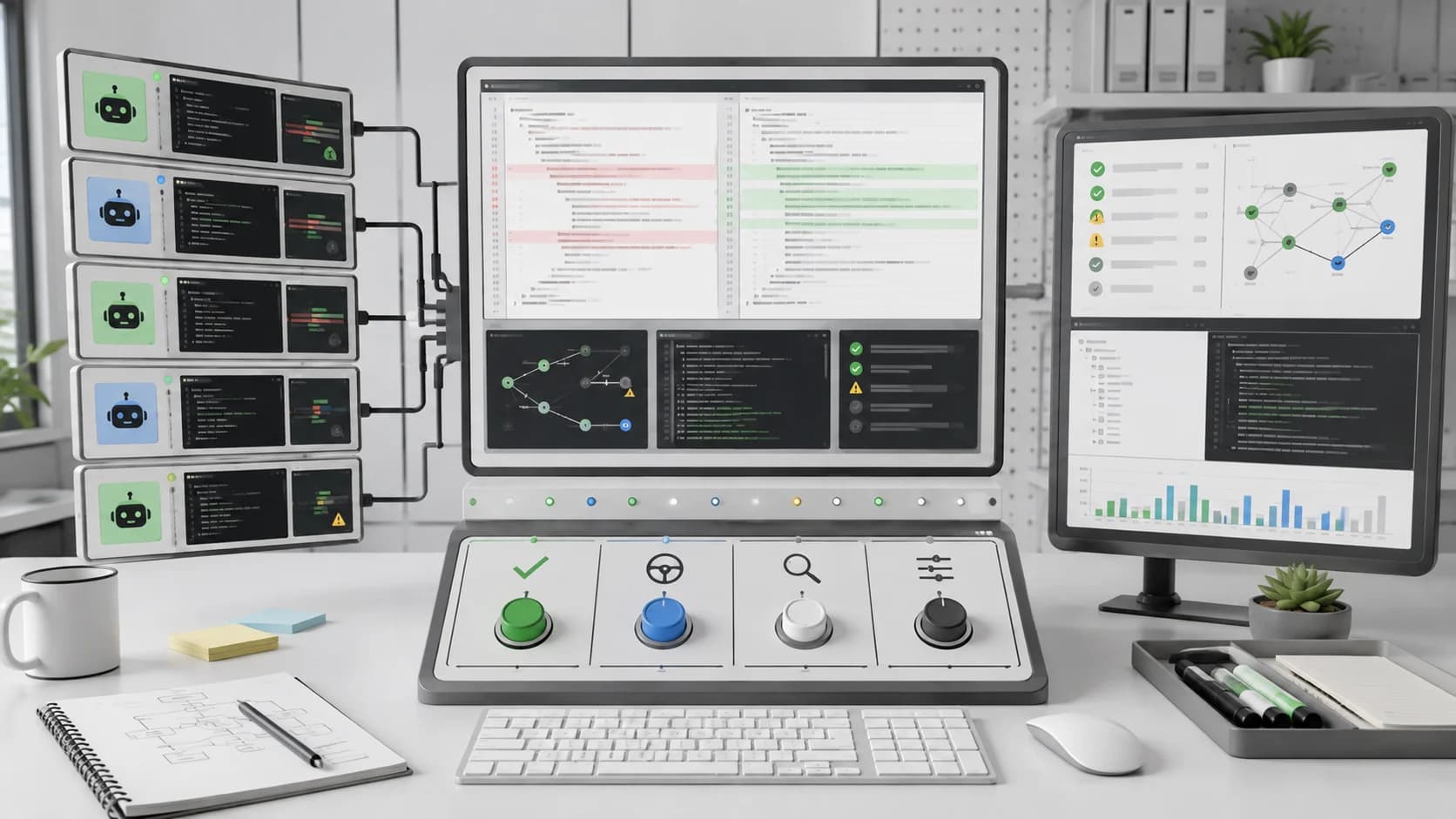
TL;DR
Coding agents need better human loops: a position paper argues agent research over-optimizes solo autonomy while developers need to steer and verify agents.
| Research Signals | |
|---|---|
| Humans are Missing from AI Coding Agent Research | Position paper on task alignment, steerability, verification, and adaptability |
| Hugging Face ICML 2026 Open Reproductions | Large-scale agent reproduction run with public logbooks |
| Hugging Face July 2026 Papers | Coding-agent evaluation and harness papers surfaced in the monthly ranking |
| Microsoft CLI coding-agent rollout study | Enterprise adoption evidence for Claude Code and GitHub Copilot CLI |
| Google Trends | Checked September 6, 2026, but Trends returned HTTP 429 for the candidate cluster |
Last updated: September 6, 2026. Google Trends was attempted for coding agents, Claude Code, AI agent benchmark, and agent reproducibility; it returned HTTP 429, so no Trends numbers are used below. The demand read falls back to Hugging Face paper velocity, existing Developers Digest search-intent coverage, arXiv source quality, and adjacent discussion signals.
The coding-agent market keeps asking one question: when will the agent do the whole software task by itself?
A new position paper from researchers at CMU, Stanford, Princeton, UIUC, and collaborators argues that this is the wrong center of gravity. The paper, Humans are Missing from AI Coding Agent Research, says the useful bottleneck is moving away from raw task completion and toward the interface between the agent and the developer: can the human align the task, steer the system mid-run, verify what changed, and carry preferences forward?
That lands at the same moment as two other signals. Hugging Face's ICML 2026 reproduction challenge showed agents can audit thousands of research claims when the work is structured as claims, logs, artifacts, and adversarial review. Microsoft's CLI-agent rollout study, which we covered in Microsoft's CLI Coding Agent Study, found measurable output lift from command-line agents while also warning that merged PR count is only a proxy for value.
The through-line is simple: the next useful leap is not a leaderboard point. It is the human loop.
What The Paper Gets Right#
The position paper names four dimensions that matter more in real engineering work than a binary resolved/unresolved score.
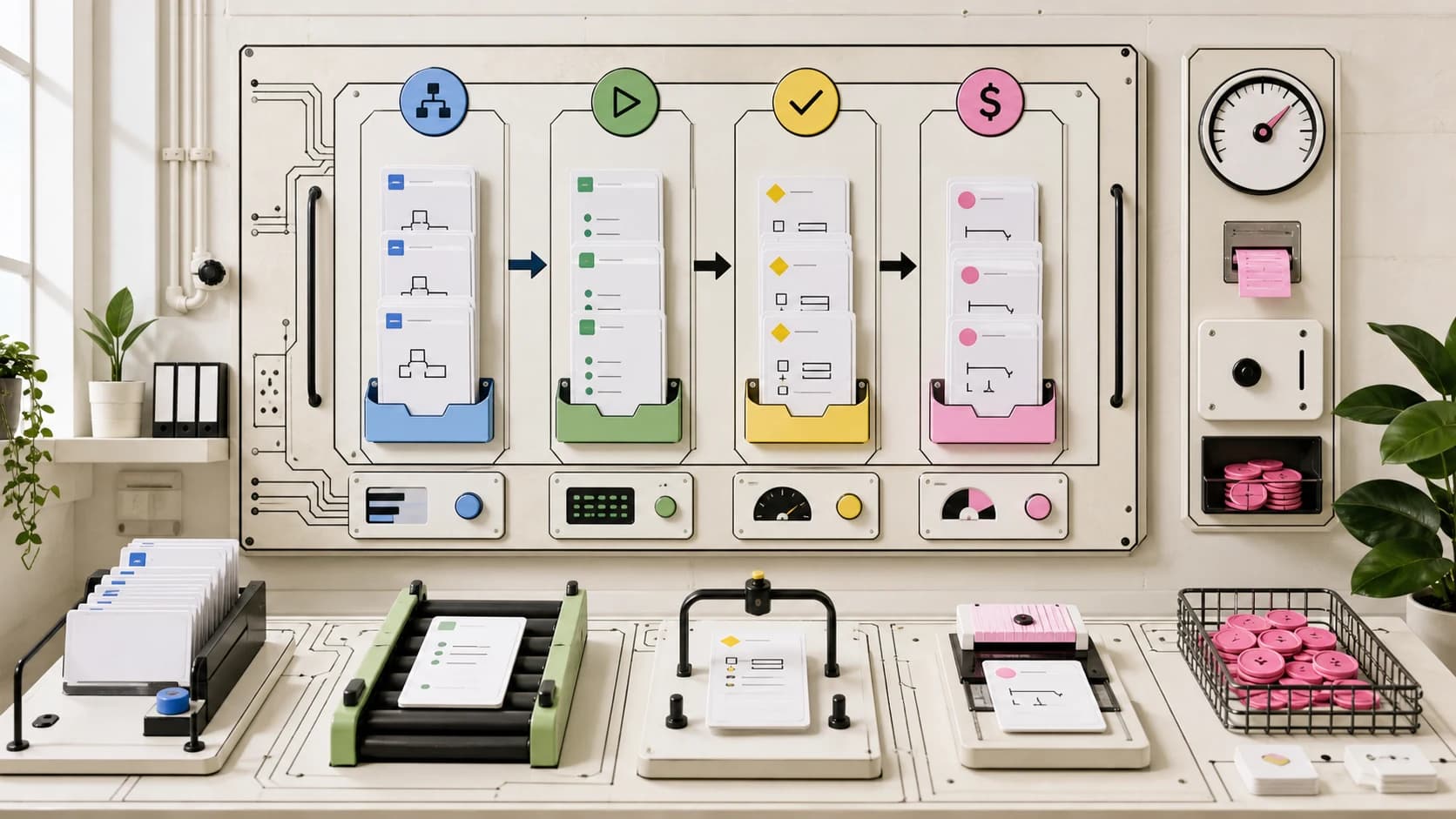
Task alignment asks whether the agent understood the actual job, not just the text prompt. In a real repository, "fix the auth bug" may mean preserving product behavior, avoiding an unnecessary migration, following team conventions, and touching only the bounded surface. Benchmarks flatten that into a GitHub issue and a hidden test suite.
Steerability asks whether the developer can redirect the agent while the work is still cheap to change. This is where many tools still feel wrong. You either over-specify the task up front or interrupt a run after the agent has already built a pile of assumptions. Good steerability should feel closer to code review in motion: inspect the plan, stop a bad branch early, narrow the diff, and resume without restarting from zero.
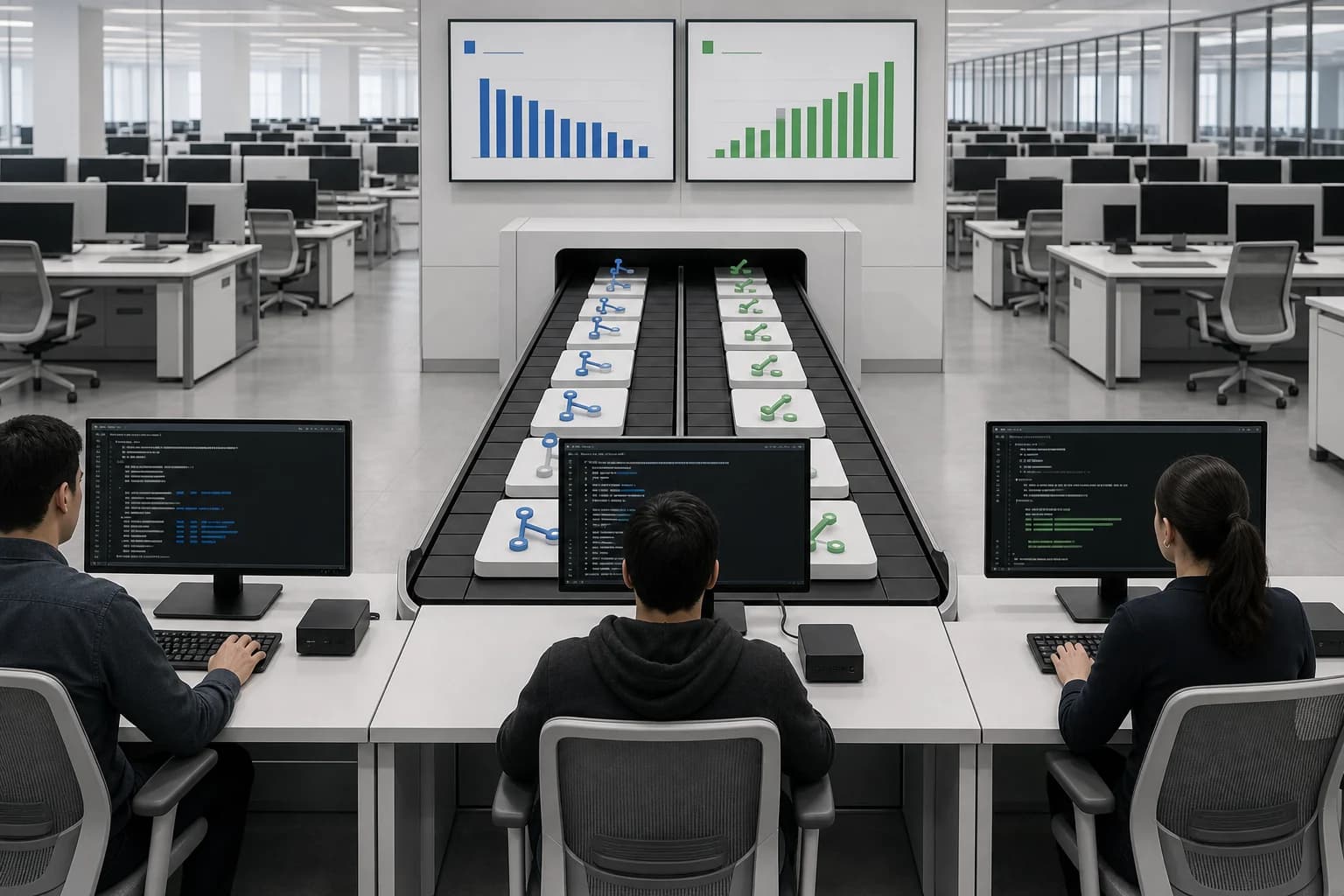
Verification asks whether the result is inspectable. This is the sharpest point in the paper. The authors show that agent-generated patches are often longer than the human reference patches even when they solve SWE-bench Verified tasks. Longer patches are not automatically worse, but they are harder to review, harder to bisect, and easier to hide accidental behavior in. That is exactly why SWE-NFI matters: functional correctness alone misses whether the change is clean, local, and maintainable.
Adaptability asks whether the agent learns from the developer across sessions. Every heavy user has seen the failure mode: the agent asks the same clarifying question, violates the same repo convention, or repeats the same too-large refactor because yesterday's correction did not become durable operating knowledge. That is not a model-intelligence problem by itself. It is a memory, workflow, and product-surface problem.
Why Solo Autonomy Is An Attractive Trap#
Benchmarks reward solo autonomy because it is easy to score. Give an agent a task, let it run, check whether hidden tests pass. That setup produced real progress, and nobody should dismiss it. Without SWE-bench, Terminal-Bench, long-horizon task suites, and reproduction challenges, the industry would be arguing from vibes.
But a benchmark can be right and still incomplete.
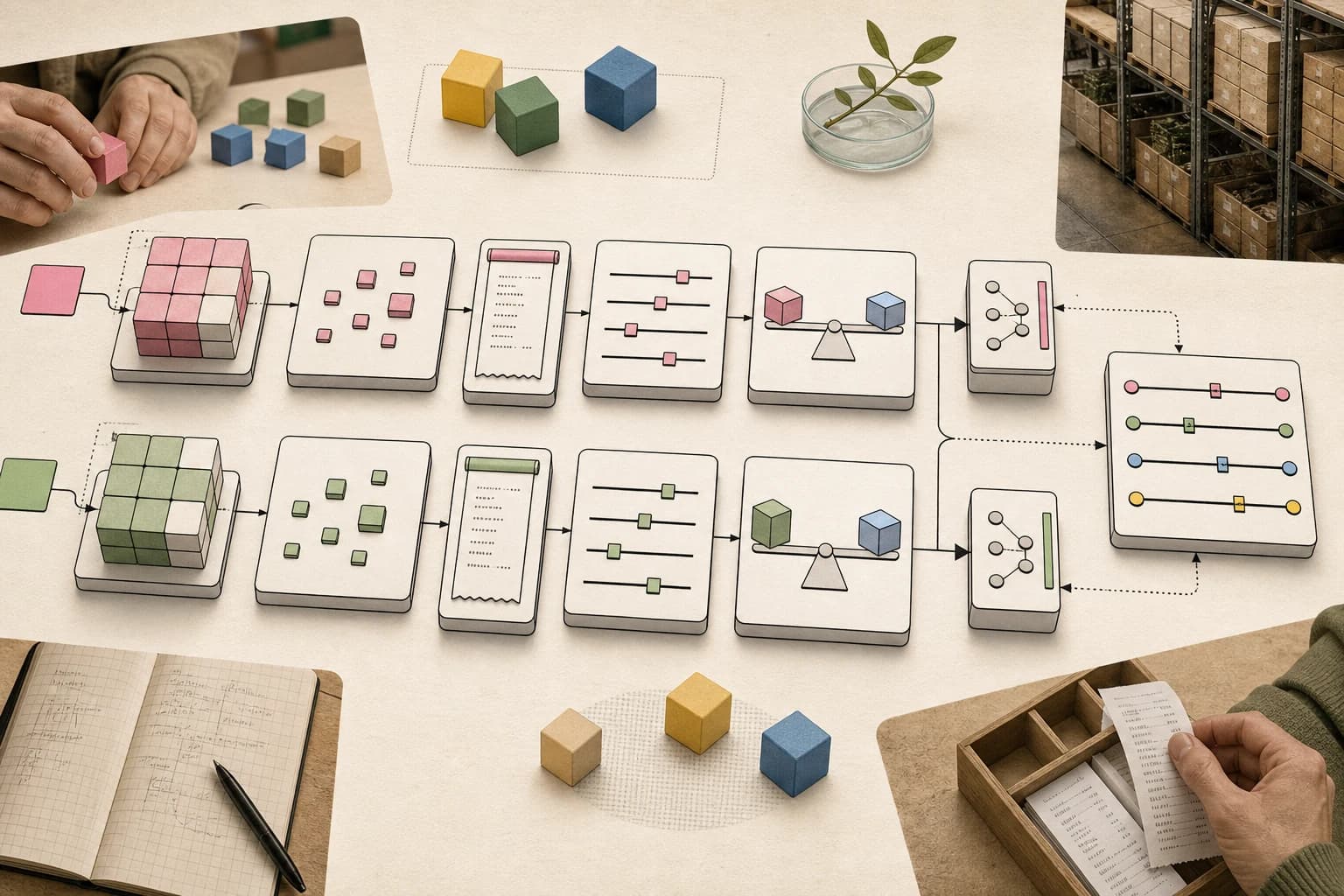
The Hugging Face reproduction challenge is the clean example. Agents attempted 2,226 ICML papers and produced 6,816 logbooks. Hugging Face reports that 51% of examined papers had at least one claim independently verified, while 23% had at least one falsified or contested claim. That sounds like an autonomy story until you read the workflow. The useful part was not "agents replaced reviewers." The useful part was the harness: extracted claims, reproducible commands, public artifacts, frozen verdicts, skeptical judging, and human steering when the agent got stuck.
The paper's argument makes that explicit. Human involvement is not a temporary crutch until models become smart enough. It is how the work becomes accountable. A developer does not need an agent that silently produces a 900-line patch and says all tests pass. A developer needs an agent that exposes the uncertainty while there is still time to do something about it.
That is why Your Benchmark Is Lying To You keeps aging well. A benchmark result is an input to engineering judgment, not a replacement for it. The more capable agents get, the more expensive it becomes to discover late that the task was misread.
What Better Human Loops Look Like#
The practical design direction is not mysterious. It is just underbuilt.
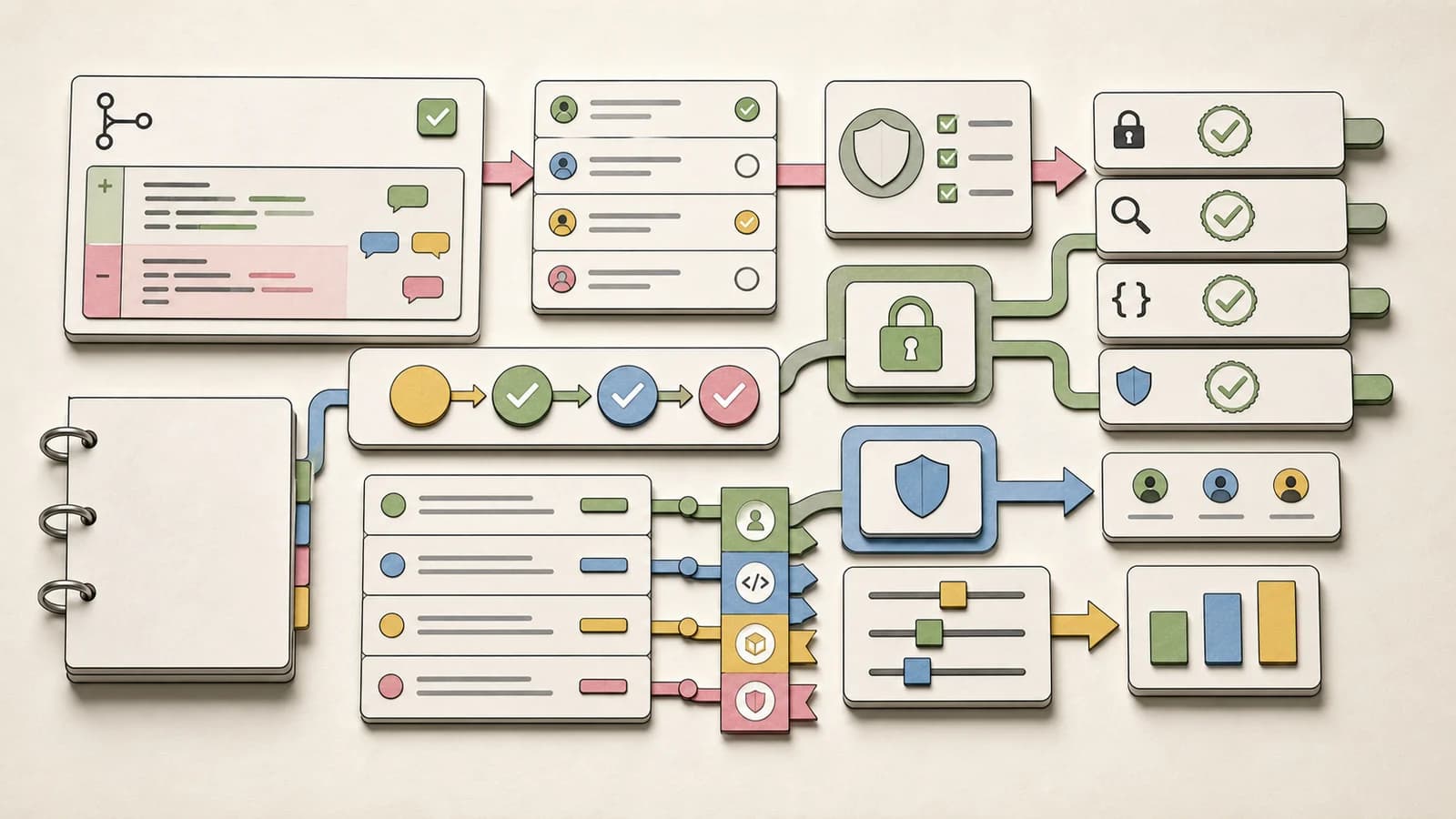
First, agents should make their working contract visible. Before editing, show the inferred task, files likely to change, risky assumptions, and planned verification. Not as a decorative "thinking" transcript, but as a compact contract the developer can approve or edit.
Second, agents should carry review units, not just final diffs. The unit a human can reason about is often "auth boundary," "database migration," "copy change," or "test fixture," not the final patch blob. A good harness should let the developer approve one unit, reject another, and ask for a smaller alternative.
Third, agents should prove outcomes against the thing that matters. Passing tests is useful. It is not the same as proving the UI route renders, the production bytes changed, or the deployment uses the intended config. The repo's own release discipline reflects this: local checks, commit-tree checks, deployment status, and live route verification are different claims.
Fourth, agent memory should be evidence-backed. "The user likes concise code" is weak memory. "In this repo, auth routes must use getUserId() because dev middleware bypasses Clerk" is useful memory. The difference is not sentiment. It is provenance and operational consequence.
Finally, tools should measure intervention quality. If a human redirects an agent three times before success, that is not just chat history. It is data about where task alignment failed, what plan affordance was missing, and which verification step caught the issue.
The Opposing View#
There is a fair counterargument: optimizing for human loops may slow down full autonomy. If the long-run goal is agents that can complete tasks end to end, why spend product energy on interruptibility, review UX, and preference memory?
Because developers buy useful systems before they buy theoretical endpoints.
The Microsoft rollout study is useful here. It found that adoption spread through social networks and that adopters merged more PRs than a counterfactual estimate, but the authors are careful about the metric. A merged PR is output, not necessarily value. That caveat is the entire market. Teams do not need more autonomous activity. They need more trustworthy progress.
There is also a research counterargument: human-centered metrics are messy. They involve user behavior, team norms, preferences, and interaction design. True. But avoiding the mess does not remove it from production. It only moves it out of the benchmark and into the user's day.
The Take#
The next coding-agent winner will not be the tool that claims the cleanest "autonomous software engineer" story. It will be the one that turns human judgment into a first-class runtime primitive.
That means task alignment before execution, steerability during execution, verification after every meaningful unit, and adaptability across sessions. It means treating a developer's intervention as signal, not failure. It means building interfaces and harnesses that make the agent easier to inspect while it is still acting.
The paper is right to push the field here. Solo autonomy is a useful benchmark axis. Human-centered usefulness is the product.
FAQ#
What is the main argument of Humans are Missing from AI Coding Agent Research?#
The paper argues that AI coding-agent research over-focuses on autonomous task completion and under-focuses on the human-agent loop. It proposes task alignment, steerability, verification, and adaptability as core dimensions for evaluating coding agents.
Why does this matter if benchmark scores keep improving?#
Benchmark scores show whether agents can solve constrained tasks. Real engineering also requires small diffs, reviewable reasoning, correct assumptions, safe deployment, and adaptation to team conventions. Those properties are not captured by a single pass/fail score.
Are humans just a temporary workaround for weak coding agents?#
Not for production work. Even strong agents need task framing, review, verification, and accountability. The Hugging Face ICML reproduction challenge showed the most reliable workflows combining agents with structured artifacts and human steering.
What should coding-agent tools build next?#
They should expose task contracts, make mid-run steering cheap, split work into reviewable units, preserve evidence-backed memory, and verify outcomes against the real system rather than only hidden tests.
Does this mean autonomous agents are overhyped?#
Autonomous agents are useful, but autonomy is not the same as usefulness. The stronger claim is that agent products should optimize for trustworthy collaboration before claiming they can replace the developer loop.
Continue Reading#
- The ICML 2026 Agent Reproduction Audit - what happened when agents audited a third of a major ML conference
- Microsoft's CLI Coding Agent Study - adoption and output evidence from a large enterprise rollout
- SWE-NFI: The Benchmark That Catches What Coding Agents Miss - why passing hidden tests is not the whole quality story
- Your Benchmark Is Lying To You - how benchmark claims fail without audit metadata
- Agent PR Governance for GitHub Copilot Review - practical controls for agent-authored pull requests
Sources#
- Humans are Missing from AI Coding Agent Research, arXiv HTML, fetched September 6, 2026
- Humans are Missing from AI Coding Agent Research, arXiv abstract, fetched September 6, 2026
- What We Learned by Reproducing 2,200 papers from ICML, Hugging Face, fetched September 6, 2026
- ICML 2026 Agent Reproductions challenge, Hugging Face, fetched September 6, 2026
- Hugging Face Papers monthly ranking for July 2026, fetched September 6, 2026
- Adoption and Impact of Command-Line AI Coding Agents, arXiv, fetched September 6, 2026
Get the next deep dive like this in your inbox
One email a week on AI Agents and the rest of the AI dev stack. Free.
Read next on AI coding tools
The ICML 2026 Agent Reproduction Audit: 23% of Examined Papers Had Falsified or Contested Claims
ICML 2026 reproduction audit: coding agents checked 2,226 papers claim by claim, and 23% had a falsified or contested claim. What the challenge found.
7 min readMicrosoft's CLI Coding Agent Study: Adoption Is a Workflow Problem
Microsoft's study of Claude Code and GitHub Copilot CLI found about 24% more merged PRs among adopters. The bigger lesson is rollout design, not magic.
8 min readSWE-NFI: The Benchmark That Catches What Coding Agents Miss
SWE-NFI benchmarks coding agents on 188 behavior-preserving improvement tasks. The best hits 70% correctness, but all lag humans on structural refactors.
6 min readNew here? Start with
Technical content at the intersection of AI and development. Building with AI agents, Claude Code, and modern dev tools - then showing you exactly how it works.