Anthropic's Fermat Proof Is an Autoformalization Milestone

TL;DR
Anthropic's Lean formalization of Fermat's Last Theorem, read for developers: what Claude verified in 11 days and the repo patterns worth copying.
Anthropic published a complete computer-checked formalization of Fermat's Last Theorem on September 4, 2026. The company says Claude worked largely autonomously over 11 days to write the proof in Lean, and the accompanying repository now exposes a full Lean 4 project, generated browsing docs, and multiple independent verification paths.
Last updated: September 5, 2026
The obvious headline is "AI proves Fermat." That is the wrong read for developers. Fermat's Last Theorem was already proved by Andrew Wiles and Richard Taylor in the 1990s, and the math community was not waiting for a language model to discover the argument. The useful headline is narrower and more important: a frontier lab shipped a repo-scale mathematical artifact where the claimed result is checked by a compiler-like kernel instead of accepted on model confidence.
That puts Anthropic's release in the same lane as OpenAI's Lean-certified math results, but with a different shape. OpenAI emphasized breadth across ten problems. Anthropic is emphasizing depth through one huge formalization: thousands of pages of background mathematics translated into a machine-checkable graph.
What Anthropic Shipped#
The public Anthropic research post says the project is the first complete computer-checked proof of Fermat's Last Theorem. The GitHub repository is a Lean 4 project built on Mathlib, pinned to Lean 4.33.1 and Mathlib v4.33.0. Its README says the final check rejects shortcuts such as sorry, extra axioms, and native_decide, and derives Mathlib's own FermatLastTheorem statement from the formal theorem.
The repo also matters because it is not just a PDF. It includes an html/ tree for browsing the proof, a generated graph of landmark theorems, source links, and instructions for reproducing the build with Lake. That is a developer-facing artifact, not a press release.
The release had immediate velocity. The HN thread reached more than 600 points and 400 comments within a day, and the GitHub repository was created on September 4 and had more than 500 stars by the morning of September 5. That is launch chatter, but it is useful launch chatter: developers are not only arguing about whether Claude is smart. They are inspecting proof artifacts, Lean versions, axiom boundaries, build cost, and how much of the work can be trusted because the verifier, not the model, decides.
The Important Caveat#
Kevin Buzzard's Xena Project post is the best counterweight to the launch framing. Buzzard, who has been working on formalizing Fermat's Last Theorem, writes that the formalization "tells us essentially nothing" mathematically, because the theorem itself was already believed. His excitement is about autoformalization: if an AI swarm can formalize a large body of existing literature end to end in 11 days, then future papers may become machine-checkable much closer to publication time.
That caveat should change how developers talk about this release. The result is not a new theorem discovery story. It is a software artifact story.
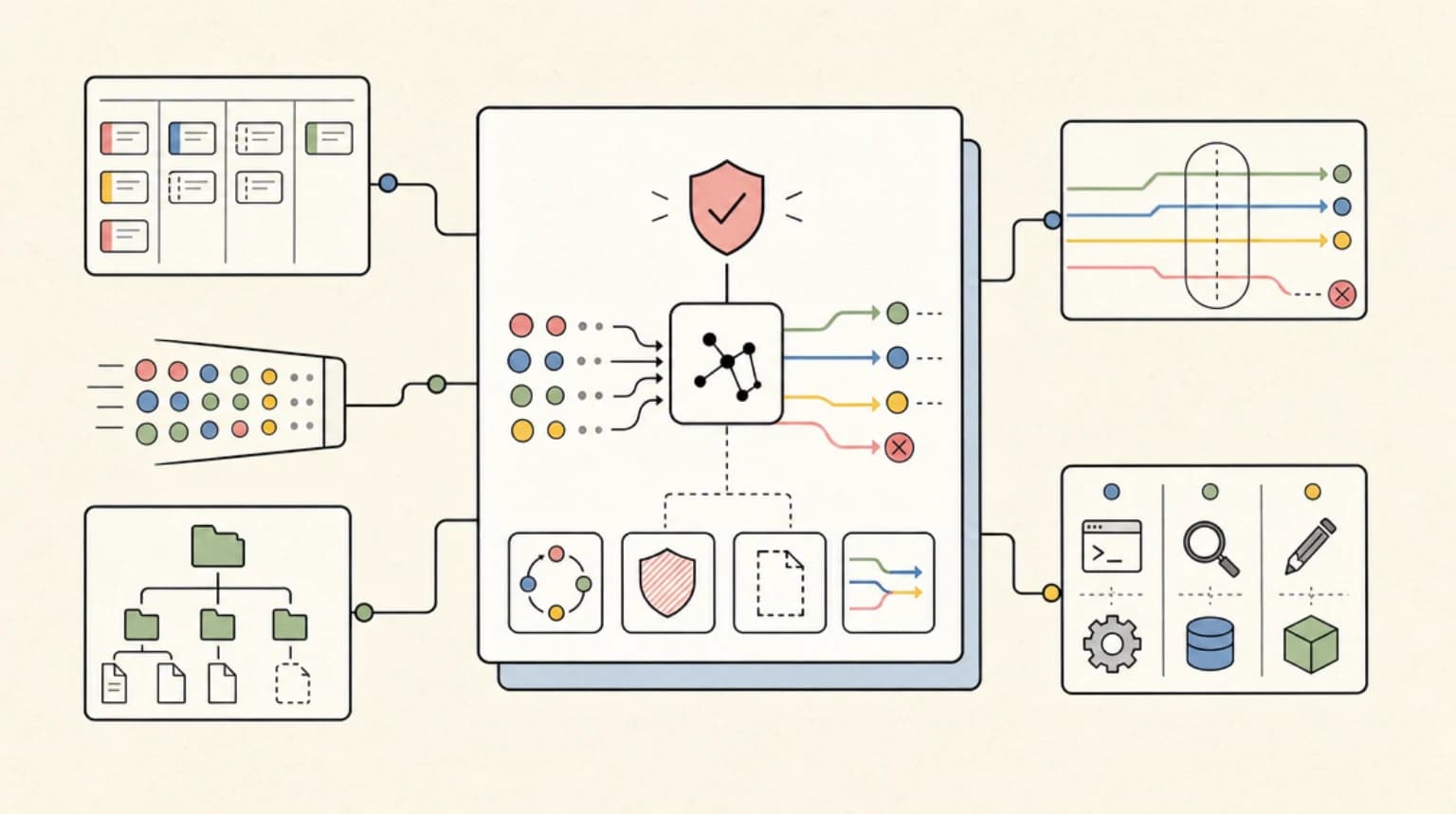
The proof follows existing mathematical literature. It still inherits trust assumptions: Lean's kernel, Mathlib definitions, the pinned toolchain, the independent checkers, and the claim that the generated proof graph corresponds to the intended theorem. Anthropic's README is unusually helpful here because it names the verification boundary. It says the final theorem follows from Lean's three standard axioms, reports a second-kernel check with nanoda, and links the build recipe. That is exactly the distinction we keep making in agent engineering: a result is only as strong as the receipt it leaves behind.
If you are building agent systems, this is the transferable lesson. The winning artifact is not a confident answer. It is a repo with pinned dependencies, a replayable build, a final check file, and a narrow statement of what was verified. That is the same posture we argued for in The Judge Is Leaving the Agent Loop: where structure can decide, use structure.
Google Trends Check#
Google Trends was usable for this run, but it does not support a breathless launch-volume claim.
I checked three United States, past-three-month clusters on September 5:
| Query cluster | Read |
|---|---|
Lean theorem proving, Lean 4, Fermat Last Theorem | Lean 4 has persistent demand, while exact theorem-proving and FLT terms are small outside the September spike. |
AI theorem proving, formal verification, machine checked proof | formal verification is the durable search-intent anchor; the exact AI proof terms are still niche. |
Claude math, Claude proof, Anthropic Fermat | Claude math and Claude proof have recurring demand; Anthropic Fermat is currently a tiny launch query. |
That is why this post should target the durable lane: Lean, formal verification, machine-checked proof, and AI autoformalization. The exact release name belongs in the article and metadata, but the search-intent bet is broader.
What Developers Should Copy#
The first pattern is the final-check file. Anthropic's README says FinalCheck.lean is designed to fail if the proof relies on forbidden shortcuts. For ordinary software agents, that maps to a release gate that encodes what cannot be hand-waved: no skipped tests, no unchecked generated files, no missing migration, no stale snapshot, no bypassed policy.
The second pattern is dependency pinning. The repo names Lean 4.33.1 and Mathlib v4.33.0. That matters more than the model name. Without a pinned checker and library, a proof artifact becomes an anecdote. The software version of this is familiar: generated migrations should name the schema version, benchmark reports should name the commit and hardware, and agent patches should leave the exact command output that distinguishes the bug from the baseline.
The third pattern is browsability. Anthropic did not only ship Lean files; it shipped generated HTML pages over theorem dependencies. That is the missing layer in most agent output. Machines can check the artifact, but humans still need a way to navigate why it exists. This is where the release connects to Leanstral 1.5: theorem-proving models are becoming useful, but the product surface around proof exploration may matter as much as the proving model.
The fourth pattern is restraint. The proof being machine-checked does not mean every surrounding claim is machine-checked. Cost estimates, autonomy level, generated documentation quality, and "largely autonomous" all remain lab-reported claims unless independently reproduced. That is not a dunk on Anthropic. It is the standard developers should apply to every AI artifact, including their own.
Where This Fits#
There is now a visible sequence:
- Models started producing informal proof sketches that needed expert review.
- Domain experts began steering frontier models toward narrow results, as in the Lean-verified convex optimization proof.
- Open-weight theorem provers such as Leanstral started saturating older proof benchmarks.
- Labs began releasing full Lean certificate repositories instead of only claims.
- Anthropic has now shown the repo-scale version: not one compact theorem, but a large formalization project with generated navigation and independent checking.
The next useful benchmark is not "can a model solve another famous theorem." It is whether the method can formalize live research fast enough to change review. Can an AI system take a new preprint, identify the informal gaps, formalize the dependencies, and leave a maintainable artifact that mathematicians and developers can inspect? That is the durable product question.
For developer teams outside mathematics, the analogy is direct. The value of an agent does not come from saying it solved the task. It comes from turning the task into an artifact your existing tools can verify. Lean is the cleanest version of that idea because the checker is formal. Most production systems are messier, but the direction is the same: make the output replayable, browsable, pinned, and hard to fake.
FAQ#
Did Claude discover a new proof of Fermat's Last Theorem?#
No. Anthropic's release is a formalization of existing mathematical literature around the Wiles and Taylor-Wiles proof lineage. The milestone is that the proof has been translated into a complete Lean artifact checked by a proof assistant.
Why does Lean verification matter?#
Lean verification means the proof term is checked by Lean's kernel against formal definitions and axioms. It is much stronger than an LLM-written explanation, but it still depends on the trusted kernel, the pinned library, and the correctness of the formal statement.
Is this useful for ordinary software developers?#
Yes, but indirectly. Most teams are not writing Lean proofs. The useful pattern is artifact discipline: pinned toolchains, replayable checks, explicit trust boundaries, generated navigation, and final gates that fail when shortcuts are present.
Was Google Trends strong enough to justify this topic?#
The exact Anthropic Fermat query is launch-shaped and low volume. The broader clusters around Lean 4, formal verification, and Claude math show more durable demand, so the SEO angle should target autoformalization and machine-checked proof rather than only the release name.
Continue Reading#
- OpenAI Math Repo: What the Lean Proofs Do and Don't Verify - the October 2026 follow-up: hundreds of manuscripts, about 42% Lean-formalized
- OpenAI Publishes Ten Decade-Open Math Proofs, Each Formalized in Lean
- Leanstral 1.5: Mistral's Open Theorem-Proving Model Hits 100% on miniF2F
- GPT-5.6 Closes 30-Year Gap in Convex Optimization Theory
- The Judge Is Leaving the Agent Loop
Sources#
- Formalizing Fermat's Last Theorem - Anthropic, fetched September 5, 2026.
- anthropics/fermats-last-theorem - GitHub, fetched September 5, 2026.
- Formalizing Fermat's Last Theorem - Hacker News, fetched September 5, 2026.
- FLT: Anthropic has beaten me to it - Xena, fetched September 5, 2026.
- Fermat's Last Theorem - Freek Wiedijk's formalizing 100 list, fetched September 5, 2026.
Get the next deep dive like this in your inbox
One email a week on News and the rest of the AI dev stack. Free.
Read next on Claude Code
OpenAI Publishes Ten Decade-Open Math Proofs, Each Formalized in Lean
OpenAI's Astra model produced results on ten decade-old math problems, including Erdős problems, each with a Lean 4 certificate. What shipped and why.
6 min readLeanstral 1.5: Mistral's Open Theorem-Proving Model Hits 100% on miniF2F
Leanstral 1.5 is Mistral's open Apache-2.0 model for Lean 4 theorem proving. The benchmark claims, the HN pushback on its bug-finding pitch, and how to use it.
8 min readGPT-5.6 Closes 30-Year Gap in Convex Optimization Theory
GPT-5.6 helped produce a Lean-verified proof closing a 1996 gap in derivative-free convex optimization. How the 10-page expert prompt worked, and what HN said.
5 min readTechnical content at the intersection of AI and development. Building with AI agents, Claude Code, and modern dev tools - then showing you exactly how it works.