Terminal-Universe Turns Agent Traces Into Training Environments
TL;DR
Terminal-Universe, Qwen's paper on rebuilding terminal-agent trajectories into reusable environments, and why agent teams should keep replayable workspaces.
| Research notes | |
|---|---|
| Primary paper | arXiv:2609.04148 |
| Hugging Face signal | HF Papers: Terminal-Universe, #1 paper of the day on September 4, 2026 |
| Discovery surfaces | Hugging Face daily and July monthly pages, HN Algolia exact-title checks, local duplicate screen, Google Trends attempt |
| Google Trends check | Attempted September 4, 2026 for terminal agent, coding agents, AI coding agents, Terminal-Bench, and Qwen agent. Pytrends returned HTTP 429 TooManyRequestsError, so no numerical Trends demand claim is used. |
Last updated: September 4, 2026
The best coding-agent training data is not the transcript. It is the environment the transcript came from.
That is the useful idea in Terminal-Universe, a new Qwen paper that hit Hugging Face Papers today as the #1 paper of the day. The paper starts from a practical bottleneck: terminal-agent trajectories are piling up, but reusable executable environments are still scarce. A trajectory is one frozen demonstration. An environment can be queried again, tested again, extended into new tasks, and used to train agents on feedback rather than imitation alone.
This sits directly beside the shift we covered in Terminal-Bench and StateM: agent quality is becoming a harness-and-environment problem, not only a model problem. It also extends the lesson from DataFlow-Harness, where the artifact that matters is not a plausible generated script but a persistent, platform-native system with checks around it.
Terminal-Universe gives that idea a data pipeline.
What Terminal-Universe Claims#
The paper describes a framework for turning terminal-agent trajectories into reusable terminal environments. Instead of treating a run as a one-time example of "what the agent did," it tries to reconstruct the workspace state in which the run happened.
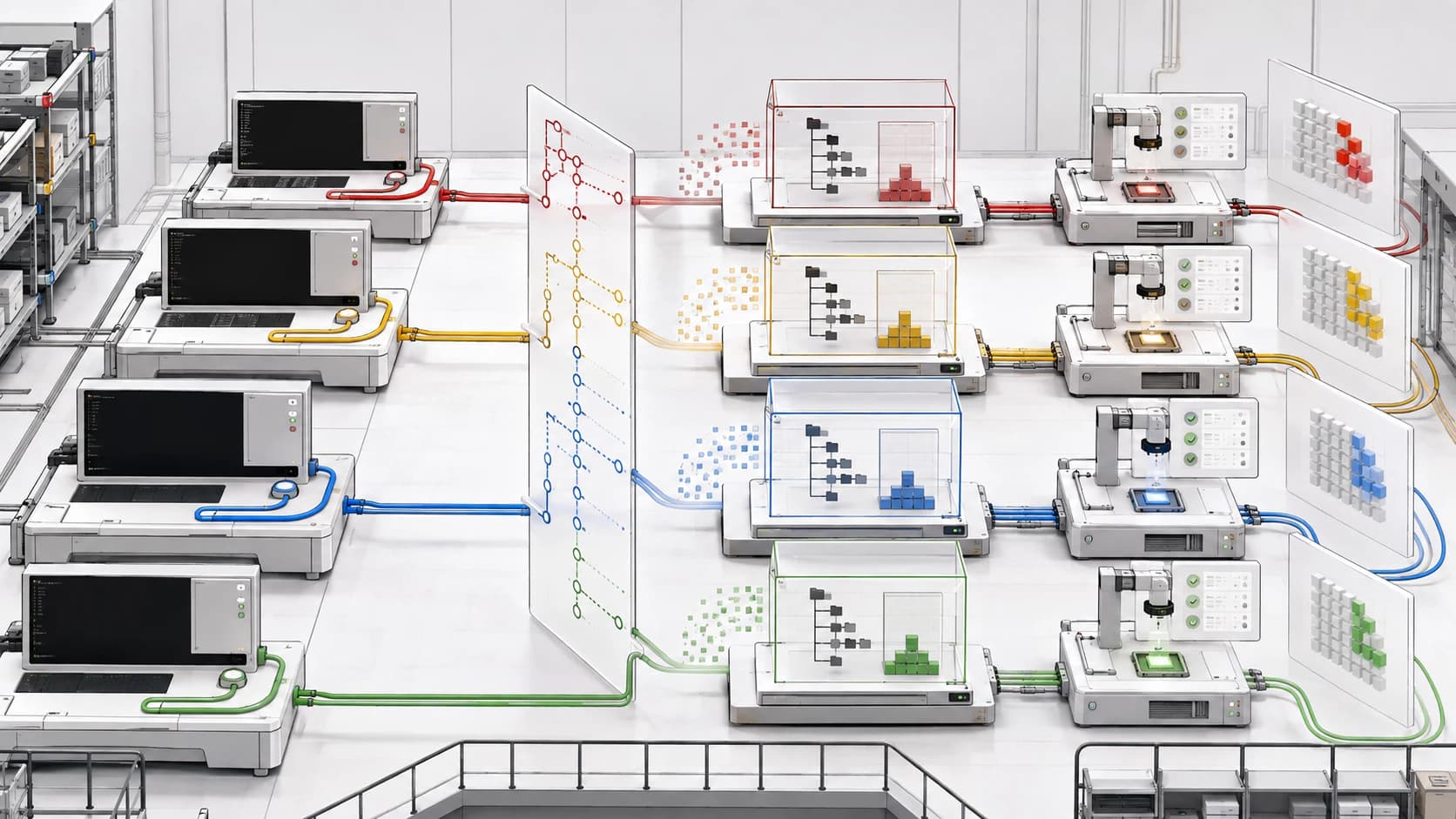
The basic loop is:
| Step | What it produces |
|---|---|
| Replay file operations | A partial workspace before the agent changed it |
| Fill missing files and dependencies | A task-sufficient executable environment |
| Reconstruct the original intent | A query matching the original trajectory |
| Synthesize new tasks | More prompts grounded in the same workspace |
| Extend sessions | Multi-round interactions with iterative feedback |
| Train on the resulting corpus | Better terminal-agent behavior on benchmark tasks |
The reported scale is 37.3k task-sufficient environments. The paper says supervised fine-tuning Qwen3.5-27B on the derived corpus improves single-round performance on Terminal-Bench 2.1 by 11.9 points and multi-round performance on EvoCode-Bench v2 MT@4 by 13.8 points.
Those are paper claims, not independent benchmark confirmations. But the direction is important even before the exact numbers are reproduced: the training unit moves from "copy this past run" to "recover this workspace, ask new questions of it, and check what happens."
Why Trajectories Alone Are Weak Data#
Raw trajectories are tempting because they are already there. Every coding agent run leaves commands, file reads, edits, test output, retries, and final messages. It feels like free data.
The problem is that a trajectory is entangled with one path through one task. It does not tell you what else was possible in the workspace. It does not expose alternate requirements. It does not necessarily preserve the pre-change state cleanly. And if you train too directly on it, you risk teaching the model to imitate surface behavior instead of learning how to operate inside a real project.
That is why the environment reconstruction step matters. A recovered workspace can be re-queried. It can support variants. It can expose dependency relationships across files and repositories. It can be validated through execution.
This is also why the paper pairs naturally with Harness Handbook. Harness Handbook maps behavior to source locations so an agent can plan edits inside a changing harness. Terminal-Universe uses old terminal behavior to rebuild places where future agents can practice. Both are really about the same constraint: agents need navigable workspaces, not just more context.
The Developer Takeaway#
If you build coding-agent infrastructure, the immediate takeaway is not "fine-tune Qwen3.5-27B." It is to stop throwing away the useful parts of agent runs.
Most teams keep logs for debugging and maybe observability. Terminal-Universe suggests a higher bar:
| Artifact | Keep it because |
|---|---|
| Pre-edit file state | You need the environment before the agent acted |
| Tool-execution history | It reveals dependency paths and task structure |
| Test commands and outputs | They become executable feedback, not prose labels |
| User follow-up turns | They create multi-round task variants |
| Final patch and side effects | They define what changed and what must be checked |
| Failure traces | They identify missing setup, brittle assumptions, and repair targets |
That does not require a research lab. It requires treating agent traces as structured product data. If your agent platform already records tool calls, file diffs, command output, and final state, you are close to having a training and evaluation corpus. If it records only chat messages, you are not.
The same point shows up in agent memory context ledgers: memory without provenance is not enough. For coding agents, provenance means knowing which workspace, which file state, which command result, and which follow-up instruction produced a reusable lesson.
What Could Go Wrong#
The risky version of this idea is obvious: train agents on their own messy traces and call the result self-improvement.
Terminal-Universe tries to avoid that by reconstructing executable environments and generating verifiable tasks, but the caveats are still real:
| Risk | Why it matters |
|---|---|
| Incomplete reconstruction | Missing files or dependencies can turn a valid task into a broken one |
| Hidden leakage | A synthesized task may accidentally encode the answer path |
| Overfitting to terminal benchmarks | Better Terminal-Bench numbers may not transfer to product repos |
| Bad trajectory inheritance | Past agent shortcuts can become training habits |
| Synthetic user drift | Multi-round user-agent feedback may not match real developer feedback |
That is the healthy opposing read. This is not proof that all trajectory-derived data is good. It is a recipe for making some of it checkable.
The strongest version of the idea keeps deterministic verification under the generated tasks. The agent can propose, reconstruct, and extend. The environment and tests still decide whether the task is real.
The Bigger Shift#
The July Hugging Face monthly paper page was already pointing this way. Qwen-UI-Agent pushed GUI agents toward real-world operating surfaces. Harness Handbook made agent harnesses readable and editable by behavior. Several July agent papers focused on verifiers, task synthesis, memory, and long-horizon control loops rather than one-off chat performance.
Terminal-Universe is the September continuation: once agents are doing real terminal work, the run history itself becomes raw material for the next training loop.
That is a meaningful change in how teams should think about coding-agent data. The valuable asset is not a folder of transcripts. It is a library of reconstructed, executable situations: repo states, tasks, tests, dependencies, failures, repairs, and follow-up turns.
In other words, the future training corpus for coding agents may look less like Stack Overflow and more like a cleaned CI farm full of replayable workspaces.
FAQ#
What is Terminal-Universe?#
Terminal-Universe is a Qwen research framework that reconstructs executable terminal workspaces from agent trajectories, then uses those environments to synthesize new verifiable tasks and multi-round interactions for coding-agent training.
Why is Terminal-Universe important for coding agents?#
It treats the workspace as the reusable training asset. A terminal transcript only shows one path through one task, while an executable environment can be queried, tested, modified, and extended.
Does Terminal-Universe prove Qwen is the best coding-agent model?#
No. The paper reports improvements from supervised fine-tuning Qwen3.5-27B on its generated corpus, but those are paper claims. The broader developer lesson is about environment-grounded data generation, not a final model ranking.
How is this different from ordinary agent memory?#
Ordinary memory often stores summaries or retrieved snippets. Terminal-Universe focuses on reconstructing task-sufficient executable environments from previous runs, so future tasks can be checked by code and tests instead of memory recall alone.
Should teams store every coding-agent trajectory?#
Store enough structure to make future verification possible: pre-edit state, diffs, tool calls, command output, test results, and user follow-up. Raw chat transcripts alone are weak data.
Continue Reading#
- Terminal-Bench Shows Harness Scaling Is the Coding-Agent Benchmark Now
- DataFlow-Harness Shows Agent Pipelines Need Persistent Artifacts
- Qwen-UI-Agent Turns GUI Control Into Runtime Infrastructure
- Harness Handbook Shows the Missing Map for Coding Agents
- Agent Memory Needs a Context Ledger
Sources#
- Hugging Face Papers: Terminal-Universe, fetched September 4, 2026.
- arXiv:2609.04148, Terminal-Universe: Turning Agent Trajectories into Scalable Terminal Environments, fetched September 4, 2026.
- Hugging Face daily papers page, fetched September 4, 2026.
- Hugging Face July 2026 monthly papers, fetched September 4, 2026.
- HN Algolia exact-title checks for
Terminal-Universeandterminal agent trajectories, fetched September 4, 2026. - Google Trends query cluster check via pytrends, attempted September 4, 2026. Returned HTTP 429 TooManyRequestsError, so no numeric Trends demand claim is used.
Get the next deep dive like this in your inbox
One email a week on AI Agents and the rest of the AI dev stack. Free.
Read next on local and open-weight models
Terminal-Bench Shows Harness Scaling Is the Coding-Agent Benchmark Now
Terminal-Bench and StateM show harness scaling now drives coding-agent scores. Why runbooks, durable state and recovery loops matter as much as model choice.
11 min readDataFlow-Harness Shows Why Agents Need Editable Pipelines
DataFlow-Harness shows why coding agents doing data work should produce editable, validated pipelines instead of throwaway scripts, and what to copy first.
8 min readQwen-UI-Agent Points at the Next GUI Agent Runtime
Qwen-UI-Agent, Alibaba's GUI agent report, reads best as a product spec: mobile, desktop, browser, CLI and DeepSearch combined in one stateful agent runtime.
8 min readNew here? Start with
Technical content at the intersection of AI and development. Building with AI agents, Claude Code, and modern dev tools - then showing you exactly how it works.