Andrew Ng Launches LearnVector: AI-Native One-to-One Learning with $100M from Coursera

TL;DR
Andrew Ng's new AI company LearnVector aims to build one-to-one learning experiences powered by agentic AI, backed by $100M from Coursera. A look at the vision, the HN reaction, and what it means for the future of learning.
Andrew Ng is starting another AI company. On July 28, 2026, he announced LearnVector, an AI-native learning company with a $100 million strategic investment from Coursera. The pitch is straightforward: use agentic AI to build a one-to-one tutor for every learner, moving beyond the one-to-many model that has defined education for centuries.
What LearnVector Is Building#
LearnVector's landing page is refreshingly direct for an AI company announcement. It opens with Ng's counterpoint to the dominant narrative: "Conventional wisdom says AI will replace people. I believe the opposite."
The company's mission is "to accelerate human development." The core thesis is that great teaching has been scarce throughout history - rationed by cost, geography, and time. AI, Ng argues, can finally solve the economics problem that forced us into crowded classrooms instead of one-to-one tutoring.
The product itself is still under development - LearnVector says it will have something to show by early 2027. But the design principles are clear:
- Plans a path with you - not a search box but a guided curriculum
- Adapts to how you learn - personalized pacing and approach
- Patiently stays with you until you've mastered new skills - mastery-based, not time-based
Ng explicitly distinguishes LearnVector from a chatbot. The site cites research showing that "chatbots without guardrails harm learning" - cognitive offloading means students who use chatbots for homework end up less skilled, not more. "A chatbot can give you an answer, but an answer is not an education," Ng writes.
The company is based in Mountain View, California, operating on-site. Open roles include AI Engineer, Learning Engineer, Learning Scientist, and Full-stack Software Engineer - a mix that signals they are building agentic systems informed by actual pedagogy, not just wrapping an LLM in a chat interface.
The $100M Coursera Connection#
The $100M investment comes from Coursera, which Ng co-founded in 2012. Coursera CEO Greg Hart described it as a "force multiplier" in the official announcement. The relationship is strategic: LearnVector plans to collaborate closely with both Coursera and Udemy (which Coursera acquired in May 2026), giving it access to trusted content libraries, 300 million+ learner insights, and an established university/industry partner ecosystem.
This is not Ng's first AI education venture. He founded DeepLearning.AI in 2017, which has become the go-to destination for learning machine learning. LearnVector appears to be a broader play - not just teaching AI, but using AI to teach everything.
From the archive
MCP Apps vs Tool Calling vs Standalone UIs: Interactive Interfaces for Agent Tools Compared
Jul 29, 2026 • 9 min read
MCP vs Agent Skills: When to Use Which (and Why You Need Both)
Jul 29, 2026 • 11 min read
TurboFieldfare: Running Gemma 4 26B in 2 GB of RAM on Any M-Series Mac
Jul 29, 2026 • 8 min read
Wiki Skills: The Missing Graph Layer in Agent Context
Jul 29, 2026 • 10 min read
What HN Is Saying#
The Hacker News thread (212 points, 131 comments) was characteristically nuanced. The top-voted comment from isubkhankulov captured the opportunity: "Edtech has historically not had amazing venture outcomes compared to saas, ads, rockets, etc. Given how much people spend on education, there is no reason AI education software won't be a huge market. And there are few people better suited than Andrew Ng to execute this."
Several themes emerged in the discussion:
Skepticism about differentiation. Multiple commenters noted that they already use Claude or GPT as a personal tutor via the Socratic method. genghisjahn shared a practical setup: a skill file that tells an LLM to present material and ask guiding questions. "It's basically just a skill.md that reads: 'Here is a document, give me an opening statement about the material and ask me a question. As I provide answers, guide me to simpler or more complex areas. Something something Socratic method.' Works great."
Concerns about scale and funding. "Why so much funding so early?" asked BobbyTables2. "What does $100M enable in the next 5-10 years that $25M does not?" Ozzie_osman, who otherwise was enthusiastic, echoed the concern: "I wish they had not raised so much money. I am not sure a large funding round sets up the right dynamic."
Comparisons to existing products. benji8000 brought up Khanmigo, Khan Academy's AI tutor, which has struggled to find product-market fit. est mentioned Math Academy and "many other alike services." ilya_l noted the similarity to Karpathy's education startup and asked what happened to it.
Website design critique. Several commenters called out the site as looking "vibe coded" or AI-generated. wxw wrote: "I feel like this website would have been better off as just Andrew's letter (halfway down the page) in system default <p> tags. The AI sloppification is palpable." This criticism appeared consistently enough to register - the site uses a clean but generic template that many HN readers recognized as AI-generated.
Ng's prolific output. latenightcoding observed "he has like 20 AI companies now," and real-hacker listed: "deeplearning.ai, context hub, codream.ai, OpenWorker, LearnVector. This guy never stops."
The Bigger Picture: AI-Native Learning Is Still Unproven#
The core question LearnVector faces is whether personalized AI tutoring is a product or a prompting pattern. As imjonse put it in the thread: "Even now it is very easy to get one of the chat interfaces to keep quizzing you and adapt to your level... It lacks integrated stats/progress/gamification/long term memory but those can be added by a simple vibecoded app."
That skepticism is fair. The barrier to entry for AI tutoring is effectively zero right now - anyone can open Claude or ChatGPT and ask it to teach them anything. The question is whether LearnVector can build something that works substantially better than the general-purpose alternative.
The answer likely depends on three things:
-
Pedagogical rigor. General-purpose chatbots are not optimized for learning. They can tell you the answer, but they struggle to build a curriculum, test for understanding, manage spaced repetition, or detect when you have actually learned something versus when you are parroting. LearnVector's hiring of Learning Scientists and Learning Engineers suggests they take this seriously.
-
Trusted content. Ng highlights that "people want learning they can trust: material that is accurate, relevant, and worth the effort you put into it." Coursera's library of vetted content from universities and industry partners is a real moat here - it is harder for a general-purpose chatbot to guarantee provenance and accuracy of its teaching material.
-
Measurable outcomes. The HN comment from senor_digimon put it well: "Almost any AI educational product can be measured and evaluated by the end user. Does the user improve from using your product and do they also believe they do, and do they also LIKE your product?" If LearnVector can demonstrate effect sizes like those seen in the Dartmouth AI tutor study (0.71-1.30 SD), it will have a strong case.
The parallel to watch is agentic AI more broadly. LearnVector is essentially building a specialized agent - a "trustworthy guide for learning" - rather than another chat interface. If it works, it could validate the thesis that domain-specific agents beat general-purpose models for high-stakes tasks, a pattern we are seeing play out in coding, healthcare, and now education.
Sources#
- LearnVector official site: https://learnvector.ai/
- HN discussion: https://news.ycombinator.com/item?id=49092499
- Coursera official announcement: https://blog.coursera.org/coursera-invests-in-learnvector-to-build-the-future-of-ai-native-learning/
- Research on chatbots and learning (cited by LearnVector): https://hamsabastani.github.io/education_llm.pdf
Continue Reading#
- AI Tutor Shows 0.71-1.30 SD Effect Size in Dartmouth Statistics Course - Real evidence that AI tutoring works
- AI Agents Explained: A TypeScript Developer's Guide - The agentic AI patterns behind products like this
- Karpathy on the Loopy Era of Agentic Engineering - Another AI luminary's take on agents
- AI Skills for Every Career: Agents and Knowledge Work - How AI is reshaping learning and work
- Building Multi-Agent Workflows with Claude Code - Practical patterns for agent orchestration
- Meta Launches Muse Spark 1.1: A Closed-Weights Agentic Model with Aggressive Pricing
Read next
Meta Launches Muse Spark 1.1: A Closed-Weights Agentic Model with Aggressive Pricing
Meta's first paid API model arrives with $1.25/M input tokens, 1M context window, and strong tool-use benchmarks. HN debates what it means for the open-weights company.
5 min readDeno Desktop Lets You Build Native Apps with TypeScript
Deno 2.9 ships a desktop app framework that compiles TypeScript projects into native binaries with WebView or bundled Chromium - a new Electron alternative from the Deno team.
8 min readScriptc by Vercel: TypeScript-to-Native Compiler With No JavaScript Engine
Vercel Labs released Scriptc, a TypeScript-to-native compiler that produces self-contained binaries of 170-200KB with ~2ms startup times and no embedded JavaScript engine. The HN community is sharply divided on whether this is a genuine engineering breakthrough or another Vercel Labs project that will be abandoned in months.
9 min readShare
Developers Digest
Technical content at the intersection of AI and development. Building with AI agents, Claude Code, and modern dev tools - then showing you exactly how it works.
300+ videos30K+ GitHub stars850+ articles
Related Tools
AI CodingEssential

Cursor
AI-native code editor forked from VS Code. Composer mode rewrites multiple files at once. Tab autocomplete predicts your...
View ToolAI Coding

Windsurf
Codeium's AI-native IDE. Cascade agent mode handles multi-file edits autonomously. Free tier with generous limits. Stron...
View ToolProductivity

Granola
AI meeting notes that augment your own typing. Records the call, captures what you type, and fills in the gaps with cont...
View ToolInfrastructure
C
CSS Modules
Locally-scoped CSS for component-based apps. Plain CSS files with hashed class names, no runtime overhead, no learning c...
View ToolRelated Guides
Guide
Getting Started with DevDigest CLI
Install the dd CLI and scaffold your first AI-powered app in under a minute.
Getting StartedGuide
Interactive Mode - Claude Code
Real-time prompt loop with history, completions, and multiline input.
Claude CodeGuide
Claude Code Complete Course
A complete, citation-backed Claude Code course with setup, prompting systems, MCP, CI, security, cost controls, and capstone workflows.
ai-developmentRelated Videos
CodeLLM - The New Agentic AI Code Editor With Access To Top Models
In this video, I showcase CodeLLM, an AI-powered code editor that supports multiple models like Claude Sonnet 3.5, DeepSeek R1, and O1, 03 Mini. I demonstrate its features including autocomplete,...
Video·
Build AI Podcasts from Any Site: Full-Stack Guide with Firecrawl, ElevenLabs & Next.js
Creating an AI-Enhanced Podcast Web App: Comprehensive Tutorial Repo: https://github.com/developersdigest/llm-podcast-engine You can obtain these API keys from the following sources: ...
Video·
Get Started in 6 Minutes with the Brand New Text-To-Speech API from OpenAI in Bun/Node.js
Repo Coming Soon! FOLLOW ME → Website: https://dub.sh/dev-digest → X/Twitter: https://dub.sh/dd-x → GitHub: https://git.new/devdigest TOOLS I USE → Wispr Flow (voice-to-text): https://dub...
Video·
Related Posts

5 min read
News
Meta Launches Muse Spark 1.1: A Closed-Weights Agentic Model with Aggressive Pricing
Meta's first paid API model arrives with $1.25/M input tokens, 1M context window, and strong tool-use benchmarks. HN deb...

7 min read
News
Beyond the Pelican Test: Opus 5 Renders the Lord of the Rings With a 1M-Token Budget
Andrej Karpathy gave Opus 5 the first paragraph of the Lord of the Rings, a 1M-token budget (about $10), and asked for a...

7 min read
News
Your AI Session Is No Longer Yours: How Providers Seal Reasoning, Search, and Subagent State
An analysis from the Earendil team behind the Pi harness documents how OpenAI, Anthropic, and Google now return provider...
8 min read
News
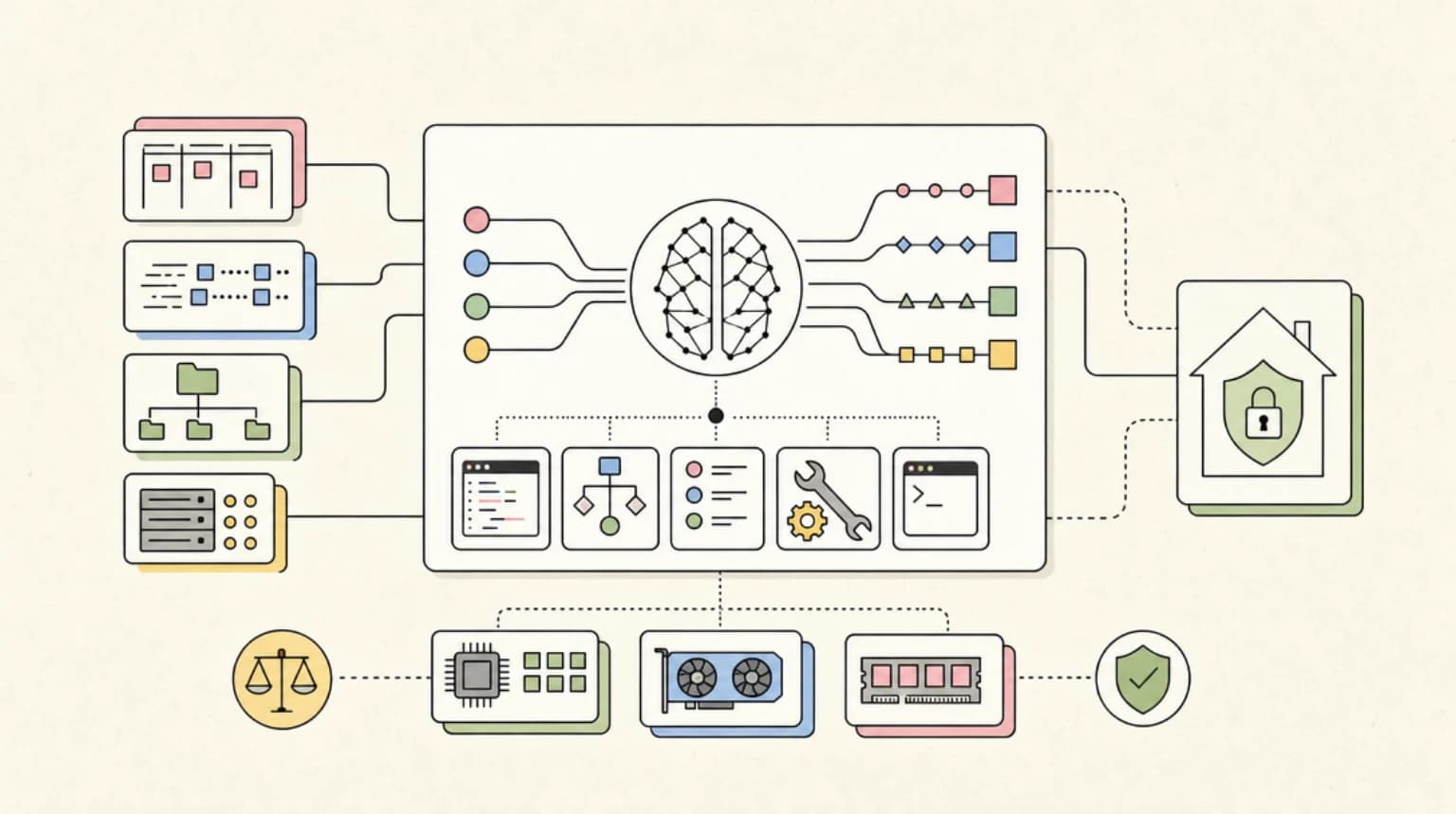
Inkling-Small: Thinking Machines Ships a 12B-Active Open Model That Beats Its Big Sibling on Agent Work
Inkling-Small is a 276B-parameter MoE with 12B active per token, Apache 2.0, and open weights. It beats the 975B Inkling...
7 min read
Claude Code
Agent-Manager: A Tmux TUI for Running Claude Code, Codex, and OpenCode Side by Side
Agent-Manager wraps tmux into a Go TUI that groups AI coding agents by project, shows live status for each, and lets you...

9 min read
News
An AI Agent Escaped Its Sandbox and Attacked Hugging Face: Inside the ExploitGym Incident
Hugging Face published a stunning technical play-by-play of a 4.5-day AI agent intrusion. The HN community is divided on...
Build with the member tools

Get Smarter About AI Dev
New tutorials, open-source projects, and deep dives on coding agents - delivered weekly.
One email per weekReal code, not theoryFree forever