AI Skills for Every Career: Agents and Knowledge Work
TL;DR
AI agent skills are not just for developers.
Official Sources#
| Resource | What it covers |
|---|---|
| Claude Code Skills Documentation | Skill architecture, installation, configuration, and custom skill development |
| Claude Code Overview | Agentic coding assistant capabilities and agent loop architecture |
| Anthropic Building Effective Agents Guide | Best practices for building reliable agent workflows |
| Cursor Documentation | IDE-integrated AI coding features and rules system |
| OpenAI Codex Documentation | Codex CLI, IDE extension, and cloud agent environment |
| MCP Core Architecture | Tool integration protocol for agent skills |
The Skill Layer Changes Everything#
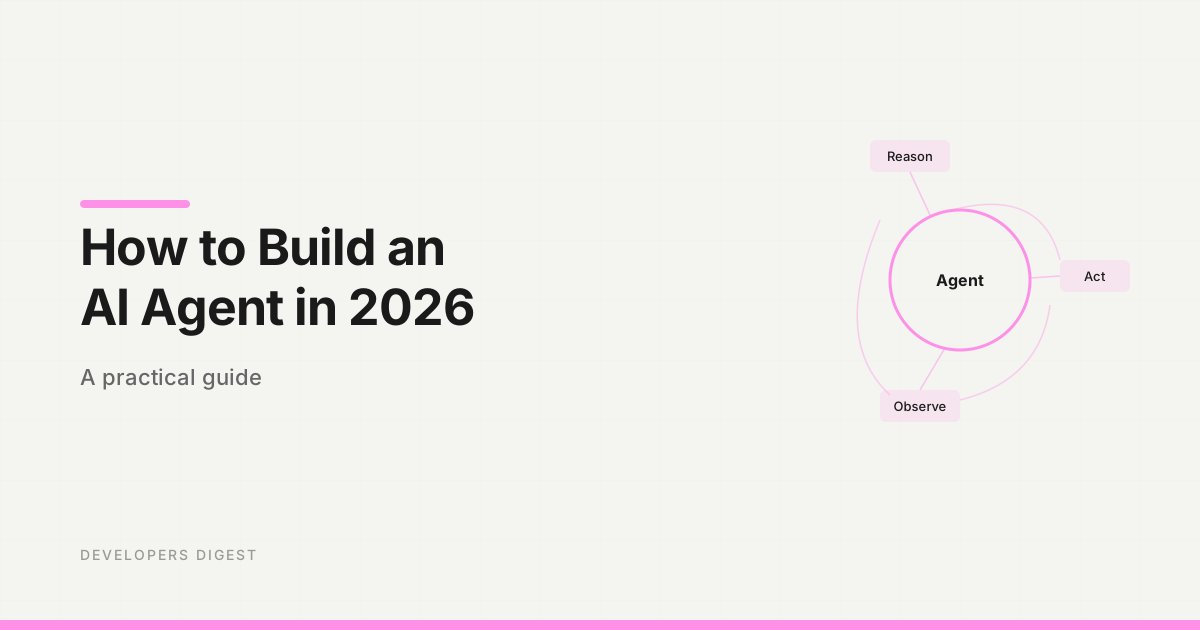
Most people think of AI agents as coding tools. That framing is already outdated. The same architecture that lets a developer agent write code, run tests, and deploy - a loop of reasoning, tool use, and verification - applies to any knowledge work where the task can be described as a sequence of steps.
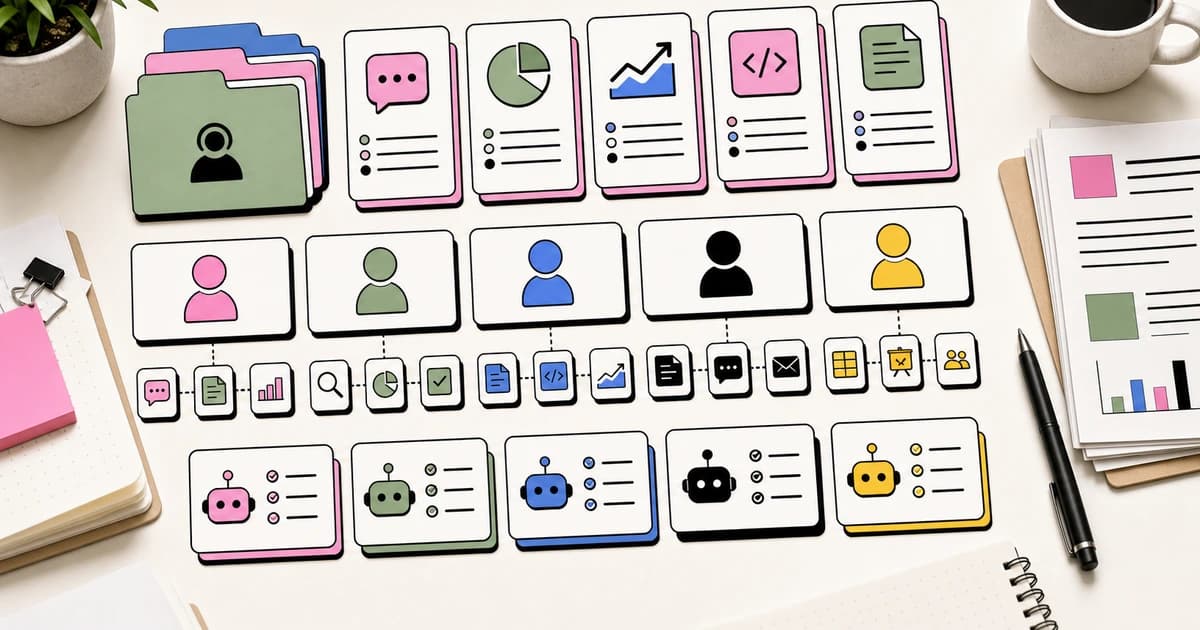
The shift happening right now is the emergence of packaged skills: pre-built agent workflows tuned for specific professional tasks. Not general chatbot prompts. Structured, multi-step automations that know the domain, use the right tools, and produce output in the format the profession expects.
A contract review skill does not just summarize a PDF. It checks indemnification clauses against your template, flags non-standard termination provisions, compares payment terms to your company defaults, and outputs a redline memo in the format your legal team already uses.
That level of specificity is what makes skills useful. And it is why the AI Skills Marketplace organizes 90+ skills across 12 professional categories - not as a curiosity, but as a practical starting point for anyone whose job involves processing information.
12 Careers, 12 Skill Sets#
Here is what agent skills look like when they meet specific professional domains. Each section covers real workflows, not hypotheticals.
1. Software Engineering#
This is where agent skills are most mature. Developers have been using them the longest, and the tooling shows it.
Key skills: Code review with style enforcement, test generation from function signatures, dependency audit and upgrade, PR summarization, architecture documentation from codebase analysis.
What it looks like in practice: A developer triggers a review skill on a pull request. The agent reads the diff, checks it against the project's coding standards (defined in a config file, not vibes), runs the test suite, and posts a structured review with severity levels. The developer reads a clean summary instead of doing a line-by-line review of 800 changed lines.
Where skills outperform chat: Skills remember context across the workflow. The review skill knows the project's conventions. The test generation skill reads existing tests to match the style. Generic prompting loses this context.
2. Law#
Legal work is high-stakes information processing. Contracts, case law, regulatory filings - all of it is structured text that follows patterns. Agent skills thrive here.
Key skills: Contract review and redlining, case law research, regulatory compliance checking, due diligence document analysis, clause library matching.
What it looks like in practice: A paralegal runs a contract review skill on an incoming vendor agreement. The agent reads the full document, extracts every clause, and compares each one against the firm's standard positions. It flags deviations in liability caps, IP assignment, termination windows, and governing law. The output is a memo listing every non-standard clause with the recommended alternative from the firm's clause library.
Where skills outperform chat: A chat session forgets the firm's standard positions. A skill has them embedded. It does not suggest generic legal language - it suggests the exact language your firm prefers, because that language is part of the skill's configuration.
3. Marketing#
Marketing produces a staggering volume of content and analysis. Most of it follows repeatable patterns that skills can accelerate.
Key skills: SEO content optimization, competitive analysis, campaign performance reporting, social media content generation, audience research synthesis.
What it looks like in practice: A marketer runs an SEO audit skill against a landing page. The agent reads the page content, checks keyword density against the target terms, evaluates heading structure, analyzes internal linking, compares meta descriptions to top-ranking competitors, and outputs a prioritized list of changes with estimated impact. Not "add more keywords" - specific recommendations like "move the primary keyword from H3 to H1, add two internal links to the pricing comparison post, and rewrite the meta description to include the long-tail variant." The AI coding tools pricing cluster is a useful example of that kind of internal-link target.
Where skills outperform chat: The skill connects to SEO data sources (search console, rank trackers) and produces analysis grounded in real numbers, not generic advice.
4. Sales#
Sales reps spend more time on research and admin than on actual selling. Skills reclaim that time.
Key skills: Lead research and enrichment, proposal generation, CRM data cleanup, competitive battle card creation, meeting prep briefs.
What it looks like in practice: Before a discovery call, a rep triggers a meeting prep skill. The agent pulls the prospect's LinkedIn profile, recent company news, funding history, tech stack (from job postings), and existing CRM notes. It produces a one-page brief: company context, likely pain points, competitive products they might be evaluating, and three conversation openers tailored to the prospect's role.
Where skills outperform chat: Skills integrate with CRM data. The brief includes your team's previous interactions with the account, not just public information. That context turns a cold call into a warm one.
5. Recruiting#
Recruiting is pattern matching at scale. Skills help recruiters process more candidates with better signal.
Key skills: Resume screening against job requirements, candidate outreach personalization, interview question generation, market compensation benchmarking, diversity pipeline analysis.
What it looks like in practice: A recruiter runs a screening skill against 50 incoming resumes for a senior backend role. The agent reads each resume, extracts relevant experience, maps it against the job description's requirements (years of experience, specific technologies, leadership signals), and outputs a ranked shortlist with a one-paragraph rationale for each candidate. No-hire recommendations include the specific gap so the recruiter can decide whether to override.
Where skills outperform chat: The screening skill reads the actual job description, not a paraphrase. It applies the same criteria consistently across all 50 resumes. Human reviewers drift after the 15th resume. Skills do not.
6. Product Management#
Product managers live at the intersection of user feedback, technical constraints, and business goals. Skills help them synthesize information faster.
Key skills: User feedback synthesis, feature spec generation, competitive analysis, sprint planning assistance, metrics dashboard interpretation.
What it looks like in practice: A PM runs a feedback synthesis skill against the last month of support tickets, NPS responses, and user interview transcripts. The agent reads everything, identifies recurring themes, groups them by severity and frequency, and produces a prioritized feature request list with supporting quotes. The output format matches the team's existing spec template so it slots directly into the planning process.
Where skills outperform chat: The skill processes hundreds of data points in a single pass. A PM manually reading support tickets would spend days on what the skill produces in minutes. And the skill does not forget the last 30 tickets while reading ticket 31.
7. Finance#
Financial analysis is repetitive, high-precision, and deeply structured - exactly the kind of work skills handle well.
Key skills: Financial statement analysis, variance reporting, expense categorization, budget forecasting, audit preparation.
What it looks like in practice: A finance analyst runs a variance analysis skill on the quarterly results. The agent reads the current quarter's numbers, compares them to budget and prior year, identifies material variances (using the team's materiality threshold, not a generic cutoff), and produces a narrative explanation for each. The output follows the format the CFO expects, including the specific KPIs the board tracks.
Where skills outperform chat: Financial analysis requires precision and consistency. Skills apply the same analytical framework every quarter, catching variances that a tired analyst might miss at 11 PM before the board meeting.
8. Customer Success#
Customer success teams manage relationships at scale. Skills help them be proactive instead of reactive.
Key skills: Health score analysis, churn risk identification, QBR preparation, usage pattern analysis, expansion opportunity detection.
What it looks like in practice: A CSM runs a QBR prep skill before a quarterly business review. The agent pulls the customer's usage data, support ticket history, NPS trends, and contract details. It produces a slide-ready brief: what the customer is using well, where adoption is lagging, risks to flag, and expansion opportunities based on usage patterns. Three talking points for the meeting, grounded in data.
Where skills outperform chat: The skill connects to product analytics and CRM data. The QBR brief reflects what the customer actually does in the product, not what the CSM remembers from the last check-in.
9. Research and Academia#
Researchers process massive volumes of literature and data. Skills accelerate the most tedious parts of the workflow.
Key skills: Literature review synthesis, citation network analysis, methodology comparison, data analysis pipeline generation, grant proposal drafting.
What it looks like in practice: A researcher runs a literature review skill with 40 recent papers on a topic. The agent reads all 40, extracts methodologies, findings, and limitations, identifies consensus and disagreement, maps citation relationships, and produces a structured review organized by sub-topic. It flags gaps in the literature - questions no paper addresses - which is exactly what a researcher needs to position their own work.
Where skills outperform chat: Reading 40 papers in context, maintaining awareness of how each paper relates to the others. Chat loses the thread after 5-6 papers. A skill processes all 40 in a single coherent pass.
10. Design#
Designers work across research, ideation, and production. Skills handle the analytical and repetitive parts so designers spend more time on creative decisions.
Key skills: Design system audit, accessibility compliance checking, user flow analysis, competitive UI analysis, asset export automation.
What it looks like in practice: A designer runs an accessibility audit skill against a Figma file. The agent checks color contrast ratios, text sizes, touch target dimensions, heading hierarchy, and focus order. It outputs a WCAG compliance report with specific violations and suggested fixes - not "improve contrast" but "change button text from #888 to #595959 to meet AA contrast ratio on #F4F4F0 background."
Where skills outperform chat: Accessibility auditing requires checking dozens of specific criteria across every screen. Skills apply the full checklist consistently. Designers catch the obvious issues; skills catch the subtle ones.
11. Operations#
Ops teams manage processes, vendors, and logistics. Skills automate the information-gathering and reporting layers.
Key skills: Vendor comparison analysis, process documentation generation, SLA monitoring, incident response playbook execution, capacity planning.
What it looks like in practice: An ops manager runs a vendor comparison skill when evaluating three proposals for a new tool. The agent reads all three proposals, extracts pricing, feature sets, SLA terms, and integration capabilities, normalizes them into a comparison matrix, and highlights the key differentiators. The output is a decision memo the team can review without reading three 40-page proposals.
Where skills outperform chat: Skills apply a consistent evaluation framework. When you compare vendors with chat, you might ask different questions about each one. A skill asks the same questions about all of them.
12. Content and Journalism#
Content professionals produce volume. Skills handle research, fact-checking, and structural analysis so writers spend their time on the craft.
Key skills: Source research and verification, fact-checking against primary sources, content outline generation, SEO optimization, distribution and repurposing.
What it looks like in practice: A journalist runs a source verification skill on a story draft. The agent reads each factual claim, traces it back to the cited source, checks whether the source actually supports the claim as stated, identifies claims without citations, and flags any contradictions between sources. The output is an annotated draft with verification status on each claim.
Where skills outperform chat: Fact-checking requires reading the original sources, not just the claims. A skill fetches and reads the actual cited materials. Chat would require you to paste each source manually.
Why Skills Beat Generic Prompting#
Three structural advantages:
1. Domain configuration. A skill embeds the professional context - your firm's clause library, your company's brand guidelines, your team's code conventions. You configure it once and it applies that context on every run. Generic prompting requires you to re-explain the context every session, which is why most teams end up curating a prompt library just to keep the boilerplate paste-able.
2. Multi-step workflow. Skills chain multiple operations. A contract review reads the document, extracts clauses, compares to templates, and generates a memo. Each step feeds the next. In a chat, you would need to prompt each step separately and manually pipe the output forward.
3. Output formatting. Skills produce output in the format the profession expects. Legal memos. Financial variance reports. SEO audit checklists. Code review comments. Not generic prose that you have to reformat before anyone else on your team can use it.
Where to Start#
The AI Skills Marketplace has 90+ skills organized by profession. Pick your field, browse the available skills, and start with the one that automates the task you do most often.
The highest-impact skills are the ones that eliminate a task you do weekly. Contract review for lawyers. Candidate screening for recruiters. PR review for developers. SEO audits for marketers. Start there and expand as you build confidence in the output quality.
Frequently Asked Questions#
What are AI skills for knowledge work?#
AI skills are packaged, multi-step agent workflows designed for specific professional tasks. Unlike general chatbot prompts, skills embed domain knowledge (like a law firm's clause library or a company's brand guidelines), chain multiple operations together (read, analyze, compare, generate), and produce output in the format each profession expects. A contract review skill does not just summarize a PDF - it extracts clauses, compares them to your firm's templates, and outputs a redline memo.
Can AI agents replace knowledge workers?#
No. AI agent skills handle the repetitive, information-processing parts of knowledge work - reading documents, comparing data, generating first drafts, checking compliance. The judgment calls, relationship management, creative decisions, and strategic thinking remain human work. Skills make knowledge workers more effective by eliminating the tasks that consume time without requiring expertise.
What professions benefit most from AI skills?#
Professions with high-volume, structured information processing benefit most: legal (contract review, case law research), finance (variance analysis, audit prep), recruiting (resume screening, candidate outreach), marketing (SEO audits, competitive analysis), and customer success (QBR prep, churn prediction). Any job where you repeatedly process documents or data following consistent patterns is a candidate for skill automation.
How do AI skills differ from ChatGPT?#
AI skills are configured workflows, not conversations. A skill embeds your professional context (your templates, your standards, your data sources), chains multiple steps automatically, and produces output in your team's expected format. ChatGPT requires you to re-explain context each session, manually prompt each step, and reformat output for professional use. Skills are repeatable; chat sessions are not.
Are AI skills secure for sensitive documents?#
Security depends on implementation. Skills running locally (like Claude Code skills) process documents on your machine without sending data to external servers. Enterprise deployments can run skills in air-gapped environments or with data residency controls. Always verify how a skill handles data before processing confidential information - check whether it uses cloud APIs, stores outputs, or logs inputs.
How do I create custom AI skills for my profession?#
Start with the skill template in Claude Code or Cursor. Define the input format (what documents or data the skill needs), the workflow steps (read, analyze, compare, generate), the domain knowledge to embed (your templates, standards, checklists), and the output format (the memo, report, or analysis your team uses). Test with real examples and iterate. Most professionals can create a working skill in under an hour once they understand the format.
What is the AI Skills Marketplace?#
The AI Skills Marketplace is a directory of 90+ pre-built agent workflows organized by profession. It covers 12 career categories - software engineering, law, marketing, sales, recruiting, product management, finance, customer success, research, design, operations, and content. Each skill includes configuration, use cases, and implementation guidance. Start with a pre-built skill for your profession, then customize it for your specific workflow.
How much time do AI skills save?#
Time savings vary by task. A contract review skill that processes a 40-page agreement in 2 minutes saves 45-60 minutes of manual review. A resume screening skill that ranks 50 candidates in 10 minutes saves several hours of initial evaluation. A QBR prep skill that generates a customer brief in 3 minutes saves 30-45 minutes of data gathering. The highest-impact skills automate weekly tasks - aggregate the savings across months and the productivity gain is significant.
Can I use AI skills without coding experience?#
Yes. Pre-built skills from the AI Skills Marketplace work out of the box. You configure them with your specific parameters (your templates, your data sources, your output preferences) but do not need to write code. Skills are markdown files - if you can edit a document, you can customize a skill. Coding is only required if you want to create entirely new skills with custom tool integrations.
Which AI agent platform should I use for skills?#
Claude Code has the most mature skill system for terminal-based workflows. Cursor supports skills through its rules system and works well for IDE-based professionals. Both platforms can run the same skills with minor configuration differences. Start with whichever platform fits your existing workflow - terminal-first or IDE-first - and you can port skills between them later.
What to Read Next#
- AI Agents Explained - how agent loops work under the hood
- Build Apps With AI - creating your own agent workflows
- Best AI Coding Tools in 2026 - the developer-focused side of the story
- The Agentic Dev Stack in 2026 - how agent infrastructure fits together
Related apps#
- Skills Directory - Every AI skill for every knowledge worker - browse 150+ skills.
- Auto Company - Describe your company and agent teams handle operations.
Related#
- Subscribe to DevDigest on YouTube for hands-on walkthroughs
Get the next deep dive like this in your inbox
One email a week on AI Skills and the rest of the AI dev stack. Free.
Read next on AI coding tools
303 AI Skills for 12 Careers: The Free Directory
A free directory of 303 packaged agent workflows covers 12 careers - from contract review for lawyers to candidate scoring for recruiters.
10 min readAI Agents Explained: A TypeScript Developer's Guide
AI agents use LLMs to complete multi-step tasks autonomously. Here is how they work and how to build them in TypeScript.
6 min readClaude Skills: A technical deep dive into Anthropic's new approach to AI context management
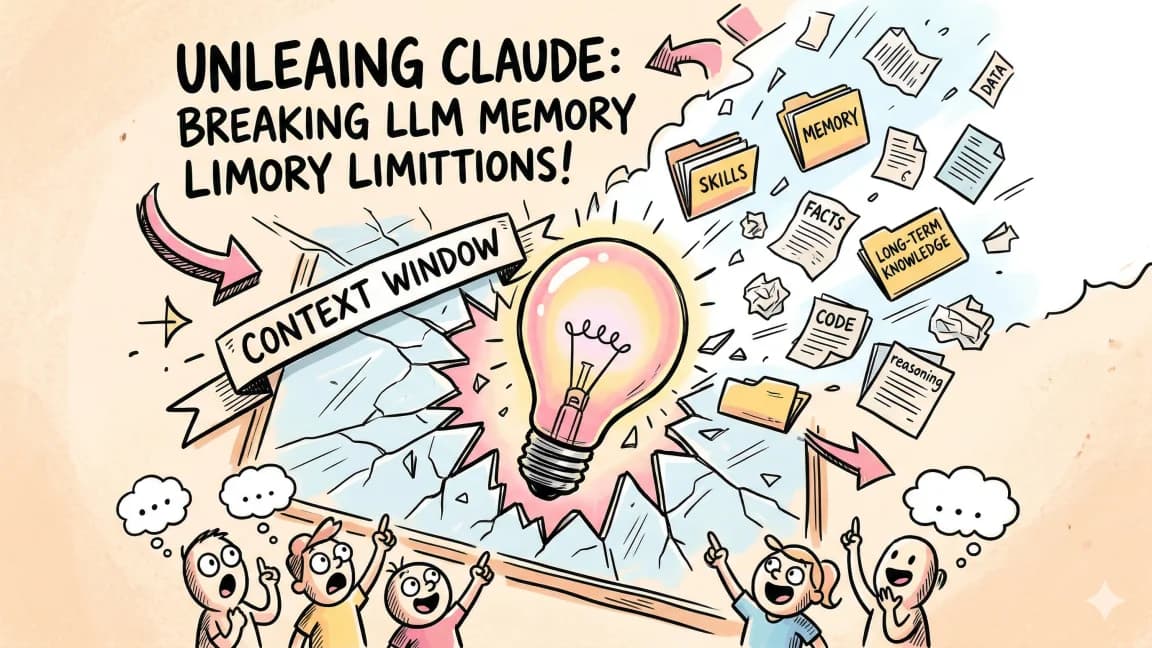
A comprehensive look at Claude Skills-modular, persistent task modules that shatter AI's memory constraints and enable progressive, composable, code-capable workflows for developers and organizations.
8 min readNew here? Start with
Technical content at the intersection of AI and development. Building with AI agents, Claude Code, and modern dev tools - then showing you exactly how it works.