Mastra for Durable TypeScript Agents: Where It Fits and Where It Does Not
TL;DR
Mastra is the strongest fit when a TypeScript product needs agents, workflows, memory, tools, MCP, evals, and traces in one backend layer. It is not the right answer for every chat feature.
Mastra makes the most sense when the agent is no longer a chat feature.
That is the dividing line.
If the product needs one streamed answer, a tool call, and a UI hook, you probably do not need a full agent framework. Use the Vercel AI SDK, a direct model call, or the simplest route that ships.
If the product needs workflows, memory, typed tools, retrieval, MCP, evals, traces, suspend/resume, and a local playground for debugging agent behavior, the problem has changed. You are not wiring a chatbot. You are building backend agent infrastructure.
That is the Mastra lane.
The Sources Worth Reading#
| Source | What it clarifies |
|---|---|
| Mastra agents | Agents come with memory, tool calling, MCP, logging, tracing, eval primitives, and workflow composition. |
| Mastra suspend and resume workflows | Workflow execution can pause for human input or external events, then resume from stored state. |
| Mastra workflow control flow | Workflows support branches, parallel steps, loops, sleep, events, run watching, canceling, and resume methods. |
| Mastra MCP overview | Mastra agents can use MCP tools and expose tools through MCP-compatible surfaces. |
| Mastra observability | Mastra traces agent decisions, tool calls, memory operations, latency, token usage, and workflow behavior. |
| CopilotKit with Mastra | Mastra can own backend agent logic while CopilotKit exposes that agent to a product UI through AG-UI. |
Last updated: May 30, 2026. Check the docs before copying code because the Mastra APIs are still moving.
The Take#
Mastra is TypeScript product infrastructure for agents.
That sounds broad, so here is the narrower version:
Use Mastra when the agent needs a backend operating model.
Do not use Mastra just because a model call has tools.
The backend operating model is the important phrase. It means the agent run has shape outside the prompt:
- typed tools,
- memory,
- workflow steps,
- branches and loops,
- retrieval,
- MCP connectors,
- evals and scorers,
- traces,
- suspend/resume,
- deployment surfaces.
The model still reasons. Mastra gives the reasoning loop a place to live.
What "Durable" Really Means#
Do not confuse "durable" with "the agent is magically reliable."
Durability is a set of boring properties:
Can the run be identified?
Can the state be stored?
Can a workflow pause?
Can a human approve the next step?
Can the run resume after the wait?
Can traces explain what happened?
Can the failed step be retried without replaying everything blindly?
The Mastra docs expose the pieces you need for that shape: workflows, suspend/resume, snapshots, run watching, tracing, memory, and observability. The Inngest integration examples go further by wrapping Mastra agents for durable execution.
That does not mean every Mastra agent is automatically production-safe. You still need storage, policy, review, deployment, and rollback. Platform durability still matters too. A Vercel durable function, queue worker, Inngest function, or long-running server gives the run a place to survive. Mastra gives the agent and workflow vocabulary that runs inside that platform layer.
For the platform side of the problem, read Vercel's durable execution programming model. The distinction matters: durable runtime keeps the process alive or resumable; Mastra shapes what the agent is doing while it runs.
The Architecture Split#
For a serious TypeScript SaaS app, I would split the stack like this:
Next.js or Node app
  |
  +-- product database
  +-- auth and permissions
  +-- background jobs
  +-- Mastra agent runtime
        |
        +-- agents
        +-- typed tools
        +-- memory
        +-- workflows
        +-- RAG
        +-- MCP
        +-- evals and traces
  |
  +-- optional CopilotKit UI layer
        |
        +-- sidebar, canvas, approval UI, frontend tools
This is why the CopilotKit UI-layer field note and this Mastra note are paired.
CopilotKit answers: how does the user collaborate with the agent inside the app?
Mastra answers: where does the backend agent logic, state, workflow, and evidence live?
They are not substitutes. They are neighboring layers.
Where Mastra Fits#
1. TypeScript Teams Building Real Agent Products#
Mastra is most compelling when the rest of the product is already TypeScript.
If your app is Next.js, Hono, Express, SvelteKit, or another Node stack, keeping agent code in TypeScript reduces integration drag. Tools can share types with product services. Workflow steps can call the same internal clients. Evals and traces can use the same deployment and logging habits as the rest of the app.
That is the core advantage over a Python-first graph service for many web teams.
2. Workflows That Mix Reasoning And Deterministic Steps#
The strongest agent systems do not ask the model to do everything.
Use the model for judgment:
- classify the ticket,
- draft the response,
- decide which knowledge base result matters,
- explain the risk.
Use deterministic TypeScript for the rest:
- load account data,
- check permissions,
- calculate plan limits,
- send the approved email,
- write the audit event,
- update the database.
Mastra workflows give you a place to compose both without pretending every step is a prompt.
3. Agents That Need Memory And Retrieval#
Memory and RAG are easy to demo badly.
Mastra is useful when memory is part of the product contract:
- remember user preferences,
- preserve thread context,
- retrieve from an internal knowledge base,
- use semantic recall,
- store durable account notes,
- avoid stuffing the whole history into every prompt.
If memory is just "append the last messages," a framework is less important. If memory affects product behavior across sessions, you need clearer primitives.
4. Tooling That Should Be Shared Across Agents#
A mature agent product rarely has one tool.
It has a tool surface:
- account lookup,
- ticket search,
- billing read,
- renewal draft,
- docs search,
- product telemetry,
- MCP tools for internal systems.
Mastra's tool and MCP support matters when those tools need schemas, reuse, logging, and policy. This is the difference between a one-off function call and an agent backend.
5. Evals, Traces, And Failure Review#
The production question is not "did the model answer?"
It is:
Why did this run do that?
Was the output good?
Which tool calls happened?
Which memory changed?
Which step failed?
Can we compare this run to last week?
Mastra's eval and tracing primitives are why I would consider it for agent products that will be operated by a team. They do not remove the need for product-specific evaluation. They make it easier to put evaluation into the normal run loop.
Where Mastra Does Not Fit#
1. One Model Call With Streaming UI#
If your feature is:
user asks question
model streams answer
maybe one tool is called
render result
Mastra may be more structure than you need.
Use a lighter SDK first. Add Mastra when the agent starts needing workflows, state, approval, tools, traces, and a backend runtime that has to outlive one request.
2. Python-Heavy Data Orchestration#
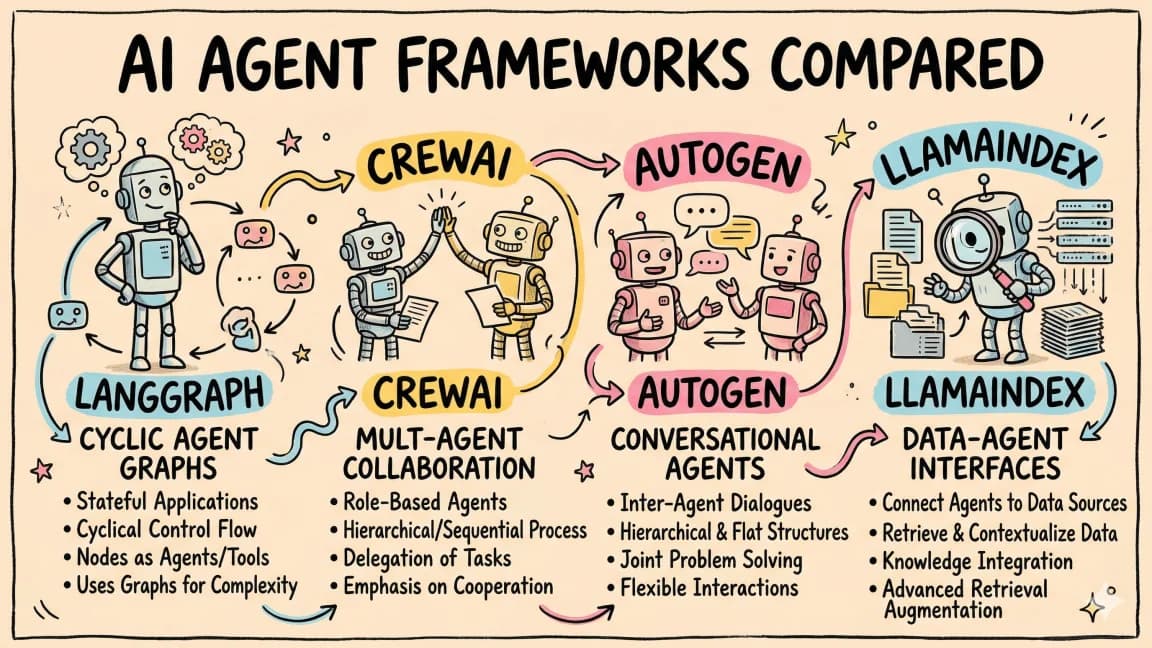
If your team already lives in Python and the hard part is graph execution, LangGraph may still be the better default. Its graph mental model, checkpointing story, and LangSmith ecosystem are strong for teams that want explicit state machines.
Mastra's advantage is not that TypeScript is universally better. It is that many product teams already ship TypeScript apps and want agent infrastructure in the same ecosystem.
3. Pure UI Collaboration#
Mastra can power the agent, but it is not primarily the product UI.
If your first problem is "the agent needs to see current React state, render cards, ask for approval inside the dashboard, and update a canvas," start with CopilotKit as the interface layer. Pair it with Mastra when the backend logic becomes substantial.
4. No Evaluation Habit#
Mastra gives you eval primitives. It does not give you taste.
If the team will not define success criteria, review traces, write scorers, or inspect failures, the framework cannot save the product. It will just make a better-looking pile of agent runs.
The Practical Decision#
I would reach for Mastra when I can say yes to three or more:
- The app is TypeScript-first.
- The agent needs backend tools, not just frontend tools.
- The workflow has multiple steps.
- Some steps should be deterministic TypeScript.
- The agent needs memory or retrieval.
- The run needs traces or evals.
- A human may need to approve a tool call.
- The agent should survive longer than one browser session.
- MCP tools are part of the plan.
I would avoid it when the problem is still a thin chat layer, a single model call, or a prototype where framework structure would slow down learning.
The Short Version#
Mastra is the backend layer for TypeScript agent products.
It is where the agent gets tools, memory, workflow shape, traces, evals, and production behavior.
CopilotKit is where that agent becomes visible and controllable in the product UI.
LangGraph is still the graph-first answer when explicit state machines and Python ecosystem depth matter most.
The mistake is picking one framework and asking it to own every layer. Assign the layers first. Then the choice gets much easier.
FAQ#
Is Mastra a replacement for LangGraph?#
Not directly. Mastra is the TypeScript-native answer when the product team wants agents, tools, workflows, memory, RAG, evals, and traces in a Node or web-app stack. LangGraph remains the stronger default when explicit graph execution, Python ecosystem depth, checkpointing, and LangSmith workflows are the main requirements.
Is Mastra the same layer as CopilotKit?#
No. Mastra is the backend agent and workflow layer. CopilotKit is the product-facing UI and runtime bridge. A common architecture is Mastra for backend reasoning, tools, memory, and traces, then CopilotKit for sidebar UI, shared app state, frontend tools, approval cards, and generative UI.
When is Mastra too much?#
Mastra is probably too much when the feature is one streamed model call, one tool call, or a thin chat panel. Start lighter. Add Mastra when the agent needs multi-step workflow state, memory, retrieval, approval gates, MCP tools, evals, traces, or a backend runtime that must be reviewed and operated by a team.
Does Mastra make agents durable by itself?#
Mastra gives you the agent and workflow primitives for durable-style behavior: run identity, workflow state, suspend/resume, traces, evals, and integrations such as Inngest. It does not remove the need for platform durability, storage, queues, deployment policy, review, and rollback. Treat Mastra as the agent operating model, not the whole production platform.
Continue Reading#
- Durable AI Agent Frameworks Compared - one crashing, two-day-approval run through LangGraph, Mastra, Pydantic AI and the OpenAI Agents SDK
- AI Agent Frameworks Compared - LangGraph, CrewAI, Mastra, CopilotKit, AutoGen and Claude Code side by side
- How to Use Claude Code with Next.js
Get the next deep dive like this in your inbox
One email a week on AI Agents and the rest of the AI dev stack. Free.
Read next on AI coding tools
Mastra vs CopilotKit vs LangGraph: Build the Same Agent App Three Ways
A practical field note on where Mastra, CopilotKit, and LangGraph fit when you are building the same agent-native product interface.
9 min readWhen CopilotKit Is the UI Layer, Not the Agent Framework
CopilotKit is strongest when you treat it as the product-facing agent UI layer: chat surfaces, frontend tools, shared state, generative UI, and human approval around a backend agent.
8 min readVercel's New Durable Execution Programming Model: A Developer's Guide
Durable execution lands on Vercel. What it means for agents, long-running flows, and indie dev stacks - with code, gotchas, and where it fits the agent stack.
10 min readNew here? Start with
Technical content at the intersection of AI and development. Building with AI agents, Claude Code, and modern dev tools - then showing you exactly how it works.