Non-Developers Using AI Agents Need Platform Engineering

TL;DR
OpenAI's workplace agent data points to a practical shift: non-developers are starting to use agents for real work, so engineering teams need paved paths, policy, and receipts.
OpenAI's latest workplace-agent research is not only an adoption story.
It is a platform-engineering warning.
Last updated: July 2, 2026
OpenAI Economic Research studied ChatGPT Enterprise customers using agents from January through early June 2026, covering 137 companies and 189,000 agent conversations. The headline is that non-developer workflows are showing up in real enterprise usage, not only demos. The practical takeaway for engineering teams is sharper: if agents are moving into finance, legal, recruiting, sales, and operations, the company needs paved paths before every team builds its own shadow automation stack.
That connects directly to the control-plane pattern in OpenAI's June API updates, the operating model behind Codex automations, and the safety frame in agent capability ledgers. The agent market is moving from "developers can automate code" to "everyone can automate work." That second phase is where platform teams matter most.
The Signal: Agents Are Escaping The Developer Corner#
The useful part of OpenAI's report is the shape of the work.
OpenAI says agents are being used across knowledge-work categories, including coding, writing, data analysis, research, and business operations. That matters because enterprise AI adoption often starts with a chatbot and stalls when the work needs files, tools, approvals, private data, and accountability.
Agents cross that boundary.
A normal assistant can summarize a document. An agent can inspect a folder, draft a plan, update a spreadsheet, call an internal tool, prepare a ticket, or run a workflow. That is why the rise of non-developer agents should not be treated as a training problem only. It is an internal-platform problem.
The wrong response is simple enablement theater:
| Bad reaction | Why it fails |
|---|---|
| Give every team a generic agent builder | Nobody owns permissions, logging, or lifecycle |
| Ban agents outside engineering | Workflows move into unsanctioned tools |
| Ask security to review every workflow manually | Review becomes the bottleneck |
| Buy one horizontal agent platform and call it done | Real work still needs domain-specific context |
The better response is a paved path.
What A Paved Path Looks Like#
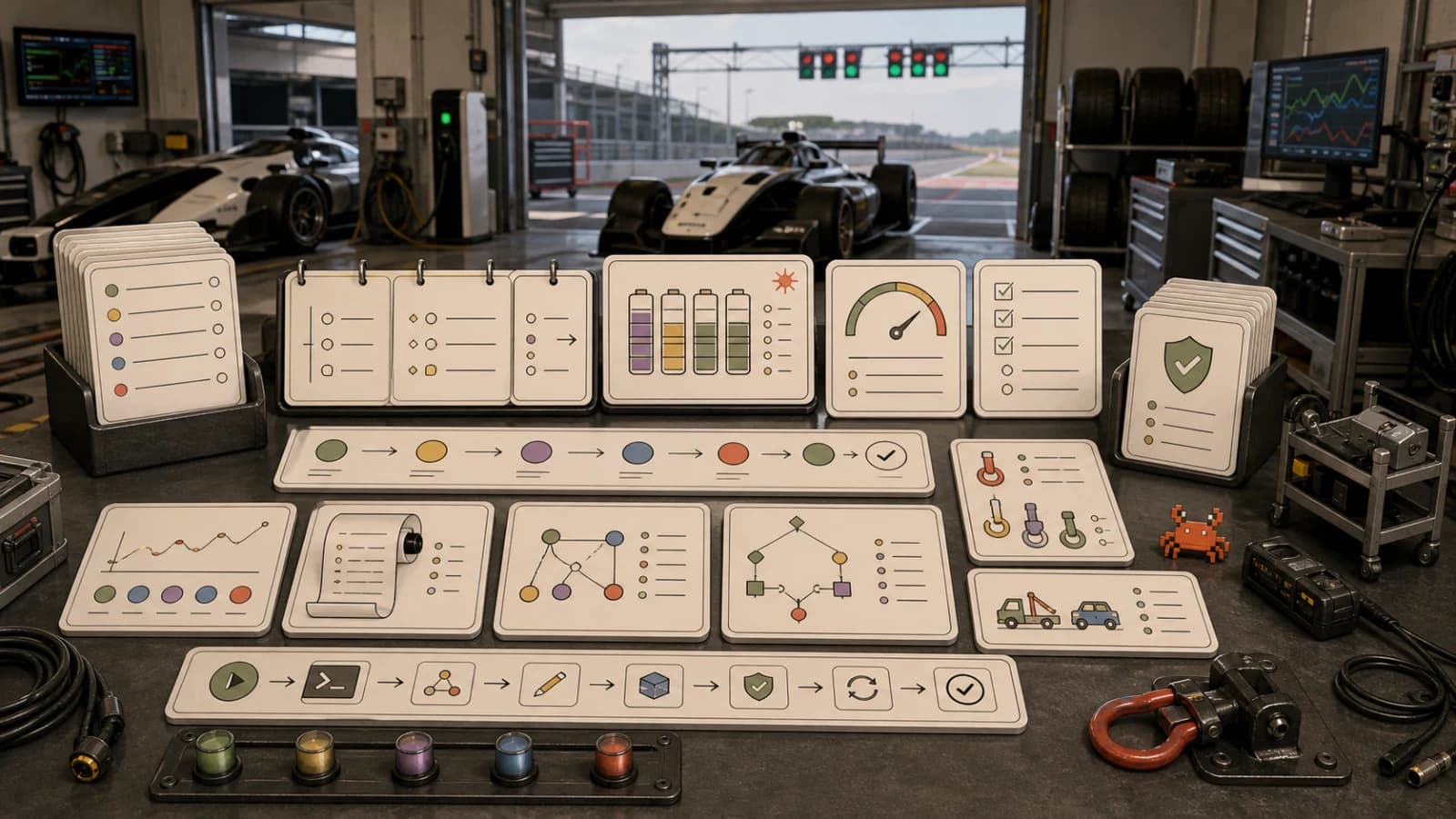
Non-developer agents need a platform contract that is boring enough to repeat.
At minimum, every sanctioned agent workflow should answer six questions:
| Question | Platform artifact |
|---|---|
| What can it access? | Tool allowlist, data scope, OAuth scopes, filesystem boundary |
| Who owns it? | Team owner, reviewer, escalation path |
| What does it cost? | Model budget, hosted-tool cost, per-run ceiling |
| What did it do? | Trace, tool-call log, output artifact, user approval record |
| How does it fail? | Stop conditions, retry limits, rollback path |
| How is it evaluated? | Baseline task, acceptance rubric, change history |
That sounds heavy until you compare it with the alternative: dozens of teams running business-critical agents with no shared receipts.
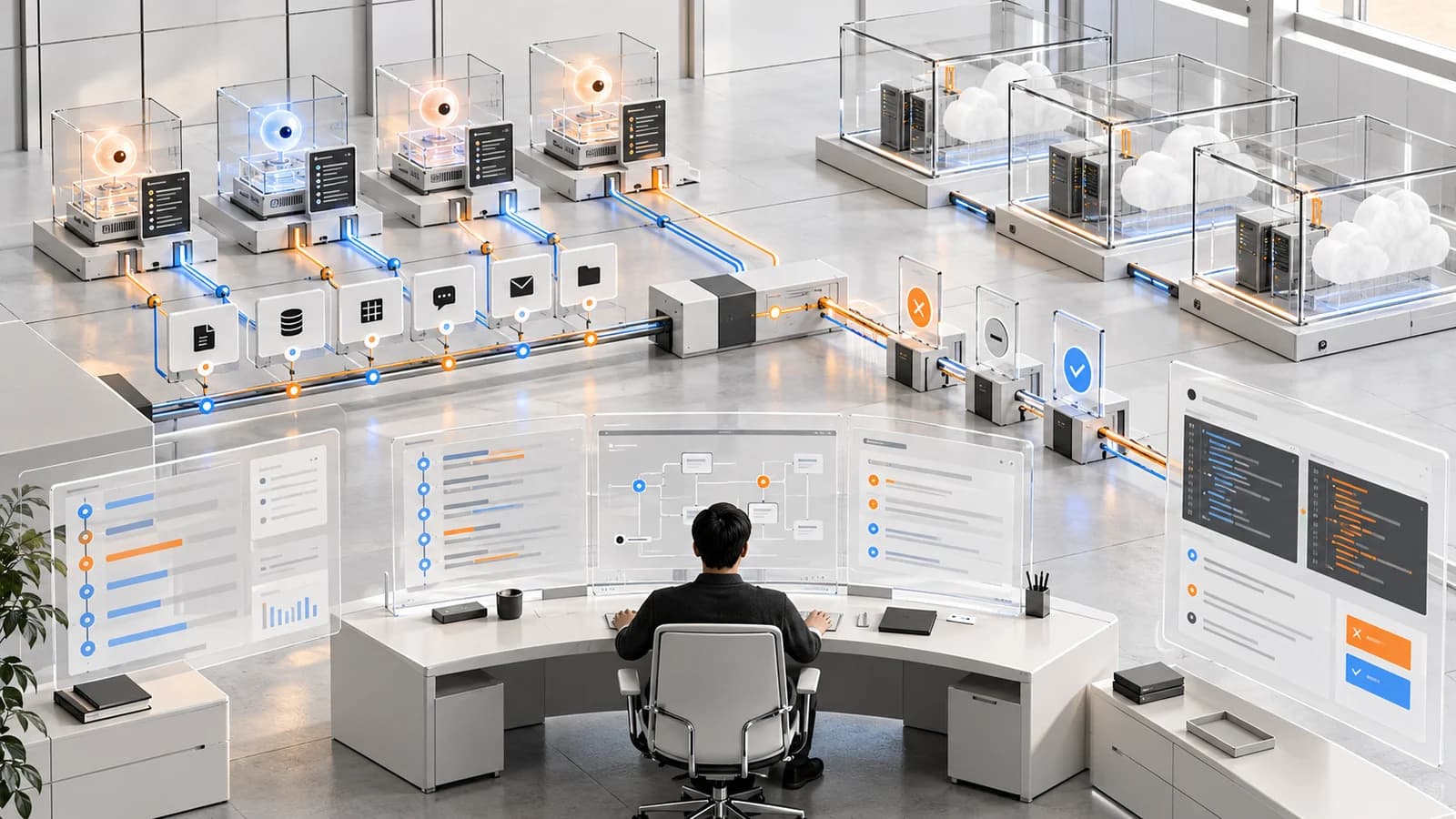
The lesson from developer agents applies here too. Once a workflow can act, the product surface is not the chat box. The product surface is the harness around it: identity, tools, memory, policy, logs, approval, rollback, and cost control.
The Developer Team's New Job#
This is where engineering can either become the blocker or the multiplier.
The blocker pattern is familiar: central IT says no, teams keep experimenting anyway, and every useful workflow becomes a one-off script with an API key in the wrong place.
The multiplier pattern is more practical:
- Build a small catalog of approved tools.
- Give each tool a capability label, not only a name.
- Route sensitive actions through human approval.
- Log every tool call and model decision that changes business state.
- Start each new workflow from a template that already includes budgets and receipts.
That is the same operating discipline behind long-running agents needing harnesses. The agent can be flexible. The wrapper should be predictable.
For a sales-ops agent, the tool catalog might include CRM read access, draft-only email creation, and account-note summarization. For a finance agent, it might include read-only invoice search, spreadsheet generation, and approval-required vendor updates. For a recruiting agent, it might include calendar availability, candidate-note summarization, and draft outreach.
The point is not to give every non-developer a terminal.
The point is to turn agent power into safe internal products.
Why "Just Use ChatGPT" Is Not Enough#
ChatGPT Enterprise can be the entry point. It is not the whole platform.
Enterprise agents need to touch systems of record. They need to know which documents are canonical. They need to avoid leaking sensitive context into the wrong workflow. They need to respect retention policy. They need to stop when the task becomes ambiguous. They need to leave a reviewable trail.
That is why OpenAI's broader platform direction matters. The recent OpenAI API work around workload identity, Admin APIs, spend controls, model allowlists, retention controls, hosted tools, and private tool connectivity is not cosmetic. Those are the pieces that let a company say:
"This agent can run, but only inside this boundary."
The same idea shows up in agent eval receipts. You do not need a giant eval platform on day one. You do need a stable way to compare the current workflow against the next version before a small prompt tweak changes how invoices, contracts, candidates, or customer notes are handled.
The Opposing Take: Most Teams Are Not Ready#
The skeptical take is fair.
Many teams do not have clean data ownership, current SOPs, reliable internal APIs, or clear approval boundaries. Adding agents can amplify that mess. A workflow that was vague as a checklist becomes dangerous when an agent starts executing it.
That is not an argument against agents.
It is an argument against pretending agents remove organizational debt.
If a process is undocumented, contradictory, and politically sensitive, an agent will not magically make it operational. It will make the gaps visible. The first platform-engineering job is often not model selection. It is turning messy implicit process into explicit workflow contracts.
A Practical Rollout Plan#
Start smaller than the vendor demo.
Pick one internal workflow where the answer can be reviewed before it changes business state:
- draft a renewal brief from CRM notes and recent tickets
- summarize a vendor contract for legal review
- prepare a recruiting packet from interview notes
- produce a finance variance memo from approved spreadsheets
- turn a customer call transcript into a draft implementation plan
Then ship it with a contract:
| Layer | First version |
|---|---|
| Inputs | Named folders, systems, or records only |
| Tools | Two or three approved actions |
| Output | Draft artifact, not automatic state change |
| Approval | Human accepts, edits, or rejects |
| Logging | Prompt, tool calls, sources, final artifact |
| Budget | Per-run ceiling and weekly owner report |
| Evaluation | Ten saved examples with pass/fail notes |
That is boring. It is also how agent adoption survives contact with a real company.
SEO Takeaway#
The search term to watch is not only "AI agents."
It is the cluster around "AI agents for business operations," "ChatGPT Enterprise agents," "non developer AI agents," "agent workflow automation," and "AI agent governance." The Google Trends check for this run could not be completed locally because no Trends client was available in the environment and prior automation runs hit HTTP 429. I used those phrases for query framing only, then weighted primary-source quality, existing-site duplicate risk, and durable platform-engineering intent instead of fabricated trend numbers.
That should be the editorial stance too. The durable story is not that one report proves every office worker gets an agent tomorrow. The durable story is that non-developer agent usage turns AI adoption into an internal-platform problem.
Developers will still build many of the primitives.
But the users will not all be developers.
FAQ#
What are non-developer AI agents?#
Non-developer AI agents are agent workflows used by teams outside software engineering, such as finance, legal, sales, recruiting, support, and operations. They can draft, research, analyze, update tools, and prepare artifacts without requiring the user to write code.
Why do non-developer AI agents need platform engineering?#
They need platform engineering because business workflows require permissions, tool access, audit logs, cost controls, approval steps, and rollback paths. Without a shared platform, every team tends to create its own fragile automation pattern.
Should companies let every team build its own AI agents?#
Teams should be able to build useful workflows, but not from scratch with unlimited access. A better model is a paved path: approved tools, workflow templates, ownership, budgets, logging, and human approval for sensitive actions.
What is the first safe workflow for enterprise AI agents?#
Start with draft-only workflows where a human reviews the result before it changes a system of record. Good examples include renewal briefs, contract summaries, recruiting packets, finance memos, and customer-call implementation plans.
Sources#
- OpenAI Economic Research: How agents are transforming work - accessed July 2, 2026.
- OpenAI Codex documentation - accessed July 2, 2026.
- OpenAI API platform documentation - accessed July 2, 2026.
- OpenAI Agents SDK tracing docs - accessed July 2, 2026.
Get the next deep dive like this in your inbox
One email a week on AI Agents and the rest of the AI dev stack. Free.
Read next on AI coding tools
OpenAI's June API Updates Are Really a Control-Plane Upgrade
OpenAI's June 2026 API changelog looks like scattered platform plumbing. Read together, moderation scores, workload identity, Admin APIs, prompt-cache retention, container billing, and Secure MCP Tunnel are the pieces teams need to run agents with real controls.
8 min readCodex Automations: Where Scheduled AI Agents Actually Help
Codex automations are useful when recurring engineering work has clear inputs, reviewable outputs, and safe boundaries. Here is the practical playbook.
9 min readAI Agent Containment Needs a Capability Ledger
Anthropic's Claude containment writeup points to the next security layer for coding agents: deterministic capability ledgers, not another approval prompt.
9 min readNew here? Start with
Technical content at the intersection of AI and development. Building with AI agents, Claude Code, and modern dev tools - then showing you exactly how it works.