OpenAI Retunes GPT-5.6 Sol in ChatGPT and Makes Luna the Free Tier Default
TL;DR
GPT-5.6 Sol gets a chat-focused retune with 68% fewer factual errors in OpenAI's internal eval, a new effort slider, and GPT-5.6 Luna becomes the default model for Free and Go users with unlimited text chats. What the API did not change and why the split matters.
OpenAI announced today that GPT-5.6 Sol, its frontier model, is being retuned for everyday ChatGPT conversations, while GPT-5.6 Luna becomes the default model for Free and Go users with unlimited text chats. Two numbers frame the update: OpenAI's internal evaluation found responses with at least one factual error were 68% less common with the new Sol and 62% less common with Luna compared to GPT-5.5 Instant on financial, medical, and legal prompts. The second half of the story is a tier shift: a model that cost $6 per million output tokens four weeks ago is now the free default.
What actually shipped#
| Change | Where | Users |
|---|---|---|
| GPT-5.6 Sol retuned for chat (focused answers, tighter formatting, fewer factual errors) | ChatGPT Chat | Plus, Pro |
| New effort slider (quick to deep reasoning) | ChatGPT web, mobile, desktop | Plus, Pro |
| GPT-5.6 Luna becomes the default model | ChatGPT | Free, Go |
| Unlimited text chats with Luna | ChatGPT | Free, Go (starts next week) |
| Think button for higher reasoning | ChatGPT | Free, Go (starts next week) |
| GPT-5.6 Sol powering Work and Codex | unchanged | - |
The retune is chat-specific: OpenAI explicitly says the version of Sol behind Work and Codex "is not changing as part of this release." So the API model id, pricing, and agent behavior you build against today are untouched. This is a product-surface update, not a model release - which is exactly why it is worth reading carefully.
The Sol retune is a behavior change, not a benchmark change#
The new Sol adapts answer length to the question, avoids unnecessary formatting, and gives a corrective answer instead of agreeing when agreement would not be useful. Plus and Pro users get a slider to set how much "thought" each response gets, and Instant and Thinking now feel like one model with different effort levels rather than two different personalities.
OpenAI's factuality numbers come from an internal evaluation, so treat them as a directional signal, not an independent benchmark. What matters for developers: the model family's behavior in chat is now tuned and productized separately from its behavior in agentic surfaces. That is a real departure from the GPT-5.5 era, where one behavior profile shipped everywhere.
Luna on the free tier is the bigger story#
Free and Go users get GPT-5.6 Luna as the default this week, unlimited text chats starting next week, and a Think button that escalates harder questions to deeper reasoning. Limits remain on file uploads, images, and other tools.
This is the price story from July 30 - Luna dropped 80% to $0.20/$1.20 per million tokens - landing in the free product within a week. Luna keeps its 1,050,000-token context window, so the free tier now carries a million-token model as its default. OpenAI framed it as "more abundant intelligence": unlimited text chats at the efficiency tier is the consumer equivalent of what the API cut did for agent fleets.
What it means for developers#
Four takeaways:
-
Your API code did not change. Sol in the API, in Codex, and in Work is the same model at the same $5/$30 pricing. If you saw this headline and worried about a model swap under your agent, you do not need to.
-
Behavior is now a product surface decision. OpenAI can tune Sol one way for chat and keep it unchanged for agentic work. Expect more of this: the API may increasingly be the only place where "model behavior" is stable, because the consumer surfaces will keep absorbing these retunes.
-
The free tier is a testing ground. Unlimited Luna text chats with a Think button means millions of users are generating preference data on the efficiency tier. The 62% factuality improvement cited for Luna matters precisely because that tier is about to see the largest traffic OpenAI has ever routed through it.
-
Competitive pressure on consumer AI. Google's Gemini free tier and Anthropic's Claude free tier now answer to a free product running a frontier-adjacent model with a million-token context. Our GPT-5.6 vs Claude 5 model tier comparison and the budget model pricing landscape both need a footnote: the efficiency tier is now what consumers see first.
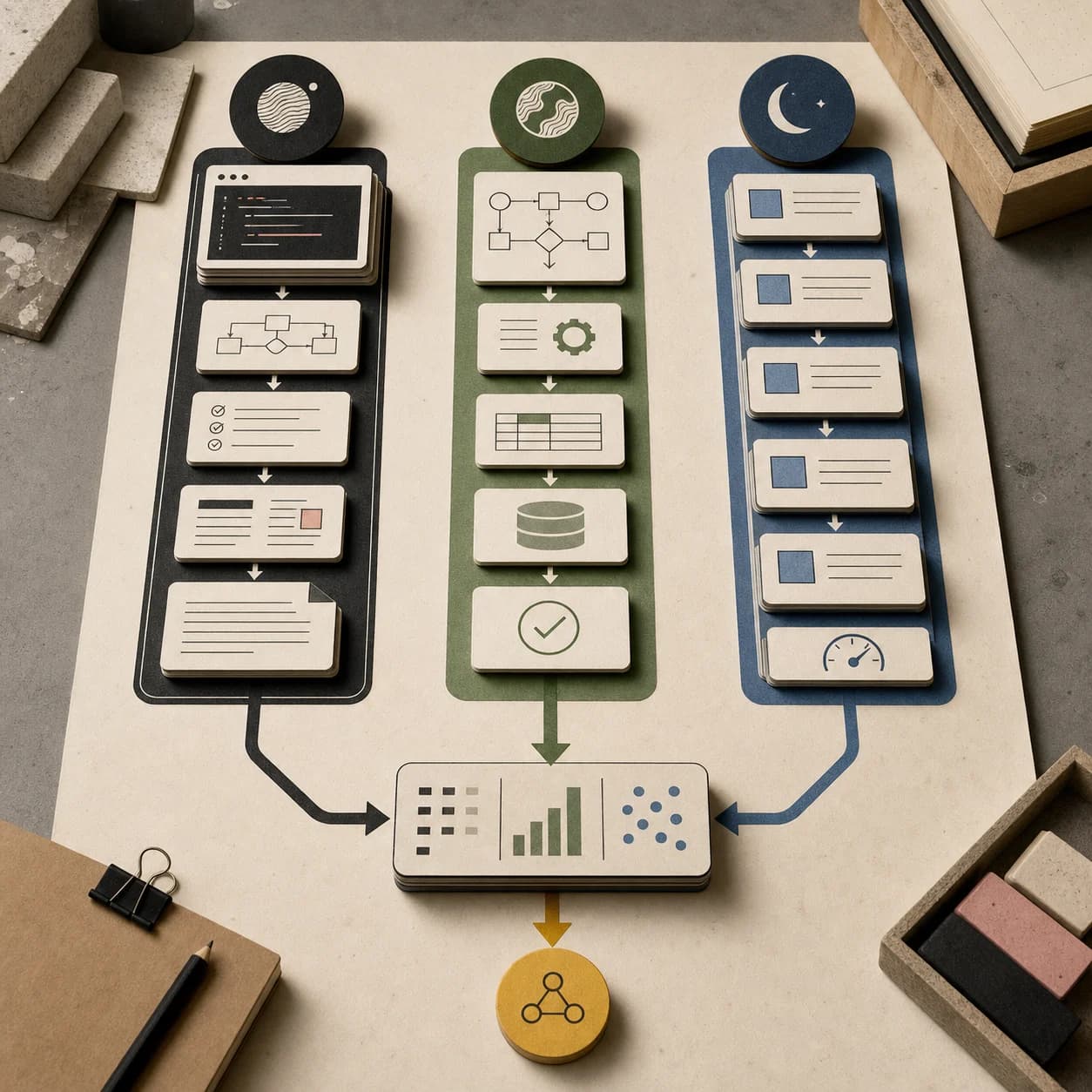
Chart: OpenAI, from the announcement post. The Think button is the free-tier escalation path to deeper reasoning.
From the archive
SkillSV: A Shapley Framework That Values the Lines Inside an Agent Skill
Aug 6, 2026 • 8 min read
The Plateau Was the Instrument
Aug 6, 2026 • 10 min read
Chat SDK Adds Durable Approvals: Agent Workflows That Wait For a Human
Aug 6, 2026 • 6 min read
UK AISI Reports Agents Taking Real-World Action During Cyber Evals: 19 Events, 17 From One Model
Aug 5, 2026 • 7 min read
Safety notes worth knowing#
The August update system card documents new under-18 guardrails: training against romantic roleplay, age-restricted challenges, and self-presentation as a substitute for real relationships, plus age-appropriate boundaries on sexual content, eating disorders, body-image risks, and graphic violence. The card also covers the eval changes behind the factuality numbers. If you evaluate OpenAI models on safety-relevant prompts, the card is the source of truth for what changed in this snapshot.
FAQ#
Is GPT-5.6 Sol different in the API now?#
No. OpenAI states the version of Sol powering Work and Codex is not changing; the retune applies to the Chat experience in ChatGPT only.
When do free users get unlimited Luna chats?#
This week Luna becomes the default for Free and Go users; unlimited text chats and the Think button arrive starting next week, subject to abuse guardrails.
Does the Luna API price change with this update?#
No. Luna stays at $0.20 per million input and $1.20 per million output tokens from the July 30 cut, now also serving as the free-tier default.
How does the effort slider work for Plus and Pro?#
It sets how much reasoning ChatGPT applies per response, from quick everyday answers to deeper planning, research, and coding work, on web, mobile, and desktop.
Sources#
- Improving GPT-5.6 Sol in ChatGPT - and expanding access to GPT-5.6 Luna for free users - OpenAI - primary announcement
- GPT-5.6 August Updates system card - OpenAI - safety training and evaluation details
- GPT-5.6 Luna model docs - OpenAI - current API pricing and context window
- OpenAI API pricing - verified July 30, unchanged in this update
- Advancing the price-performance frontier with GPT-5.6 - OpenAI - launch post for the family
Continue Reading#
- OpenAI Cuts GPT-5.6 Luna 80% and Terra 20% - the price cut that made a million-token model free-tier-viable
- GPT-5.6 Sol Developer Guide - how to build on Sol via the API, unchanged by this update
- GPT-5.6 Sol, Terra, Luna: The Full Family Guide - where each tier fits in an agent architecture
- GPT-5.6 vs Claude 5: Model Tiers Compared - how the efficiency tier stacks against the competition
- What If AI Was Free Tomorrow - the economics of unlimited model access, now playing out on the free tier
Read next
OpenAI Cuts GPT-5.6 Luna by 80%: The Price-Performance Frontier Just Shifted
OpenAI slashes GPT-5.6 Luna by 80% to $0.20/M input tokens, cuts Terra by 20%, adds Sol Fast mode at 2.5x speed, and reveals Sol autonomously optimized its own production kernels.
7 min readOpenAI Cuts GPT-5.6 Luna 80% and Terra 20%: The Cost-Per-Task Math for Agent Builders
Luna drops from $1/$6 to $0.20/$1.20 per million tokens, Terra from $2.50/$15 to $2/$12, and Sol gets a paid Fast mode. What the new floor means for agent economics, Codex quotas, and the competition.
8 min readGPT-5.6 Sol, Terra, and Luna: A Developer's Guide to OpenAI's New Model Family
A practical guide to choosing GPT-5.6 Sol, Terra, and Luna, using programmatic tool calling, caching, and the multi-agent beta in production.
8 min readShare
Developers Digest
Technical content at the intersection of AI and development. Building with AI agents, Claude Code, and modern dev tools - then showing you exactly how it works.
300+ videos30K+ GitHub stars850+ articles
Related Tools
AI Models

ChatGPT
OpenAI's flagship. GPT-4o for general use, o3 for reasoning, Codex for coding. 300M+ weekly users. Tasks, agents, web br...
View ToolAI Models

GPT-5
OpenAI's latest flagship model. Major leap in reasoning, coding, and instruction following over GPT-4o. Powers ChatGPT P...
View ToolAI Models

OpenRouter
Unified API for 200+ models. One API key, one billing dashboard. OpenAI, Anthropic, Google, Meta, Mistral, and more. Aut...
View ToolAI Models

Gemini
Google's frontier model family. Gemini 2.5 Pro has 1M token context and top-tier coding benchmarks. Gemini 3 Pro pushes...
View ToolApps from Developers Digest
Related Guides
Guide
Run AI Models Locally with Ollama and LM Studio
Install Ollama and LM Studio, pull your first model, and run AI locally for coding, chat, and automation - with zero cloud dependency.
Getting StartedGuide
Default Permission Mode - Claude Code
Approve each action manually - the safest mode for new tasks.
Claude CodeRelated Videos
OpenAI's New O1 Model and $200/Month ChatGPT Pro Tier: What's New?
Learn The Fundamentals Of Becoming An AI Engineer On Scrimba; https://v2.scrimba.com/the-ai-engineer-path-c02v?via=developersdigest OpenAI's New O1 Model and $200/Month ChatGPT Pro Tier: What's...
Video·
OpenAI's NEW Web Browser ChatGPT Atlas in 2 Minutes
OpenAI AI has launched their first browser called ChatGPT Atlas, which incorporates ChatGPT for enhanced functionality. This browser allows users to interact with their documents using natural...
Video·
OpenAI Codex in ChatGPT in 5 Minutes
In this video, we delve into OpenAI's latest release, Codex, a cloud-based software engineering agent designed for various coding tasks. Unlike tools like Cursor or Windsurf, Codex integrates...
Video·
Related Posts
7 min read
News
OpenAI Cuts GPT-5.6 Luna by 80%: The Price-Performance Frontier Just Shifted
OpenAI slashes GPT-5.6 Luna by 80% to $0.20/M input tokens, cuts Terra by 20%, adds Sol Fast mode at 2.5x speed, and rev...

7 min read
OpenAI
OpenAI's Efficiency Ledger: Serving Costs Down 20%, ARC-AGI-3 Up 3x With No Model Change
The "Building abundant intelligence" essay carries real engineering numbers: GPT-5.6 Sol cut serving costs 20%, speculat...
8 min read
OpenAI
ChatGPT Work and Codex Now Share One Desktop App: What Actually Changed
OpenAI is consolidating its desktop apps, not merging ChatGPT and Codex into one indistinguishable product. Here is how...

8 min read
News
Gemini 3.8 Live and 3.8 Live Extended Thinking: Google's Audio-to-Audio Voice Models, Benchmarked and Priced
Google shipped two new audio-to-audio models on September 15: Gemini 3.8 Live (76.0 Speech-to-Speech Index, 1.18s first...
6 min read
News
TypeSafe Jev: the First Decision-Only Model Class, Benchmarked and Priced
TypeSafe's Jev is the first 'System One' model: no text generation, typed decisions with calibrated probabilities, 70-50...
7 min read
News
Gemini's Agentic Video Understanding Cuts Video Tokens by 88%: How It Works and What Breaks
Google shipped agentic video understanding on Gemini 3.7 Flash, 3.6 Flash, and 3.5 Flash-Lite: the model decides which f...
Build with the member tools

Get Smarter About AI Dev
New tutorials, open-source projects, and deep dives on coding agents - delivered weekly.
One email per weekReal code, not theoryFree forever