AI Agents Deep Dive
Understanding AI agents from fundamentals to multi-agent systems and building your own in TypeScript.
10 articles88 min total read time
10 of 10 posts published
01
AI Agents Explained: A TypeScript Developer's Guide
AI agents use LLMs to complete multi-step tasks autonomously. Here is how they work and how to build them in TypeScript.
6 min read|Read →
02
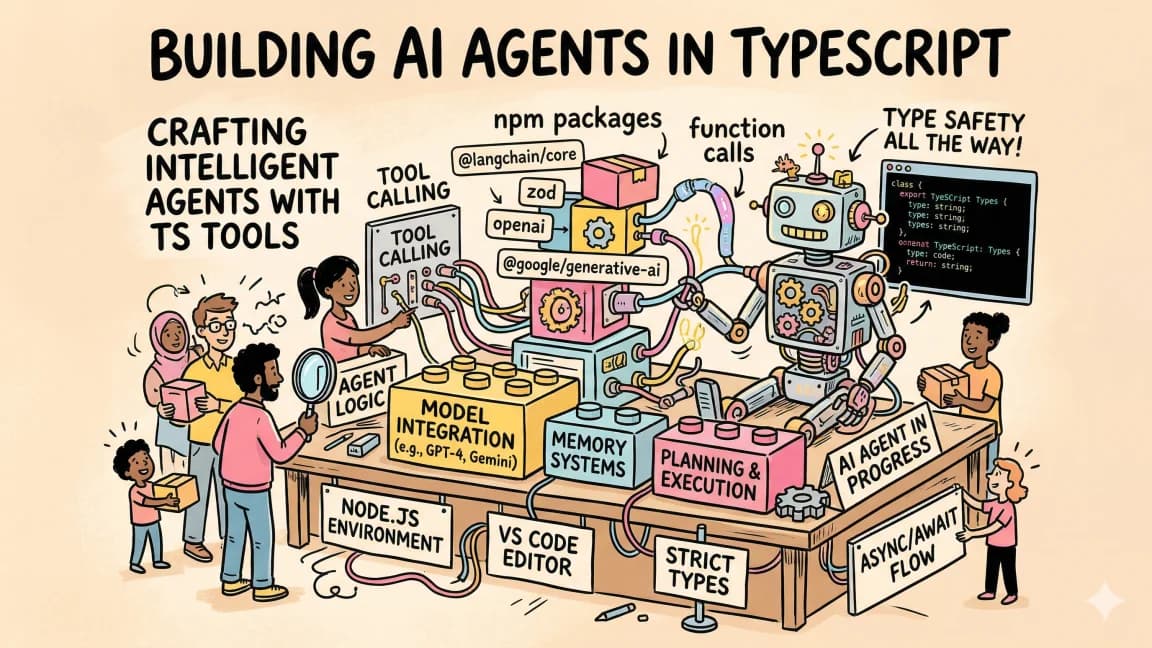
How to Build AI Agents in TypeScript
A practical guide to building AI agents with TypeScript using the Vercel AI SDK. Tool use, multi-step reasoning, and real patterns you can ship today.
10 min read|Read →
03

Multi-Agent Systems: How to Orchestrate Multiple AI Agents in TypeScript
From swarms to pipelines - here are the patterns for coordinating multiple AI agents in TypeScript applications.
6 min read|Read →
04

The Agentic Development Tech Stack for 2026
Coding changed more in the past two years than in the previous decade. We moved from manual typing to autocomplete, then to multi-file edits.
12 min read|Read →
05

How to Debug AI Agent Workflows
Debug AI agent workflows with structured tool logging, context snapshots, decision traces, replay and Claude Code hooks to find broken loops and tool failures.
9 min read|Read →
06
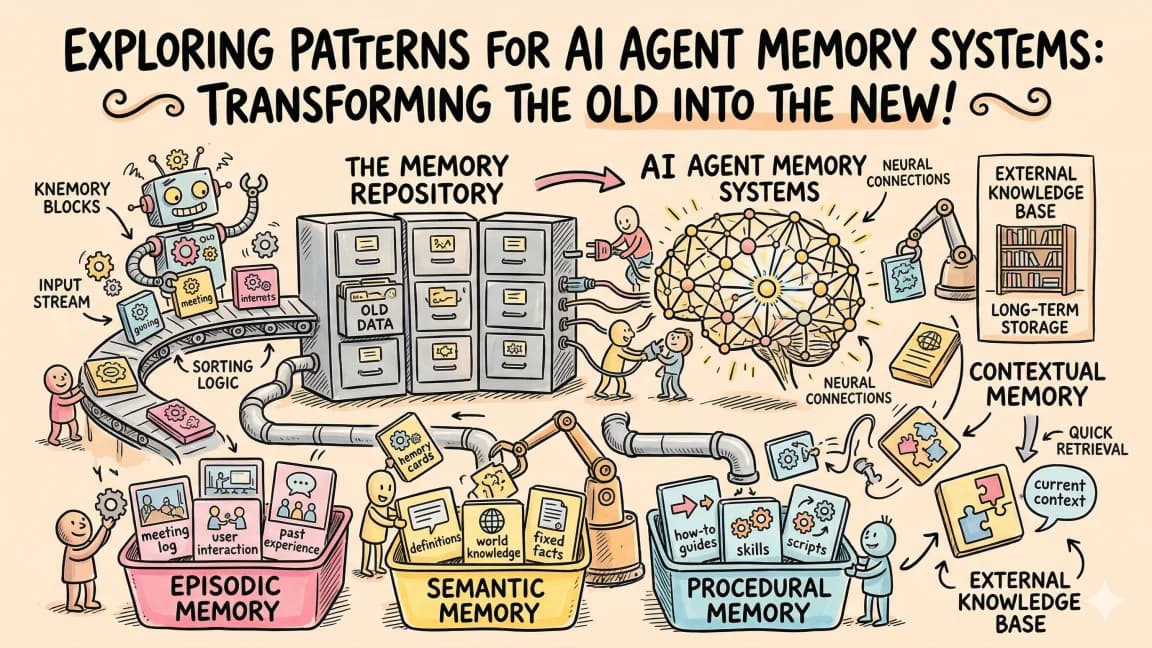
AI Agent Memory Patterns
AI agent memory patterns that fix forgetting between sessions: CLAUDE.md persistence, RAG retrieval, conversation summarization, structured and tiered memory.
9 min read|Read →
07

Over-Editing: Why Your AI Coding Agent Rewrites What Isn't Broken
Over-editing is when AI coding agents make huge diffs for tiny fixes. Why models do it, why tests miss it, and how to keep agent edits minimal.
9 min read|Read →
08

Intent Debt: The AI-Era Debt Nobody Is Tracking
Intent debt is the third layer of AI-era debt Martin Fowler describes, after technical and cognitive debt. What it is and how to diagnose it in your project.
8 min read|Read →
09

7 AI Agent Orchestration Patterns Developers Should Know
Seven AI agent orchestration patterns for production, from single-agent baselines to multi-level hierarchies, each with a decision rule, sketch and tradeoffs.
10 min read|Read →
10

The Agent Reliability Cliff: Why Your 10-Step Chain Only Succeeds 20% of the Time
The agent reliability cliff: 85% per-step success compounds to about 20% over 10 steps. Why long chains collapse, and six patterns that fight the decay.
9 min read|Read →
Get Smarter About AI Dev
New tutorials, open-source projects, and deep dives on coding agents - delivered weekly.
One email per weekReal code, not theoryFree forever