Try Zoer today: https://zoer.ai/ the all-in-one full-stack tool that combines Lovable, Supabase, and Netlify in one. In this video, discover Zoer, a cutting-edge platform that enables you to build and deploy full stack applications using natural language. Watch a comprehensive demonstration of its features, from creating a learning management system to customizing technical architecture and visual design. Learn how Zoer simplifies the application development process by generating databases, writing SQL, and provisioning the necessary computational resources. See how you can integrate design inspirations, interact with your app's data through an embedded chat bot, and even publish your creations to the community. Finally, experience the seamless one-click deployment feature that brings your applications to life. 00:00 Introduction to Zoer: Build Full Stack Apps with Natural Language 00:13 Starting a Project: Building a Learning Management Platform 00:52 Customizing Your Application: Features and Design 01:47 Building and Reviewing Your Application 03:55 Interacting with Your Application: Using the Copilot 05:10 Database Management and Integration 06:08 Publishing and Selling Your Applications 06:58 Editing and Finalizing Your Application 08:10 Deploying Your Application with One Click 08:36 Conclusion and Final Thoughts
Weekly deep dives on AI agents, coding tools, and building with LLMs - delivered to your inbox.
Free forever. No spam.
Subscribe FreeNew tutorials, open-source projects, and deep dives on coding agents - delivered weekly.

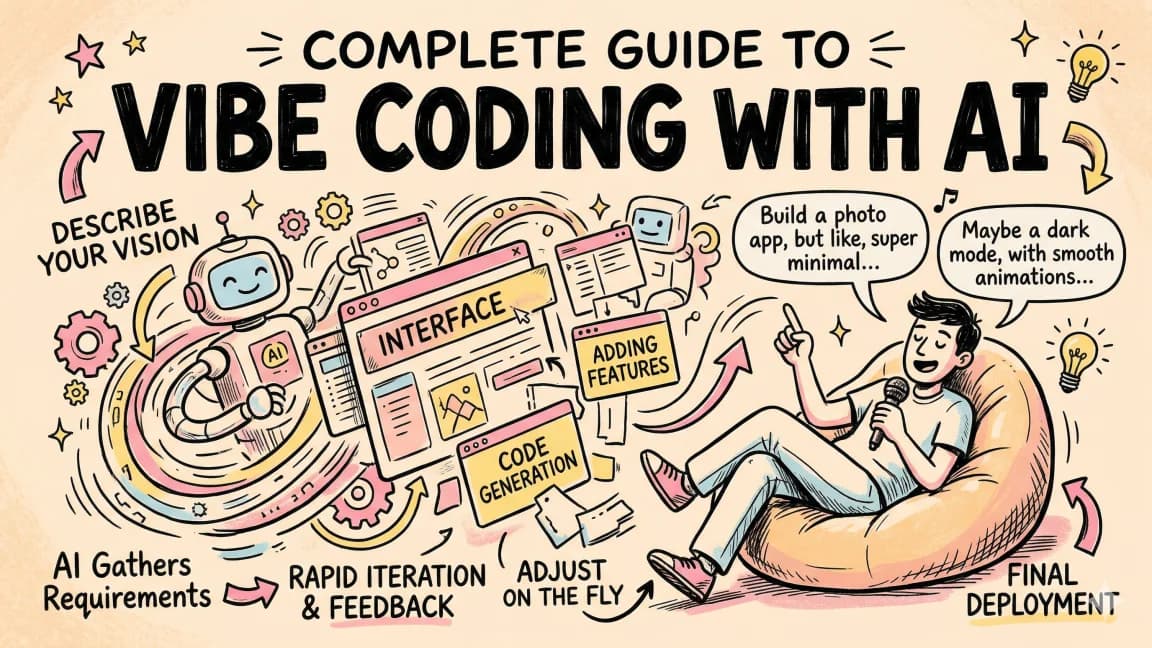
--- type: transcript date: 2025-09-10 youtube_id: LaQoE3wmZMA --- # Transcript: I Built a Full-Stack App in 5 Mins: Vibe Coding with Zoer (Lovable + Supabase + Netlify in One) In this video, I'm going to be showing you Zoro, which is a platform that allows you to build and deploy full stack applications completely with natural language. In this video, I'm going to go through a demonstration, show you how it works, as well as some of the features that are built into the platform. The first thing that I'm going to do is I'm going to say I want to build out a learning management platform. First, what you can do with this is say if you have a vague prompt with this, what you're going to be able to do is you can click to enhance that prompt. It will take that initial prompt and it will effectively scaffold it out in a way where you can edit and tweak it for all of the different things of what a platform like this could look like. Say for instance if you don't want to have something like a minimum of 10,000 concurrent users. Maybe that's not as important initially. I could say I want 100 concurrent users. You can go through you can edit the technical architecture or if there's anything that is missing maybe it will spark an idea as you read through what it has generated for you. Now, additionally within here, they do have databases built in. And another nice thing with the platform is you will be able to include design inspiration. If you have different websites that you like and you like the general look and feel, you can go ahead and add up to five different screenshots for what you want to generate. As soon as we send that off, now what it's going to do is it's not going to go and immediately build our app. And the nice thing with this is it will essentially give us a brief of what we can review of all of the different features, the text stack, as well as the different styles. and some of the component pieces of what it's going to leverage. Within here, I can see all of the relevant features. We see things like the primary color. We have the layout, navigation, so on and so forth. And just to demonstrate this, I can say I want to change out the primary color to be black and I want the accent color to be white. I'll go ahead and I'll send that in. And the nice thing with this is you can just iterate through this process until you're happy with it. And once you're happy, you can go ahead and click to build out your application here. As soon as you click to build off the application, a couple things are going to happen. First, it's going to begin to build out the database if that is necessary. It will be able to provision the different compute that's required as well as the environment for the database. It will begin to write out all of the relevant SQL to create those tables, the schemas, as well as also often seating it with the correct data for whatever application that you're building. And where this is helpful as an initial step within the application building process is the other parts of your application. Once this is established, we'll have the proper context in terms of the correct schema for your back end as well as the schema for how the APIs ultimately interact on the front end. In terms of the architecture and flow of how the AI actually writes out the relevant pieces, it is definitely very thought out in terms of what it actually does in the order that it does. Now, in terms of the speed of generation, it is quite fast for what it generates. And what it will do is it will actually go through for a handful of minutes before it actually returns your application to you. In a lot of cases, it can run autonomously quite for a while. You don't necessarily need to sit here and watch everything, especially for the initial app generation. Once the SQL is generated, what it's going to do is it's going to scaffold out a Nex.js project within here. And the really cool thing with this is we'll dynamically see all of the relevant content stream in and write to the respective files as well as the correct directories. Here we can see it's updating particular files that were a part of the instances template and then it will also create net new files like we see streaming out on the right hand side here. Here we go. It has gone through and generated our application for us. So it's written probably between one and two dozen files here. What we can do is we can go ahead and open this up and take a look. And there we have it. We have a fully functional application here. As a first generation, there will probably be some aspects that we do have to update. But at a glance here, if we take a look, we do have a pretty rich initial first generation here. There are some things that do have 404 pages. That's an easy fix. We can just iterate on those in subsequent prompts. Next, another thing that I want to show you with the platform is what you'll notice in the bottom right hand corner of our screen is we have this little glowing orb. And the cool thing with this is what we're going to be able to do is actually interact with our application directly from the co-pilot. I'm going to say I want to list out the most expensive courses. I'll go ahead and I'll send that in. What it has the functionality to do is to actually go and look through how things were set up to pull the relevant information. Say if you do have the permissions to grab the relevant pieces of data that is available to you on the front end of the application, you can go ahead and query it just like this and you can get information that is in fact the same information that lives within your application. Within here, for instance, I have the data science course where we have the duration as well as the cost. And then we also have some of the other more expensive courses that are listed out here. Overall, the really neat thing with this is without actually having to do anything, we have a built-in chatbot that does work and interact with our application. Having this as a native integration is definitely something that is very helpful. Now, just to hop back to the app builder here, just to go through some aspects of the platform. So if we click over to the database tab, the nice thing with the platform is you don't have to worry about setting up something like Superbase or another Postgress instance or whatever you're using for your database. This all comes embedded as a part of the platform. So you don't need to go and chase down different third party services for these types of features. They're all built in. So within here, for instance, we have all of the tables that it scaffold out and we also have some of the seated data for all of these different tables. And within here again, we see similar to the files that it generated, we have over about a dozen tables here. So we have things from the users all the way through to the profiles to things like notifications as well as categories, assignments, so on and so forth. Now, with this being said, I do want to call out that you will eventually be able to leverage your own database as well. While this is embedded into the platform right now, if you do want to use external services, that will be an option coming soon. Next up, a feature that I don't think I've seen in any of these other platforms is you can actually publish what you create to the community and then also set a price for it. So, say if you build an application or a good template, a good starting point for something that a lot of people might be looking for, you can go ahead and set a price, it will publish it to the community of others that are looking to potentially buy and support your work. Now, once you have published it to the community, if you have set a price for it, what you're going to be able to do is you can go over to my apps here. And within here, you can manage all of your different applications. So, you can go in and iterate on them. Or alternatively, if you have put them up as a template for sale, you can go ahead and change the price just like that. Alternatively, if you have made any sales for what you've generated, you're going to be able to see all of that within here as well. Next up, just to show you how you can make some edits within the application within here. Let's say I want to build out the all assignments page because that is one that currently has a 404. I'm going to say I want to finalize the all assignments page. So I want to make sure everything does work on the front end. Back end is integrated to what we have within the database. I'm going to go ahead and kick off that process. And then what we'll see is it will go through it will create the back end. If it does need to make any updates to the database for what we're asking for, it will go ahead and run all of those various migrations that we need. And in addition, what it will do is it will create that page for the front end as well as all of the respective components for the front end as well. So you can be relatively broad where you do give a little bit more room to the LLM to be a bit more creative for creating various aspects of the page. But in addition to that, what you can do is you can be very specific for the prompts that you ask for, whether it's the pages or the edits that you want to make for each generation. Now that it is complete, if I go ahead and I open this up and I go over to the all assignments page and then here we go. So here is the assignments page that is created for us. From here we can go and iterate on the different components or the different pages throughout our application and just begin to lean into the process of finishing out what we've built. All right, last but not least, one of the key features of the platform is you will be able to deploy your application just with one click. If we go through and we click to deploy this, what it will do is it will go through the process of building the code to make sure that everything does compile. It will go through and actually make the Docker image to go and deploy this. It will upload the file to a server and then actually deploy it. So, you will be able to have a hosted version with just one click. But overall, that's pretty much it for this video. I encourage you to check out the platform. And the one thing to note with this is you will be able to get started for under $2 for a 3-day trial. Kudos to the team at Zor for what they've created. It is a very impressive text to app builder. I've tried a ton of these before and this one definitely does work quite well. If you found this video useful, please comment, share, and subscribe. Until the next one.
Technical content at the intersection of AI and development. Building with AI agents, Claude Code, and modern dev tools - then showing you exactly how it works.