Goldman Sachs Restricts Claude Code to Engineers Only

TL;DR
Goldman Sachs limited Claude Code and GitHub to engineers in October. What Bloomberg reported, what it signals for banks and regulated teams, and a rollout checklist for your own org.
Last updated: November 9, 2026 - based on Bloomberg's November 2 report as relayed by Quartz, plus follow-up coverage.
Goldman Sachs has cut most traders and bankers off from Claude Code and GitHub. Per Bloomberg's report, internal guidance updated in October limits both tools to engineers. If you are asking whether your own company should follow, the useful question is not "ban or allow" but "which role gets an agent, with which guardrails." This page covers what was reported, what is still unknown, and a rollout checklist you can use Monday.
What was reported#
Bloomberg reported on November 2, 2026 that Goldman Sachs banned most of its staff from using advanced AI coding tools. Quartz's summary adds the details:
- The bank had permitted bankers to use the tools for months before a review of productivity and risk concerns led to the change.
- The directive does not cover "strats," employees whose jobs combine software engineering, quantitative research and trading.
- Traders had used the tools to follow how clients were trading, simulate shifts in markets and their positions, and draft text and visuals. Bloomberg says the change frustrated some of them.
- In July, Goldman CIO Marco Argenti spoke favorably of "vibe coding" outside technical roles, with results handed to an engineer from a pool of 12,000 for polishing.
- Earlier this year the bank restricted staff in Hong Kong from using Anthropic's Claude.
Goldman's spokesperson said the bank makes AI tools available to determine the best use cases, and that "after a period of experimentation where we assess a variety of factors including productivity and risk management, we put them in the hands of those who are best suited to leverage them for the long term."
Note what is not in the reporting: no specific incident, no leak, and no cost figure. The stated reasons are "productivity and risk management," nothing more. Treat any story that supplies a motive as inference.
The angle: this is role-based access, not an AI ban#
The headline reads like a retreat. The details read like ordinary access control. Goldman did not remove coding agents from the building. It narrowed them to the people who can review what an agent writes, and it kept its own internal assistant, which Quartz says draws on models from OpenAI, Anthropic and Alphabet, available more broadly.
That distinction matters for builders selling into or working inside regulated companies. A coding agent can run shell commands, read files and push to GitHub, so handing one to a trader is closer to handing them a production terminal than a chat window. The New Stack's coverage frames it as part of a wider debate about restricting coding agents in finance and isolating them from credentials, with Replit recommending isolated environments where credentials, audit logs and approvals are managed separately (a vendor recommendation, from that article's search excerpt).
Two risks follow from the gap between "can build" and "can review." One is unreviewed code reaching real systems. The other is quieter: approvals pile up until nobody reads them. Our write-up of the "Yes, and don't ask again" secrets finding shows how an approval click can persist a password to disk. That is the failure mode a risk team worries about when the person clicking is not an engineer.
What people are actually saying#
The r/ClaudeCode thread, Goldman Sachs restricted Claude Code to engineers only, shows roughly 1K upvotes and about 236 comments in search listings (read from excerpts, not the full thread). Its summary line: bankers and traders lost access, strats kept it.
Coverage on the reaction side splits two ways. eFinancialCareers frames it as developers and finance staff finding the restriction annoying. The counter-case is the one in Goldman's own statement: experimentation first, then concentrate the tools where review capacity exists. Both can be true. A tool that made non-engineers productive for months is now gated because the bank decided the risk is better managed with engineers in the loop.
What a builder does Monday#
If your company is deciding who gets a coding agent, copy the structure, not the headline:
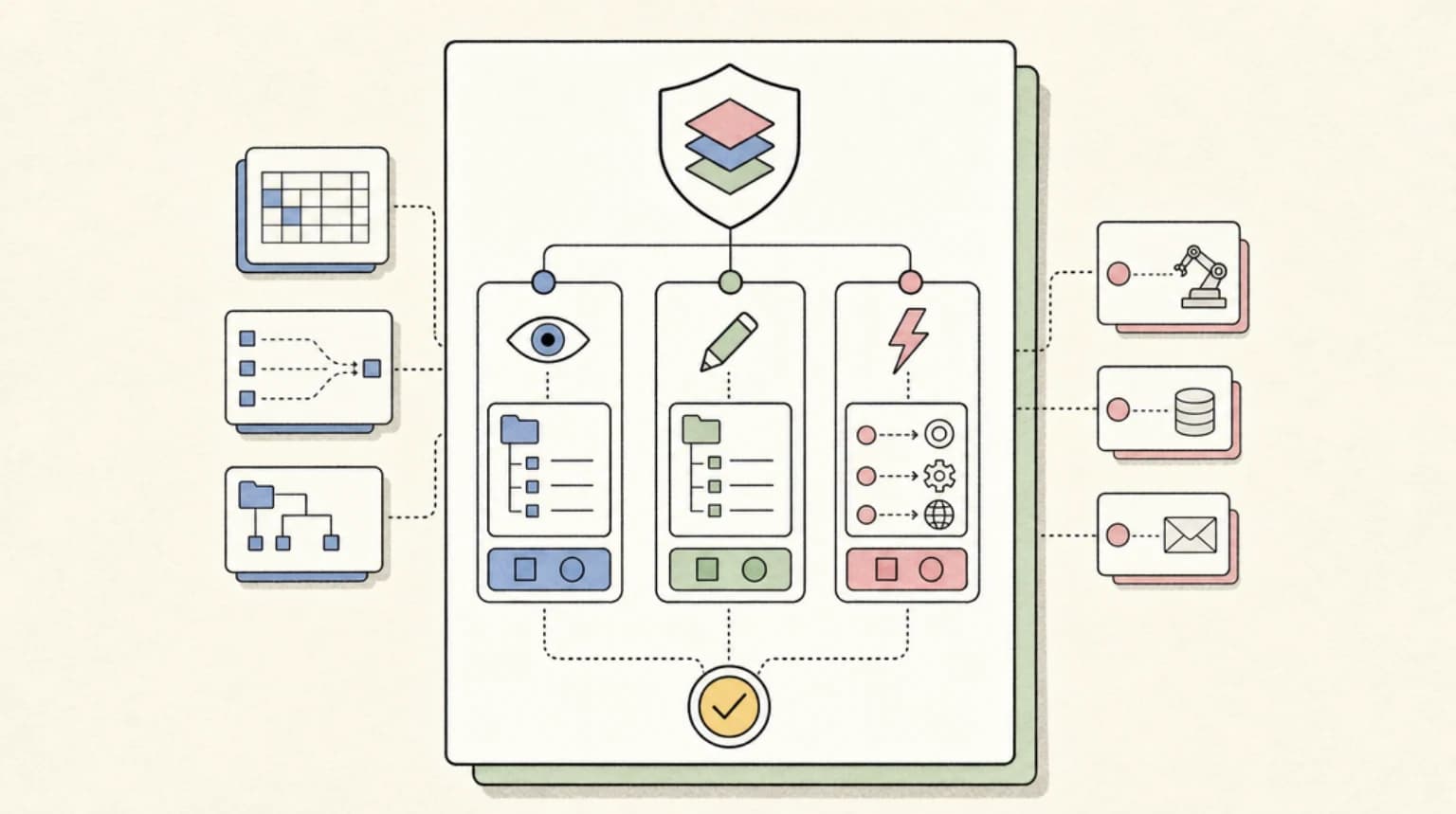
- Tier by role. Engineers get the agent in a repo with review. Non-engineers get a constrained assistant or a request path to an engineer.
- Enforce rules centrally. Per-person "don't ask again" approvals do not scale. Use deny rules for secrets and production paths, as covered in Claude Code permissions: settings.json allow, deny, ask.
- Keep credentials out of reach. Follow how to keep API keys away from your AI coding agent.
- Gate merges, not prompts. Put the review at the pull request, as in agent PR governance.
- Watch usage, not just access. Heavy automated use can burn plan limits fast, see the weekly limit drain from headless runs.
Where it breaks: role lists go stale, strats-style hybrid roles blur the line, and a person who loses the agent will route around it with a personal account. Plan the sanctioned path before you close the unsanctioned one.
Continue Reading#
- Claude Code Permissions: settings.json Allow, Deny, Ask - rule syntax and precedence
- Claude Code settings.local.json Secrets: Check Your Repos - how approvals persist secrets
- How to Keep API Keys Away From Your AI Coding Agent - file rules and credential masking
- Agent PR Governance with Copilot Review - gate agent output at the merge
- Claude Code Auto Mode Is Now the Default - fewer prompts, different risk
Sources#
- Bloomberg: Goldman Restricts Traders and Bankers From Using Some AI Tools - original report, November 2, 2026 (headline and excerpt only; paywalled)
- Quartz: Goldman Sachs is restricting traders and bankers from using AI coding tools - detailed summary of Bloomberg, read in full November 9
- The New Stack: Goldman Sachs restricted Claude Code for bankers - industry context (search excerpt)
- eFinancialCareers: As Goldman Sachs restricts vibe coding - reaction (search excerpt)
- r/ClaudeCode discussion - community thread (search excerpt)
Get the next deep dive like this in your inbox
One email a week on Claude Code and the rest of the AI dev stack. Free.
Read next on Claude Code
Claude Code Permissions: settings.json Allow, Deny, Ask
Configure Claude Code permissions in settings.json: allow, deny, and ask rules, scope precedence, tool specifiers, and the headless flags you need for CI.
11 min readClaude Code settings.local.json Secrets: Check Your Repos
Apiiro found real secrets in 1,122 public Claude Code settings.local.json files saved by Yes, and don't ask again. What the file stores, what Anthropic said, and a 10-minute cleanup.
8 min readHow to Keep API Keys Away From Your AI Coding Agent: Claude Code vs Codex vs Cursor vs Gemini CLI
A deny rule on .env stops cat but not a Python one-liner. Here are the three layers that actually keep secrets out of a coding agent's context - file rules, environment scrubbing and credential masking - and what Claude Code, Codex, Cursor and Gemini CLI give you for each, with real test runs.
12 min readTechnical content at the intersection of AI and development. Building with AI agents, Claude Code, and modern dev tools - then showing you exactly how it works.