Magic Patterns: Effortless UI Design with AI
TL;DR
Most AI design tools try to replace your stack. Magic Patterns turns prompts into UI prototypes on an infinite canvas, with references, versions and export.
Last updated: June 6, 2026
| Official Sources | |
|---|---|
| Magic Patterns | Official homepage and product overview |
| Magic Patterns Chrome Extension | Browser extension for capturing site components |
| Magic Patterns Documentation | Guides and feature documentation |
| Magic Patterns Blog | Product updates and tutorials |
| Magic Patterns on GitHub | Open source projects and integrations |
| Figma Community | Design handoff destination |
What Magic Patterns Actually Does#
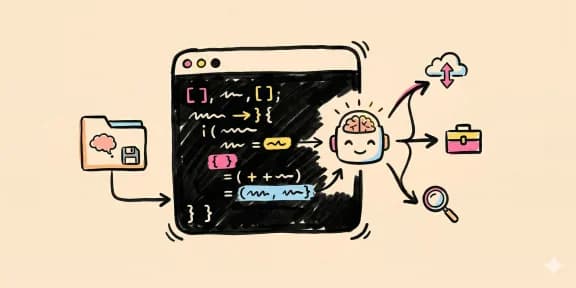
Most AI design tools try to replace your entire stack. Magic Patterns takes a different approach. It focuses on one thing: turning natural language into polished UI prototypes on an infinite canvas.
For the design side of the same problem, read AI Design Slop: 15 Patterns That Out Your App as Vibe-Coded with Create Beautiful UI with Claude Code: The Style Guide Method; they show how agent-generated interfaces fail and how to give coding agents better visual constraints.
This distinction matters. While tools like Lovable and Bolt chase full-stack application building, Magic Patterns zeroes in on rapid prototyping. The goal is helping teams visualize ideas before committing engineering resources or designer hours.
From Prompt to Prototype#
The workflow starts simple. You describe what you want in plain text. A New York Times clone. A financial dashboard with charts. A landing page with specific branding.
Magic Patterns generates the React components in real time. You watch it scaffold the files - headers, article cards, navigation elements - then render the result directly on your canvas.
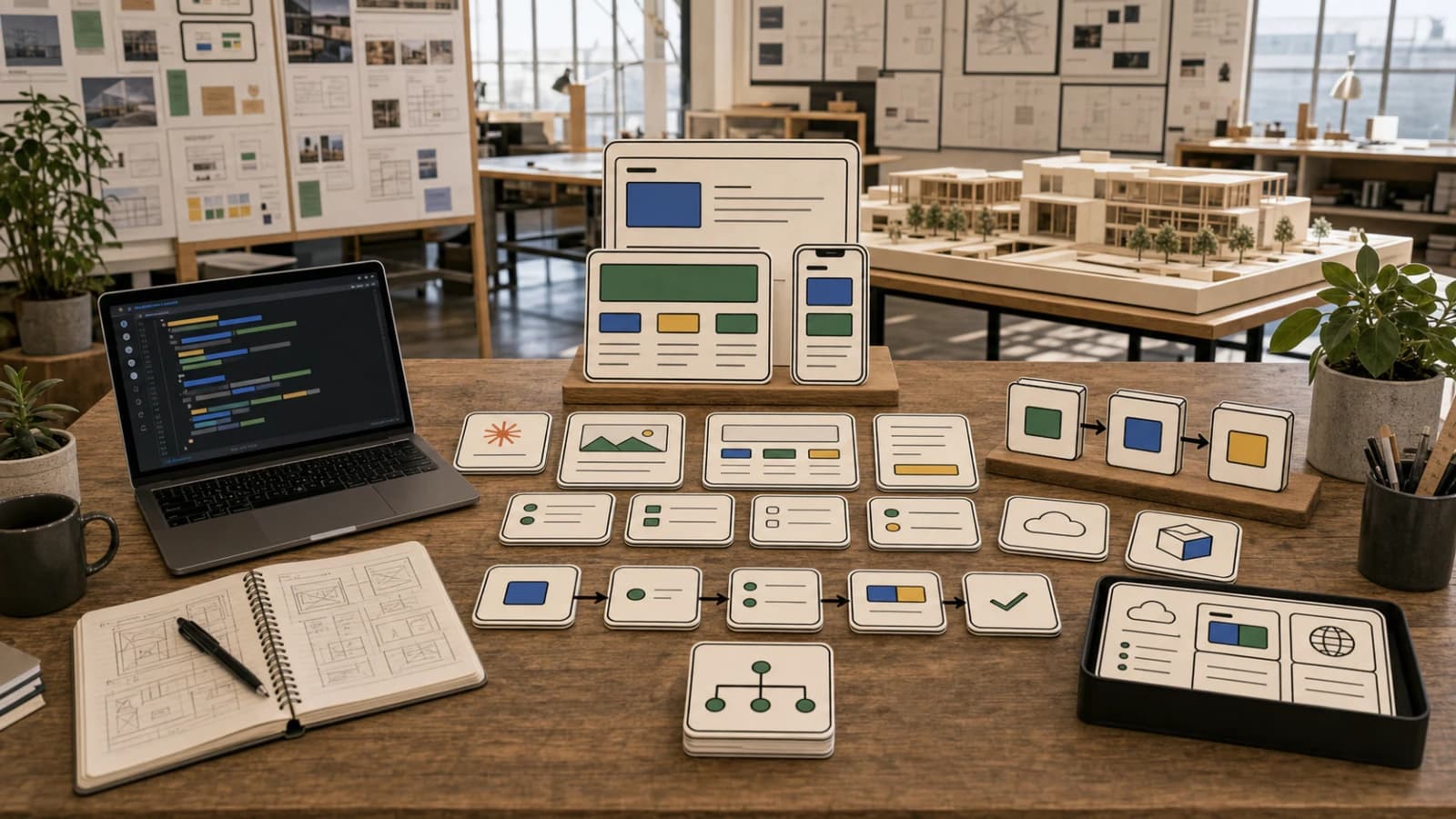
The canvas is where this tool differentiates itself. Components live on an infinite workspace you can organize however you want. Multiple pages, different variations, alternative layouts - all visible at once. This spatial approach makes it easier to compare iterations and maintain continuity across related designs.
Built for Collaboration#
The infinite canvas serves a practical purpose: stakeholder alignment. Instead of exporting static mockups or scheduling follow-up reviews, you can invite team members directly into the workspace.
Agencies will find this particularly useful. Rather than waiting days for designer availability between client calls, you can generate a prototype during the conversation. Get immediate feedback. Iterate on the spot. The back-and-forth happens in minutes, not weeks.
The platform supports real-time collaboration, so multiple people can view and discuss the same prototype simultaneously. Changes appear instantly. Everyone sees the same version of the design.
Iterative Refinement#
Once you have a base design, refinement happens through the same natural language interface. Select a component, describe the change, and Magic Patterns applies it.
The transcript demonstrates this clearly: inverting header colors, adding placeholder images, inserting search functionality above specific sections. Each request generates a new version you can compare against previous iterations.
Version history is automatic. Every change gets tracked. If an edit breaks something or you prefer an earlier direction, rollback takes one click. This safety net encourages experimentation - you're never stuck with a bad generation.
Contextual Intelligence#
Two features stand out for maintaining design consistency: references and reusable components.
References let you anchor new designs to existing work. Creating a politics page for that New York Times prototype? Reference the original homepage to preserve the header, footer, and visual language. The system passes that context into the generation, maintaining continuity without manual copy-pasting.
Reusable components work similarly but at the element level. Build a library of buttons, inputs, cards, and navigation elements specific to your design system. When generating new pages, mention these components with @ tags. The system pulls in the exact styling and behavior you've defined.
This combination - contextual references plus component libraries - means Magic Patterns scales beyond one-off experiments. You can build a genuine design system and apply it consistently across multiple prototypes.
Targeted Control#
Natural language is efficient but imprecise. Sometimes you need to modify exactly one element without touching the rest of the design.
Magic Patterns handles this through targeted selection. Highlight a specific section - a footer, a card, a navigation bar - and apply edits only to that region. The underlying model receives just the selected context, eliminating the guesswork of whether your prompt will affect the right element.
Slash commands provide additional control. You can discuss changes, request inspiration, debug issues, polish outputs, or clean up unused files without leaving the interface.
Export and Deployment#
Prototypes aren't trapped in the platform. When you're ready to move forward, Magic Patterns offers several export paths:
- GitHub sync for developers who want the React code directly in their repository
- Figma export for designers who need to refine visuals or create specs
- ZIP download for standalone code access
- Copy as prompt for transferring context to other tools
This cross-disciplinary approach recognizes that prototypes are starting points, not endpoints. Designers, developers, and product managers each get the format they need to continue work.
For static landing pages, there's also direct deployment. Generate, review, and push to production without intermediate steps.
Responsive Validation#
Every prototype includes device preview modes. Toggle between desktop, tablet, and mobile views to verify responsive behavior. This catches layout issues early - before they become expensive frontend bugs.
When to Use It#
Magic Patterns fits specific workflows:
- Early-stage validation when you need to test concepts before investing in full design or development
- Stakeholder alignment when multiple parties need to see and discuss the same vision
- Design system development when you're establishing reusable patterns across a product
- Rapid iteration when requirements change frequently and static mockups become obsolete quickly
It's not a replacement for production engineering or detailed visual design. It's a bridge between idea and execution - a way to make concepts tangible faster.
The Bottom Line#
Magic Patterns succeeds because it doesn't overreach. By focusing on prototyping rather than full-stack development, it delivers a tool that's immediately useful for designers, product managers, and agencies. The infinite canvas, version control, and flexible export options make it practical for real workflows, not just demos.
If your team spends too much time describing designs in meetings instead of looking at them, this tool closes that gap.
Frequently Asked Questions#
How does Magic Patterns differ from full-stack AI builders?#
Magic Patterns focuses exclusively on the visual layer - UI prototyping on an infinite canvas. Tools like Lovable, Bolt, and v0 try to build complete applications with backends and databases. Magic Patterns deliberately avoids backend complexity to deliver better design iteration. You get real React and Tailwind code, but the tool is optimized for rapid visual exploration rather than full-stack application scaffolding.
What is the infinite canvas and why does it matter?#
The infinite canvas is a spatial workspace where multiple components, pages, and design variations coexist simultaneously. Unlike chat-based AI tools where you see one output at a time, the canvas lets you compare four header variations side by side, explore different layout directions, or maintain multiple pages of a prototype in view. This spatial approach makes stakeholder alignment faster because everyone sees the same context.
Can I use my existing designs as a starting point?#
Yes. Magic Patterns supports references - you can anchor new designs to existing work. Creating a contact page for a prototype? Reference your homepage design and the system preserves headers, footers, typography, and visual language automatically. You can also build reusable component libraries (buttons, inputs, cards) and mention them with @ tags when generating new pages.
How does targeted editing work?#
Natural language prompts are powerful but sometimes imprecise. Magic Patterns lets you highlight a specific section - a footer, card, or navigation bar - and apply edits only to that region. The model receives just the selected context, eliminating guesswork about which element your prompt will affect. Slash commands provide additional control for discussing changes, requesting inspiration, or debugging issues.
What export options are available?#
Magic Patterns exports to multiple destinations: GitHub sync for developers who want React code directly in their repositories, Figma export for designers who need to refine visuals or create specs, and ZIP download for standalone code access. There is also a "Copy as prompt" option for transferring context to other tools. For static landing pages, direct deployment to production is supported.
Does Magic Patterns support responsive design?#
Yes. Every prototype includes device preview modes. Toggle between desktop, tablet, and mobile views to verify responsive behavior before handoff. This catches layout issues early - during the prototyping phase rather than during frontend development.
Is version history available?#
Every change is tracked automatically. If an edit breaks something or you prefer an earlier direction, rollback takes one click. This safety net encourages experimentation - you are never stuck with a bad generation and can always return to a previous state.
What is the best use case for Magic Patterns?#
Magic Patterns fits workflows where you need to make concepts tangible quickly: early-stage validation before investing in full design or development, stakeholder alignment where multiple parties need to see and discuss the same vision, design system development across a product, and rapid iteration when requirements change frequently. It is a bridge between idea and execution, not a replacement for production engineering or detailed visual design.
Watch the Video#
Sources#
- Magic Patterns - official homepage
- Magic Patterns Chrome Extension - Chrome Web Store
- Magic Patterns Documentation - Magic Patterns
- Magic Patterns Blog - Magic Patterns
- Magic Patterns on GitHub - GitHub
- Figma Community - Figma
Continue Reading#
Get the next deep dive like this in your inbox
One email a week on Magic Patterns and the rest of the AI dev stack. Free.
Read next
Magic Patterns: Why Design Wins in a World of AI Code Generators
Every AI-generated site looks the same. Magic Patterns bets on design instead: Chrome extension capture, an infinite canvas for variations, and Figma export.
8 min readCreate Beautiful UI with Claude Code: The Style Guide Method
Create beautiful UI with Claude Code by building a style guide page as your single source of truth, then enforce it with explicit constraints and CLAUDE.md.
8 min readKombai: AI That Beats Claude and Gemini on Front-End Tasks
Most AI app builders suffer from the same problem: they all look identical. Linear gradients, thick fonts, emojis everywhere.
8 min readNew here? Start with
Technical content at the intersection of AI and development. Building with AI agents, Claude Code, and modern dev tools - then showing you exactly how it works.