Mistral OCR 4 and Unlimited OCR Make Document Parsing an Agent Runtime Choice
TL;DR
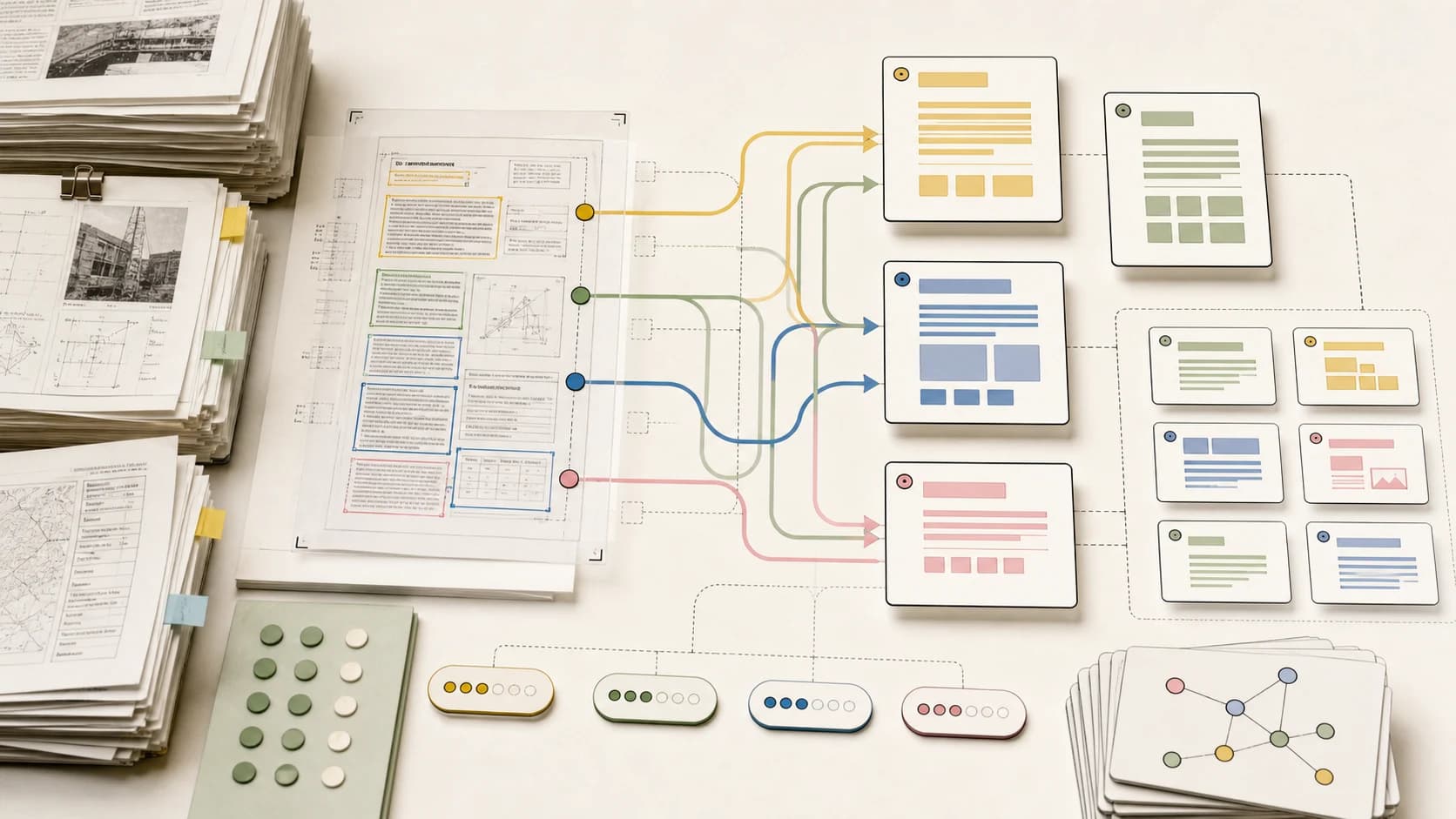
Mistral OCR 4 and Baidu's Unlimited OCR both hit Hacker News today. The useful takeaway for developers is that OCR is no longer just text extraction. It is becoming a runtime decision for document agents.
Two OCR stories hit Hacker News today for the same reason.
Mistral released OCR 4, a dedicated document extraction model with bounding boxes, block classification, inline confidence scores, markdown output, 170-language support, API pricing, and a self-hosted container path. Baidu's Unlimited OCR also surfaced, positioning itself around one-shot long-horizon parsing for multi-page documents and open model deployment.
The interesting part is not that OCR exists. OCR has existed forever.
The interesting part is that document parsing is becoming a runtime decision for agents.
Last updated: June 23, 2026
If you are building a RAG system, support triage agent, invoice workflow, legal review tool, financial document monitor, research archive, or internal search product, the first step is often not retrieval. It is ingestion. Can the system turn messy documents into trustworthy structured evidence before an LLM reasons over them?
That used to be a boring preprocessing question. Now it is an architecture question.
What Mistral OCR 4 Changes#
Mistral's launch post frames OCR 4 as a small, focused document-understanding model. The feature list is aimed directly at production ingestion:
- extracted text
- markdown-structured output
- bounding boxes
- block types
- inline confidence scores
- support for 170 languages across 10 language groups
- a single-container self-hosting option
- API, Batch API, and Document AI product paths
The pricing is also explicit: Mistral lists OCR 4 API pricing at $4 per 1,000 pages, Batch API at $2 per 1,000 pages, and Document AI at $5 per 1,000 pages.
That matters because OCR pipelines are volume problems. A demo with five PDFs does not tell you much. A production archive with five million pages forces different questions:
- What is the cost per thousand pages?
- Can the model preserve layout?
- Can you route low-risk batches through cheaper async processing?
- Can you keep sensitive documents in your own environment?
- Can downstream agents inspect confidence and geometry instead of trusting plain text?
Mistral is answering those questions with product packaging, not just a model card.
The OCR 4 model card and document-processing docs make the implementation shape clearer than the launch post alone. The API can return structured OCR output with blocks, confidence signals, and document-aware formatting rather than only a flat text transcript. That matters because downstream agents need more than words. They need evidence handles.
This is the same pressure we covered in Claude Vision API at production scale: vision extraction looks simple until volume, cost, edge cases, and validation show up. A dedicated OCR model gives teams a more focused tool than calling a general-purpose multimodal model for every page.
What Unlimited OCR Represents#
Baidu's Unlimited OCR is a different kind of signal. It is open, developer-facing, and shaped around long documents.
The GitHub repo describes "one-shot long-horizon parsing" and includes inference paths through Hugging Face Transformers and SGLang. The README shows multi-page parsing, PDF-to-image conversion, a 32,768 token max length setting, and OpenAI-compatible streaming requests through an SGLang server.
That is not the same product category as Mistral's hosted OCR endpoint. It is closer to a research/runtime surface for teams that want to run the model themselves, tune serving, and own the deployment.
The HN thread around Unlimited OCR had the right skepticism. Some commenters asked whether OCR was already solved. Others pushed back that long-run OCR is still constrained by cost, throughput, latency, memory pressure, language coverage, and degraded documents. That is exactly the point.
"OCR" is too broad a word now.
Reading a clean screenshot is one problem. Parsing a 200-page scanned contract with tables, stamps, footnotes, rotated pages, handwriting, and mixed languages is another. Feeding that output into an agent that makes decisions or updates records is a third problem.
Unlimited OCR is interesting because it attacks the long-context, multi-page version of the problem directly.
The caution is maturity. Unlimited OCR is a fresh research/runtime project, not a settled production platform. Treat it as a promising model to benchmark on your own documents, not as a drop-in replacement for validation, serving operations, or human review.
The New OCR Decision Tree#
For developers, the useful question is not "which OCR model won HN today?"
The useful question is: what kind of document workload do you have?
| Workload | Better Starting Point |
|---|---|
| High-volume document ingestion with product SLAs | Dedicated OCR API or Document AI product |
| Sensitive archives with data residency constraints | Self-hosted OCR model or private container |
| Long PDFs and multi-page parsing experiments | Open model runtime like Unlimited OCR |
| One-off screenshots, UI images, charts, and mixed visual reasoning | General vision model |
| Business extraction with validation, workflows, and deployment UI | Higher-level document platform |
This is where existing tools still matter. A platform like Unstract is not obsolete because a new OCR model ships. It sits higher in the stack: workflow design, field extraction, validation, deployment, and integration. The OCR layer feeds it.
Likewise, a multimodal model like Claude still makes sense when the input is not just a document. Screenshots, charts, interface audits, and visual reasoning belong in the broader vision bucket.
The new pattern is compositional:
- Use OCR to turn pages into structured evidence.
- Preserve coordinates, block types, tables, and confidence where possible.
- Store the parsed result alongside page images and source metadata.
- Retrieve evidence by section, page, table, or entity.
- Let an agent reason only over cited, inspectable chunks.
That is the bridge from OCR to agents.
Why This Matters for RAG#
RAG quality is capped by ingestion quality.
If the parser loses table structure, the retriever cannot recover it. If it merges headers with body text, the answer layer inherits confusion. If it strips page numbers and coordinates, the UI cannot show receipts. If it overconfidently reads a bad scan, the agent can produce a polished answer grounded in bad evidence.
This is why Mistral's bounding boxes, block classification, and confidence scores are more important than the word "OCR." They give downstream systems more handles.
A good document RAG pipeline should be able to say:
- this answer came from page 17
- this table cell came from row 4, column 2
- this field had low confidence
- this page was rotated or degraded
- this paragraph was a figure caption, not body text
That is not just extraction. It is evidence design.
The SNEWPAPERS post made the same point from a historical archive angle. Search got better only after layout processing, OCR, classification, indexing, and query assistance were treated as separate parts of the system. The agent was the layer on top, not a replacement for the ingest pipeline.
The Tradeoff Developers Should Watch#
There is a temptation to collapse document AI into one giant model call.
Upload the PDF. Ask for JSON. Done.
That works for prototypes and small internal tools. It gets fragile at scale.
The better production shape is usually a pipeline:
- page rendering
- orientation and image cleanup
- OCR or document model extraction
- table and layout preservation
- chunking with page references
- schema extraction
- validation
- human review for low-confidence fields
- searchable storage
Dedicated OCR models fit cleanly into that pipeline. Open models fit when you need cost control, deployment control, or research flexibility. General multimodal models fit when reasoning across visual context matters more than raw throughput.
The wrong move is pretending one layer solves the whole system.
From the archive
Do AI Coding Agents Need Their Own Version Control?
Jun 23, 2026 • 8 min read
OpenAI Agent Builder and Evals Are Shutting Down: Move the Agent Stack Into Code
Jun 23, 2026 • 8 min read
OpenAI Daybreak Shows the AppSec Bottleneck Is Patching, Not Finding
Jun 23, 2026 • 8 min read
OpenMontage Shows the Real Future of AI Video: Agents, Not Editors
Jun 23, 2026 • 7 min read
The Benchmark Caveat#
OCR benchmarks are useful, but they can hide the exact failures that break document agents.
A model can look strong on clean scans and still fail on:
- low-resolution faxes;
- rotated tables;
- handwriting;
- stamps and signatures;
- multi-column legal exhibits;
- mixed-language forms;
- scanned pages with handwritten corrections;
- PDFs where the embedded text layer disagrees with the image.
That is why the real evaluation set should come from your own archive. Keep page images, parsed markdown, bounding boxes, confidence values, extracted fields, and human corrections together. Then measure the pipeline by downstream task quality: did the agent cite the right page, preserve the table, flag low confidence, and avoid inventing missing fields?
This also connects to RAG with Claude. Retrieval does not repair bad ingestion. It only finds whatever your OCR pipeline preserved.
For the baseline architecture, the older What is RAG? guide is still the right starting point: retrieval quality depends on source preparation before the model ever sees a prompt.
My Take#
Mistral OCR 4 and Unlimited OCR are important because they make document ingestion feel like an active model category again.
For the last year, a lot of teams treated OCR as either solved infrastructure or a prompt you send to a frontier vision model. That is too simple. The real decision now includes layout fidelity, confidence metadata, serving mode, cost per page, self-hosting, long-document behavior, and how much evidence your agent can show back to a user.
If you are building document agents, start evaluating OCR like a runtime:
- hosted or self-hosted
- sync or batch
- short page or long document
- text-only or layout-aware
- black-box answer or inspectable evidence
- cheap enough for reprocessing
- reliable enough for human review queues
The winners will not be the systems with the fanciest demo on one clean PDF. The winners will be the systems that preserve enough structure for agents to reason, cite, and recover from uncertainty.
That is the practical shift.
FAQ#
What is Mistral OCR 4?#
Mistral OCR 4 is Mistral's document extraction model released on June 23, 2026. It returns extracted text, markdown structure, bounding boxes, block types, and confidence scores, with API, batch, Document AI, and self-hosted deployment paths.
What is Unlimited OCR?#
Unlimited OCR is Baidu's open OCR project for one-shot long-horizon parsing. The repo includes model links, Transformers inference, SGLang serving instructions, and multi-page PDF parsing examples.
Is OCR solved already?#
Clean text extraction is mature. Production document parsing is not solved in the general case. Long PDFs, degraded scans, tables, mixed languages, handwriting, layout preservation, latency, cost, and evidence tracing still create hard engineering choices.
Should I use a dedicated OCR model or a general vision model?#
Use a dedicated OCR or document model for high-volume page ingestion, layout-aware parsing, and cost-controlled pipelines. Use a general vision model when the task requires broader visual reasoning across screenshots, charts, diagrams, or mixed image content.
Why does OCR matter for AI agents?#
Agents need reliable evidence. If document ingestion loses layout, confidence, tables, or page references, the agent has weaker grounding. Better OCR gives agents cleaner source material and better receipts.
Continue Reading#
- Mistral Shieldstral: A 3B Open-Weight Policy-Adaptive Moderation Model That Beats Models 7x Its Size
- Unlimited OCR: Baidu's Open-Source Solution for Long Document Parsing
Sources#
Fetched June 23, 2026.
Read next
Unstract: Open-Source AI Document Parsing at Scale
Unstract is an open-source, no-code platform for extracting structured data from PDFs, invoices, scanned documents, and more. Here is how it works, how to set it up, and why automated document processing is becoming essential for organizations drowning in unstructured data.
10 min readClaude Vision API: Image Analysis At Production Scale
How to ship Claude's vision API in production. OCR, charts, UI audits, real cost numbers, TypeScript SDK code, and the gotchas that bite at 100k images a month.
13 min readAgentic Search Works Best When It Writes Queries, Not Answers
SNEWPAPERS is a useful Show HN signal: the strongest agentic search products do not replace search results with prose. They teach the agent to operate a real search system.
8 min readShare
Developers Digest
Technical content at the intersection of AI and development. Building with AI agents, Claude Code, and modern dev tools - then showing you exactly how it works.
300+ videos30K+ GitHub stars850+ articles
Related Tools
AI CodingOpen source

DeepSeek-TUI
Open-source terminal agent runtime with approval modes, rollback snapshots, MCP servers, LSP diagnostics, and a headless...
View ToolAI FrameworksAgent UI

CopilotKit
Frontend stack for agent-native apps. React hooks, prebuilt copilot UI, AG-UI runtime, frontend tools, shared state, and...
View ToolAI Frameworks
C
Composio
Gives AI agents access to 250+ external tools (GitHub, Slack, Gmail, databases) with managed OAuth. Handles the auth and...
View ToolAI Frameworks

OpenAI Agents SDK
Lightweight Python framework for multi-agent systems. Agent handoffs, tool use, guardrails, tracing. Successor to the ex...
View ToolApps from Developers Digest
Related Guides
Guide
Claude Code Setup Guide
Configure Claude Code for maximum productivity -- CLAUDE.md, sub-agents, MCP servers, and autonomous workflows.
AI AgentsGuide
MCP Servers Explained
What MCP servers are, how they work, and how to build your own in 5 minutes.
AI AgentsGuide
Building Your First MCP Server
Step-by-step guide to building an MCP server in TypeScript - from project setup to tool definitions, resource handling, testing, and deployment.
AI AgentsRelated Videos
Buzz: Open-Source Collaboration for Humans + AI Agents
Buzz by Block: Open-Source Slack-Style Collaboration for Humans + AI Agents (Demo & Setup) Check out Arcade: https://arcade.dev.plug.dev/xiDRwlA Repo: https://github.com/block/buzz The video introd...
Video·
Agents 101: How to Build and Deploy Anything with AI Agents
Build Anything with Vercel, the Agentic Infrastructure Stack Check out Vercel: https://vercel.plug.dev/cwBLgfW The video shows a behind-the-scenes walkthrough of how the creator rapidly builds and d...
Video·
Zed: The Open Source Agentic IDE - Use Claude Code, Codex & Gemini CLI in one place
Check out Zed here! https://zed.dev In this video, we dive into Zed, a robust open source code editor that has recently introduced the Agent Client Protocol. This new open standard allows...
Video·
Related Posts
10 min read
Document AI
Unstract: Open-Source AI Document Parsing at Scale
Unstract is an open-source, no-code platform for extracting structured data from PDFs, invoices, scanned documents, and...
13 min read
Claude API
Claude Vision API: Image Analysis At Production Scale
How to ship Claude's vision API in production. OCR, charts, UI audits, real cost numbers, TypeScript SDK code, and the g...
8 min read
AI Search
Agentic Search Works Best When It Writes Queries, Not Answers
SNEWPAPERS is a useful Show HN signal: the strongest agentic search products do not replace search results with prose. T...

5 min read
NVIDIA
NVIDIA Nemotron Nano 2 VL: Open Source Vision-Language Model
NVIDIA's Nemotron Nano 2 VL delivers vision-language capabilities at a fraction of the computational cost. This 12-billi...
8 min read
RAG
What is RAG? Retrieval Augmented Generation Explained
How RAG works, why it matters, and how to implement it in TypeScript. The technique that lets AI models use your data wi...
8 min read
AI Agents
Pizza Bot Shows Why Background Agents Need Inboxes
AWS open-sourced Pizza Bot, a local-first inbox for long-running AI agent work. The useful lesson is not the brand. It i...
Build with the member tools

Get Smarter About AI Dev
New tutorials, open-source projects, and deep dives on coding agents - delivered weekly.
One email per weekReal code, not theoryFree forever