Anthropic Sonnet 4.5 in Claude Code
TL;DR
Claude Sonnet 4.5 in Claude Code uses parallel subagents to build a Next.js site and ten arcade games from three prompts. What worked and what still broke.
Last updated: June 11, 2026
What Makes Claude Sonnet 4.5 Different#
Anthropic's Claude Sonnet 4.5 isn't just another model increment. The company claims they've observed it maintaining focus for more than 30 hours on complex multi-step tasks. For developers, that translates to autonomous coding sessions that can tackle extensive refactors, multi-file architectures, or detailed specs requiring iterative refinement without human intervention.
For model-selection context, compare this with Claude Code Agent Teams, Subagents, and MCP: The 2026 Playbook and Why Skills Beat Prompts for Coding Agents in 2026; model quality matters most when it is tied to a concrete coding workflow.
Getting Started with Claude Code#
Claude Code offers multiple interfaces depending on your workflow. The new VS Code extension provides a familiar panel-based experience similar to Cursor or GitHub Copilot. But the terminal interface remains the preference for many developers, offering direct access to the autonomous agent through command line interactions.
Beyond the editor integration, Anthropic recently rebranded the Claude Code SDK to the Claude Agent SDK, emphasizing its broader applicability beyond just coding tasks. The underlying architecture supports complex orchestration scenarios where agents can spawn subagents and work in parallel.
Parallel Execution: The Force Multiplier#
The most significant productivity gain comes from parallel subagent execution. Instead of generating components sequentially, you can instruct Claude Code to spawn multiple subagents simultaneously to build different parts of your application.
In practice, this means creating your Next.js application structure, header, footer, homepage, and blog pages all at once. The model coordinates these parallel streams, installs dependencies like gray-matter for markdown parsing, and integrates everything into a cohesive application.
This approach cuts generation time dramatically. A complete Next.js setup with TypeScript, Tailwind, and ESLint configuration happens in minutes rather than the iterative back-and-forth typical of linear generation.
Building a Production-Ready Site in Two Prompts#
The first prompt establishes the foundation: a Next.js application with specific branding, header, footer, and a functional blog with markdown support. The second prompt transforms this basic structure into a polished SaaS landing page.
Requesting a neo-brutalist theme, pricing section, FAQ, and rich footer with placeholder content yields a complete commercial site. The model handles responsive layouts, visual hierarchy, and even adds syntax-highlighted code blocks for technical blog posts without explicit instruction.
Pushing Limits: Ten Games in One Shot#
To test the model's capabilities, a single prompt requested a games page featuring ten classic arcade titles spanning 1979 to 2000, with varying complexity and consistent neo-brutalist styling. The instruction specifically demanded parallel page generation for each game.
The results demonstrate both the power and current limitations of autonomous coding:
- Pong: Fully functional with AI opponent, collision detection, and scoring
- Connect Four: Complete win detection and reset functionality
- Snake: Working growth mechanics and food collection
- Breakout: Proper collision physics and score tracking
- Asteroids: Destructible asteroids with size reduction on impact
- Missile Command: City defense mechanics with collision detection
- Tetris: Complete rotation and line-clearing logic
- Frogger: Functional collision system, though visual distinction between roads and obstacles needed refinement
- Pac-Man: Partial implementation; movement and ghost AI required additional prompts
For ten games generated from a single prompt, the success rate is remarkable. Most titles required only minor fixes for keyboard event handling to prevent page scrolling during gameplay.
Architecture of Autonomous Development#
The workflow follows a clear pattern: establish the foundation, delegate parallel tasks, then iterate on the results. When building the games collection, the model first created the main games listing page, then spawned separate subagents for each individual game implementation.
This architecture scales. Complex refactors spanning dozens of files, test suite generation, or documentation updates can all be parallelized. The 30-hour runtime capability mentioned in Anthropic's announcement suggests these agents can handle enterprise-scale codebases with minimal supervision.
Practical Limitations#
Current implementations aren't perfect. The Pac-Man example showed that complex game AI and precise collision detection for grid-based movement still require refinement. Keyboard event handlers occasionally conflict with browser defaults, causing layout shifts during gameplay.
These issues resolve with targeted follow-up prompts, but they indicate where human oversight remains valuable. The model excels at structure, styling, and standard logic implementations. Edge cases in physics simulations or complex state machines may need additional iteration.
The Three-Prompt Website#
The entire demonstration, from empty directory to deployed-ready site with ten interactive games, required exactly three prompts. No manual terminal commands for project initialization. No hand-written configuration files. No copying boilerplate code.
Claude Sonnet 4.5 handled Next.js setup, component architecture, styling decisions, package installation, markdown processing, and game logic implementation autonomously. The result is a functional, styled, multi-page application complete with interactive elements.
This represents a shift in how developers can approach prototyping and even production builds. The barrier to creating full-stack applications drops significantly when a single well-constructed prompt generates what previously required hours of manual coding.
FAQ#
What is Claude Sonnet 4.5 and how does it differ from previous models?#
Claude Sonnet 4.5 is Anthropic's model optimized for sustained autonomous coding tasks. The key differentiator is runtime endurance - Anthropic reports the model maintaining focus for over 30 hours on complex multi-step tasks. This makes it suitable for extensive refactors, multi-file architectures, and detailed specifications requiring iterative refinement without human intervention. Earlier models would lose context or drift from objectives in long sessions.
How do I use Claude Sonnet 4.5 with Claude Code?#
Claude Code offers multiple interfaces: a VS Code extension with a panel-based experience similar to Cursor or GitHub Copilot, and a terminal interface for direct command-line interaction with the autonomous agent. Install Claude Code through your package manager, authenticate with your Anthropic account, and the agent will use Claude Sonnet 4.5 (or your configured model) for code generation, refactoring, and multi-file edits.
What are parallel subagents and why do they matter?#
Parallel subagents are a Claude Code feature where the main agent spawns multiple worker agents to handle different parts of a task simultaneously. Instead of generating components sequentially, you can instruct Claude Code to build your header, footer, homepage, and other pages all at once. This cuts generation time dramatically - a complete Next.js setup with TypeScript, Tailwind, and ESLint configuration happens in minutes rather than iterative back-and-forth.
Can Claude Sonnet 4.5 build a complete application from a single prompt?#
Yes, with some caveats. The demonstration in this article shows a complete Next.js site with ten interactive arcade games built from three prompts. The model handles project initialization, component architecture, styling decisions, package installation, and game logic autonomously. However, complex features like precise physics simulations or intricate state machines may require follow-up prompts for refinement.
What are the practical limitations of autonomous coding with Claude Sonnet 4.5?#
Current implementations have edge cases. Complex game AI, precise collision detection for grid-based movement, and keyboard event handlers conflicting with browser defaults are areas where human oversight remains valuable. The model excels at structure, styling, and standard logic implementations. Physics simulations and complex state machines may need additional iteration.
How does Claude Code handle project setup and dependencies?#
Claude Code handles the complete development workflow autonomously. It can initialize new projects (like running create-next-app), install dependencies through npm/yarn/pnpm, configure TypeScript and linting, and set up build tooling. The agent reads package.json, understands project structure, and makes appropriate decisions about which packages to install based on the task requirements.
What's the difference between Claude Code and the Claude Agent SDK?#
Claude Code is the developer-facing tool for coding tasks - the terminal CLI and VS Code extension. Anthropic recently rebranded the underlying SDK to Claude Agent SDK to emphasize its broader applicability beyond just coding. The SDK provides the architecture for complex orchestration scenarios where agents spawn subagents and work in parallel. Claude Code is built on this SDK but focused specifically on software development workflows.
Is Claude Sonnet 4.5 better than Opus for coding tasks?#
Sonnet 4.5 is optimized for the sustained focus required in autonomous coding sessions. Opus remains the most capable model for complex reasoning and nuanced tasks. For typical Claude Code workflows - multi-file refactors, feature implementation, test generation - Sonnet 4.5 offers the best balance of capability and efficiency. Choose Opus when you need maximum reasoning depth or are working on particularly complex architectural decisions.
Official Sources#
| Source | Description |
|---|---|
| Claude Code Overview | Official documentation for Claude Code concepts, architecture, and workflows |
| Claude Code Sub-Agents | How the Task tool spawns parallel workers and controls concurrency |
| Claude Models | Model specifications, capabilities, and comparison for Sonnet, Opus, and Haiku |
| Claude Pricing | Current Claude subscription plans and pricing |
| Claude Code Memory | CLAUDE.md and project context persistence documentation |
| Claude Code Skills | Skill definitions, SKILL.md format, and reusable command patterns |
Watch the Video#
Continue Reading#
Get the next deep dive like this in your inbox
One email a week on Claude and the rest of the AI dev stack. Free.
Read next on Claude Code
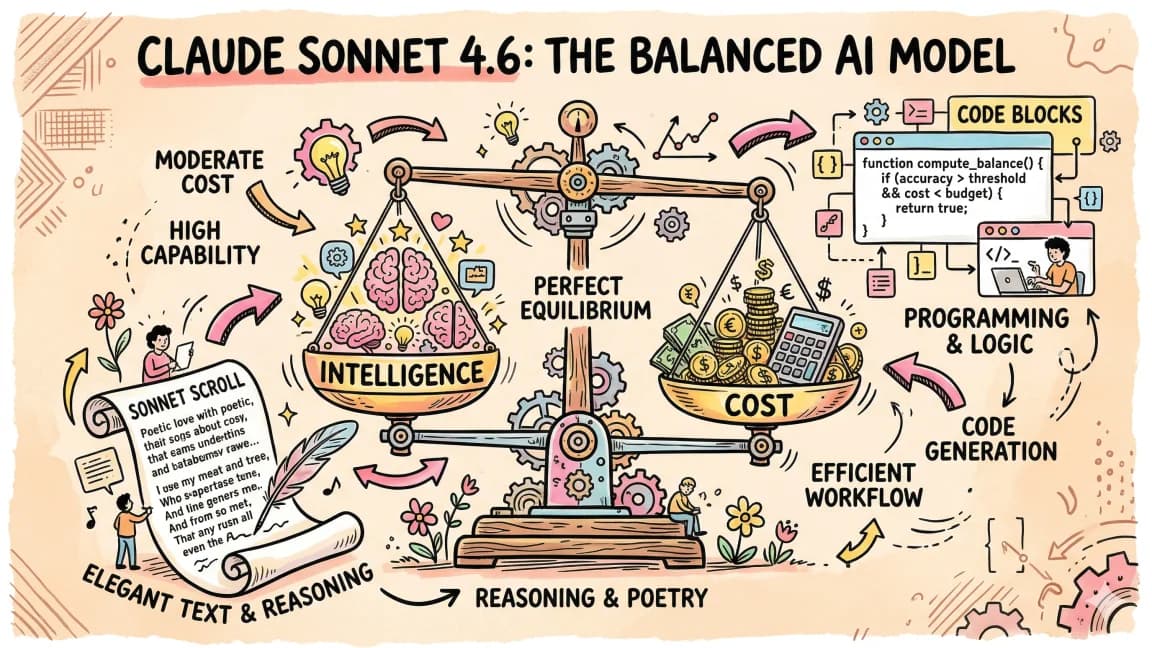
Claude Sonnet 4.6: Approaching Opus at Half the Cost
Claude Sonnet 4.6 nears Opus on agentic work and computer use at half the cost. Benchmarks, adaptive thinking, model card findings and the 1M context beta.
6 min readClaude Opus 4.5: Anthropic's Most Intelligent Model
Claude Opus 4.5 is the Anthropic model built for coding agents and computer use. Its pricing, benchmarks, token efficiency, effort parameter and agent features.
5 min readWhat Is Claude Code? The Complete Guide for 2026
Claude Code is Anthropic's AI coding agent for terminal, IDE, desktop and browser. What it does, how it works, setup, pricing, MCP, skills, hooks and subagents.
15 min readTechnical content at the intersection of AI and development. Building with AI agents, Claude Code, and modern dev tools - then showing you exactly how it works.