TutorMoments: AI2's New Benchmark Shows LLM Tutors Over-Help by Default
TL;DR
AI2 released TutorMoments, a replay-based benchmark that drops seven LLMs into real math tutoring transcripts and scores whether they scaffold when help is needed or push for rigor when the student can do more. The default finding: models over-help, and spelling out the trade-off in the prompt lifts every score but does not close the gap to a consistent human call.
On August 7, the Allen Institute for AI (AI2) released TutorMoments, a preview evaluation framework for a question most tutoring benchmarks dodge: not whether an LLM tutor can solve the math, but whether it knows when to help and when to hold back. The release includes a dataset of 462 de-identified real tutoring transcripts, teacher annotations, replay code, and the scored model replays. The headline finding is uncomfortable for anyone building educational agents: told only to "tutor well," models default to over-helping, and a prompt that spells out the trade-off improves every model tested without fixing the underlying problem.
How TutorMoments works#
The dataset, TutorMoments-Preview, is built from real one-on-one math tutoring sessions with U.S. students in grades 2-7, drawn from a high-dosage tutoring program whose students mostly attend Title I schools. Experienced math teachers annotated the transcripts, marking 1,500-plus key moments: decision points where a tutor had to choose between scaffolding (making a problem more accessible) and pushing for rigor (demanding harder thinking). A total of 27 teacher annotators produced several thousand free-text annotations, and the transcripts were de-identified twice over, first by the program provider and then through an additional math-aware pipeline.
Evaluation is a replay, not a multiple-choice probe:
- A transcript is paused at a key moment.
- The model under test takes over as the tutor for five turns, with the student played by another LLM.
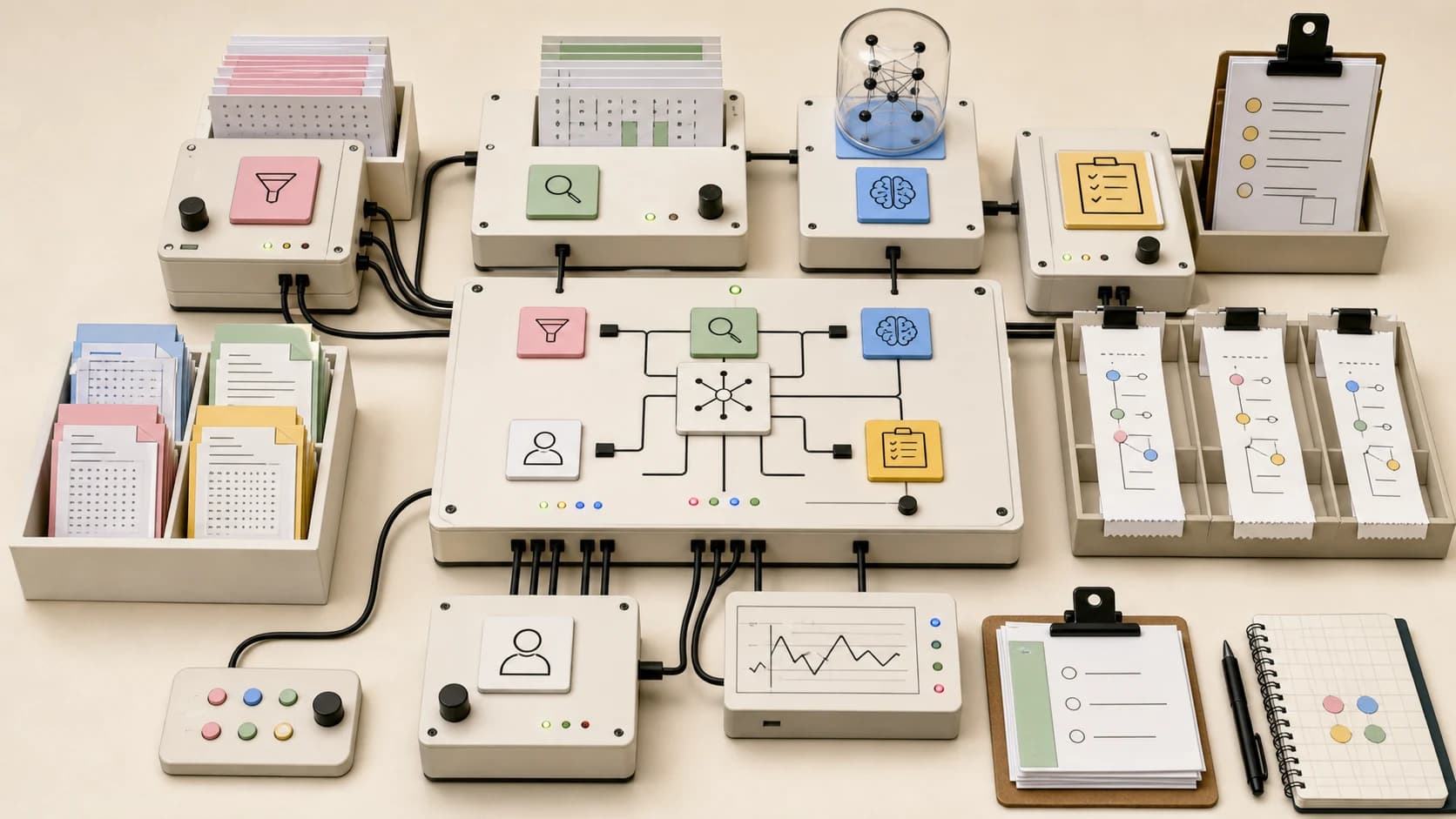
- An LLM-based scoring pipeline, validated against teacher annotations, judges each replay on three axes: whether the model scaffolded when support was needed, whether it pushed for rigor when the student was ready, and whether it avoided over-scaffolding.
Scores are reported as the share of relevant moments where the model did the appropriate thing, 0 to 1. There are more scaffolding moments (738) than rigor moments (260) in the annotations, and the pipeline detects rigor pushes less reliably, so rigor scores are noisier.
From the archive
Weekly Highlights: Agents Became the Attack Surface, Open Weights Took the Agentic Lead
Aug 7, 2026 • 11 min read
Agent Plugins 1.0.0: One Package Format for Agent Skills and MCP Servers
Aug 6, 2026 • 7 min read
Cloudflare Adds Identity-Aware AI Gateway Analytics: Behavioral Baselines for Every Agent and Employee
Aug 6, 2026 • 6 min read
Kitesurf: Cloudflare's Agent-First Browser Runs in V8 Isolates on Workers
Aug 6, 2026 • 7 min read
What the numbers say#
AI2 ran seven LLMs through TutorMoments under two prompts: a plain prompt with no guidance beyond "tutor well," and an evaluation-aware prompt that spells out the scaffolding, over-scaffolding, and rigor trade-off. Two results stand out:
- Every model scores higher under the evaluation-aware prompt than the plain prompt. The default "helpful assistant" posture is not enough to tutor well; the trade-off has to be stated explicitly.
- Prompting does not close the gap. Models still differ widely in how they interpret the enhanced prompt, and even the best scorers have substantial room to improve.
The human reference numbers are the most important caveat to read correctly. Scored at the same decision points, the human tutors in the transcripts land at 0.458 for appropriate scaffolding, 0.182 for appropriate rigor, and 0.496 for avoiding over-scaffolding, below the models' evaluation-aware scores and around their plain-prompt range. AI2 is explicit that this is not a claim that AI tutors outperform teachers: the annotators looked specifically for moments where tutoring could have gone better, so the dataset concentrates on missed opportunities rather than ideal practice. The scores measure tutor behavior at a decision point, not whether anyone learned.
The behavioral breakdown also shows a qualitative gap. When prompted, models push for rigor more, but they lean on a narrow strategy set, mostly asking students to explain their answers. Human tutors use more varied strategies and are far more likely to step back and let the student work independently. Restraint, in other words, is not just a matter of what the model says; it is a behavioral repertoire.
Why this matters to developers#
For people building agents, TutorMoments is a useful case study in two problems that generalize well past education.
First, helpfulness is a bias, not a feature. An LLM trained to be maximally helpful will solve the problem for the user by default, and in tutoring that behavior is measurable damage: it cuts short productive struggle, the effortful problem-solving that learning research ties to stronger understanding. Every agent builder has seen the same failure mode in code review, debugging, and onboarding: the assistant does the work instead of enabling the person. Benchmarks that reward "never give the answer" or "always offer a hint" cannot catch this because they measure a fixed behavior, not whether it was the right move for that student at that moment. TutorMoments scores judgment, which is a different and harder thing.
Second, the prompt sensitivity result is a reminder that agent behavior is only partly controlled by the system prompt. The evaluation-aware prompt moved every score, and the remaining variance across models is wide. If you are shipping an educational agent, expect to need evaluation-driven iteration on both the prompt and the model choice, and expect the reference point (what a human actually does at the same moment) to be humbling. The same pattern shows up in our breakdown of why agent evals need baseline receipts: a benchmark without a human baseline invites claims that the numbers do not support.
The honest limits are stated plainly in the post: the evaluation is behavioral signal, not evidence of learning, which would need studies with real students and real outcomes. The dataset is narrow (U.S. elementary and middle-school math, one pool of educators), so generalization to other subjects and settings is an open question. AI2 is positioning this as a preview, with a larger multimodal dataset, a stronger scoring pipeline, and deeper analysis as the stated next steps, supported by the Gates Foundation and Learning Commons.
Continue Reading#
- AI Tutor Shows 0.71-1.30 SD Effect Size in Dartmouth Statistics Course - the other side of AI tutoring: a measurement of real learning outcomes
- Agent Evals Need Baseline Receipts - why every benchmark needs a human reference point
- Agent Memory Benchmarks Are Not Enough - what popular benchmark suites measure and what they miss
- Agentic AI Reliability: A Case Study - where agent behavior breaks down in production
Sources#
Read next
AI Tutor Shows 0.71-1.30 SD Effect Size in Dartmouth Statistics Course
A new study from Dartmouth measures the impact of an AI tutoring platform on introductory statistics performance. Full engagement with the system correlated with significant exam score improvements, though selection bias remains a key limitation.
8 min readAgent Evals Need Baseline Receipts
Hex's data-agent lab shows the practical eval pattern AI teams should copy: compare candidates against stable baselines, keep receipts, and judge changes by task behavior.
8 min readAgent Memory Benchmarks Are Not Enough
Persistent memory for coding agents is trending because every session still starts too cold. The hard part is not saving facts. It is proving recall, freshness, deletion, and rollback under real development pressure.
9 min readShare
Developers Digest
Technical content at the intersection of AI and development. Building with AI agents, Claude Code, and modern dev tools - then showing you exactly how it works.
300+ videos30K+ GitHub stars850+ articles
Related Tools
AI Models

DeepSeek
Open-source reasoning models from China. DeepSeek-R1 rivals o1 on math and code benchmarks. V3 for general use. Fully op...
View ToolAI Models

Gemini
Google's frontier model family. Gemini 2.5 Pro has 1M token context and top-tier coding benchmarks. Gemini 3 Pro pushes...
View ToolInfrastructure

Together AI
Fastest inference for open-source models. 200+ models via unified API. Ranks #1 on speed benchmarks for DeepSeek, Qwen,...
View ToolAI CodingOpen source
DeepSeek-TUI
Open-source terminal agent runtime with approval modes, rollback snapshots, MCP servers, LSP diagnostics, and a headless...
View ToolApps from Developers Digest
Directories
AI Models
Pick a model in 30 seconds. Built for the answer, not the marketing.
View AppSaaS ProductsPopular
Fit
Log workouts, meals, and habits in plain English. Your progress shows up as a GitHub-style heatmap.
View AppSaaS Products
DevDigest Academy
Learn AI-assisted development by building, not by watching.
View AppRelated Guides
Guide
Subagent Context Isolation - Claude Code
Prevent bloating the main conversation with research or exploration.
Claude CodeGuide
Getting Started with DevDigest CLI
Install the dd CLI and scaffold your first AI-powered app in under a minute.
Getting StartedGuide
Claude Code Setup Guide
Configure Claude Code for maximum productivity -- CLAUDE.md, sub-agents, MCP servers, and autonomous workflows.
AI AgentsRelated Videos

OpenAI's GPT 5.4 in 10 Minutes: 1M Context, Computer Use, Coding Gains, Benchmarks & Pricing
The video reviews OpenAI’s newly released GPT 5.4, highlighting access tiers (GPT 5.4 Thinking in ChatGPT Plus/Teams/Pro/Enterprise and GPT 5.4 in the $200/month tier) and API availability. It covers
Video·
ChatLLM Operator | New 1 Click AI Agent automates your work and research
Meet ChatLLM Operator 🌐✈️📊 In this video, I'll show you the capabilities of ChatLLM Operator. Discover how this affordable tool, at just $10 a month, can autonomously handle tasks...
Video·
OpenAI's Deep Research Agent in 8 Minutes
Exploring ChatGPT's Deep Research OpenAI has launched their second AI agent, Deep Research, available in ChatGPT, focusing on executing complex research workflows in 5 to 30 minutes. Key features...
Video·
Related Posts
8 min read
News
AI Tutor Shows 0.71-1.30 SD Effect Size in Dartmouth Statistics Course
A new study from Dartmouth measures the impact of an AI tutoring platform on introductory statistics performance. Full e...

8 min read
AI Agents
Agent Evals Need Baseline Receipts
Hex's data-agent lab shows the practical eval pattern AI teams should copy: compare candidates against stable baselines,...
9 min read
AI Agents
Agent Memory Benchmarks Are Not Enough
Persistent memory for coding agents is trending because every session still starts too cold. The hard part is not saving...
7 min read
AI Agents
Agentic AI Reliability Is a Systems Problem
The Bayer and Thoughtworks PRINCE case study is a useful reminder that reliable agentic AI comes from context routing, t...

7 min read
News
Blind Resampling Beats Self-Repair in Small Code Models: Retry Without the Failed Code
A placebo-controlled study on MBPP+ finds that when small code models fail, resampling from scratch beats repair loops t...
7 min read
News
CAPA Benchmark: Why Coding Agents Should Learn Your Habits Across Sessions
A new 600-session benchmark shows coding assistants that read a user's resolved session history resolve ambiguous reques...
Build with the member tools

Get Smarter About AI Dev
New tutorials, open-source projects, and deep dives on coding agents - delivered weekly.
One email per weekReal code, not theoryFree forever